
Events
Support Local Brands at This Weekend’s HIMÔ Fair
HoliCOW and 32 Sanson by Rockwell come together to celebrate local artisanal furniture and home accessories at the second HIMÔ: A Space + Making Fair.
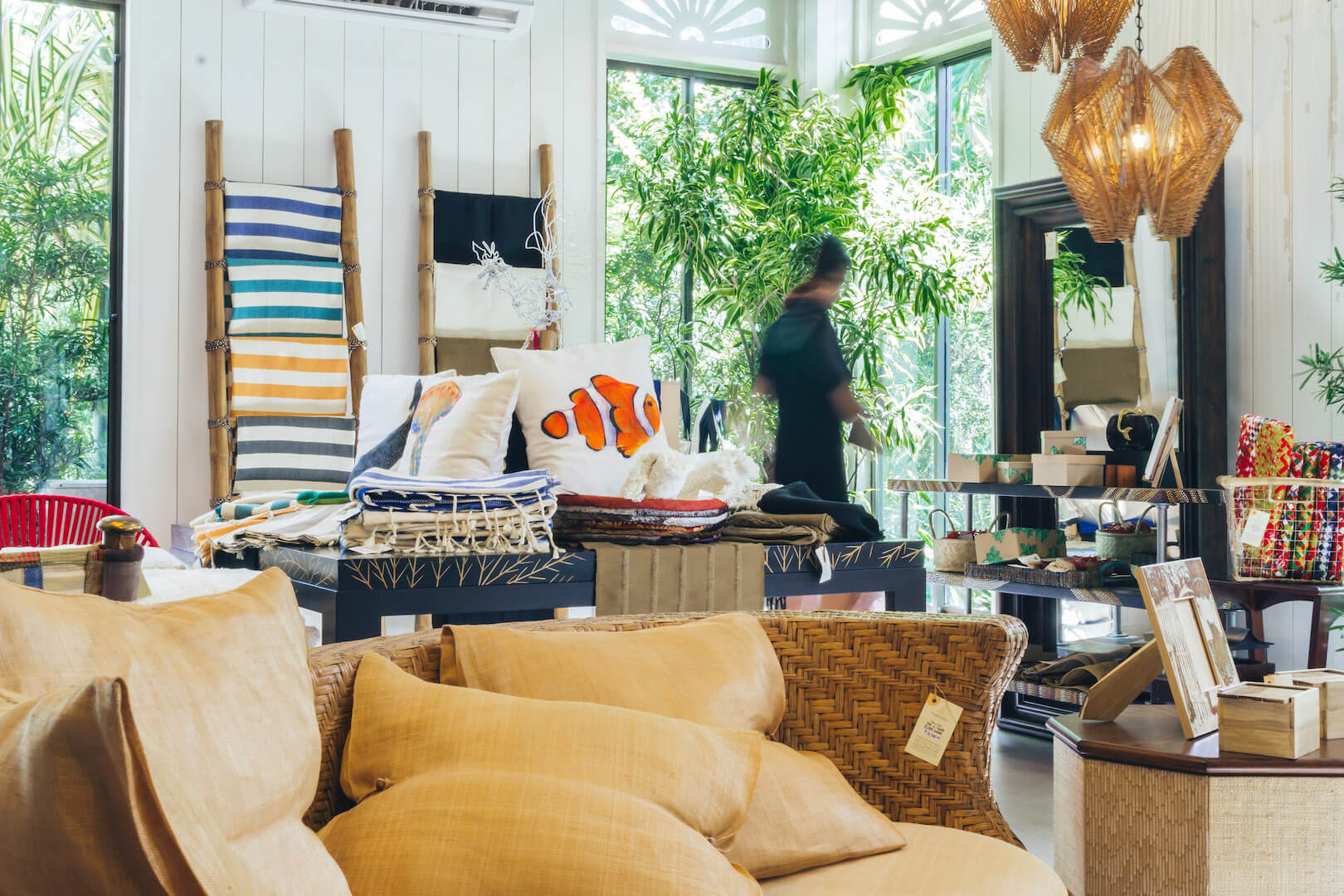
Shelves of handcrafted products—made from various materials, and in a myriad of colors and textures—fill up the 32 Sanson by Rockwell office this weekend, as it’s turned into a furniture and home accessories bazaar in the second run of the HIMÔ: A Space + Making Fair.
Named after the Visayan word for making something, HIMÔ is a curated pop-up marketplace that encourages people to create a space that reflected their personality, by bringing Filipino artisanal products into their homes. At the helm of the trunk show is HoliCOW (Holistic Coalition), a company that believes in sustainable design, and bringing together traditional and modern techniques.

At HIMÔ, HoliCOW features home accessories like table napkins made of local fabrics, seagrass trays, napkin rings with “coral” details upcycled from surplus rubber, crocheted Christmas wreaths, among many others. Those looking for a fashionable fix will find accessories and jewelry from All That Glitters and Strozzi, as well as clutches from Neil Felipp. Foodies can enjoy delicacies from neighboring provinces, local cheeses from the Malagos Farmhouse in Davao, and bottles of Don Papa’s premium local rum. Selected paintings by Sio Montera are also on display for the art-inclined.

“We always look to the three values that began and uphold the essence of Holistic Coalition,” says communications offer Kae Batiquin about how they chose which products to put on display. “First is Sustainability—is your company or are your products espousing or working towards sustainability in production and design? Next is Community—does your product and company uplift a community in the Philippines within your value web? And lastly, Identity—authenticity and spirit, because in a world of copy-for-capitalism, Filipino products shine in their genuine artistry.”
“The companies we partner with are collaborators whose values intersect with ours, always with a community that is empowered and enabled,” Kae continues. “Within this circle of companies, we curate items that fit the lifestyle we envision as HoliCOW: sophisticated and genuine, with an identity all its own, that fit industry standards of safety and ergonomics. Everything we carry or are affiliated with is handcrafted.”

As the former headquarters of one of Cebu’s pioneering furniture export companies, 32 Sanson by Rockwell seems like the perfect place to celebrate local artisans and companies at the grassroots. “32 Sanson by Rockwell is one of the companies in the real estate industry that share and wholeheartedly believe in our values as well,” Kae shares. “Situated in a historical location within Cebu City, they have endeavored greatly—and to rewarding effect—to preserve the aspects of 32 Sanson that endear it to Cebuanos; from preserving the authentic ancestral showroom of one of our oldest furniture companies (and a HoliCOW-affiliated brand), to making breathable, private but open units that are truly ‘living spaces.’ A perfect meet-in-the-middle of what we aspire to do and be, with our products.”

Catch the last day of HIMÔ: A Space + Making Fair today, November 12, 2017 at 32 Sanson by Rockwell, Sanson Road, Lahug, Cebu City. Hours are from 10:00 AM-7:00 PM.

Events
Setting the Table for the World: How Cebu is Rewriting the Filipino Culinary Narrative

by Edge Javier
At NUSTAR Resort and Casino Cebu, under the soft glow of lighting and the quiet movement of guests, the atmosphere carried more than ceremony—it carried heritage, intent, and a shared focus on food as a cultural force. On June 25, the Department of Tourism, led by Secretary Christina Garcia Frasco, convened a gathering of chefs, hoteliers, tourism officers, and advocates for a discussion that went beyond the plate.
The conversation centered on food not merely as nourishment, but as a thoughtful component of national development. It was positioned as a means of cultural expression, a tool for economic growth, and a way to shape how the Philippines is experienced by visitors. In her keynote, Secretary Frasco laid out the department’s approach to making gastronomy part of the country’s tourism framework. This includes initiatives such as the Philippine Experience, farm and market tours, the upcoming Terra Madre Asia Pacific in Bacolod, training programs for returning OFWs under Tourism Kulinarya, and the Filipino Brand of Service Excellence—each contributing to a more connected and intentional culinary narrative.


But while the rhetoric stirred, it was the food that sealed the moment.
Each course unfolded like a love letter to reinvention. Prawn kinilaw served in pani puri shells, brightened with okra salsa, humba recast as playful lollipop popsicles with molten quail egg centers, and saang—the often-overlooked spider shell—transformed into a fiery sisig taco. Local reef eel (bakasi) emerged in surprising bonbon form, while the showstopper, a squid ink risotto topped with larang-glazed barramundi, married coastal depth with culinary elegance.

Prawn kinilaw

Humba recast as playful lollipop popsicles with molten quail egg centers
Dessert was a mango trilogy—a pavlova kissed with citrus, a lush tiramisu, and a crisp sans rival—all woven together by the unmistakable sweetness of Cebu’s golden fruit.
The guest list read like a who’s who of culinary and tourism leadership, including Tadhana NYC’s Frances Tariga and Cebu Food and Wine Festival’s Kate Dychangco-Anzani, all of whom bore witness to a moment that felt less like a launch and more like a quiet turning point.
“Cebu has always held a distinct place in our culinary imagination. But it’s not just the lechon, or the puso, or the torta that define it. It is the craft behind these dishes, the pride with which they are served, and the people who have committed their lives to perfecting it. All of you have kept our traditions alive while embracing innovation. And because of your work, Cebu continues to shape the future of Filipino cuisine with clarity and conviction,” Secretary Frasco said, paying tribute to Cebu’s prominent role in shaping Philippine gastronomy.
DOT Secretary Christina Garcia Frasco

With Manila, Cebu, and surrounding areas set to be spotlighted in a forthcoming global culinary guide, the Philippines is no longer simply hoping to be seen—it is building the platform from which it can finally be tasted, understood, and remembered. And on this day in Cebu, that future was plated with clarity, confidence, and creativity.
#LoveThePhilippines #BagongPilipinas #CebuGastronomy #CulturalFlavors
Events
Some Enchanted Evening–Marguerite Lhuillier hosts a Despidida Dinner for Eva Gullas in her Fabulous Post-Modernist Maria Luisa Mansion

by Oj Hofer
The doyenne of everything bright and beautiful, Marguerite Lhuillier, hosted a dinner party in honor of her dear friend Eva Gullas at her effortlessly elegant home. She invited an intimate circle of guests for an evening of photo ops, fashion talk, positive vibes, and absolutely no politics—not even a whisper on the subject.

A 38-year-old Sapodilla tree with branches adorned with bird’s nest ferns and bromeliads that deepen its quiet, enduring beauty.
Upon entering the hostess’s expansive residence, guests were greeted by an open and welcoming space. A tall vase of fiery heliconias offered an instant boost of visual pleasure. Flanking this vibrant floral arrangement were two sacred sentinels: a Tibetan thangka of Compassion and Wisdom on the right console, and to the left, a serene image of Guanshiyin Pusa glowing with the aura of a Uruguayan amethyst geode. Completing this spiritual trio was a towering clear quartz cathedral geode. It felt as if each guest underwent a quiet cleansing and energizing upon stepping into a lush sanctuary framed by bougainvillea blossoms.

Marguerite Lhuillier, Mariquita Yeung, Frances Siao, and Christine Pelaez.
Cocktails were served at dusk. The usual spirits made their rounds—champagne, red and white wine—but this writer opted for a refreshing non-alcoholic cooler, which provided just the right kick. The extravagant tablescape featured a familiar array of cheeses and charcuterie, with my personal favorite, tortilla de patatas, delightfully arranged against the sparkling backdrop of Cebu City.

Standing Left to Right: Jun Pelaez, Dindo Arcenas , Lilet Heredia, Oj Hofer, Marguerite Lhuillier, Maris Holopeinen, Frances Siao, Christine Pelaez, Manolet Heredia, Erwin Siao Seated: Angelique Gradne Salve,Iris Fernan, Eva Gullas, Mariquita Yeung, and Jiji Gullas.
Dinner followed in a buffet-style spread catered by Café Laguna. There were no place cards on the table, allowing guests the freedom to choose their seats. Naturally, the dinner crowd gravitated between the gracious hostess, Marguerite, and the guest of honor, Eva. I was particularly fortunate to be seated beside Jun Pelaez, art connoisseur and collector. Our conversation flowed effortlessly into the realm of the arts, creativity, and life’s finer pursuits—pausing only with the arrival of desserts (my absolute weakness).

Jiji Gullas, Christopher Darza, Manolet Heredia, Dindo Fernan, and Erwin Siao
The final course of the evening featured the hostess’s famous leche flan and Christine Pelaez’s signature bibingka—sweet reminders that, like dessert, life is fleeting, but friendships, shared stories, and enchanting evenings like this one linger long after the last bite.
Eva Gullas, soon departing on a well-deserved hiatus, left us wrapped in laughter, elegance, and warmth. It’s a gift to have friends whose presence makes coming home to worth it.
Events
Can Art Spark Awakening? Inside Oj Hofer’s Tribute to His Zen Master
by Emmanuel Hamoy
On April 4, 2025, the much-anticipated exhibit One Flower, One World: Brushstrokes of Compassion and Wisdom opened at SM JMall, blending contemporary Buddhist art with interactive experiences. The event brought together art students, enthusiasts, collectors, social luminaries, community leaders, international Buddhist practitioners, and Dharma masters to celebrate Oj Hofer’s tribute to Venerable Master Hsing Yun through calligraphy, Zen ink painting, and Ikebana.

Erwin Choa (Adviser for Buddha’s Light International, Philippines), Marisa Fernan (Vice President of SM Prime Holdings Inc), Venerable Yung Guang (Head Abess of Fó Guāng Shān, Philippines), Marguerite Lhuillier (Social Luminary and Animal Rights Advocate), Sheila Go ( Adviser for Buddha’s Light International, Cebu)
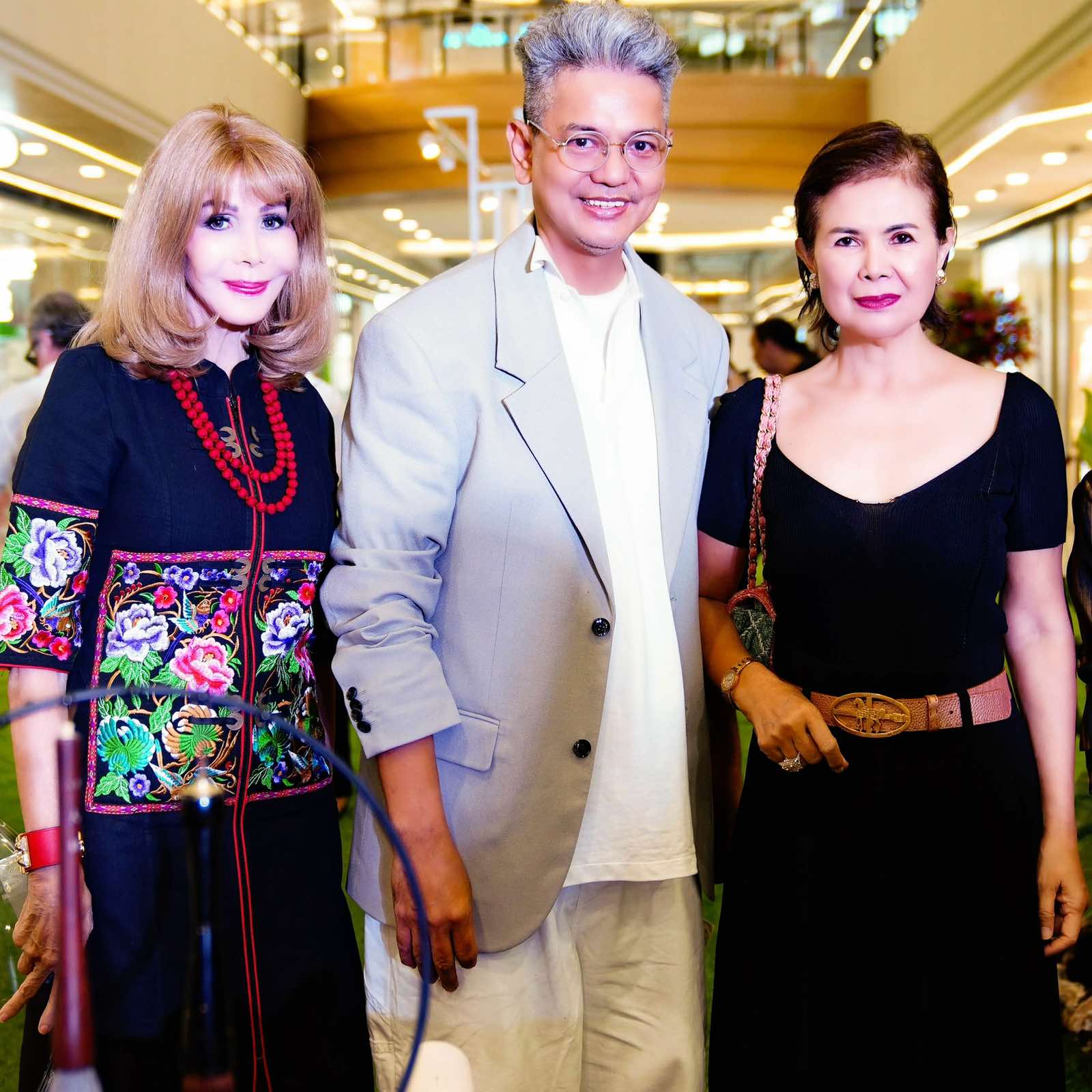
Margie Lhuillier, artist Oj Hofer and Mariquita Yeung
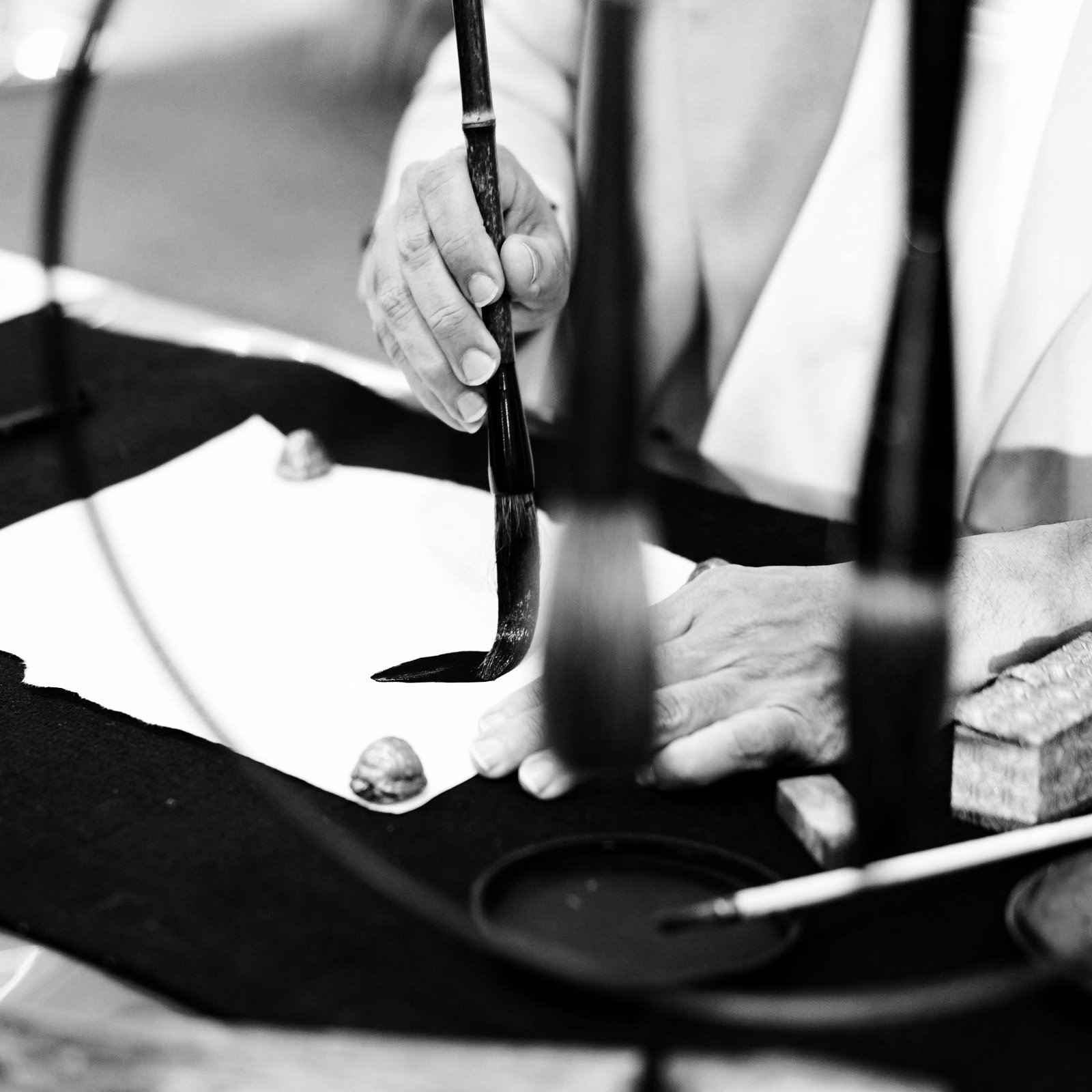
Oj’s live calligraphy demonstrations captivated guests, offering them a unique chance to witness his creative process and receive personalised calligraphy pieces. The afternoon culminated in an exclusive cocktail reception featuring delicious vegetarian delicacies prepared by Nonki Japanese Restaurant.
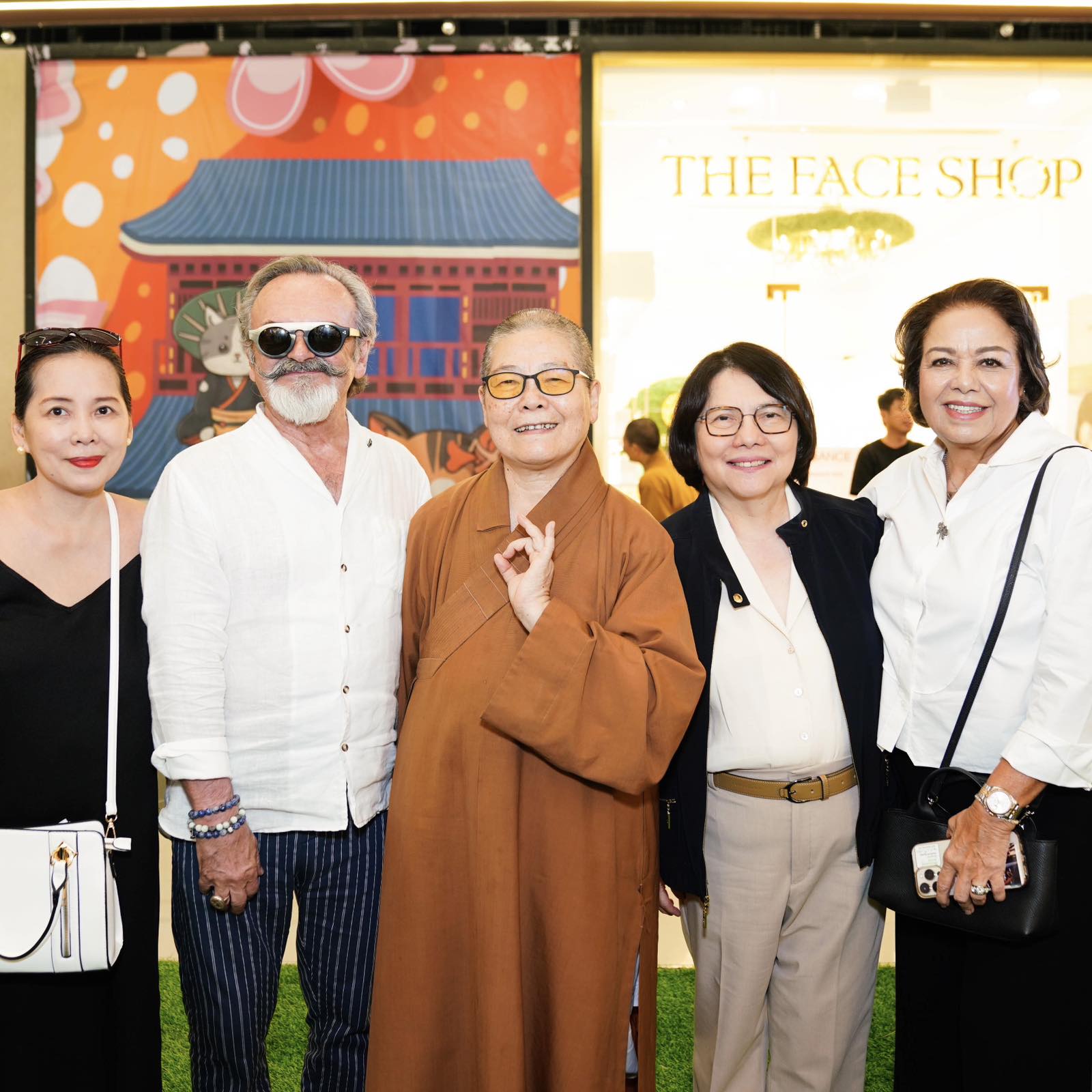
Joy Uy, Francis Dravigny, Venerable Yung Guang, Marissa Fernan, Margette Sarmiento
Among the distinguished guests were Oj’s muse, society maven Marguerite Lhuillier, SM Holdings’ Marissa Fernan, Buddhist advisers Sheila Go and Erwin Choa, and, most importantly, Fo Guang Shan Philippines’ Head Abbess, Venerable Yung Guang, who shared reflections on Master Hsing Yun’s teachings and the role of art in spiritual practice.

Artist Oj Hofer and Paeng Batuigas (Senior Assistant Vice President, Visayas Marketing, SM Supermalls)
The exhibit was a resounding success, showcasing how art can foster reflection, connection, and understanding in a diverse, multicultural society. The event was made possible with the support of SM JMall, Buddha’s Light International Association, and Fo Guang Shan Philippines.
7 Things You Need To Know Before Watching Balangiga: Howling Wilderness
Scenes From the Manila Art Fair 2026

Retrospective: Oj Hofer Celebrates 40 Years of Fashion

Cebu Isn’t Chasing Trends Anymore
Golden Prince Hotel’s Sinulog Royalty Experience

SM Fashion Forum reveals Cebu’s style influencers
5 Filipino Films That Continue the Conversation on Women Empowerment
Noise and Sounds: An Artform

Christmas in Colonial Cebu: A Themed Exhibit by Teresin Mendezona and Eva Gullas for Stylescapes 2019

Artisanal Cebu: Aspiring calligraphy artist Abigail Condrado

Experience authentic Korean Barbeque at Da-In Restaurant

Chaine des Rotisseurs: A Night of Spanish Cuisine
-
 Ogle La La 3.03 months ago
Cebu’s Heritage Is Not a Museum Piece, Darlings
-
 Art Beat2 months ago
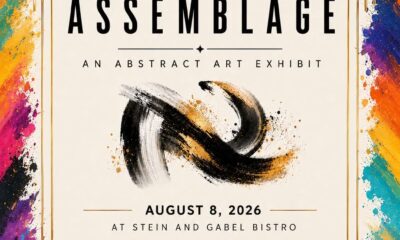
Assemblage: Art Exhibit Blending Themes of Infinity and Renewal
-
 The Scene2 months ago
At the Table: Introducing Flora de Filipinas
-
 Retail2 weeks ago
Cebu Isn’t Chasing Trends Anymore
-
 Art Beat2 weeks ago
Why Does Yayoi Kusama Matter to Cebu?
-
 Fashion4 days ago
Retrospective: Oj Hofer Celebrates 40 Years of Fashion
-
inside3 days ago
Scenes From the Manila Art Fair 2026
-
inside20 hours ago
7 Things You Need To Know Before Watching Balangiga: Howling Wilderness
You must be logged in to post a comment Login