
Arts & Culture
The Most Picturesque French Cafe in Cebu
La Vie Parisienne continues to appropriate wine culture in Cebu—hey, not that we mind!—with a brand new look that’s going to keep us coming back for more drinks (and Instagram photos).
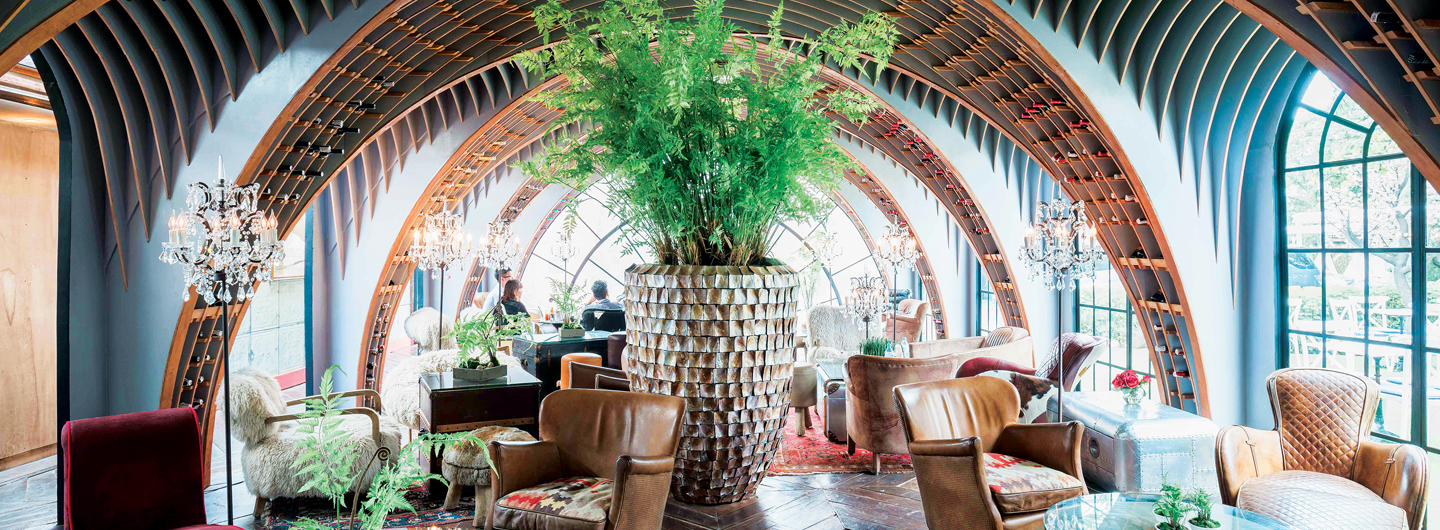

Drinking wine in Cebu has never really been that big of a thing, at least not until the opening of La Vie Parisienne in 2011.
Back in those days, the place was a charming little thing consisting of a repurposed container van with counters of freshly-baked bread, cold cuts, and cheese; and a cellar boasting of quite the impressive selection of wine. Tables scattered outside in the garden shared with Alliance Française de Cebu’s French restaurant La Maison Rose, at night only lit by a few warm lighting fixtures here and there, along with flickering tea candles in charming holders serving as the table’s centerpiece and bolstering the intimate atmosphere.

It’s a long way from the La Vie Parisienne that exploded in popularity. In response to the rapidly growing clientele, floor boards were added for convenience, as well as to make room for more tables. This also saw the addition of the now-iconic bright pink cherry blossom lighting fixtures, which intrigued both locals and visitors alike (you’d be lying if you said you didn’t have a guest in town who wanted to check out La Vie Parisienne). Of course, this only opened the doors further for more people to appreciate wine at such an accessible, unintimidating venue.

You’d think that now they found something that works for them, La Vie Parisienne would keep it at that. As it turns out, this wine cellar, deli and bakery is a stylish space of a gift that keeps on giving. Imagine our surprise when, sometime in December, images of a stunning cathedral-like wine cellar started popping up on the #lavieparisiennecebu Instagram hashtag. We just had to see this for ourselves.
Long gone were the cherry blossom installations—well, some of them anyway (there were still quite a few at the back). In their place was an enclosed industrial structure that seemed to come across as minute yet massive all at once. Inside was a completely different story: Louis Thevenin, Alliance Française’s director, has recreated a European wine cellar cum old hotel in France that narrowly treads the fine line between classic and gothic with his clever use of elements.

New wood panels on the floor were distressed to give them an older look, creating stark contrast with the clear crystals dripping on the chandeliers and the lamps. Chairs—a whimsical selection of loungers, ottomans and everything in between—were made of either brushed steel, leather, or faux fur. The tables were repurposed vintage trunks that Louis divulges were from various antique dealers and furniture shows abroad. Putting everything together was an entire wall of lush greenery—soon to be outfitted with a chimney and a taxidermy of a doe’s head. And that’s only just part of the new expansion. It seems like there’s so much going on, and yet with one glance across the entire thing, everything feels organic.

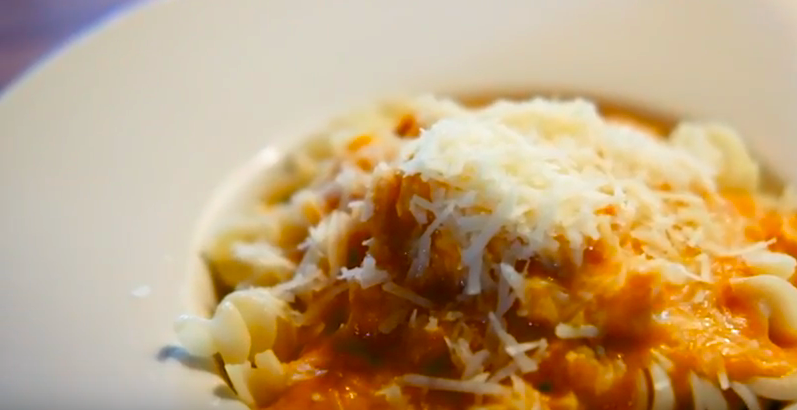
“It’s a premium look, but everything is affordable,” Louis says before turning to a waitress and rattling off a list of dishes—some old, some new—for us to sample that afternoon. For starters, we had Escargots a la Bourgignonne, a bestseller over at La Maison Rose, what with its ridiculously addicting garlic herb butter. The Oozing Puglia Burata in Arbequina Oil with Mango is a must for cheese lovers, while the Rillettes de Porc with Green Salad and Cournichons was satisfyingly filling. Our main protein source that afternoon was the Honey Tandoori French Duck Breast, with a hefty serving of roasted potatoes—the meat deliciously chewy and flavorful.

We washed everything down with a bottle of the raspberry Fruits and Wine by Moncigale—because honestly, who goes to La Vie Parisienne without getting wine? Certainly not us.
371 Gorordo Avenue, Lahug
Facebook: La Vie Parisienne
Instagram: @lavieparisiennecebu
Photography by Oliver Echavarria



Arts & Culture
Kundiman–A Collaboration Between Charles Lahti and Francis Dravigny at the Qube Gallery
by Oj Hofer
“Collaboration is like carbonation for fresh ideas “-Anonymous
Kundiman—drawn from the Filipino tradition of lyrical love songs marked by longing, devotion, and emotional depth—unfolded not merely as an exhibition but as a dialogue between two artists whose practices, though formally distinct, share a common goal: that creation is never singular, never complete, and never entirely one’s own. The word itself carries weight. In the Philippine cultural imagination, kundiman is not passive sentiment but a mode of endurance—a way of loving what one cannot fully possess, of honoring what exceeds one’s grasp—and to name an exhibition after it is to make a claim about the nature of making itself: that art, like the song, is an act of devotion directed toward something larger than the maker’s intention. It is a form that does not declare but lingers; not spectacle, but the quieter and more demanding thing called intimacy.
The collaboration between Charles Lahti and Francis Dravigny operates at what might be called the threshold of language—the place where gesture becomes structure and structure, over time, turns into meaning. Their working relationship is less a merger of two styles than a negotiation between two modes of listening: one drawn to the decisive mark, the other to the patient accumulation of woven form. Lahti’s mark-making is grounded, deliberate, and unambiguous in its commitment to presence; his lines carry the quality of breath, each stroke an event rather than a flourish. Observers familiar with East Asian ink traditions will recognize this sensibility immediately, for in Zen ink practice and Japanese calligraphy, the practitioner does not decide what to draw so much as prepare the conditions under which something may reveal itself—the mark that emerges from this discipline is not decorative but testimonial, evidence of a moment of full attention. Lahti’s work operates within this logic even when the cultural references are Western, and what anchors it is not style but stance: an ethical relation to the act of making that distinguishes genuine presence from the mere performance of spontaneity, a distinction far rarer in contemporary visual art than it ought to be.
“The line is not drawn but revealed—through stillness, breath, and a quality of awareness that the discipline of reduction alone makes possible.”
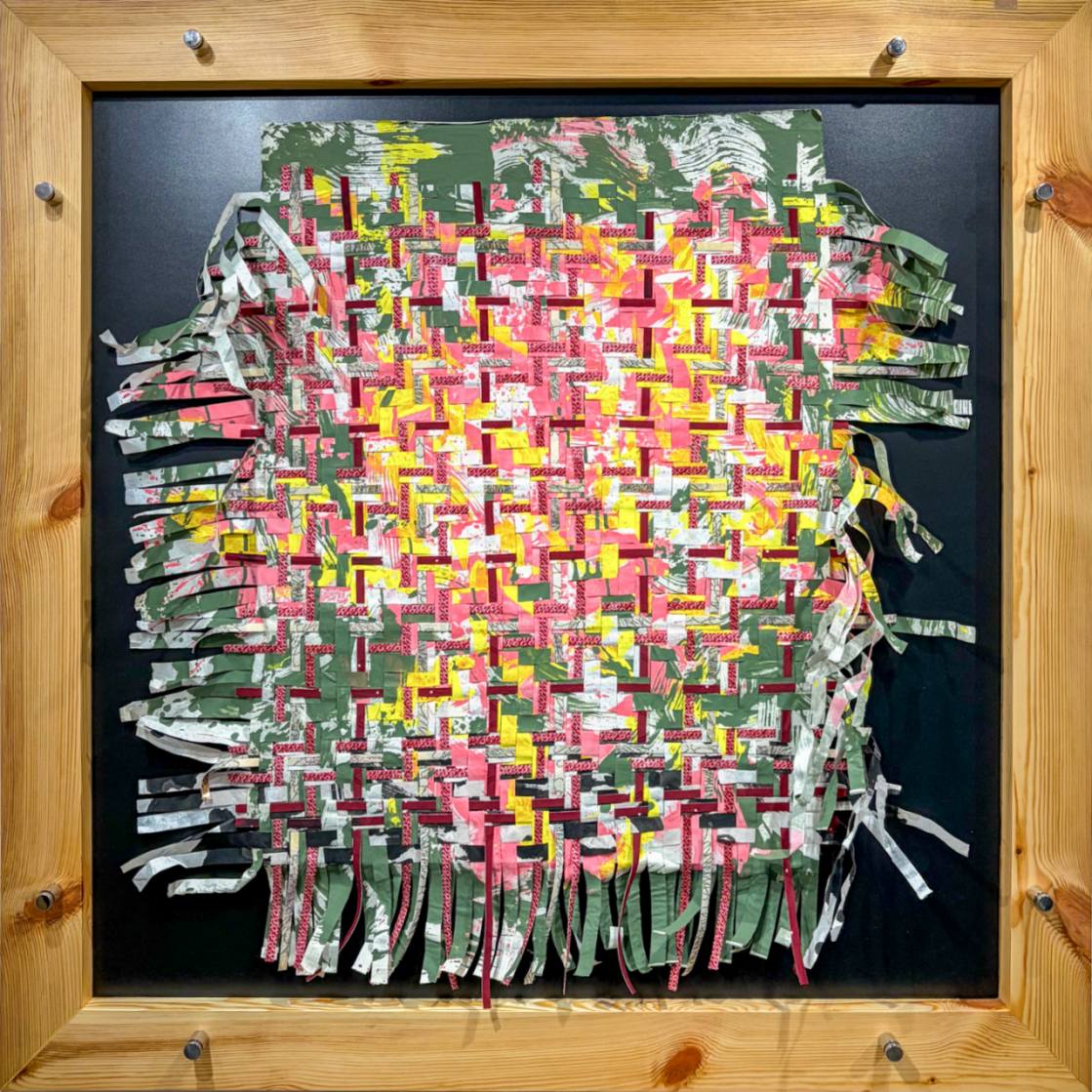
Dravigny’s woven interventions introduce a different, though deeply complementary, temporality. Where Lahti works in the decisive instant, Dravigny works in accumulation—the slow building-up of material over time—and his use of abacá, a fiber indigenous to the Philippine archipelago, is not incidental. Abacá carries its own history: long harvested by hand, traded across colonial networks, woven into ropes and sails, and more recently reclaimed as a medium of cultural expression, so that to bring it into an art context is to activate this history without necessarily declaring it. In Dravigny’s hands, textile transcends its usual function as background or support and becomes instead an act of preservation—a material archive that holds within its weave the gestures of another artist. This concept, which the exhibition implicitly explores, speaks to something the atelier tradition has long understood: that a work of art may pass through multiple bodies and multiple intentions and still emerge with coherence, provided each maker brings to the passage not assertion but responsiveness, the capacity to receive another’s action and carry it forward without erasing it. Dravigny’s woven interventions propose a similar ethic, made visible rather than concealed.
What Kundiman ultimately stages is not the product of collaboration but its conditions: the particular quality of attention required when one artist’s gesture enters the field of another’s practice, and the willingness to wait that such attention demands. The Japanese aesthetic tradition names this interval ma—the generative pause, the charged space in which meaning gathers before it resolves into form—and the exhibition’s restraint is precisely its argument. There is no excess, no spectacle, no rhetorical gesture toward significance, only a sustained attentiveness to process that runs counter to the dominant logic of contemporary exhibition-making, in which legibility is prized and impact must be immediate. Kundiman refuses this, trusting the viewer to do the work of attending, and in this refusal it finds its deepest kinship with Zen aesthetics: the discipline of reduction, the clarity of intention, the respect for what is essential over what is merely present.
“What Kundiman proposes is more radical than most exhibitions dare: that the self, in the act of making, becomes temporarily permeable—open to the gesture, the material logic, the devotion of another.”
The concept of interbeing—rooted in Buddhist philosophy and carrying the understanding that nothing arises independently, that every form is the result of conditions and every maker is in part made by what they make—finds in this exhibition its material proof. What was created here does not belong to one hand alone. It emerges in the space between, where gesture is received, transformed, and returned; where material listens and form responds and meaning unfolds not as conclusion but as continuation. The exhibition ends. The dialogue does not. This is the space between hands: where making becomes meeting, and where interbeing quietly, insistently gives rise to form.
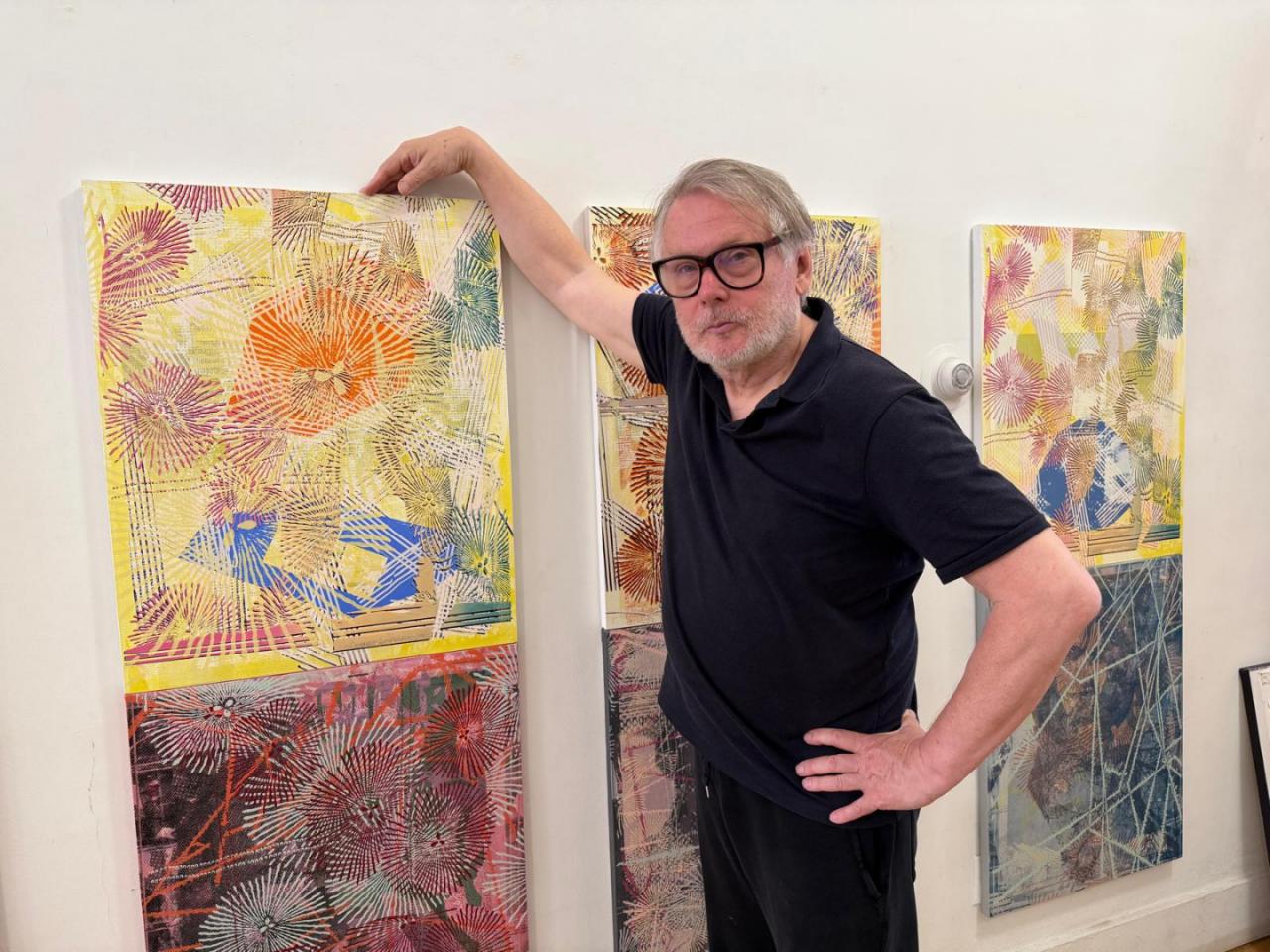
Charles Lahti with his latest works—layering print with bandana textiles to create tactile, hybrid surfaces where image, pattern, and material converge.
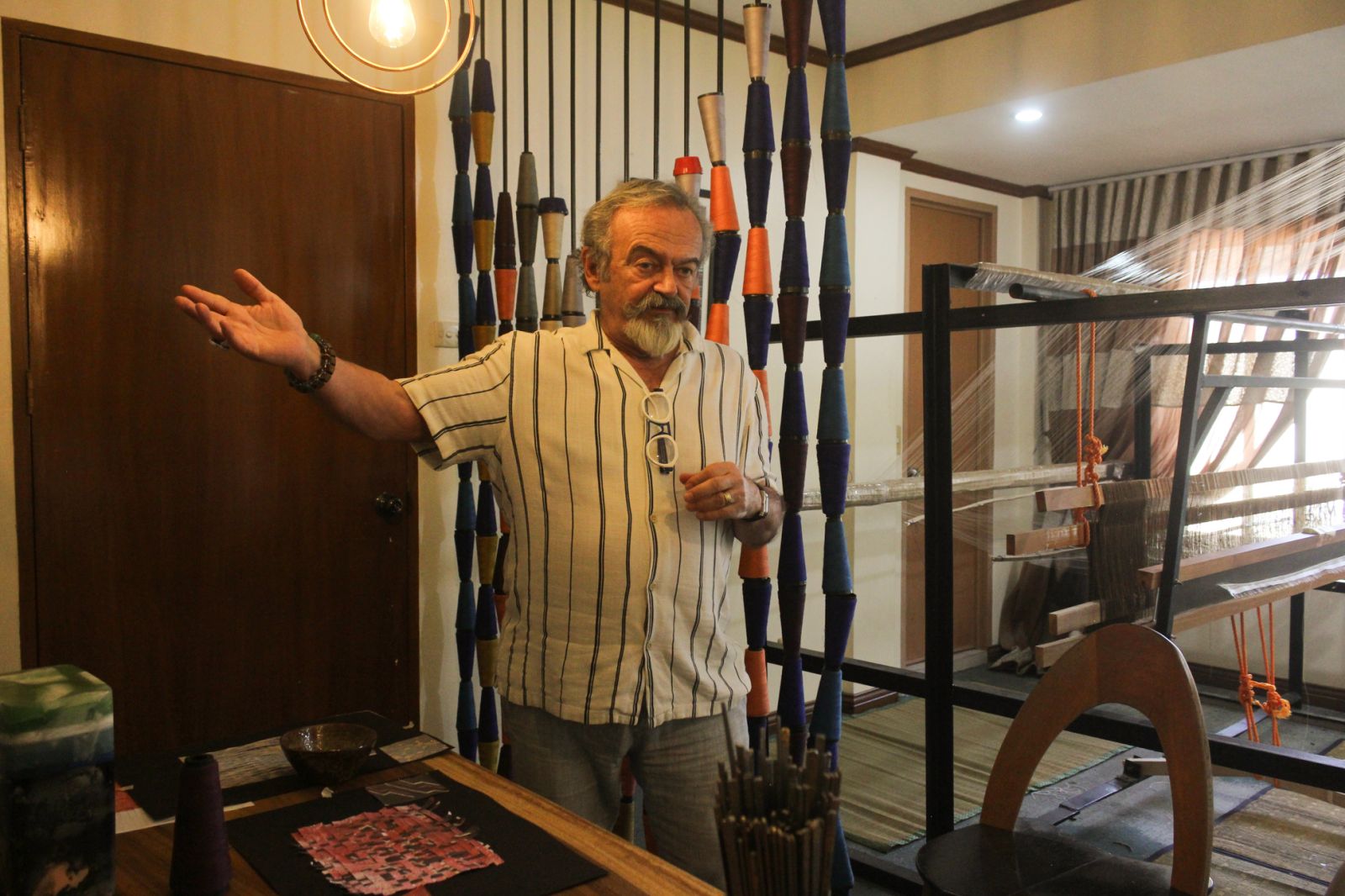
Francis Dravigny in his Cebu studio—transforming abacá and found materials into layered, sculptural weavings.
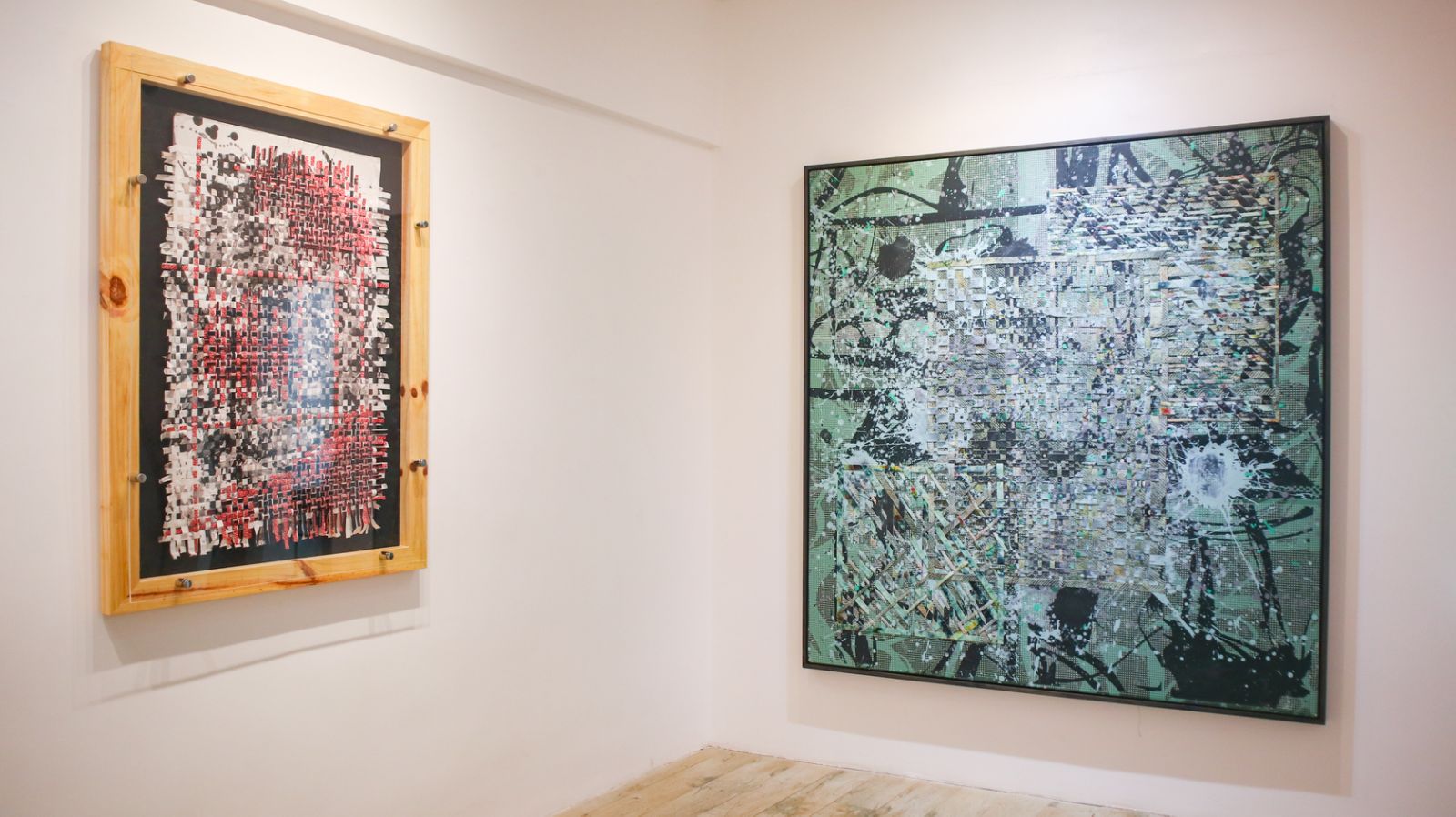
A wall of interbeing—where weave, gesture, and form dissolve into quiet harmony and non-duality.
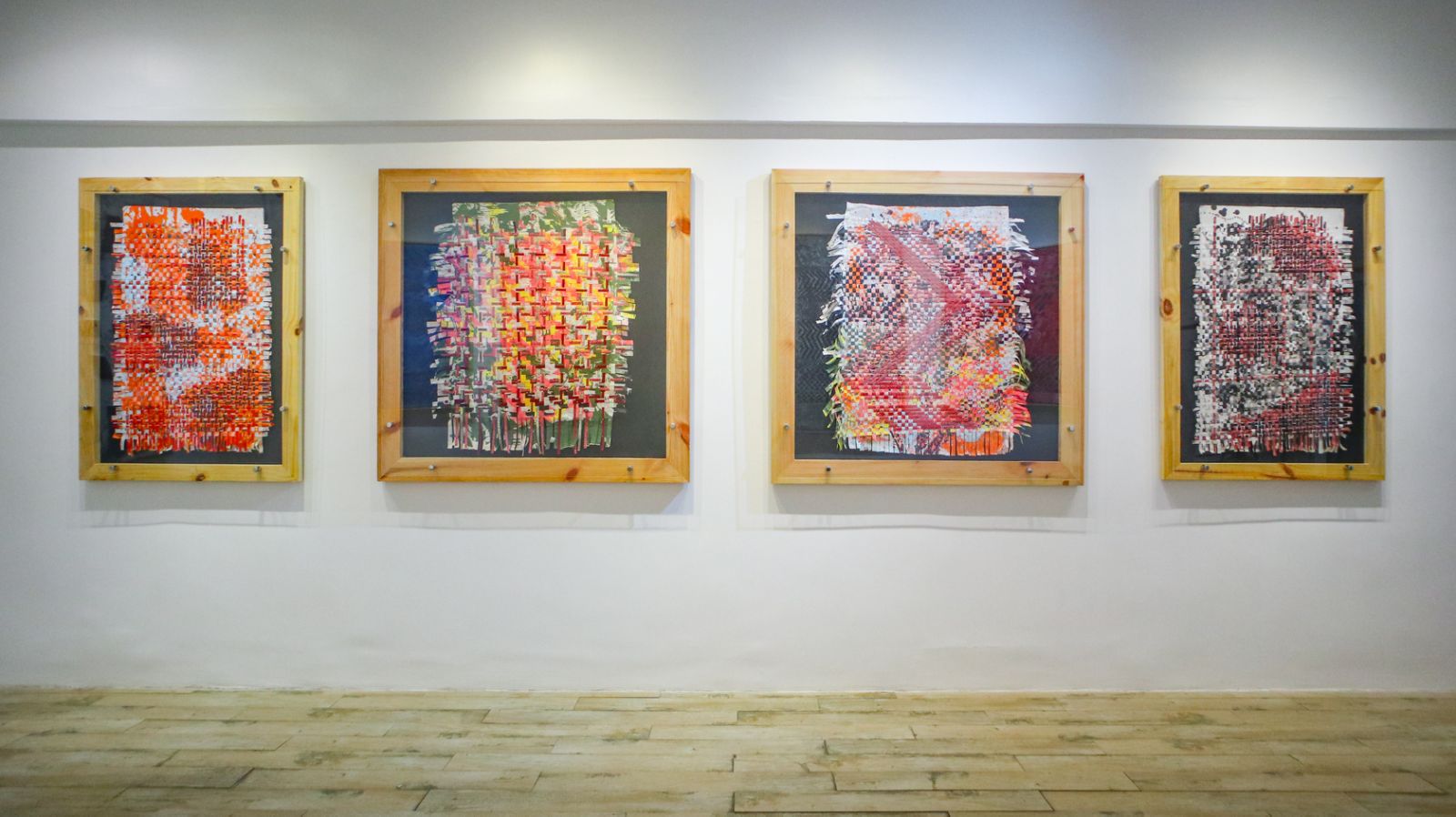
A flat surface transformed into a quiet weave—drawing the eye inward, where structure softens into stillness and resonates with Zen practice.
Arts & Culture
Kundiman After Dark: Traditional 19th Century Filipino Musical Genre Continues to Inspire
by Kingsley Medalla
The Kundiman is a traditional 19th-century Tagalog musical genre that served as a profound source of inspiration for many sophisticated, classically trained artists. The name is derived from the Tagalog phrase “kung hindi man,” literally translating to “if it were not so.” These musical pieces were often performed as poignant love songs characterized by smooth, flowing melodies containing emotional depth. Originating as a serenade in poetic Tagalog lyrics, it features a minor-to-major key progression expressing longing, devotion, patriotism, and a yearning for freedom.
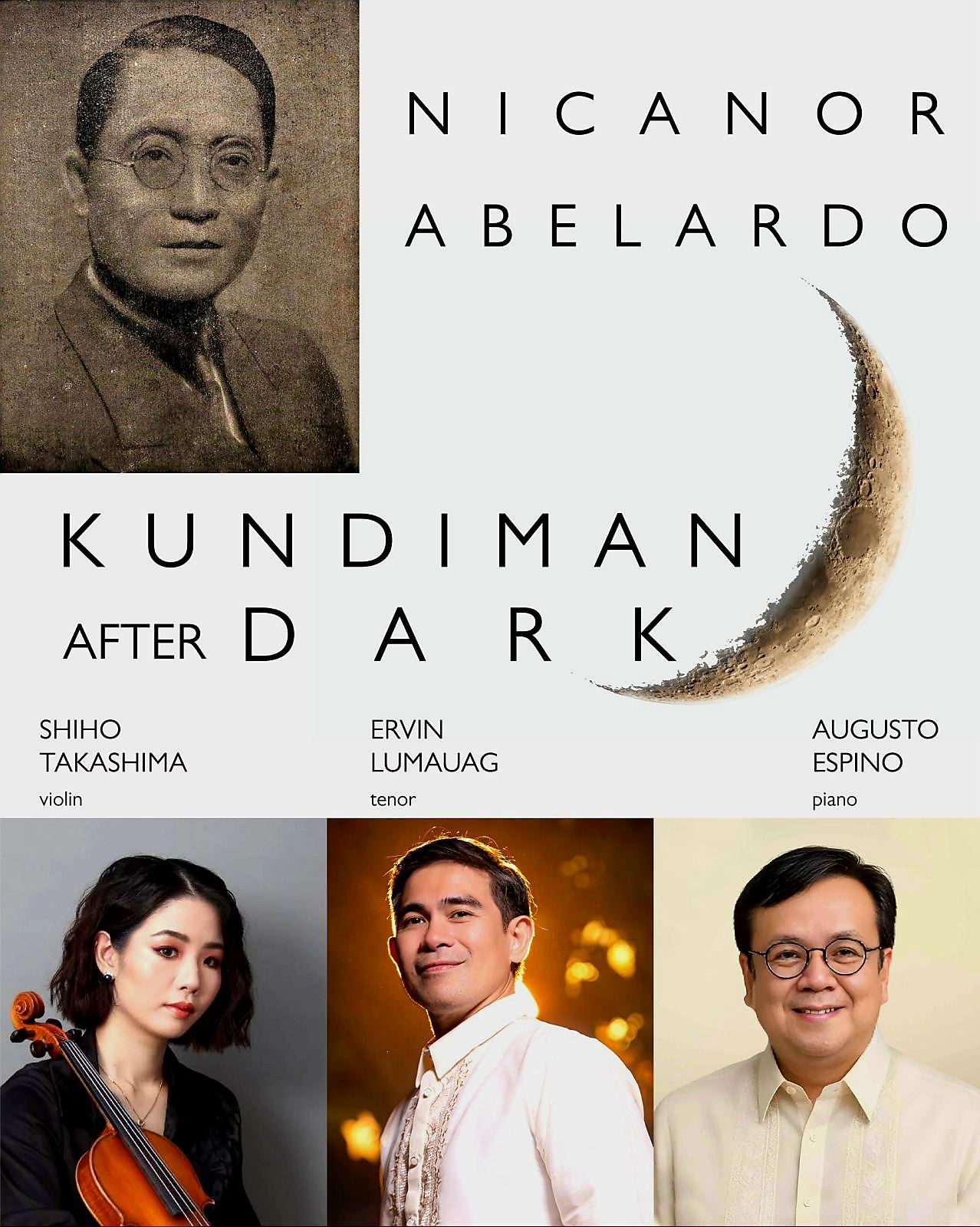
Sine Pop, a boutique theater in a 1948 post-war heritage house located in Cubao, Quezon City, serves as a charming venue for cultural events and intimate performances with a small ensemble. Recently hosting Kundiman After Dark, a recital honoring the legacy of Nicanor Abelardo (1893–1934), a highly esteemed Filipino composer and pianist hailed as the “father of the sonata form in the Philippines” and a master of the art of the Kundiman. Carlson Chan, founder of Sine Pop, clarifies their unique model: the performances are open to the public and are, as such, complimentary, as its primary focus is to promote the performing artists per se.
The performances featured beloved Kundiman classics including Mutya ng Pasig (1926), Naku… Kenkoy (1930), and a personal favorite, Bituing Marikit (1926). These musical pieces were brought to life through the solo acts and live vocals of tenor Erwin Lumauag, Japanese violinist Shiho Takashima (who has since made the Philippines her permanent residence), and the renowned composer, pedagogue, and pianist Augusto Espino.
“Nasaan Ka Irog,” written in 1923, drew inspiration from a romantic tale shared by Nicanor Abelardo’s friend, who went overseas leaving behind his beloved in the Philippines. Years after, this man eventually became a doctor and, upon his return, discovered that the love of his life had been married to someone else. He also learned that the letters he had sent were never delivered to her, as they were kept by the doctor’s family, secretly away from her. A classic case of unrequited love. Kundiman serves as the heart and soul and the pinnacle of Filipino musical artistry.
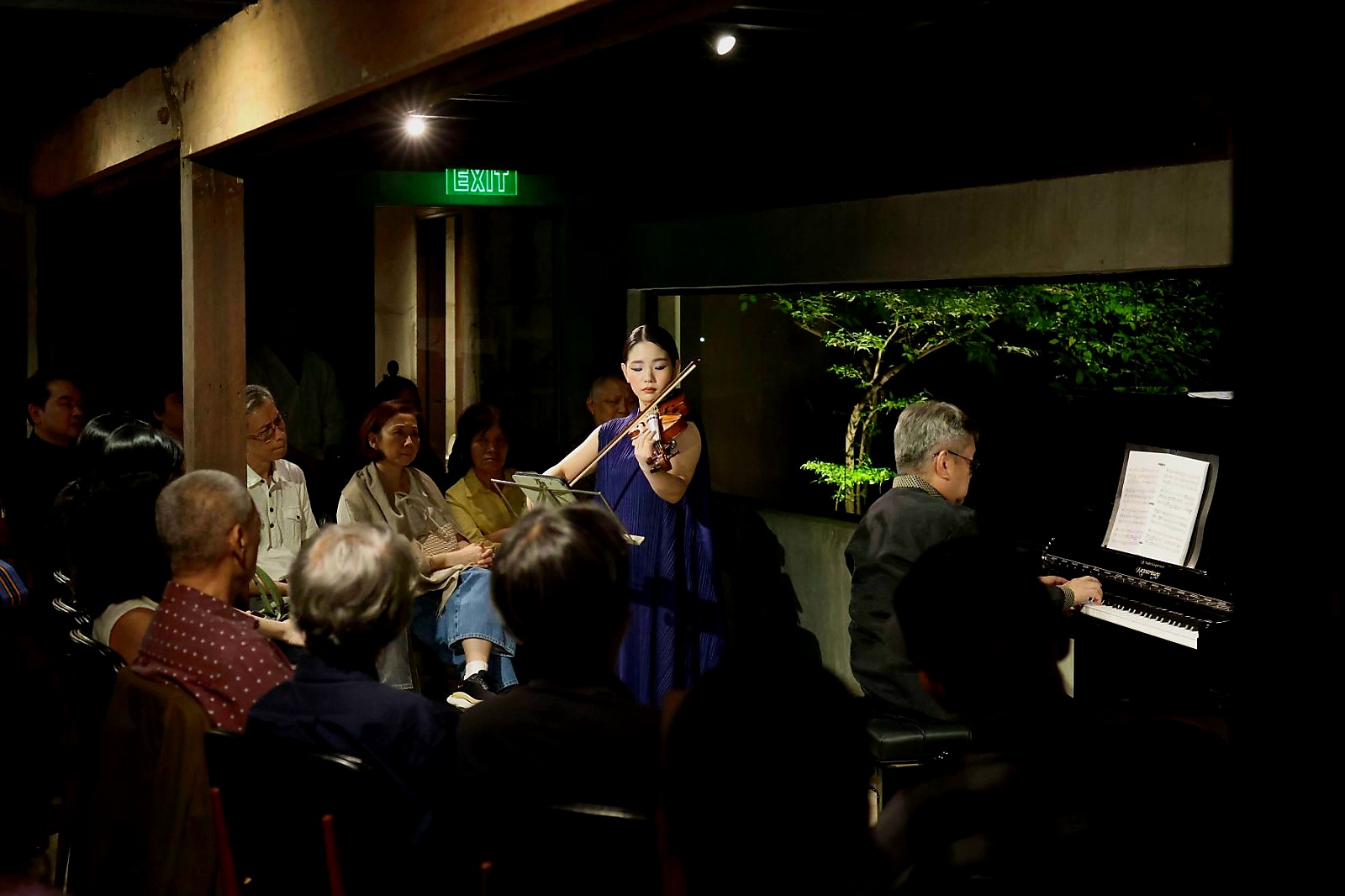
Violinist Shiho Takashima and pianist Augusto Espino
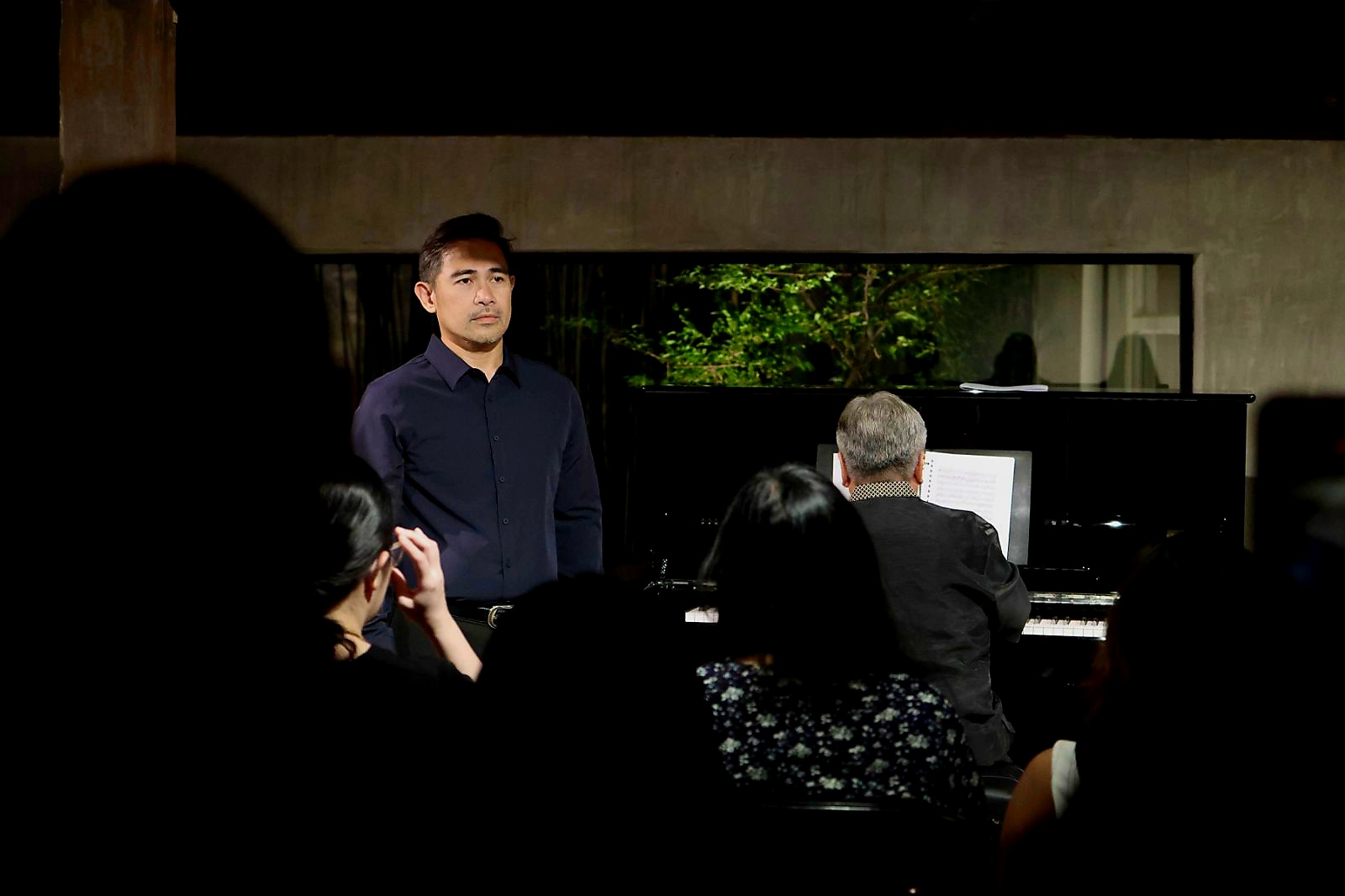
Tenor Erwin Lumauag
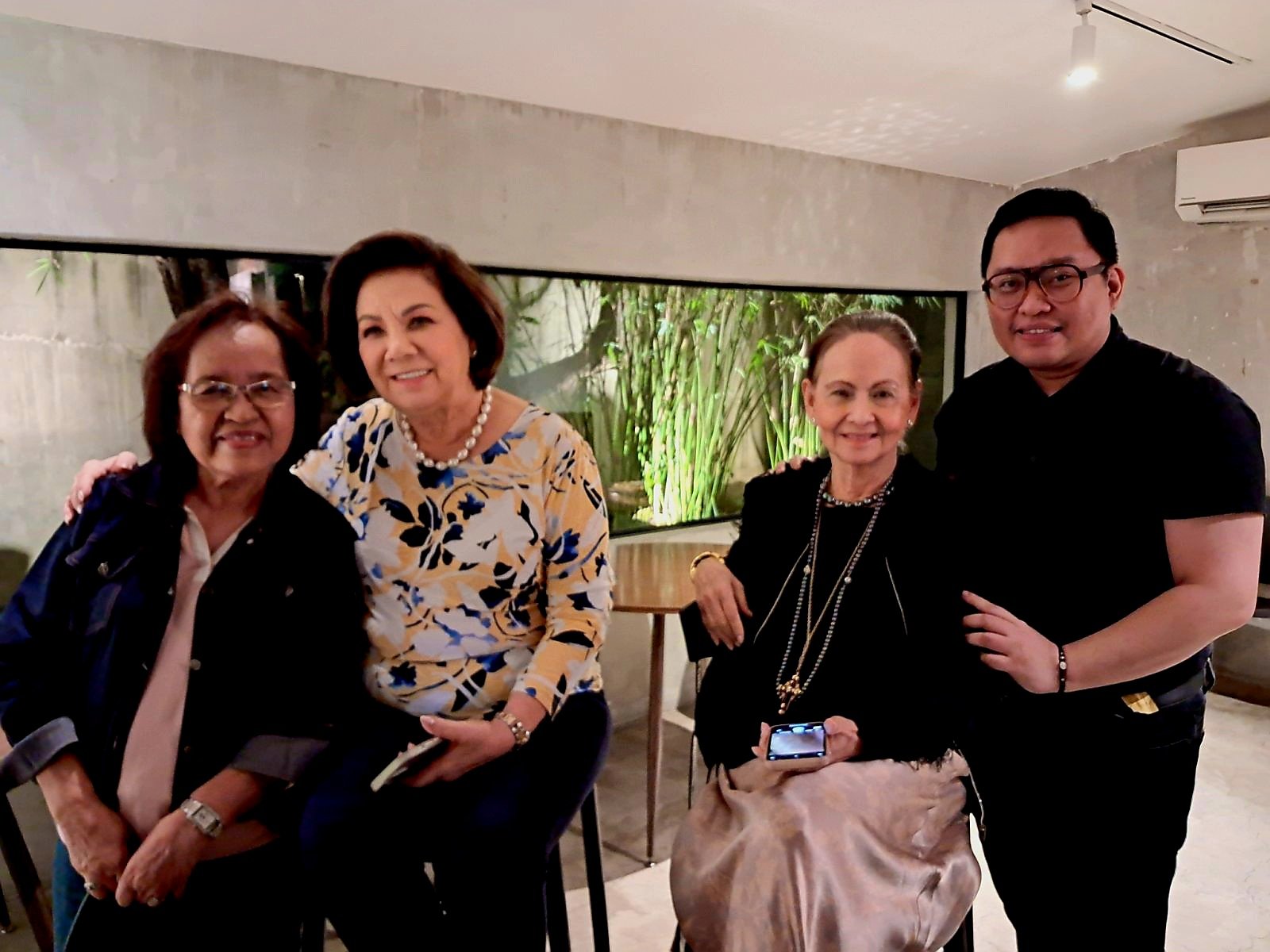
Art patrons; Pacita Agoncillo Sode, Marilou Khan Magsaysay, Patricia Cepeda-Sison and this writer Kingsley Medalle
Arts & Culture
Art Beat: Scenes From the Manila Art Fair 2026
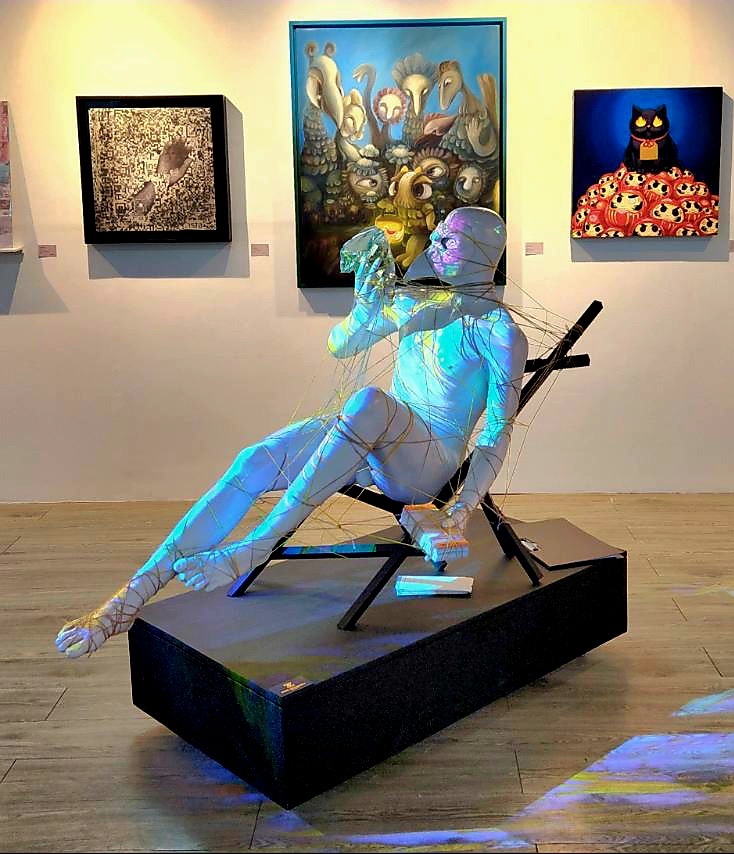
photography by Doro Barandino
“Art is unpredictable and goes in different directions. I have no idea. I would rather live the present moment.” —Bencab, National artist of the Philippines.
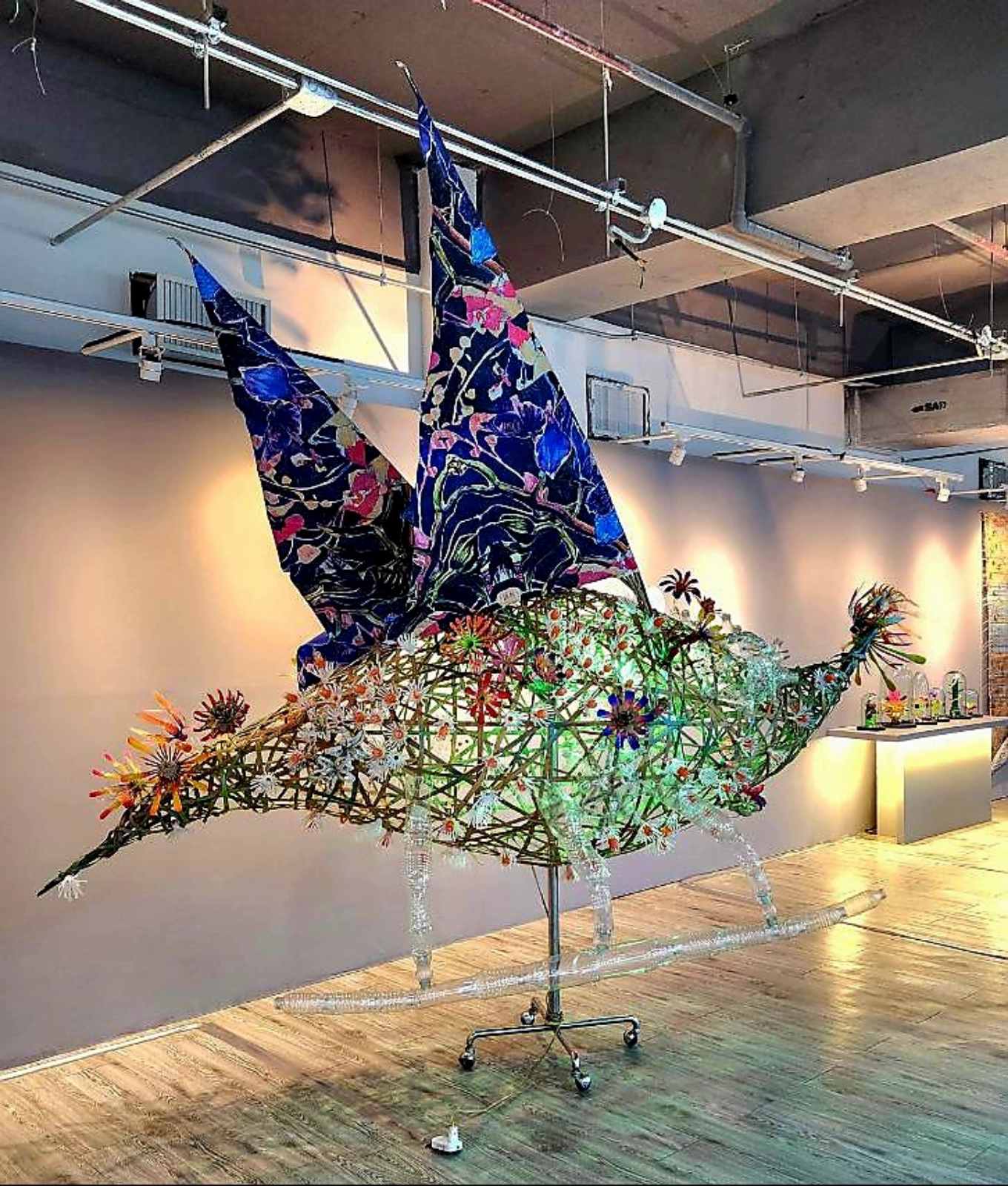
Vinta by Protegeri, collaboration art piece by Leeroy New, Solenn Heuseff and Vito Selma
Q&A with interior decorator and jewellery designer Doro Barandino
Which of the participating art galleries had the most unified and exciting theme?
Leon Gallery had the most amazingly put-together collection. Though the gallery engaged various artists, the overall visual effect felt like one unified theme. Leon Gallery used a sack-like cloth (most likely raw linen) as the background for the booth, and it brought the collection together. It had an old-world feel in a chaotic setting.
Who were the artists that were the most visually engaging?
The works of Carlo Tanseco were definitely my favorite. The artist used an eye chart (Snellen chart) as the background for the image of Dr. Jose Rizal giving us the middle finger—such an “in your face” message. The concept of our national hero as a modern-day provocateur was a wake-up call to everyone. Very subversive and underground material. I was also attracted to the works of Japanese artist Tadashi Kogure; they’re very architectural.
Was the choice of venue and its layout helpful in engaging the whole art vibe?
What I noticed was that the masters like Juan Luna, Fernando Amorsolo, and Fernando Zóbel still attracted the most viewers at the art fair. People are naturally drawn to their masterful strokes and historical significance, or perhaps these artworks are not readily accessible for public viewing. Or maybe those booths that carried the masters’ works were strategically positioned right after the registrar.
The choice of venue at Center One was a good move—it created a total art vibe. Manila Art Fair remains the premier art fair in the country today, showcasing the finest modern and contemporary art while offering curated projects and immersive installations.
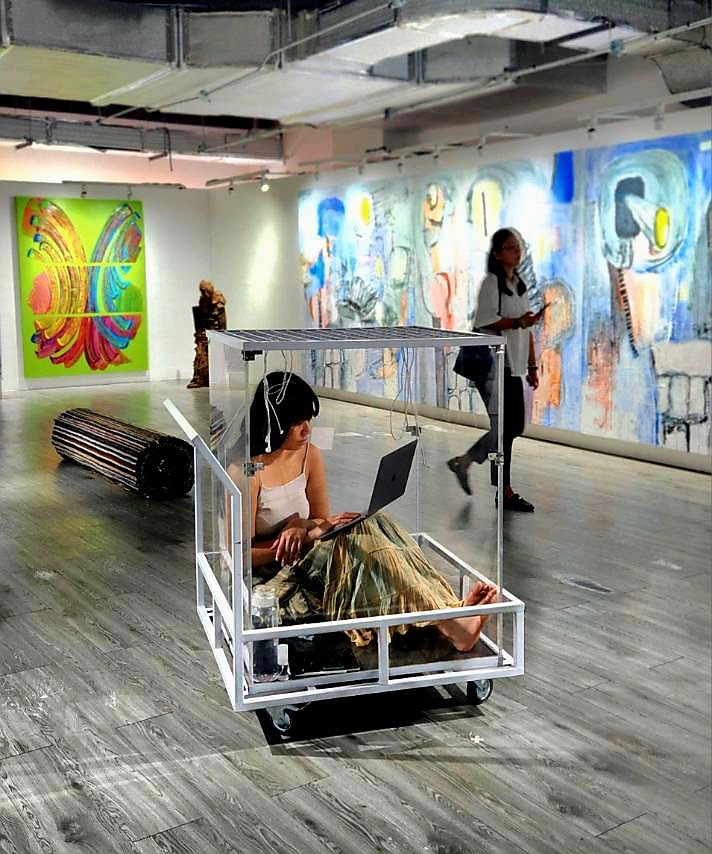
The Standard by Thai artist Pitchapa at the Triangular durational, performance art.
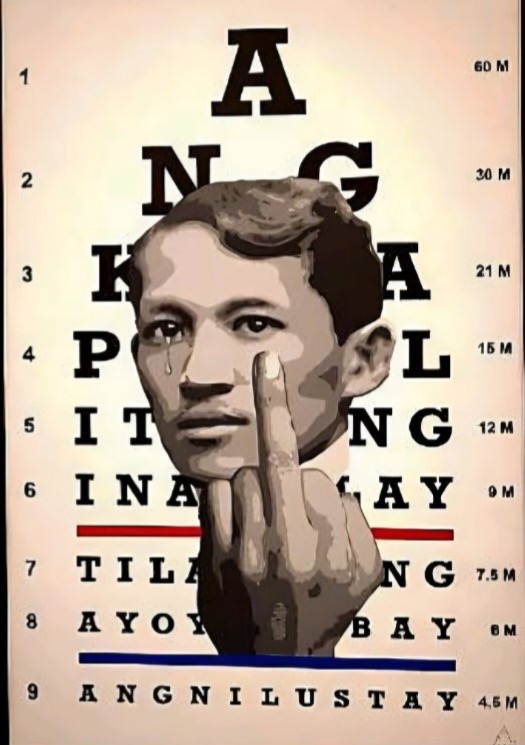
Bato Bato sa Langit by Filipino artist Carlo Tanseco
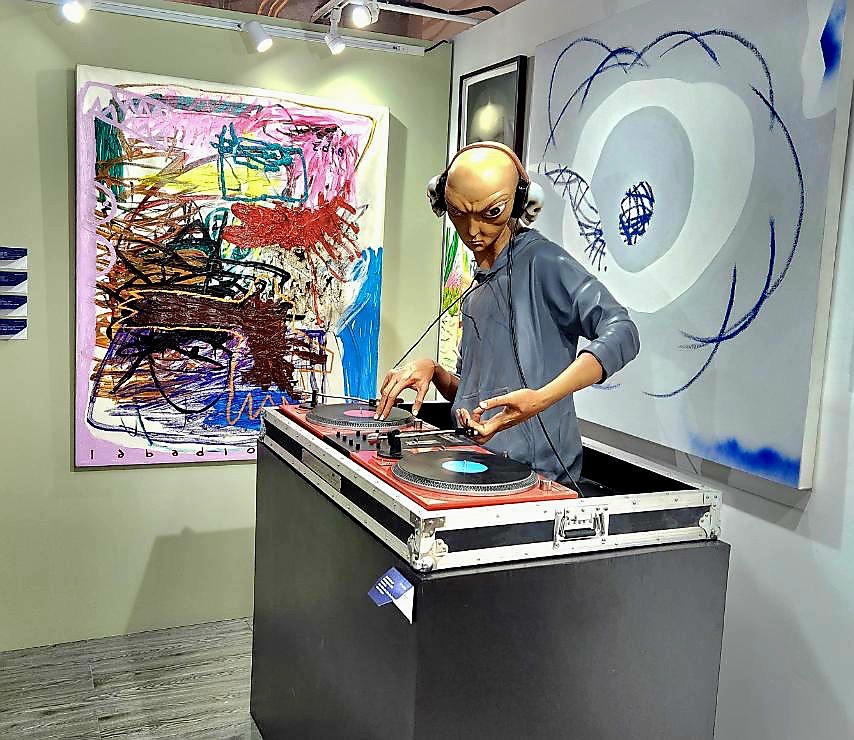
Stocking Proportions Menumpuk Proporsi by Indonesian artist Labadiou Piko
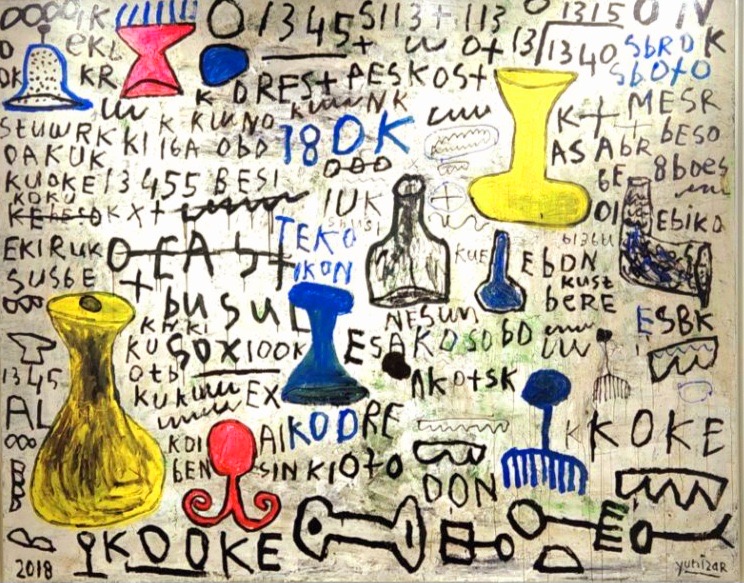
Untitled by Indonesian artist Yunizar
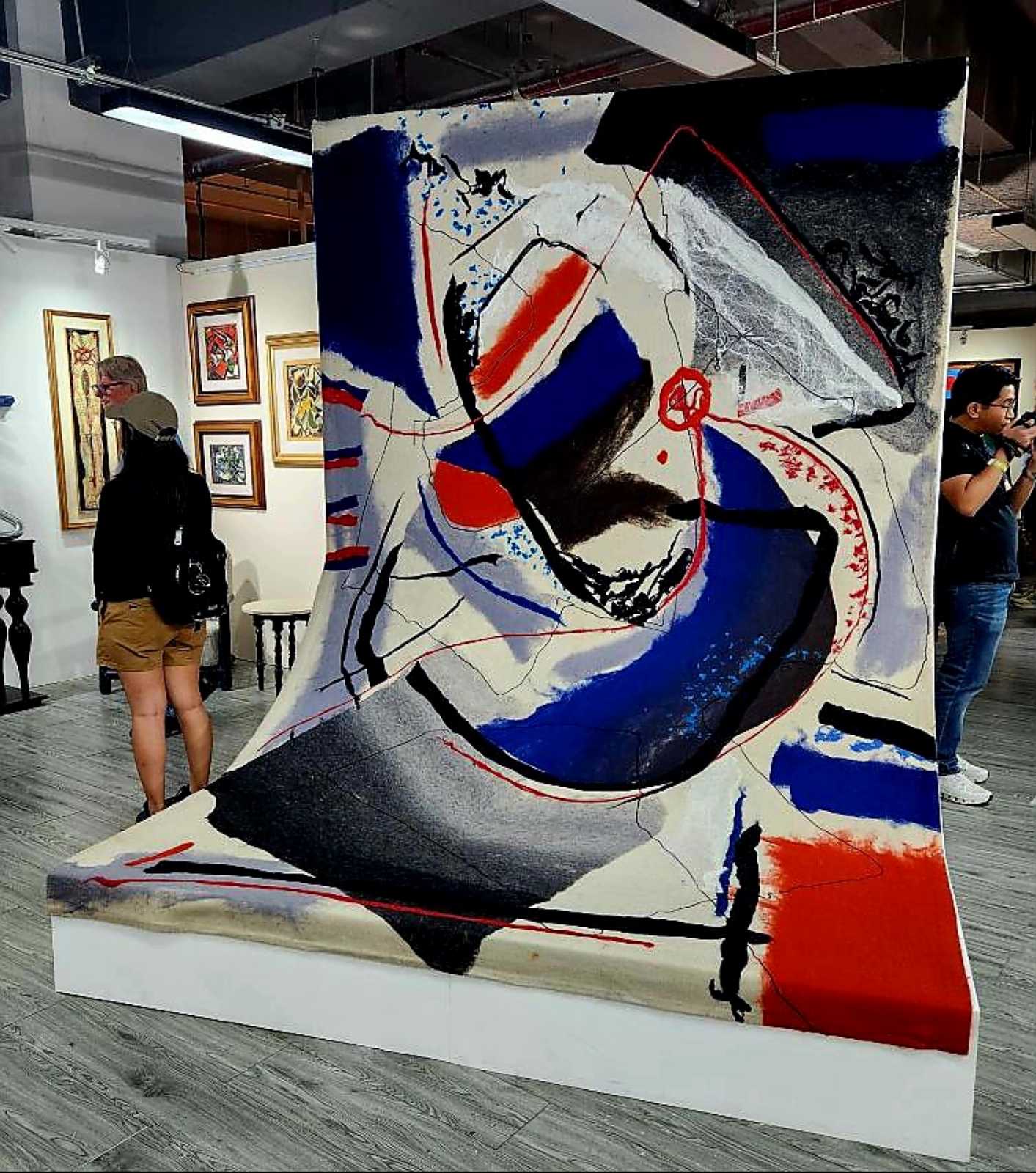
Filipiny, wool tapestry by national artist of the Philippines,Federico Aguilar Alcuaz.

Untitled by German artist Valentin Elias Renner
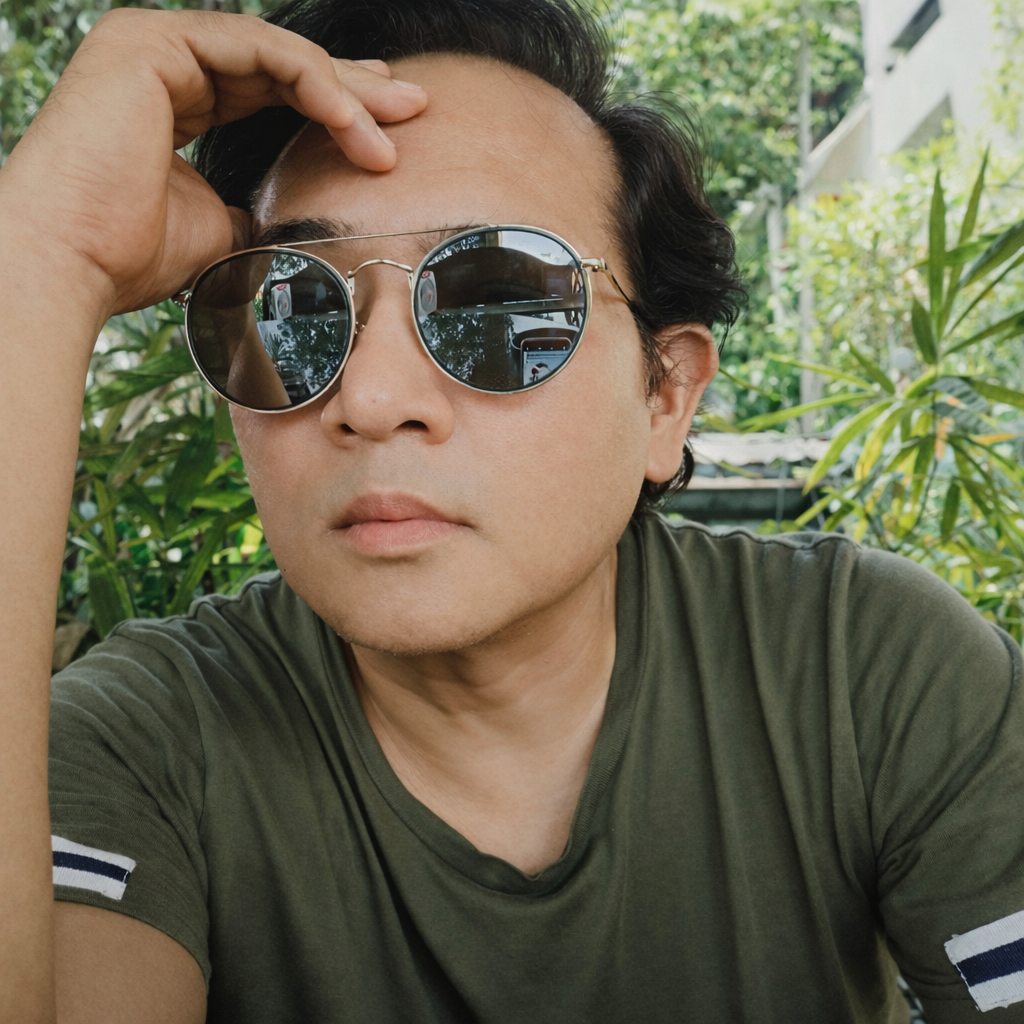
Interior decorator and jewellery designer Doro Barandino is also a regular contributor for zee.ph

Carlo Delantar Wears Numerous Hats But What Defines Him Most is Creating Business as a Social Tool

Kundiman–A Collaboration Between Charles Lahti and Francis Dravigny at the Qube Gallery

The Glass House: Emma Gomez Finds the Right Perspective in Dauis Highlands, Bohol

Cliffhanger: Jun Escario and Simon Miles Live in a Post Modernist House Perched on a Jagged Slope
Golden Prince Hotel’s Sinulog Royalty Experience

SM Fashion Forum reveals Cebu’s style influencers
5 Filipino Films That Continue the Conversation on Women Empowerment
Noise and Sounds: An Artform

Christmas in Colonial Cebu: A Themed Exhibit by Teresin Mendezona and Eva Gullas for Stylescapes 2019

Artisanal Cebu: Aspiring calligraphy artist Abigail Condrado

Experience authentic Korean Barbeque at Da-In Restaurant

Chaine des Rotisseurs: A Night of Spanish Cuisine
-

 Arts & Culture1 month ago
Kundiman After Dark: Traditional 19th Century Filipino Musical Genre Continues to Inspire
-
 Style1 month ago
Cliffhanger: Jun Escario and Simon Miles Live in a Post Modernist House Perched on a Jagged Slope
-

 Prime Target2 months ago
Ludy Vilma Demecillo Makes a Leap From the Corporate World to the Exciting Broadcasting Industry
-
 Style3 weeks ago
The Glass House: Emma Gomez Finds the Right Perspective in Dauis Highlands, Bohol
-
 QuickFx3 months ago
Chromatic Narratives: Wayne Lacson Forte at the Negros Museum
-

 Prime Target2 months ago
Ethan Andre H. Gomez: Turning One’s Body into a Canvas to Create Specific Marketable Tools
-
 Style2 months ago
Femme Fatale: David Downton Celebrates the World’s Most Stylish Women
-
 Arts & Culture3 months ago
Art Beat: Scenes From the Manila Art Fair 2026
You must be logged in to post a comment Login