
Arts & Culture
LOCALES: Where to find Cebu’s most beautiful

Cebu is home to some of the country’s most beautiful women—some of them having been recognized by the public and the Cebu City Tourism Commission through the title of Miss Cebu, which searches for the Queen City’s most dynamic, intelligent and ambitious ladies.
We ask these head turners for their favorite places in Cebu, and what makes them beautiful. Check out what they have to say, and who knows? You might just end up bumping into them one of these days.

Cebu IT Park
 Cebu IT Park’s ambience has been consistent for me, from when I was still a student to now, when I am already working. It still has something for me—good food, place to chill and sip coffee. Plus, IT is Cebu’s future too!
– Diane Muego, Miss Cebu 2014

Basilica Minore del Sto. Nino (Photography by Snapoholic)
 The Basilica Minore del Sto. Niño is a place that defines Cebu as strong and faithful. No one can miss this wonderful church because it is one of the city’s tourist spots.
– Neesha Murjani, Miss Cebu 2013

Kawasan Falls
 Badian is beautiful! Loved the thrills and adrenaline rush canyoneering downstream from Alegria to Kawasan Falls. The lush greens, crystal waters and gorgeous rock formations make me want to do it again.
– Anther Infante, Miss Cebu 2012

Mountain View Nature Park
 Mountain View is a quiet place to enjoy within the city. This place compensates the lack of parks in Cebu and since it’s in the mountain, you get all the fresh air and serenity you need.
– Mia Ali, Miss Cebu 2011

Virgin Island, Bantayan
 Virgin Island in Bantayan. Peaceful, pristine, and clear blue waters are just what us Cebuanos need when we want to get away from the hustle and bustle of the city.
– Steph Señires-Villarica, Miss Cebu 2006
Originally published in Zee Lifestyle Directory, June 2015. Like Zee Lifestyle Directory on Facebook, and grab your free copies here.






Arts & Culture
Kundiman After Dark: Traditional 19th Century Filipino Musical Genre Continues to Inspire
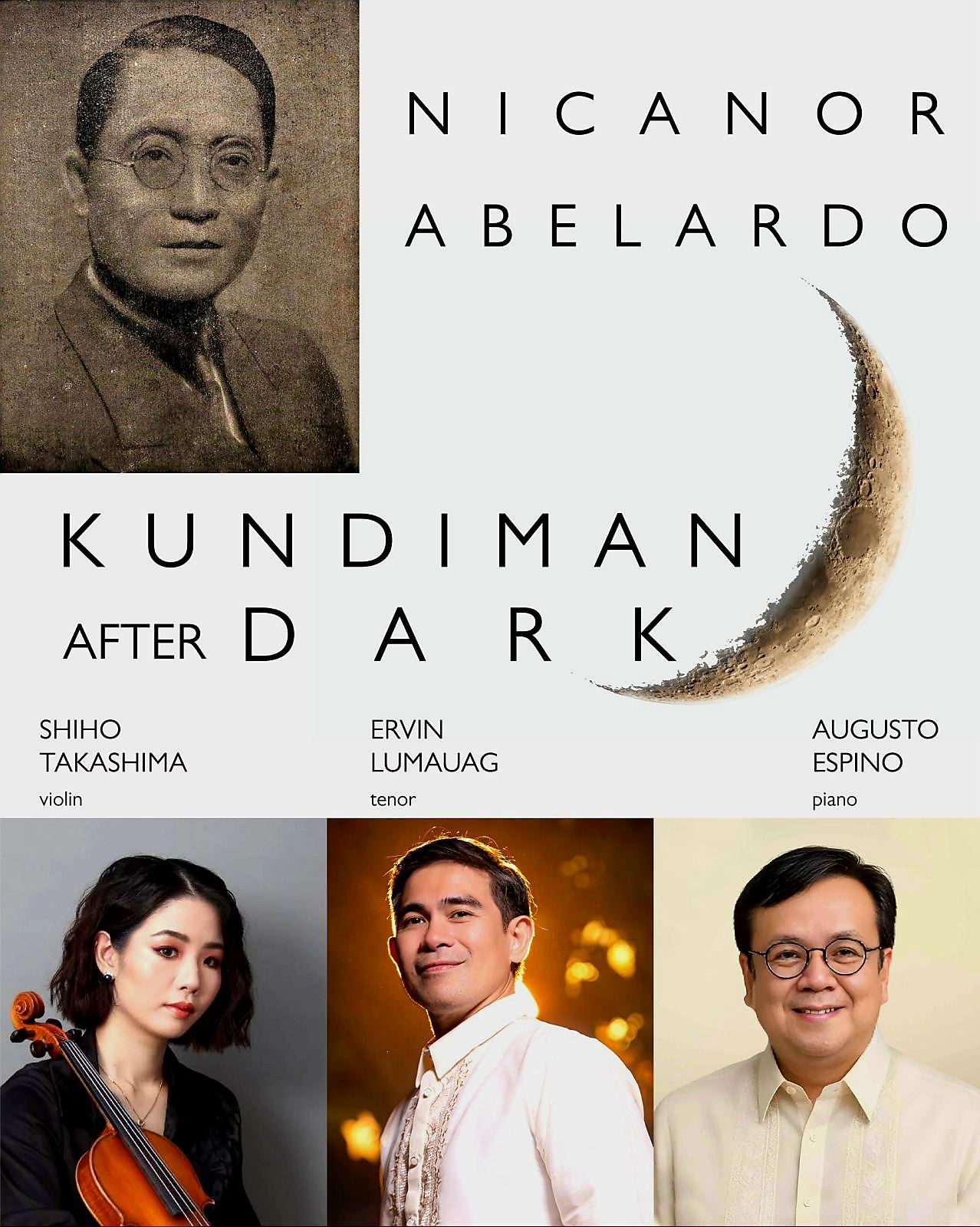
by Kingsley Medalla
The Kundiman is a traditional 19th-century Tagalog musical genre that served as a profound source of inspiration for many sophisticated, classically trained artists. The name is derived from the Tagalog phrase “kung hindi man,” literally translating to “if it were not so.” These musical pieces were often performed as poignant love songs characterized by smooth, flowing melodies containing emotional depth. Originating as a serenade in poetic Tagalog lyrics, it features a minor-to-major key progression expressing longing, devotion, patriotism, and a yearning for freedom.
Sine Pop, a boutique theater in a 1948 post-war heritage house located in Cubao, Quezon City, serves as a charming venue for cultural events and intimate performances with a small ensemble. Recently hosting Kundiman After Dark, a recital honoring the legacy of Nicanor Abelardo (1893–1934), a highly esteemed Filipino composer and pianist hailed as the “father of the sonata form in the Philippines” and a master of the art of the Kundiman. Carlson Chan, founder of Sine Pop, clarifies their unique model: the performances are open to the public and are, as such, complimentary, as its primary focus is to promote the performing artists per se.
The performances featured beloved Kundiman classics including Mutya ng Pasig (1926), Naku… Kenkoy (1930), and a personal favorite, Bituing Marikit (1926). These musical pieces were brought to life through the solo acts and live vocals of tenor Erwin Lumauag, Japanese violinist Shiho Takashima (who has since made the Philippines her permanent residence), and the renowned composer, pedagogue, and pianist Augusto Espino.
“Nasaan Ka Irog,” written in 1923, drew inspiration from a romantic tale shared by Nicanor Abelardo’s friend, who went overseas leaving behind his beloved in the Philippines. Years after, this man eventually became a doctor and, upon his return, discovered that the love of his life had been married to someone else. He also learned that the letters he had sent were never delivered to her, as they were kept by the doctor’s family, secretly away from her. A classic case of unrequited love. Kundiman serves as the heart and soul and the pinnacle of Filipino musical artistry.
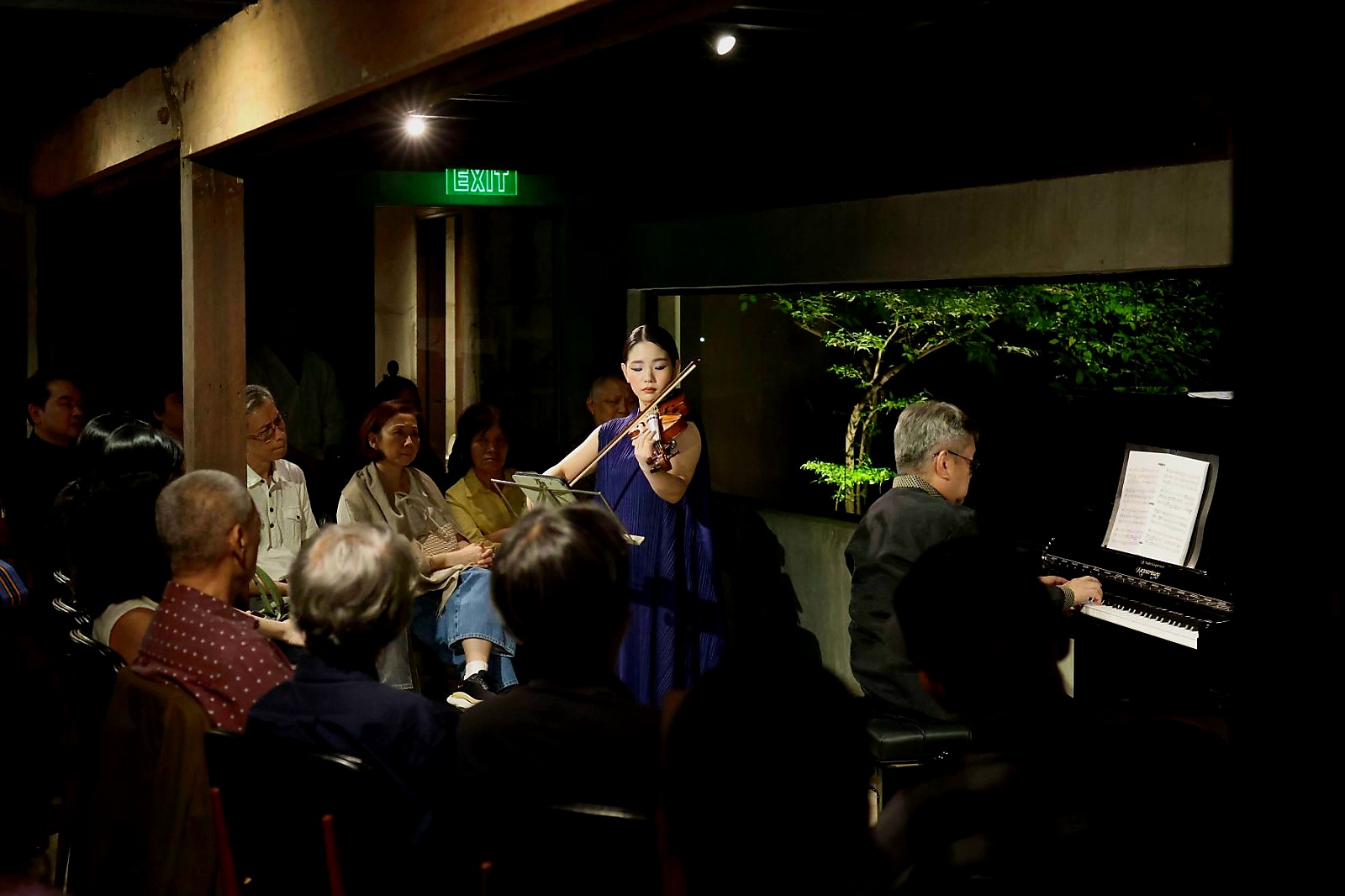
Violinist Shiho Takashima and pianist Augusto Espino
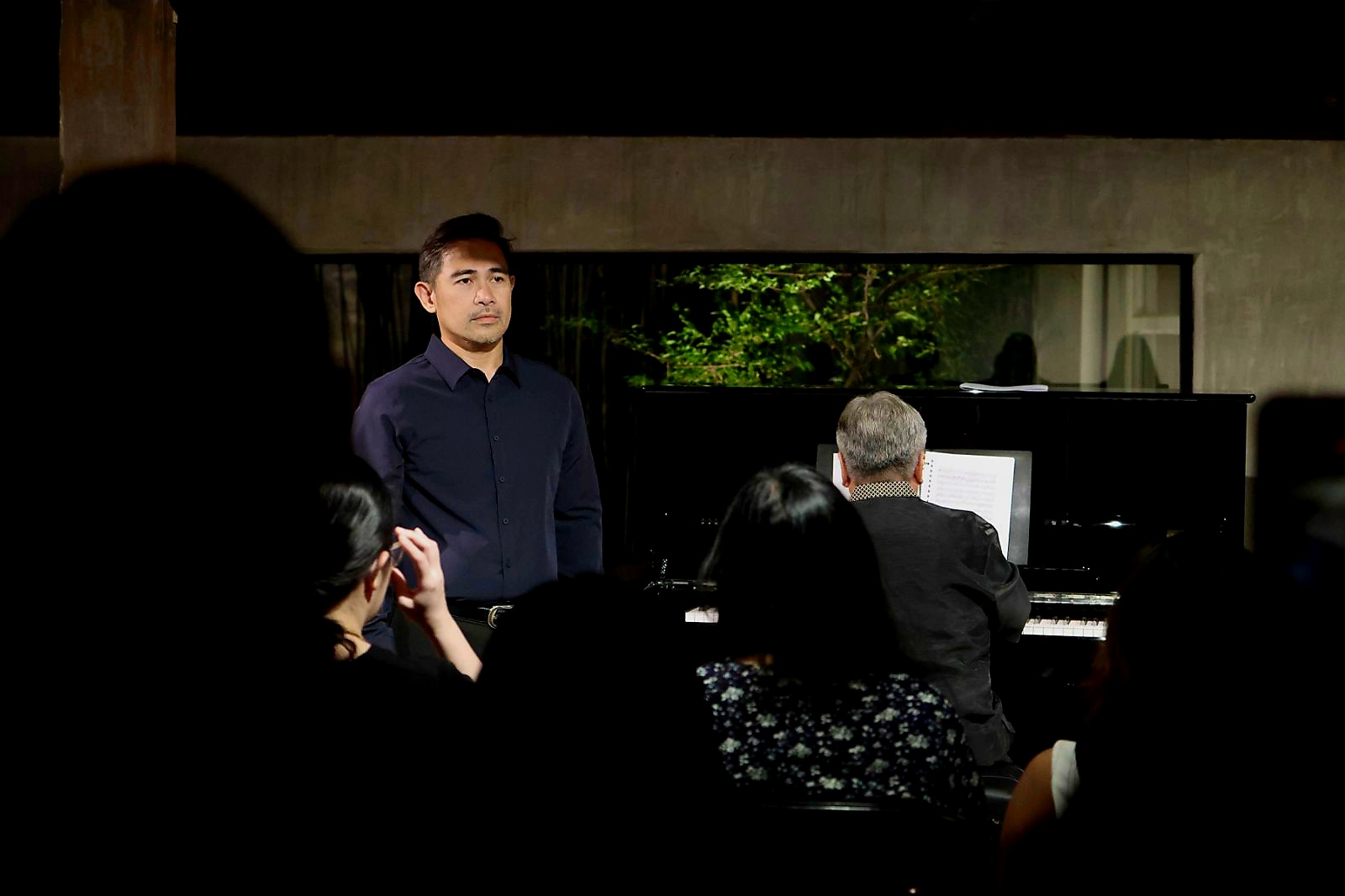
Tenor Erwin Lumauag
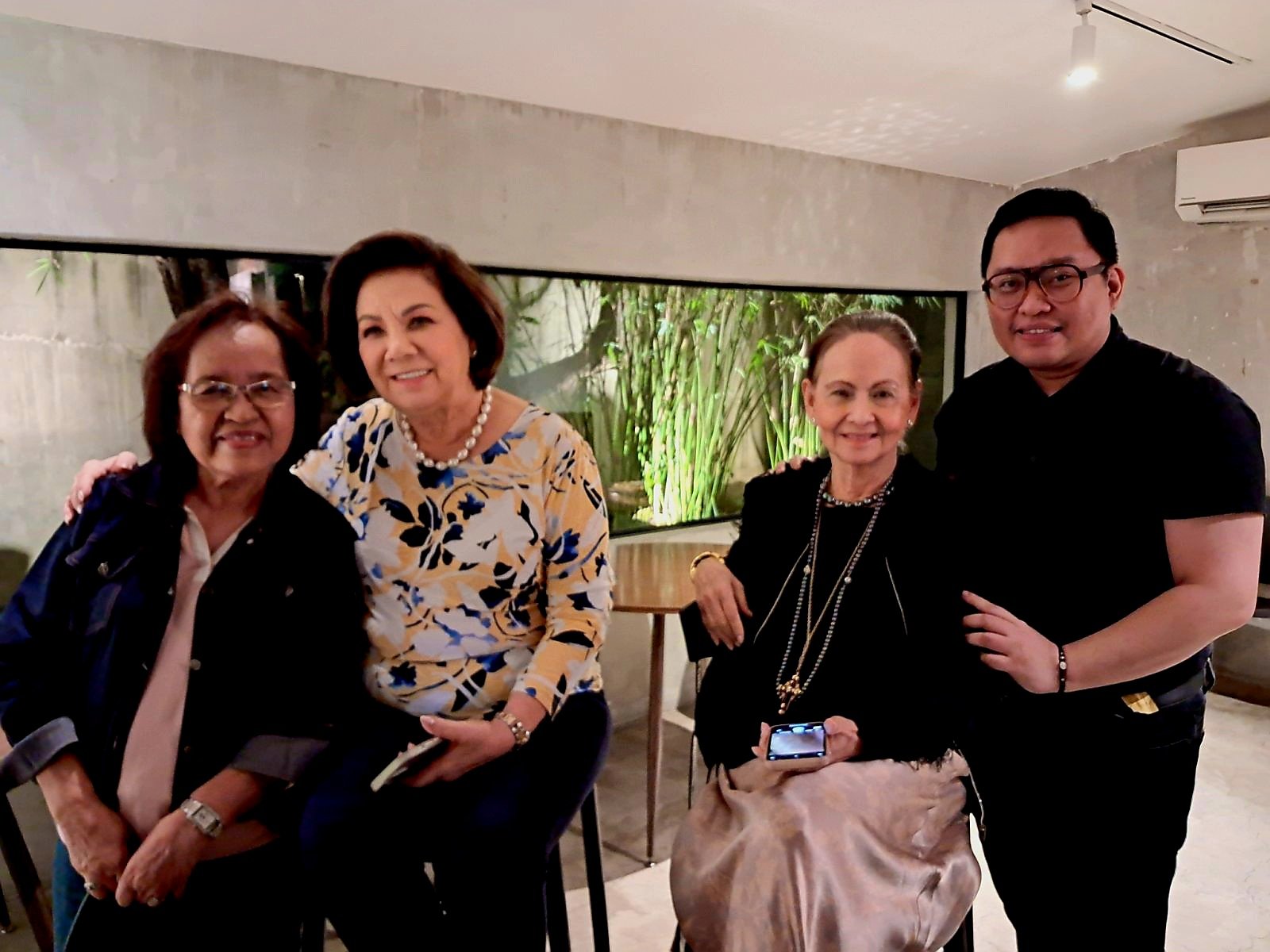
Art patrons; Pacita Agoncillo Sode, Marilou Khan Magsaysay, Patricia Cepeda-Sison and this writer Kingsley Medalle
Arts & Culture
Art Beat: Scenes From the Manila Art Fair 2026
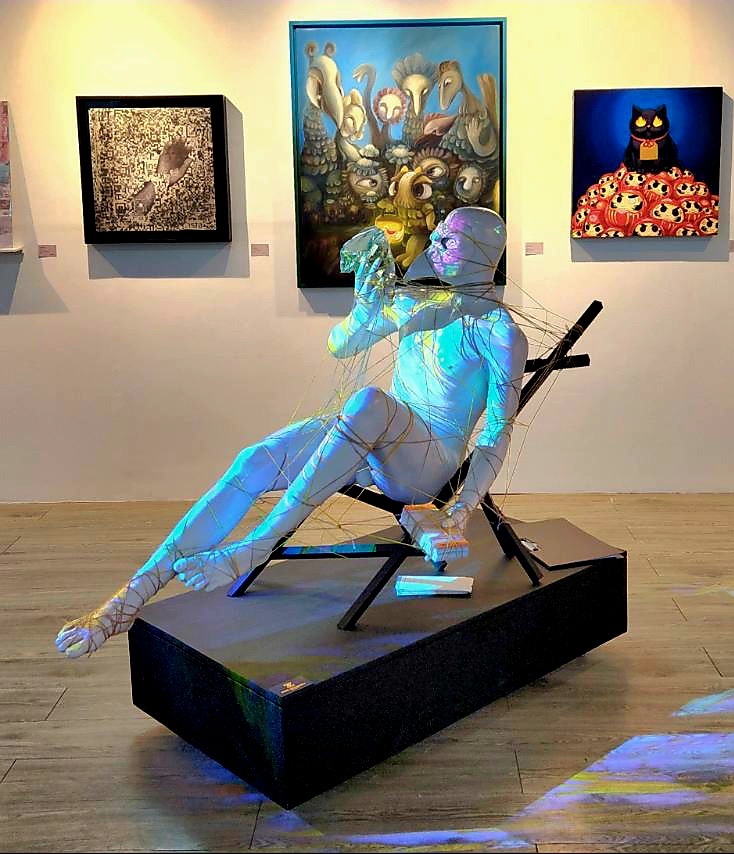
photography by Doro Barandino
“Art is unpredictable and goes in different directions. I have no idea. I would rather live the present moment.” —Bencab, National artist of the Philippines.
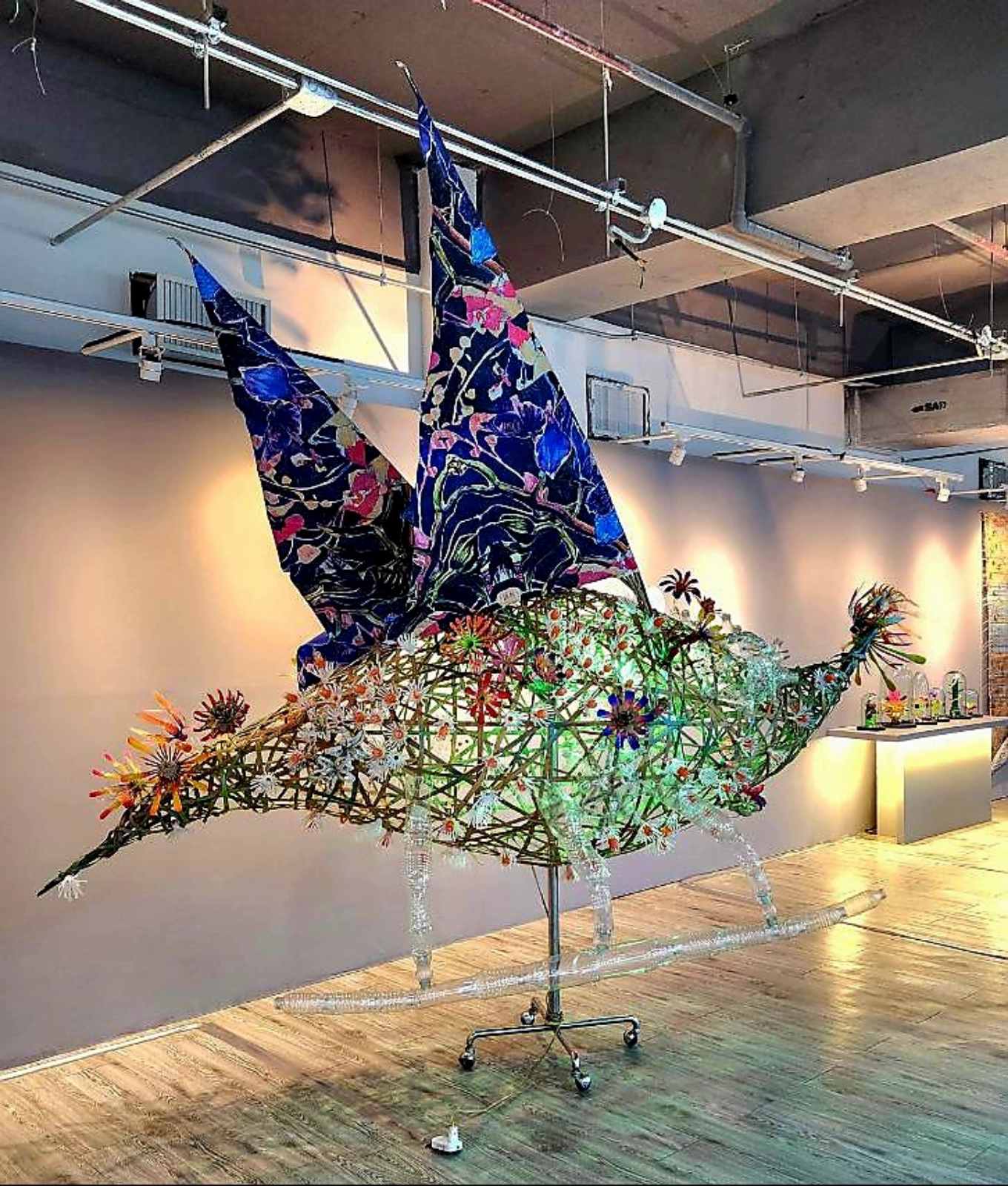
Vinta by Protegeri, collaboration art piece by Leeroy New, Solenn Heuseff and Vito Selma
Q&A with interior decorator and jewellery designer Doro Barandino
Which of the participating art galleries had the most unified and exciting theme?
Leon Gallery had the most amazingly put-together collection. Though the gallery engaged various artists, the overall visual effect felt like one unified theme. Leon Gallery used a sack-like cloth (most likely raw linen) as the background for the booth, and it brought the collection together. It had an old-world feel in a chaotic setting.
Who were the artists that were the most visually engaging?
The works of Carlo Tanseco were definitely my favorite. The artist used an eye chart (Snellen chart) as the background for the image of Dr. Jose Rizal giving us the middle finger—such an “in your face” message. The concept of our national hero as a modern-day provocateur was a wake-up call to everyone. Very subversive and underground material. I was also attracted to the works of Japanese artist Tadashi Kogure; they’re very architectural.
Was the choice of venue and its layout helpful in engaging the whole art vibe?
What I noticed was that the masters like Juan Luna, Fernando Amorsolo, and Fernando Zóbel still attracted the most viewers at the art fair. People are naturally drawn to their masterful strokes and historical significance, or perhaps these artworks are not readily accessible for public viewing. Or maybe those booths that carried the masters’ works were strategically positioned right after the registrar.
The choice of venue at Center One was a good move—it created a total art vibe. Manila Art Fair remains the premier art fair in the country today, showcasing the finest modern and contemporary art while offering curated projects and immersive installations.
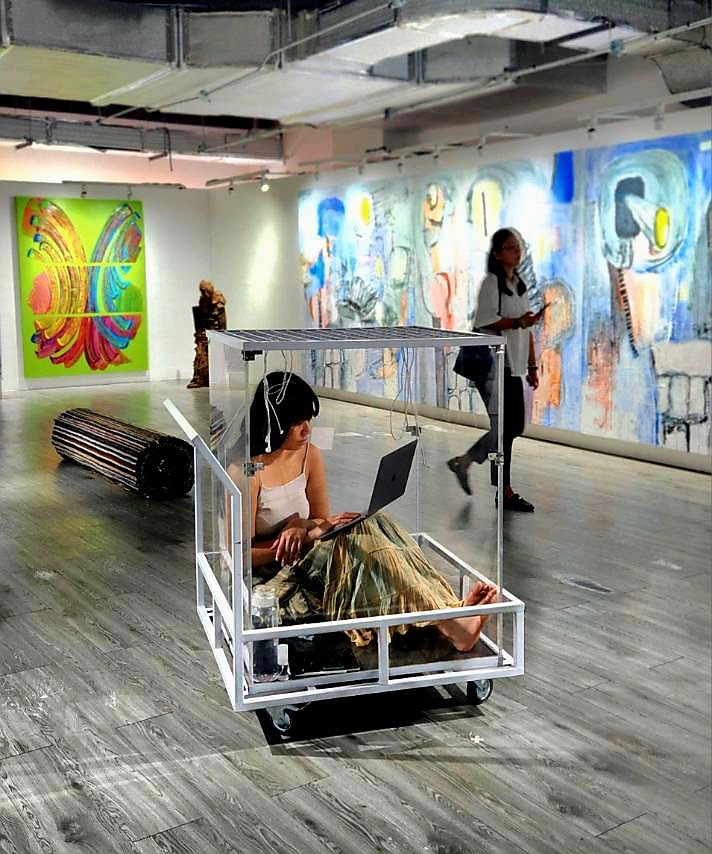
The Standard by Thai artist Pitchapa at the Triangular durational, performance art.
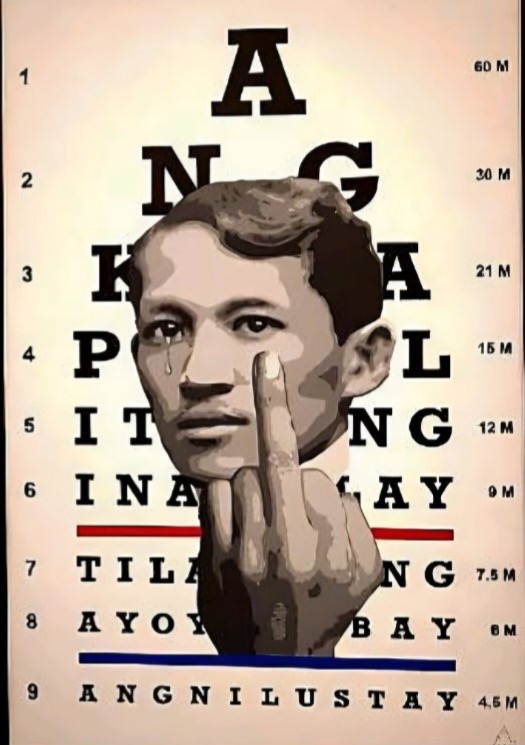
Bato Bato sa Langit by Filipino artist Carlo Tanseco
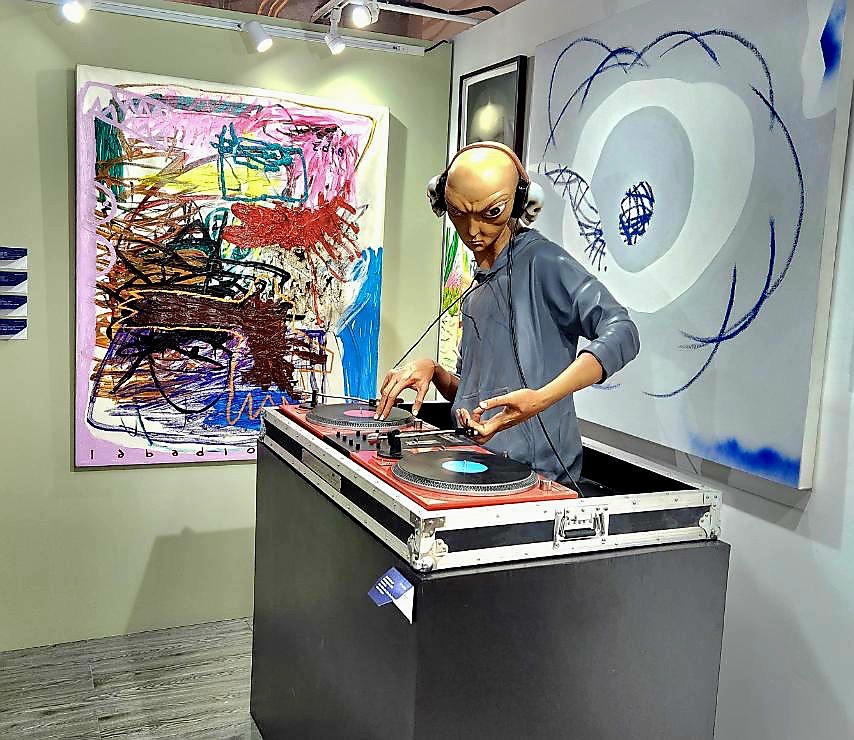
Stocking Proportions Menumpuk Proporsi by Indonesian artist Labadiou Piko
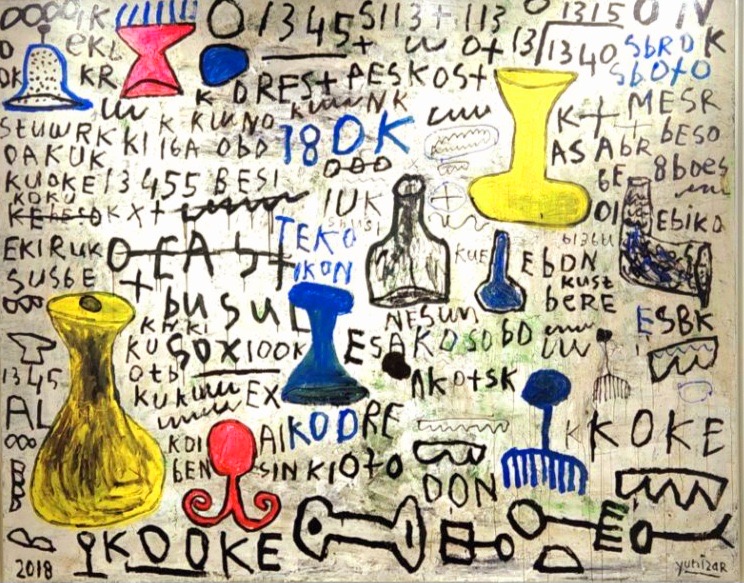
Untitled by Indonesian artist Yunizar
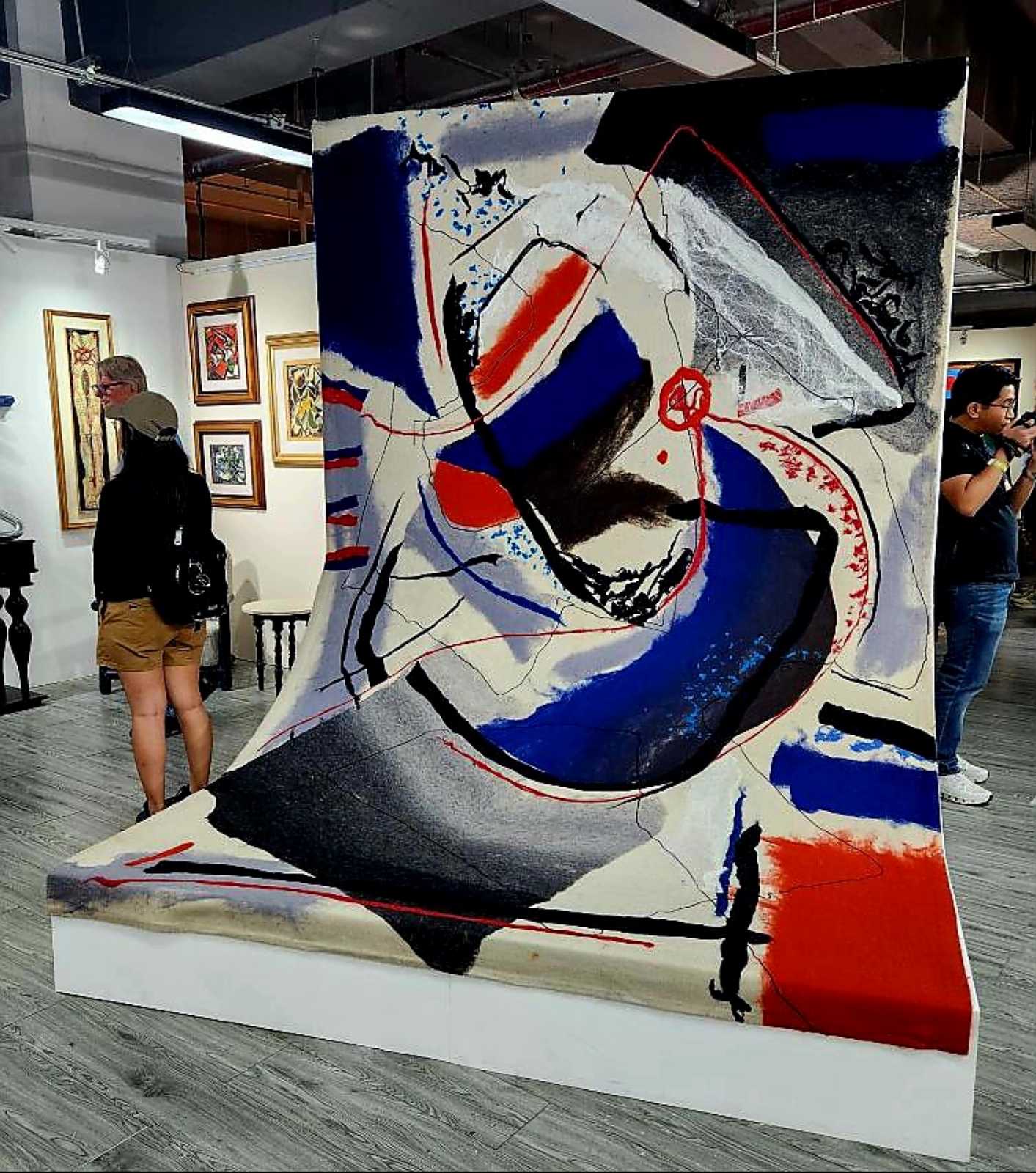
Filipiny, wool tapestry by national artist of the Philippines,Federico Aguilar Alcuaz.

Untitled by German artist Valentin Elias Renner
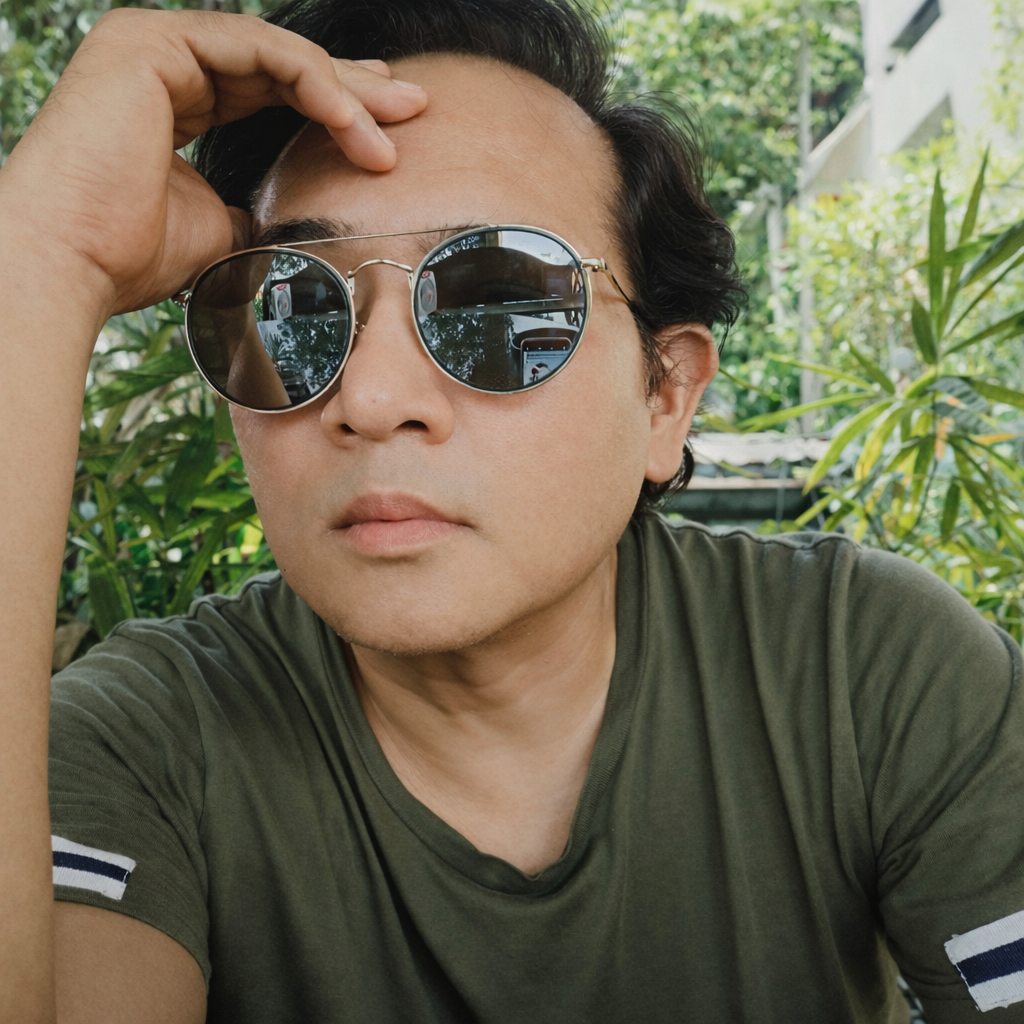
Interior decorator and jewellery designer Doro Barandino is also a regular contributor for zee.ph
Arts & Culture
Visayas Art Fair Year 5: Infinite Perspectives, Unbound Creativity
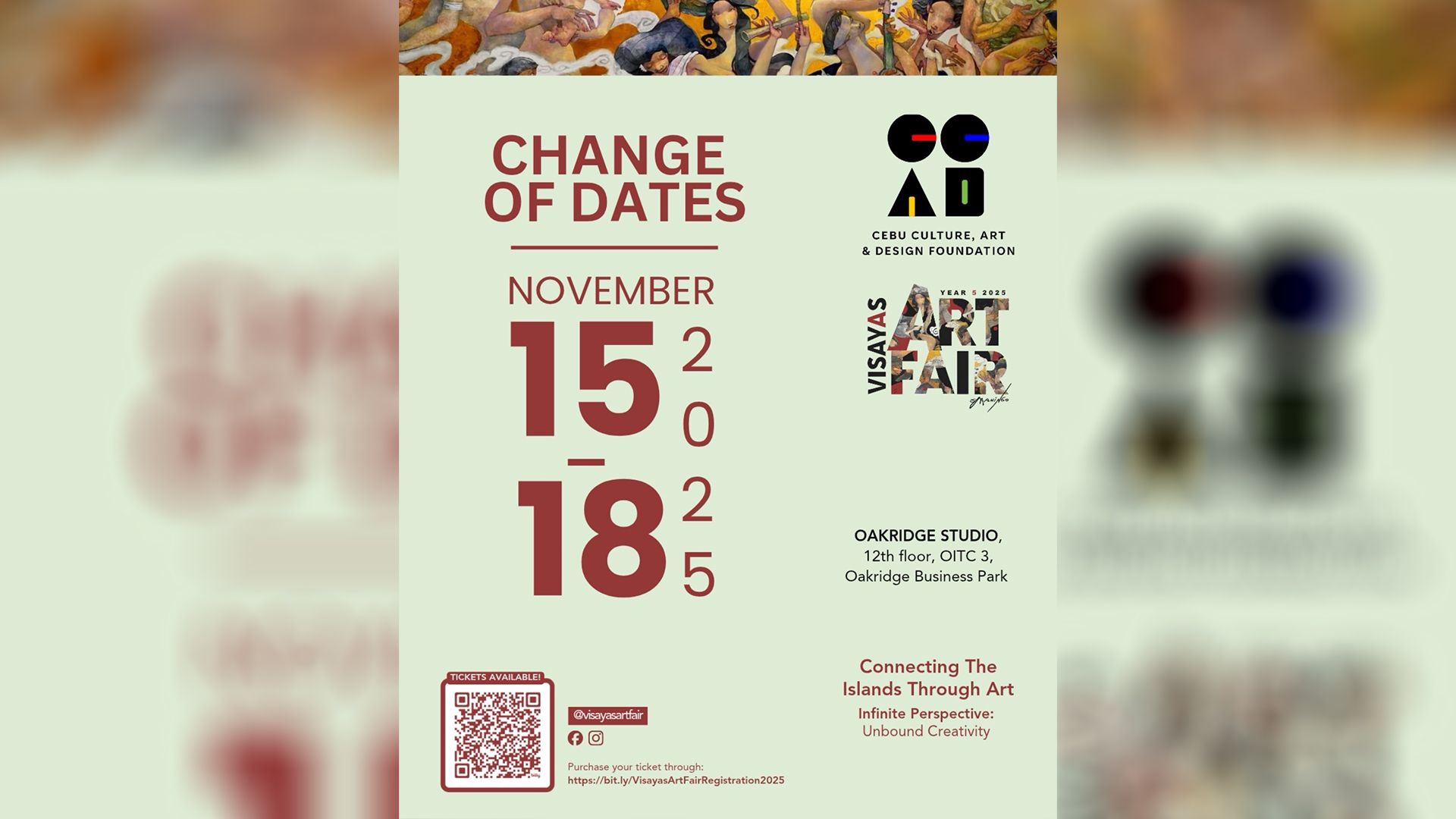
by Jing Ramos
This year’s Visayas Art Fair marks its 5th anniversary, celebrating the theme “Infinite Perspectives: Unbound Creativity.” The fair continues its mission of bridging creativity, culture, and community in the country. This milestone edition strengthens its partnership with the National Commission for Culture and the Arts and expands collaborations with regional art organizations and collectives—reinforcing its role as a unifying platform for Philippine art.
VAF5 features the works of Gil Francis Maningo, honoring the mastery of his gold leaf technique on opulent portraits of the Visayan muse Carmela, reflecting spiritual awareness.

Gil Francis Maningo is celebrated for his gold leaf technique.
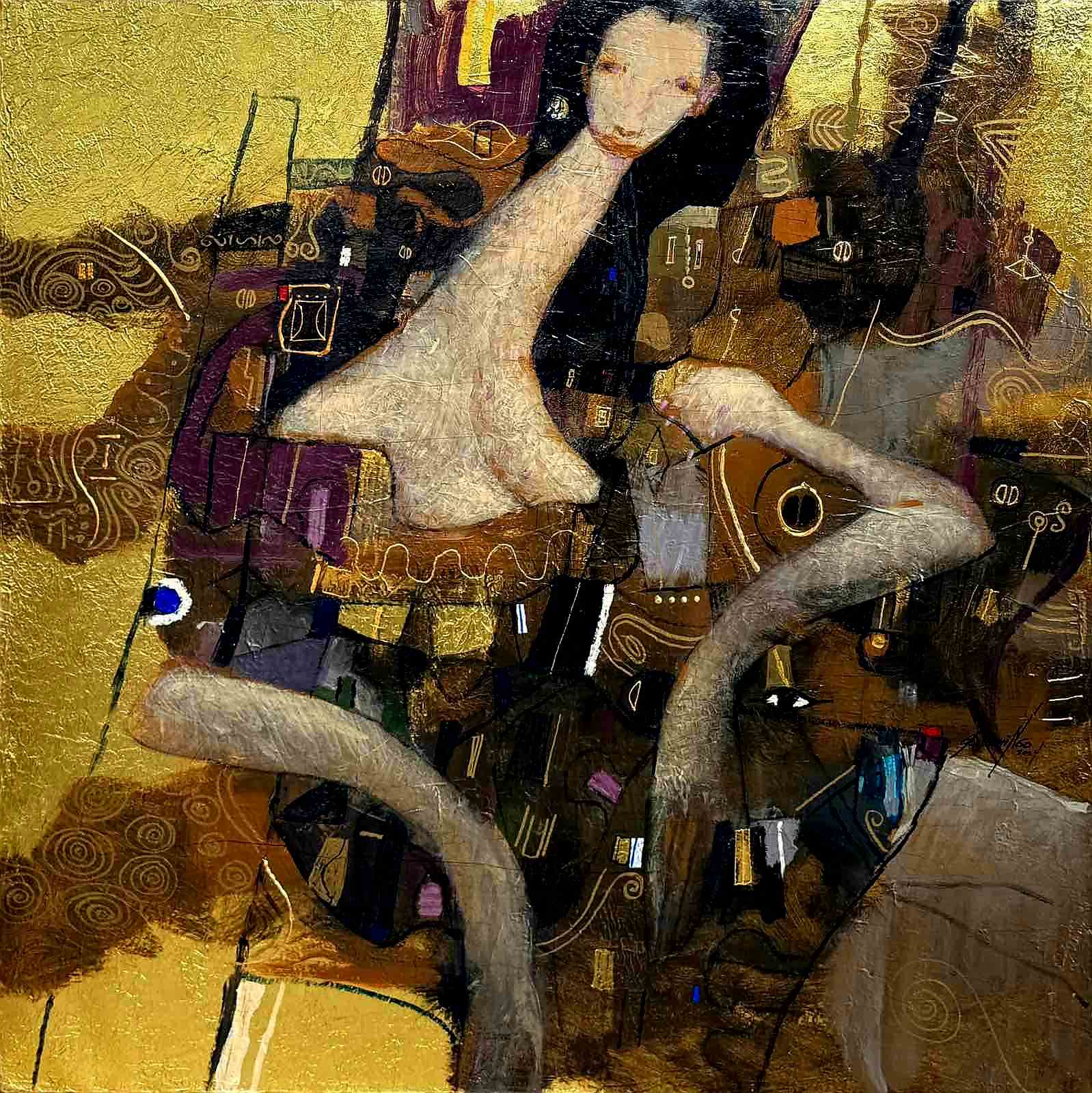
Gil Francis Maningo’s recurring theme of his Visayan muse “Carmela”.
Another featured artist is Danny Rayos del Sol, whose religious iconography of Marian-inspired portraits offers a profound meditation on the sacred and the sublime. This collaboration between two visual artists sparks a dialogue on the Visayan spirit of creativity and resilience. Titled “Pasinaya,” this dual showcase explores gold leaf as a medium of light and transcendence.
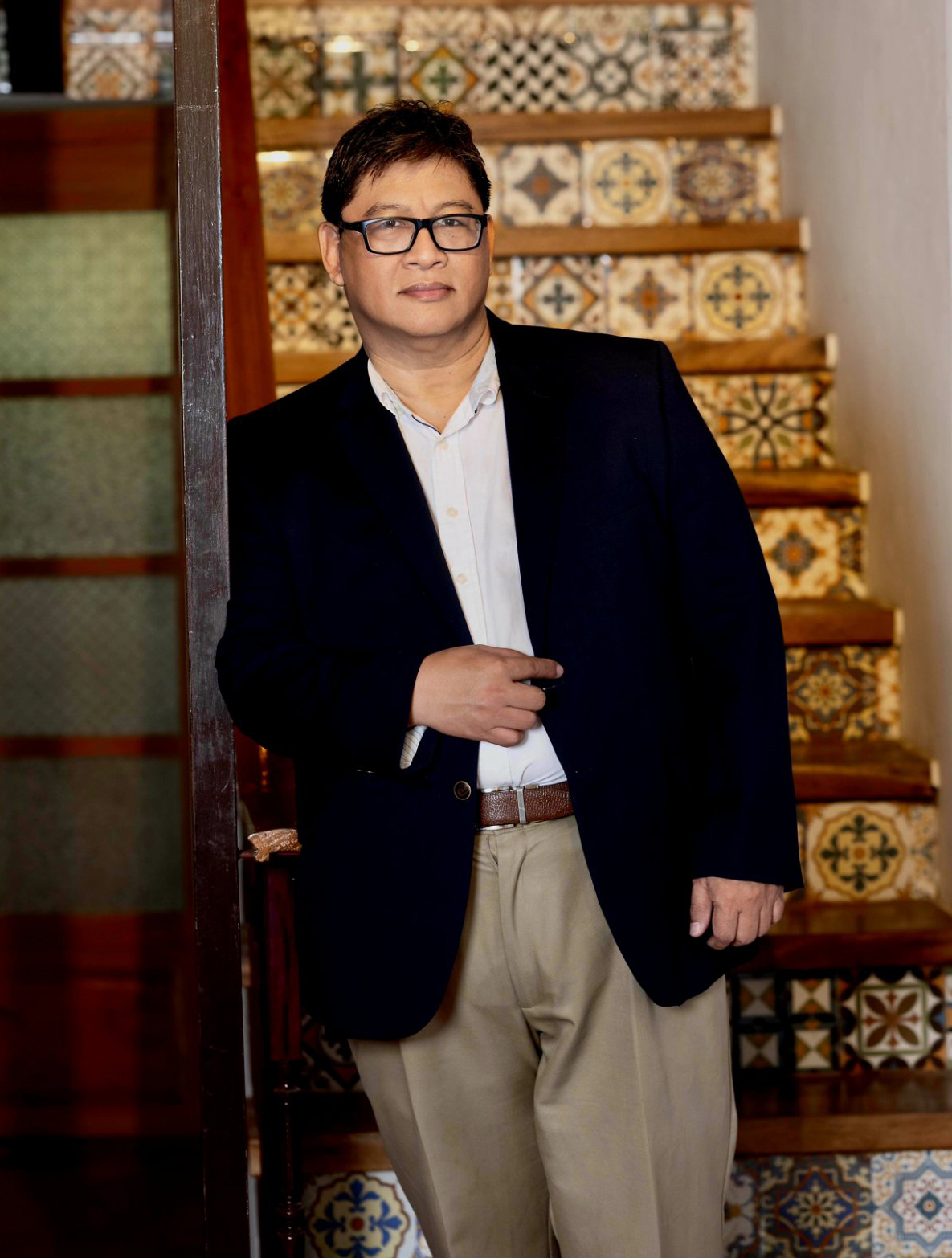
Artist Danny Reyes del Sol
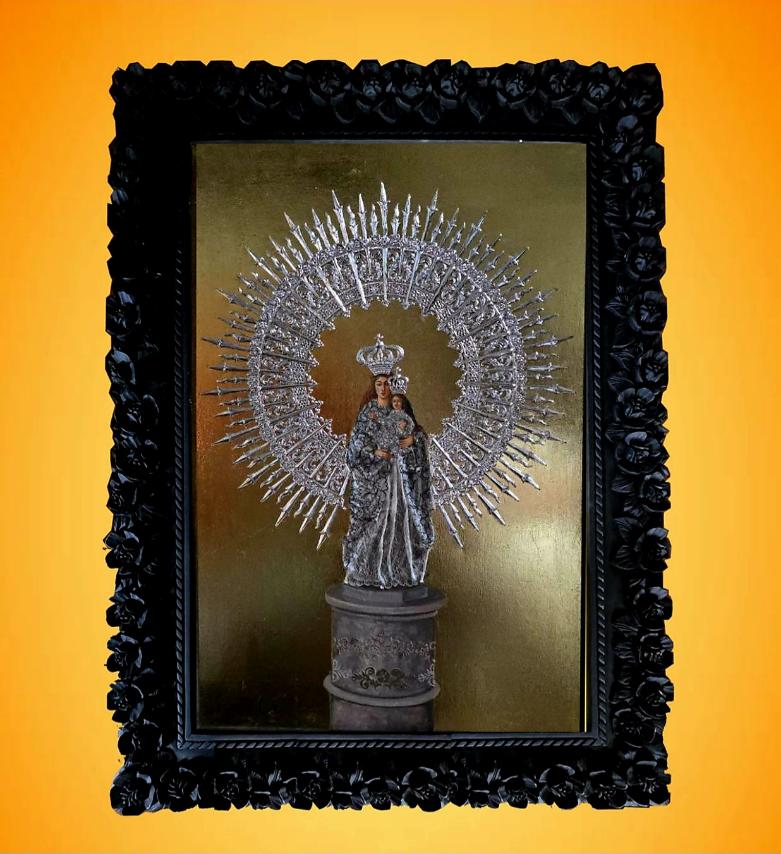
Danny Reyes del Sol’s religious iconography.
Now in its fifth year, the Visayas Art Fair has influenced a community of artists, gallerists, brokers, collectors, museum curators, and art critics—constructing a narrative that shapes how we approach and understand the artist and his work. This combination of factors, destined for popular consumption, illustrates the ways in which art and current culture have found common ground in a milieu enriched by the promise of increased revenue and the growing value of artworks.
Laurie Boquiren, Chairman of the Visayas Art Fair, elaborates on the theme, expressing a vision that celebrates the boundless imagination of unique artistic voices:
“Infinite Perspectives speaks of the countless ways artists see, interpret, and transform the world around them—reminding us that creativity knows no single point of view. Unbound Creativity embodies freedom from convention and controlled expression, allowing every artist to explore and experiment without borders.”
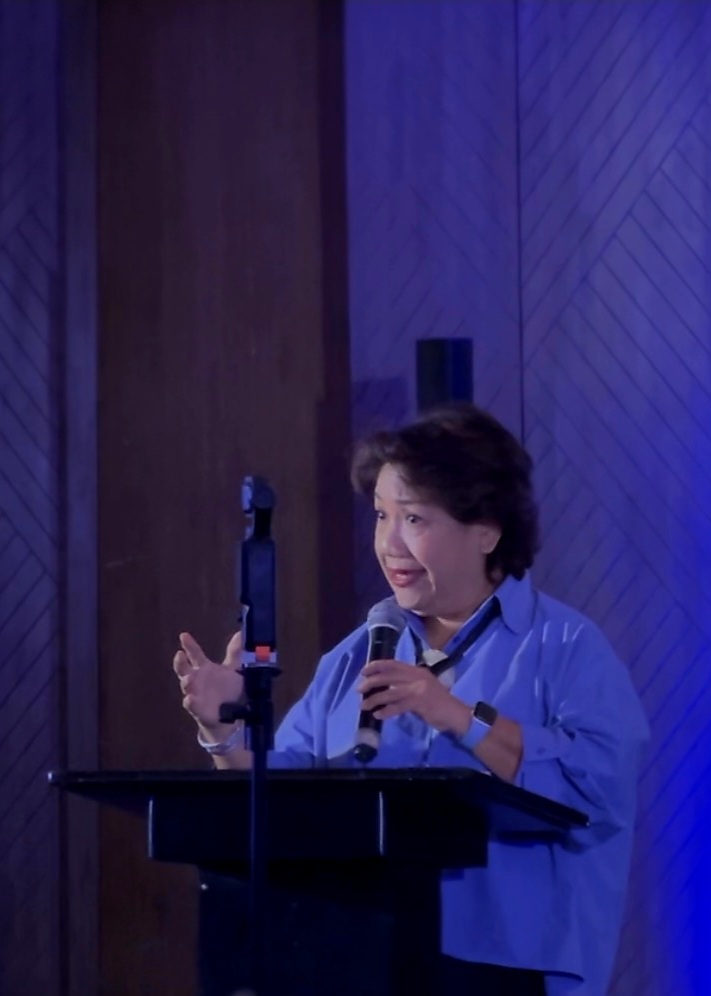
Laurie Boquiren, Chairman of the Visayas Art Fair has tirelessly championed the creative arts for the past five years.

Kundiman After Dark: Traditional 19th Century Filipino Musical Genre Continues to Inspire

Ethan Andre H. Gomez: Turning One’s Body into a Canvas to Create Specific Marketable Tools

Ludy Vilma Demecillo Makes a Leap From the Corporate World to the Exciting Broadcasting Industry

Femme Fatale: David Downton Celebrates the World’s Most Stylish Women
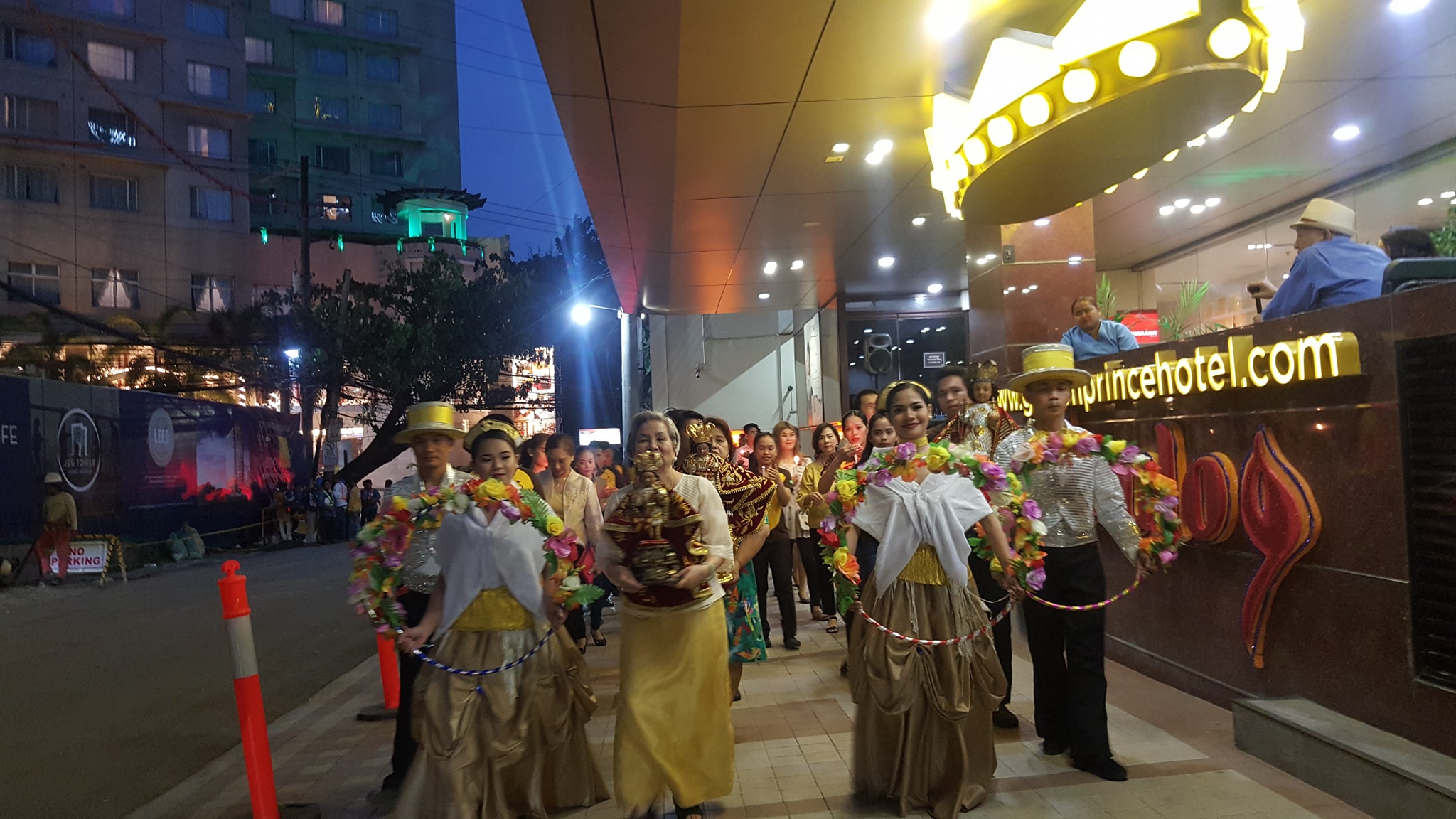
Golden Prince Hotel’s Sinulog Royalty Experience

SM Fashion Forum reveals Cebu’s style influencers
5 Filipino Films That Continue the Conversation on Women Empowerment

Noise and Sounds: An Artform

Christmas in Colonial Cebu: A Themed Exhibit by Teresin Mendezona and Eva Gullas for Stylescapes 2019

Artisanal Cebu: Aspiring calligraphy artist Abigail Condrado

Experience authentic Korean Barbeque at Da-In Restaurant

Chaine des Rotisseurs: A Night of Spanish Cuisine
-

 Travel3 months ago
Sunlight in Siquijor: Discovering the Landscape Shifts and Coastal Plains of this Mystical Island
-

 Fashion3 months ago
Cloud Dancer: The Resonant Reset of 2026
-
 Prime Target4 weeks ago
Ludy Vilma Demecillo Makes a Leap From the Corporate World to the Exciting Broadcasting Industry
-

 QuickFx2 months ago
Chromatic Narratives: Wayne Lacson Forte at the Negros Museum
-
 Prime Target3 months ago
Rod Malanao: Empowering the Growth of the Luxury Fashion Industry to Designing Knit Wear on the Side
-
 Prime Target3 weeks ago
Ethan Andre H. Gomez: Turning One’s Body into a Canvas to Create Specific Marketable Tools
-
 Style1 month ago
Femme Fatale: David Downton Celebrates the World’s Most Stylish Women
-

 Arts & Culture1 month ago
Art Beat: Scenes From the Manila Art Fair 2026