
Arts & Culture
Cebuano Designer PJ Ong’s Collaboration with Uniqlo
His chosen creative name may illicit a chuckle here and there, but PJ Ong’s passion for art and graphic design is no
laughing matter. With Inodoro, he’s introduced his own brand of aesthetics, something that landed him a Uniqlo collaboration.
By Kyla Estoya
Photography NATH YBAÑEZ
Grooming CHADY PANTALEON
Locale CRIMSON MACTAN RESORT AND SPA
This story is taken from our archives. Originally published in Zee Digital Vol. 1
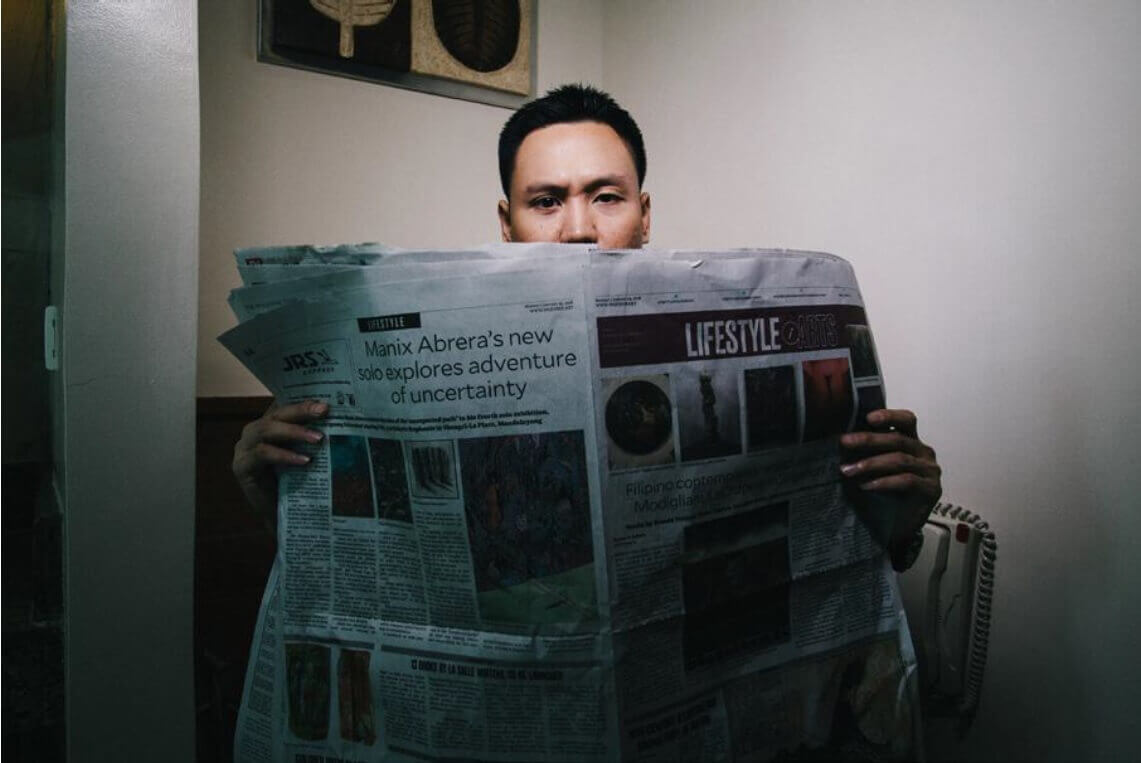
“I’m probably the friendliest graphic designer you’ll know,” PJ Ong says as we were wrapping up after the shoot at the villa of Crimson Mactan Resort and Spa. I had asked him what it was that he felt made him stand out from other artists, and he’d replied his character.
Definitely easygoing, PJ is the man behind Indoro, his creative signature that had received widespread recognition
for being the Filipino artist featured in a Uniqlo collection. “It was a great pleasure collaborating with Uniqlo for their Feel the SEA campaign,” he said smiling. “I’m still overwhelmed with the positivity that a team of highly esteemed curators chose me to represent the Philippines.”
PJ Ong grew up exposed to art, having always been interested in the subject for as far as he can remember.
His father was a businessman, but spent his free time dabbling in painting and photography. “They are the reason
I was led to this industry,” he shares about his family. “Aside from their highly supportive nature, there was always
a thirst for creativity and adventure in the household. we love to travel and to explore new things in general. My parents have always been advocates of keeping an open mind and nurturing curiosity.” And those factors have all contributed to who he is a person and as an artist.

Like many artists, it takes time, effort and probably a pinch of drama to finally find your place in the scene. During the journey, he came to the conclusion that he had always been drawn to the so-called underground art industry. Laughing, he randomly mentions that he dropped out from college, where he was studying Information Technology. “It wasn’t for me, so I took a ten-month certification in the International Academy of Design and Technology in Toronto,” PJ shares, continuing that he had went on to finish the course at the top of the class. Not bad for a college dropout. “I will always be proud of that.”
The rest is history, and Inodoro was born.
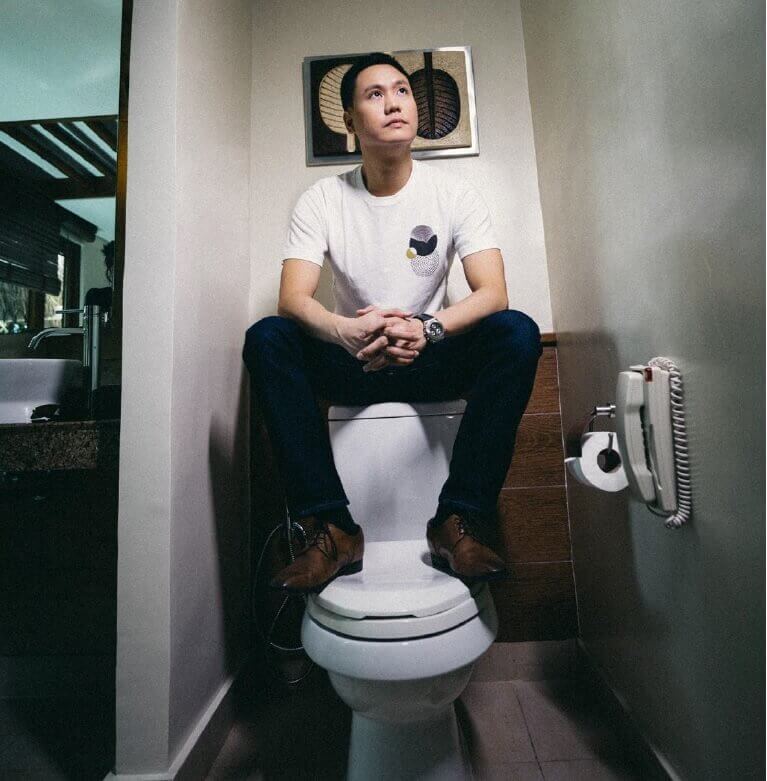
It’s not unusual for someone to ask why PJ had chosen Inodoro as his brand name, considering it is the local word for a toilet. ì”I wanted a name that had Filipino-Spanish roots, with hints of controversy and humor. Embracing the punk ethos, my moniker naturally has a streak of rebellion and non-conformism. In short, a Fuck You attitude. Plus, it’s hard to forget.”
Inodoro is entirely abstract and experimental design. PJ stressed that each project is a unique endeavor, but
he always tries to stay true to his design DNA. His work emphasize his principles, which are rooted in being forward-thinking, thorough-driven and dynamic.
This is probably one of the reasons why Uniqlo chose his work for the collection. ìI was prompted by a business contact to send over a portfolio link, and after a few days, a representative from the Uniqlo HQ in Japan got in touch with me,” he recalls. “I was overwhelmed to find out that they had strong preference for my work, which they expressed during the initial communication.”
According to him, the main directive was to create designs in three colors. They were given creative freedom in
terms of execution. “I was inspired by the Japanese’s constant pursuit of the avant-garde, the experimental and the
unknown, while keeping the overall look minimal, clean and polished. At the same time, projecting a positive message
since that was one of Uniqlo’s core values as a brand.”
The most significant thing that interests me about PJ’s view in the art industry is that he values his integrity and
brand, much more than being popular or mainstream. he thinks it would be silly of him to change his style just to gain an audience. “To me, the name wouldn’t even matter. As long as you’re able to produce brilliant work for some people, then that’s enough already,î he says. That goes to show how authentic he treats his art, and that his passion for graphic design is no joke. ìClients come to me because they already know my style. I won’t force someone to like my style—if they do, then that’s good!”



Arts & Culture
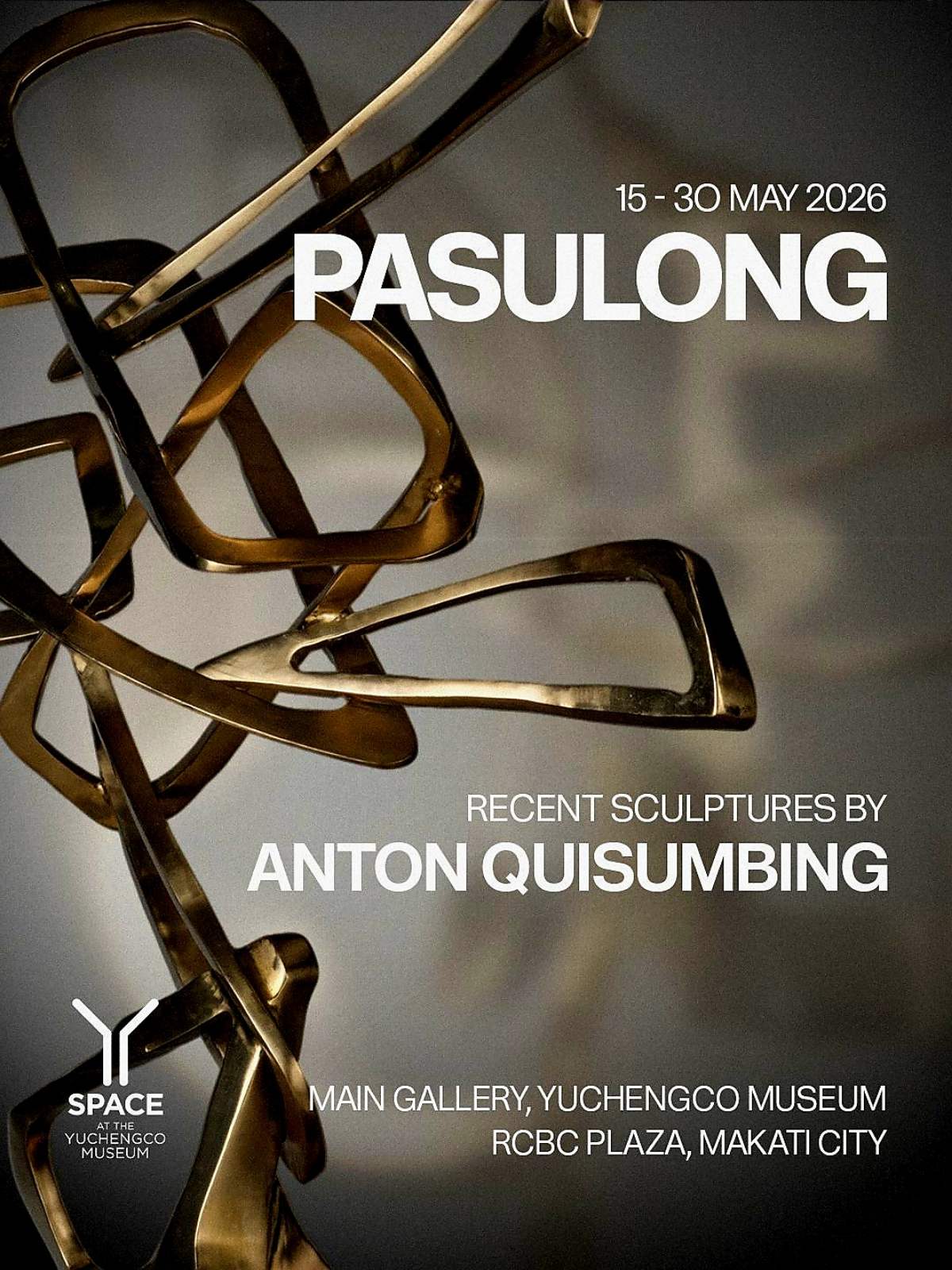
Pasulong; Anton Quisumbing at the Yuchengco Museum
by Mia Durano | photography by Zach Aldave
There is something about walking into the Yuchengco Museum that sends a signal before you’ve even seen the artworks. Situated in RCBC Plaza, right in the middle of Makati’s financial district, it is an institution with a point of view — a forum as much as a gallery. So when the energy of an exhibition opening spills past the main hall and into the corridors, something tells you that someone has earned their way in.
Pasulong is Anton Quisumbing’s first solo exhibition in over two decades. Twenty-nine sculptures that took two years to complete, all cast in bronze, made from propellers salvaged from boats damaged by Typhoon Odette in 2021. Those who knew what that ill-fated period was like understand why the timeline matters. This is not decorative bronze; rather, it is marine-grade, built to resist corrosion and force. It is a material that does not yield to the ravages of the ocean.
There is a reason why metalwork is described in physical terms — it is cold, harsh, brash, forceful, and resistant. And when you walk into a room full of bronze sculptures, that experience becomes resonant. Propulsion, with its loops, arcs, and curves that rise, descend, and turn back into shape, embodies this. There are no right angles and no hard stops here. In this particular piece, the artist is remarkably aware of its sinuous movement and instead finds its voice within the medium.
This is the tension Anton Quisumbing works with. His practice has always tested what a single material can hold, allowing every movement to maintain the weight of its volume. Pasulong does not present a clean arc of recovery; instead, it delivers the full range of its intentions.
Sight, a warped figure with an almond eye and armor along one side, carries what the exhibition describes as a sense of lightness despite the weight we carry in our lives. The work stands with the authority of something that has found its own gravitas. The artist leans toward the idea that recovery is not resolved in one sweeping gesture.
Anton Quisumbing spent years away from sculpture, turning instead to painting as his primary medium. In Pasulong, he returns to bronze and to the physical demands of the material, which, in a way, becomes an act of pushing further toward his original vision. The outcome is an artist in full control of both subject and medium.
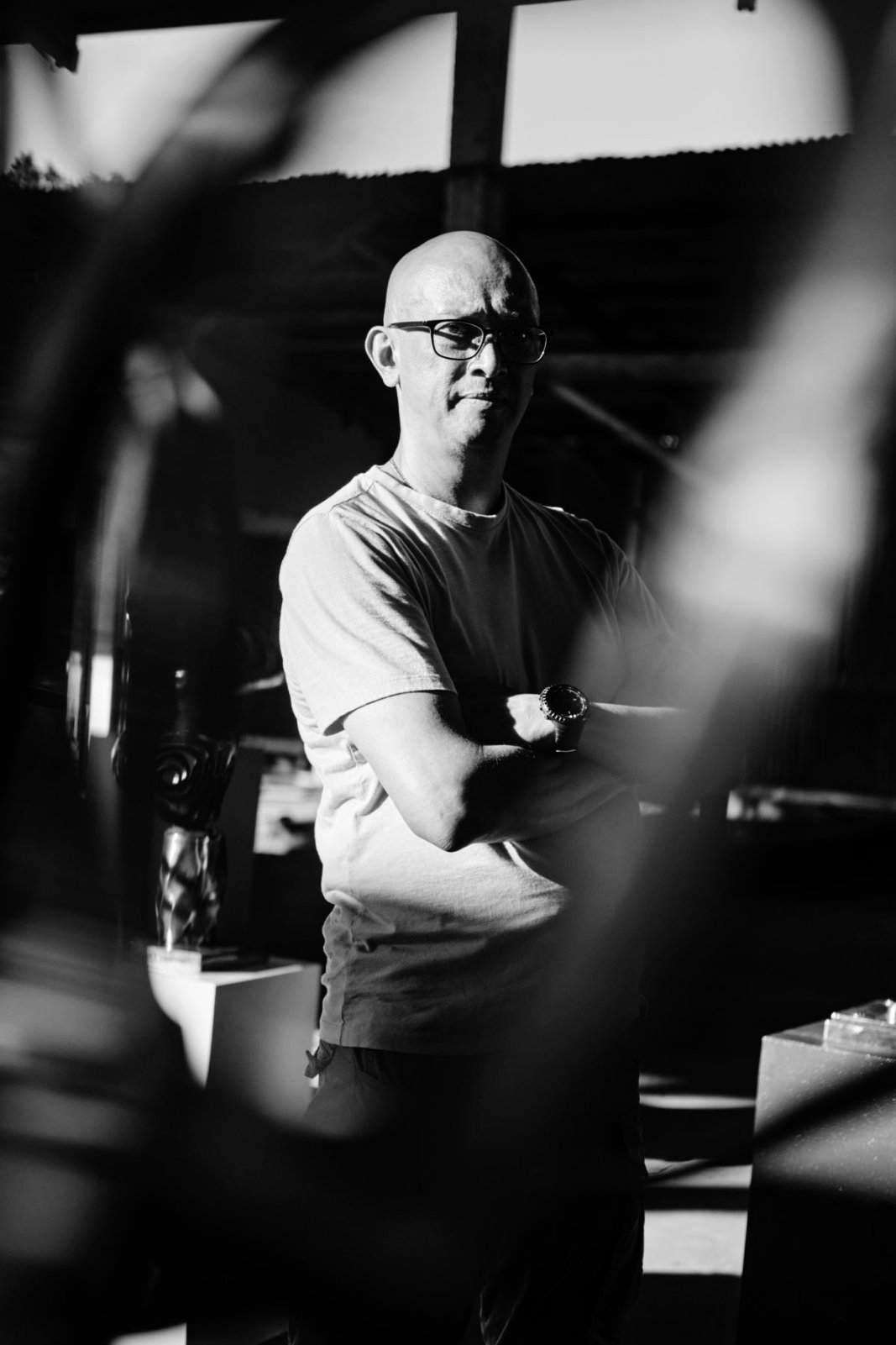
Anton Quisumbing ‘s practice as a sculptor is anchored in testing the strength of a single material.
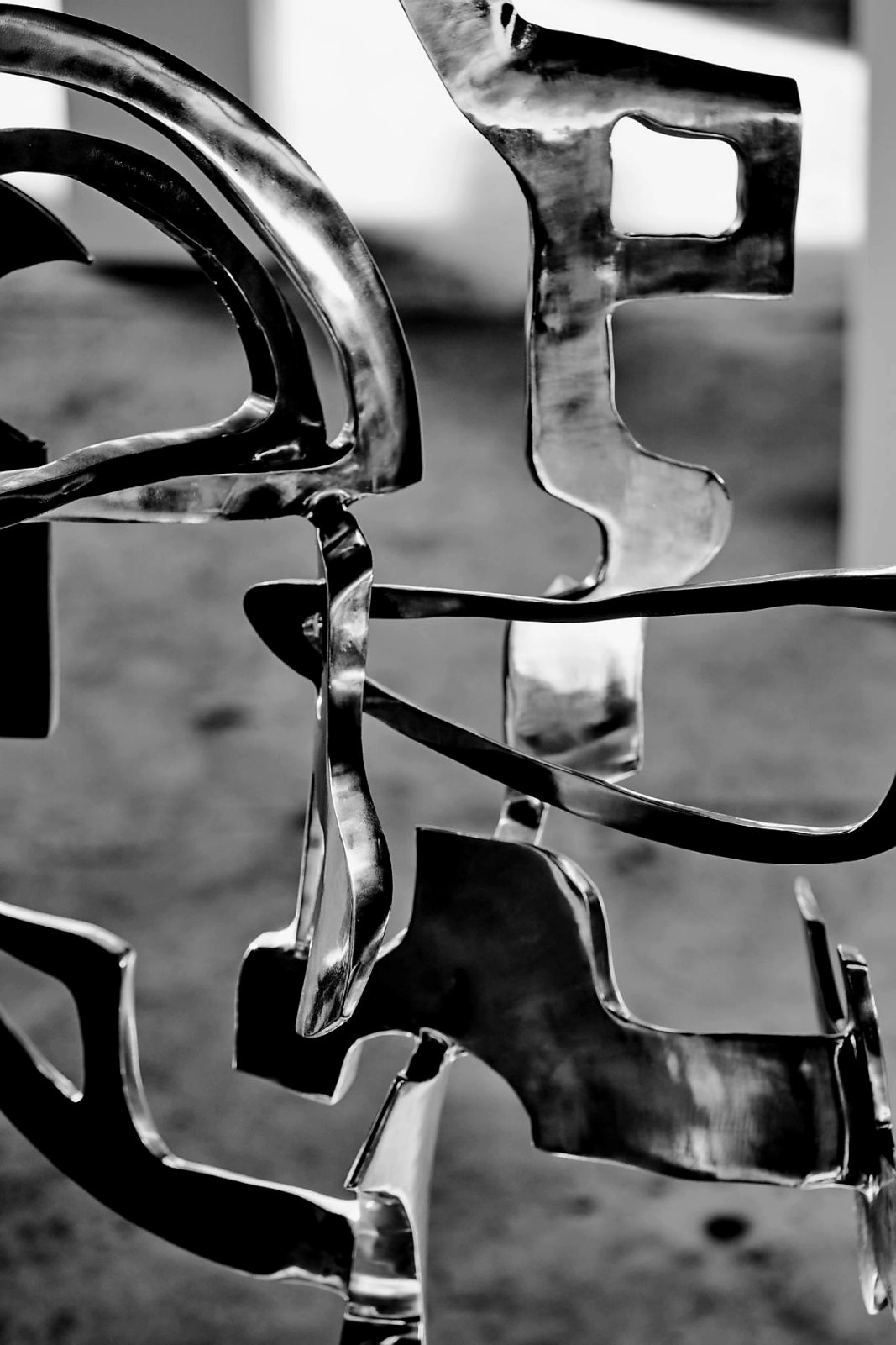
The artist’s primary concern in working with bronze was its malleability.
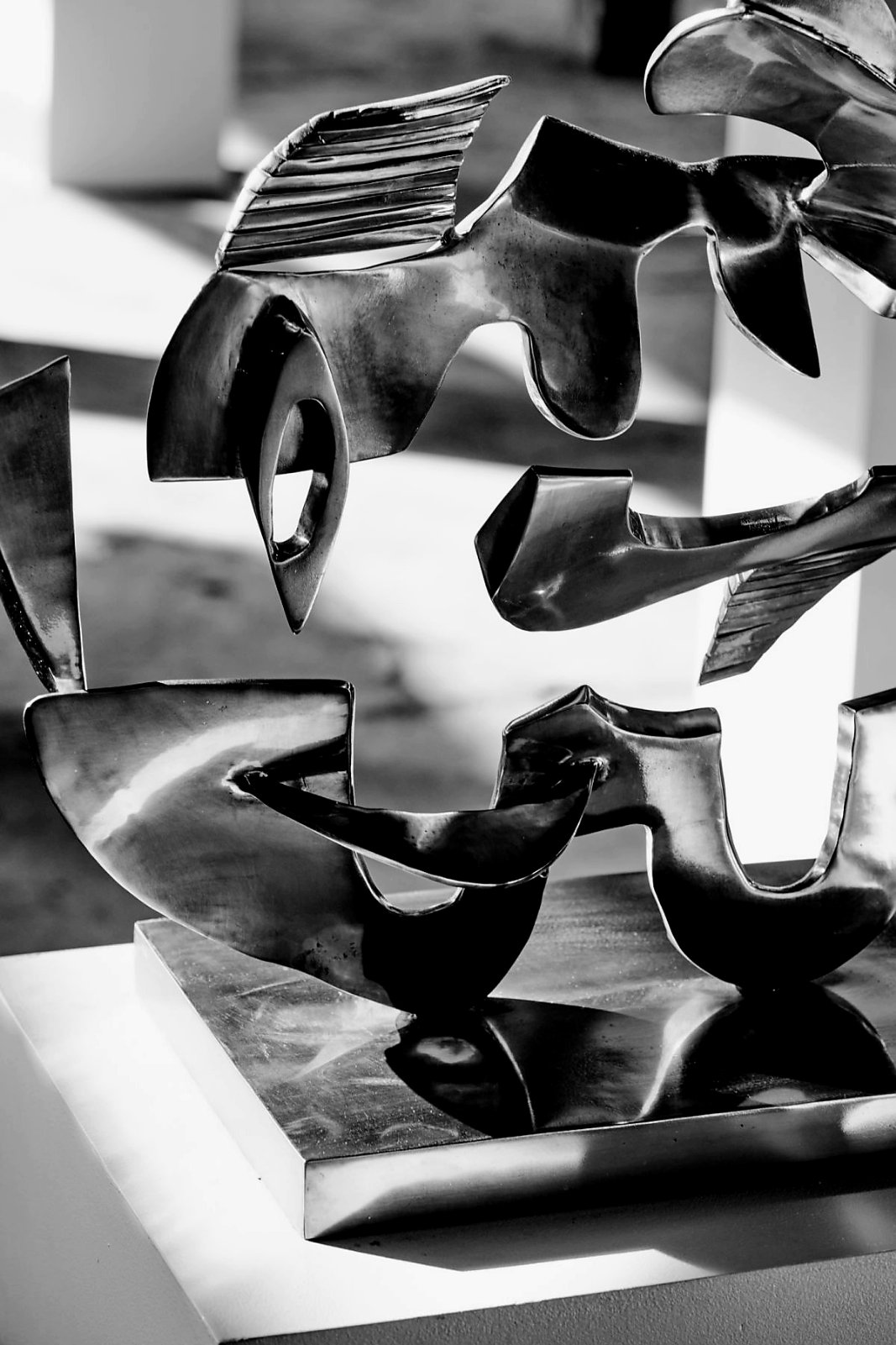
Pasulong marks Anton Quisumbing’s return to sculpture.
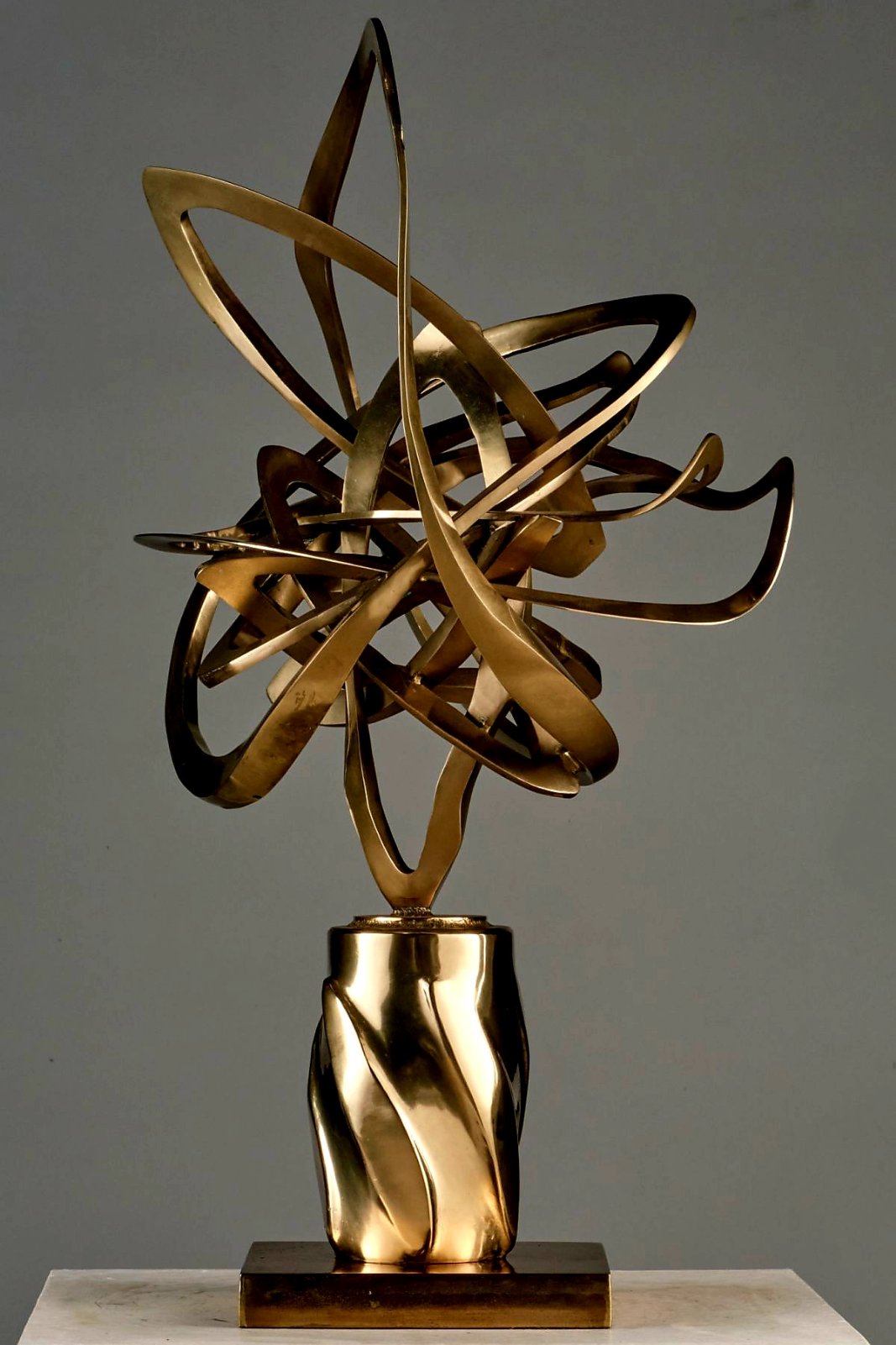
Propulsion, bronze sculpture 83×44×35cm 2024
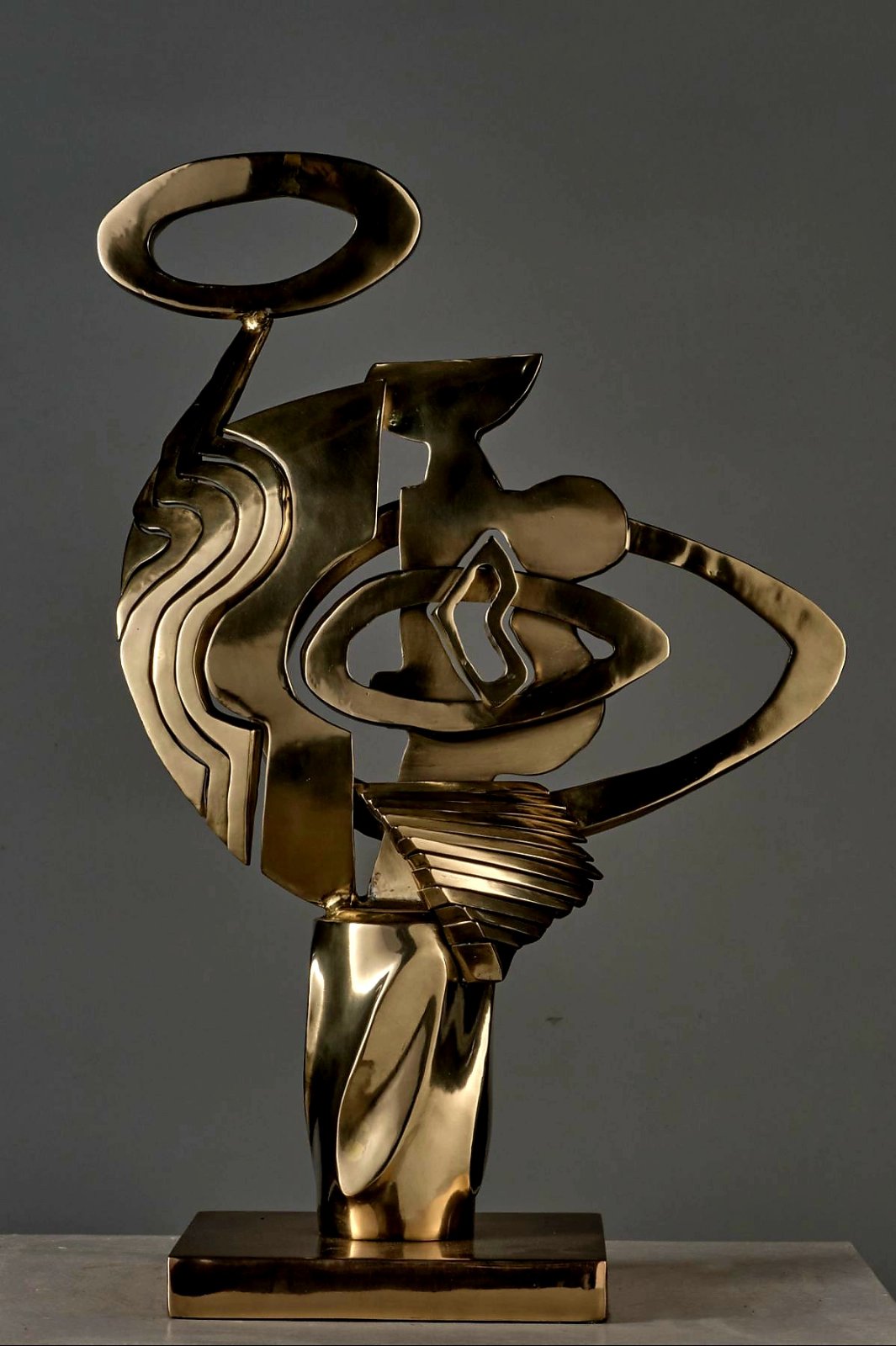
Sight, bronze sculpture 63×40×22.8cm 2024
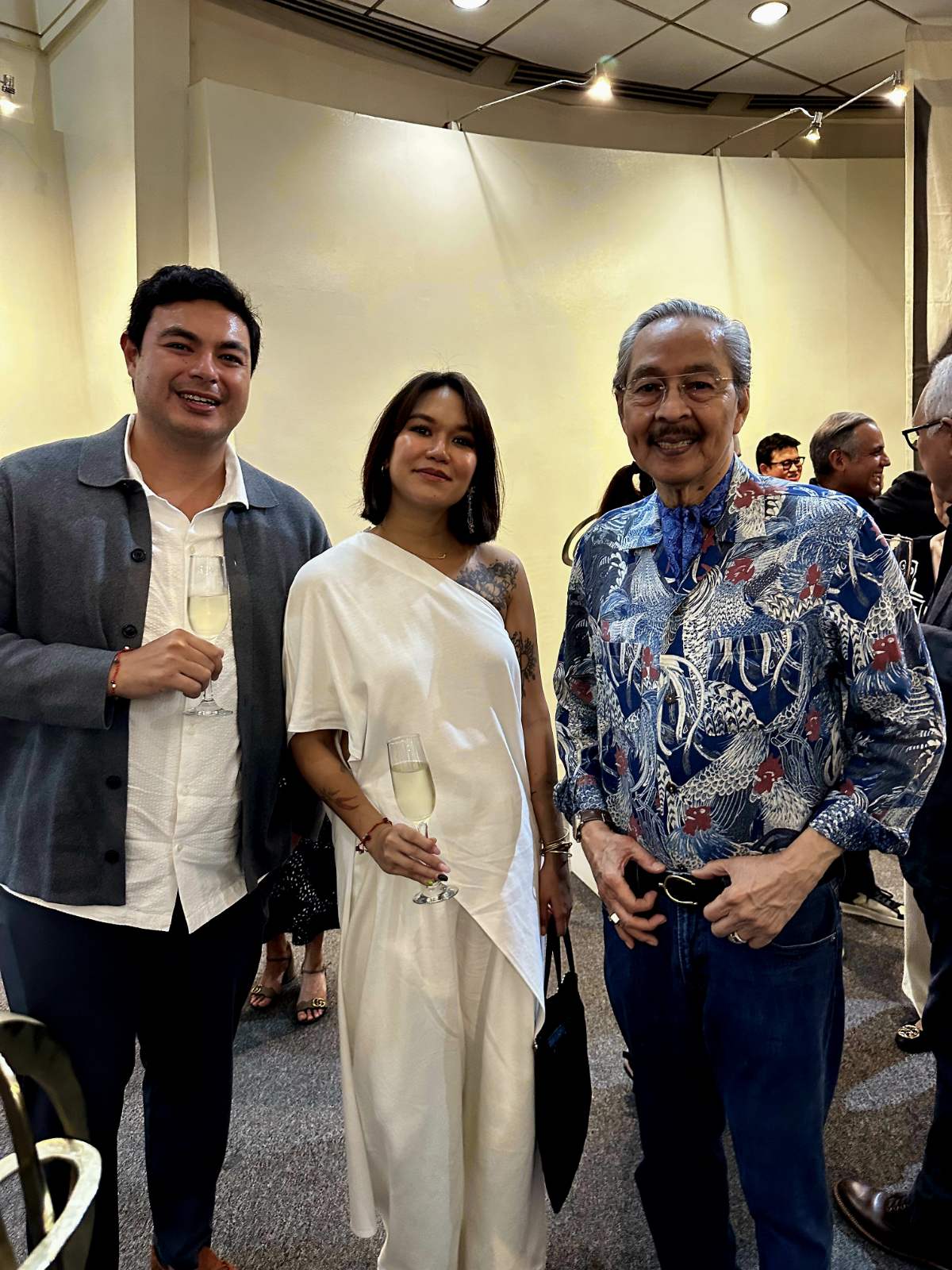
Gilo Sarmiento, this writer Mia Durano and artist Ramon Orlina
Arts & Culture
Kundiman–A Collaboration Between Charles Lahti and Francis Dravigny at the Qube Gallery
by Oj Hofer
“Collaboration is like carbonation for fresh ideas “-Anonymous
Kundiman—drawn from the Filipino tradition of lyrical love songs marked by longing, devotion, and emotional depth—unfolded not merely as an exhibition but as a dialogue between two artists whose practices, though formally distinct, share a common goal: that creation is never singular, never complete, and never entirely one’s own. The word itself carries weight. In the Philippine cultural imagination, kundiman is not passive sentiment but a mode of endurance—a way of loving what one cannot fully possess, of honoring what exceeds one’s grasp—and to name an exhibition after it is to make a claim about the nature of making itself: that art, like the song, is an act of devotion directed toward something larger than the maker’s intention. It is a form that does not declare but lingers; not spectacle, but the quieter and more demanding thing called intimacy.
The collaboration between Charles Lahti and Francis Dravigny operates at what might be called the threshold of language—the place where gesture becomes structure and structure, over time, turns into meaning. Their working relationship is less a merger of two styles than a negotiation between two modes of listening: one drawn to the decisive mark, the other to the patient accumulation of woven form. Lahti’s mark-making is grounded, deliberate, and unambiguous in its commitment to presence; his lines carry the quality of breath, each stroke an event rather than a flourish. Observers familiar with East Asian ink traditions will recognize this sensibility immediately, for in Zen ink practice and Japanese calligraphy, the practitioner does not decide what to draw so much as prepare the conditions under which something may reveal itself—the mark that emerges from this discipline is not decorative but testimonial, evidence of a moment of full attention. Lahti’s work operates within this logic even when the cultural references are Western, and what anchors it is not style but stance: an ethical relation to the act of making that distinguishes genuine presence from the mere performance of spontaneity, a distinction far rarer in contemporary visual art than it ought to be.
“The line is not drawn but revealed—through stillness, breath, and a quality of awareness that the discipline of reduction alone makes possible.”
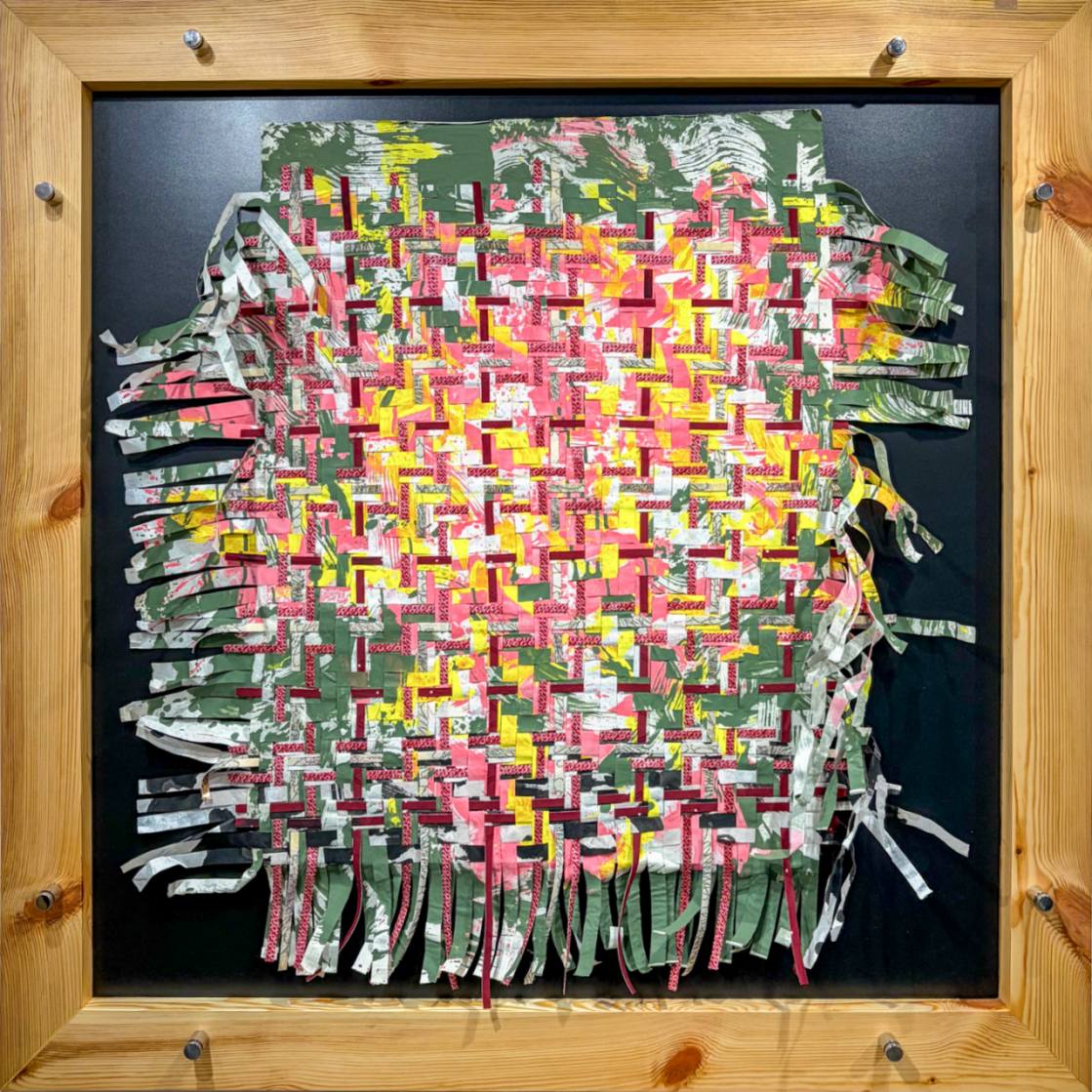
Dravigny’s woven interventions introduce a different, though deeply complementary, temporality. Where Lahti works in the decisive instant, Dravigny works in accumulation—the slow building-up of material over time—and his use of abacá, a fiber indigenous to the Philippine archipelago, is not incidental. Abacá carries its own history: long harvested by hand, traded across colonial networks, woven into ropes and sails, and more recently reclaimed as a medium of cultural expression, so that to bring it into an art context is to activate this history without necessarily declaring it. In Dravigny’s hands, textile transcends its usual function as background or support and becomes instead an act of preservation—a material archive that holds within its weave the gestures of another artist. This concept, which the exhibition implicitly explores, speaks to something the atelier tradition has long understood: that a work of art may pass through multiple bodies and multiple intentions and still emerge with coherence, provided each maker brings to the passage not assertion but responsiveness, the capacity to receive another’s action and carry it forward without erasing it. Dravigny’s woven interventions propose a similar ethic, made visible rather than concealed.
What Kundiman ultimately stages is not the product of collaboration but its conditions: the particular quality of attention required when one artist’s gesture enters the field of another’s practice, and the willingness to wait that such attention demands. The Japanese aesthetic tradition names this interval ma—the generative pause, the charged space in which meaning gathers before it resolves into form—and the exhibition’s restraint is precisely its argument. There is no excess, no spectacle, no rhetorical gesture toward significance, only a sustained attentiveness to process that runs counter to the dominant logic of contemporary exhibition-making, in which legibility is prized and impact must be immediate. Kundiman refuses this, trusting the viewer to do the work of attending, and in this refusal it finds its deepest kinship with Zen aesthetics: the discipline of reduction, the clarity of intention, the respect for what is essential over what is merely present.
“What Kundiman proposes is more radical than most exhibitions dare: that the self, in the act of making, becomes temporarily permeable—open to the gesture, the material logic, the devotion of another.”
The concept of interbeing—rooted in Buddhist philosophy and carrying the understanding that nothing arises independently, that every form is the result of conditions and every maker is in part made by what they make—finds in this exhibition its material proof. What was created here does not belong to one hand alone. It emerges in the space between, where gesture is received, transformed, and returned; where material listens and form responds and meaning unfolds not as conclusion but as continuation. The exhibition ends. The dialogue does not. This is the space between hands: where making becomes meeting, and where interbeing quietly, insistently gives rise to form.
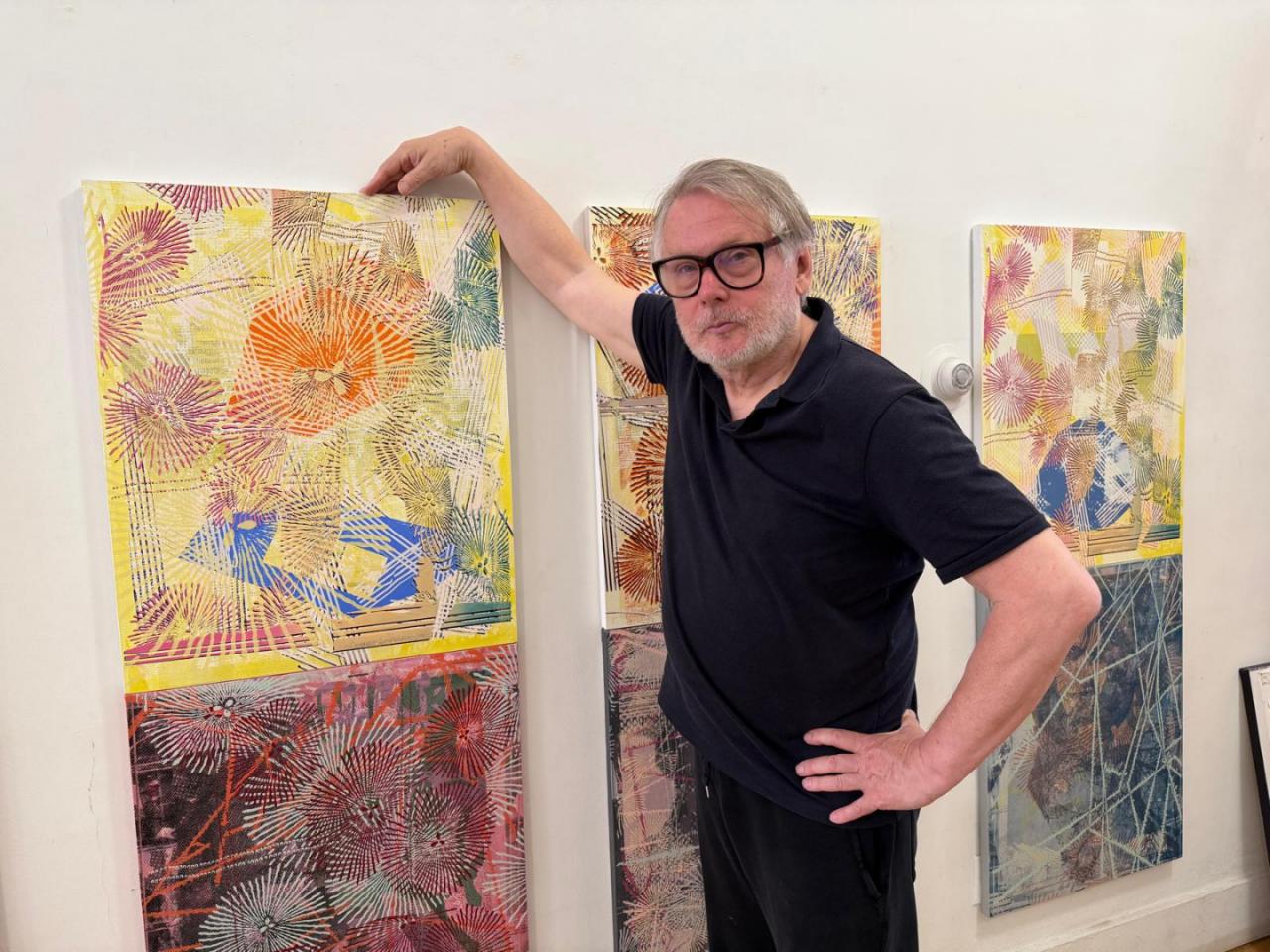
Charles Lahti with his latest works—layering print with bandana textiles to create tactile, hybrid surfaces where image, pattern, and material converge.
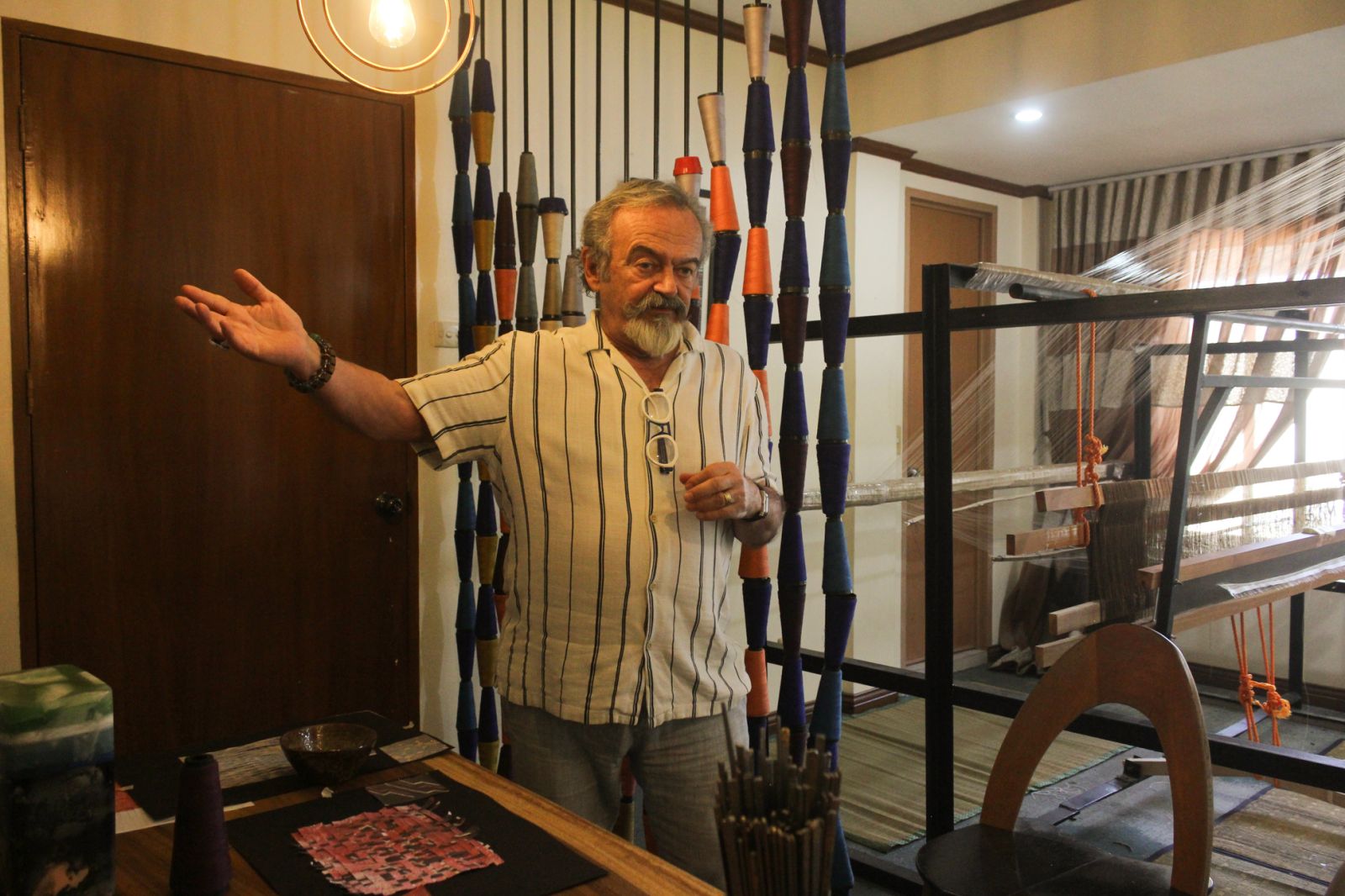
Francis Dravigny in his Cebu studio—transforming abacá and found materials into layered, sculptural weavings.
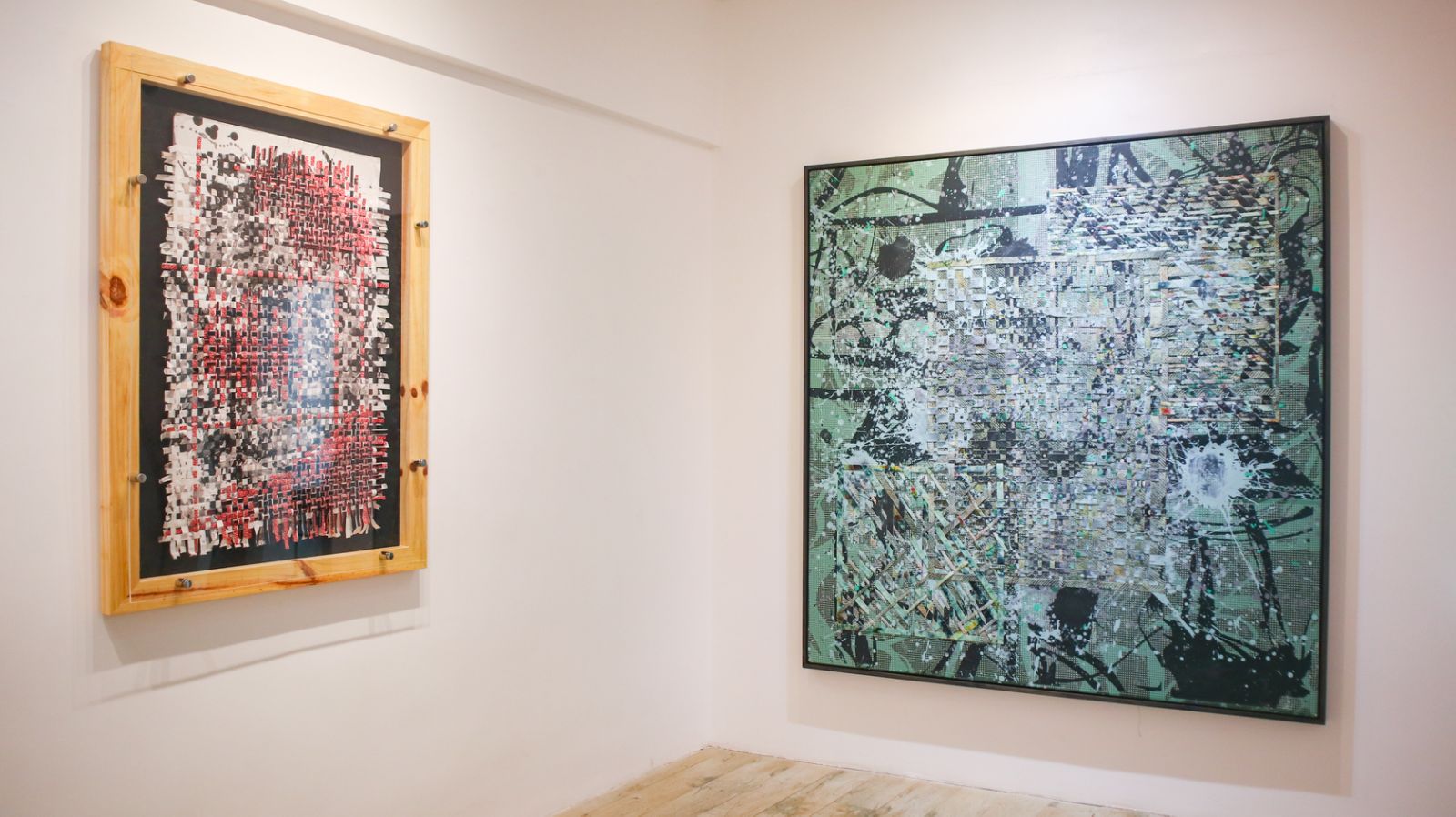
A wall of interbeing—where weave, gesture, and form dissolve into quiet harmony and non-duality.
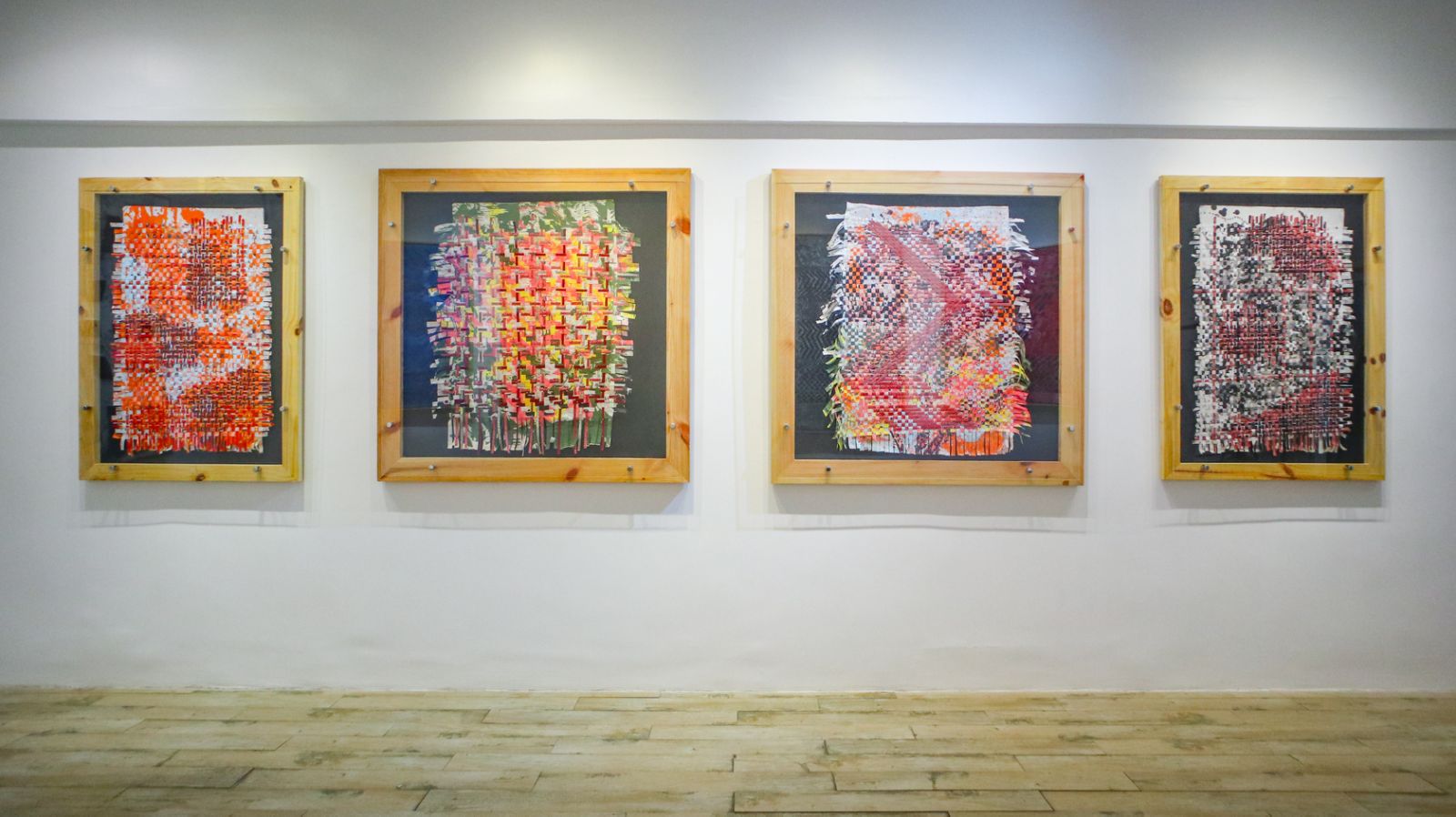
A flat surface transformed into a quiet weave—drawing the eye inward, where structure softens into stillness and resonates with Zen practice.
Arts & Culture
Kundiman After Dark: Traditional 19th Century Filipino Musical Genre Continues to Inspire
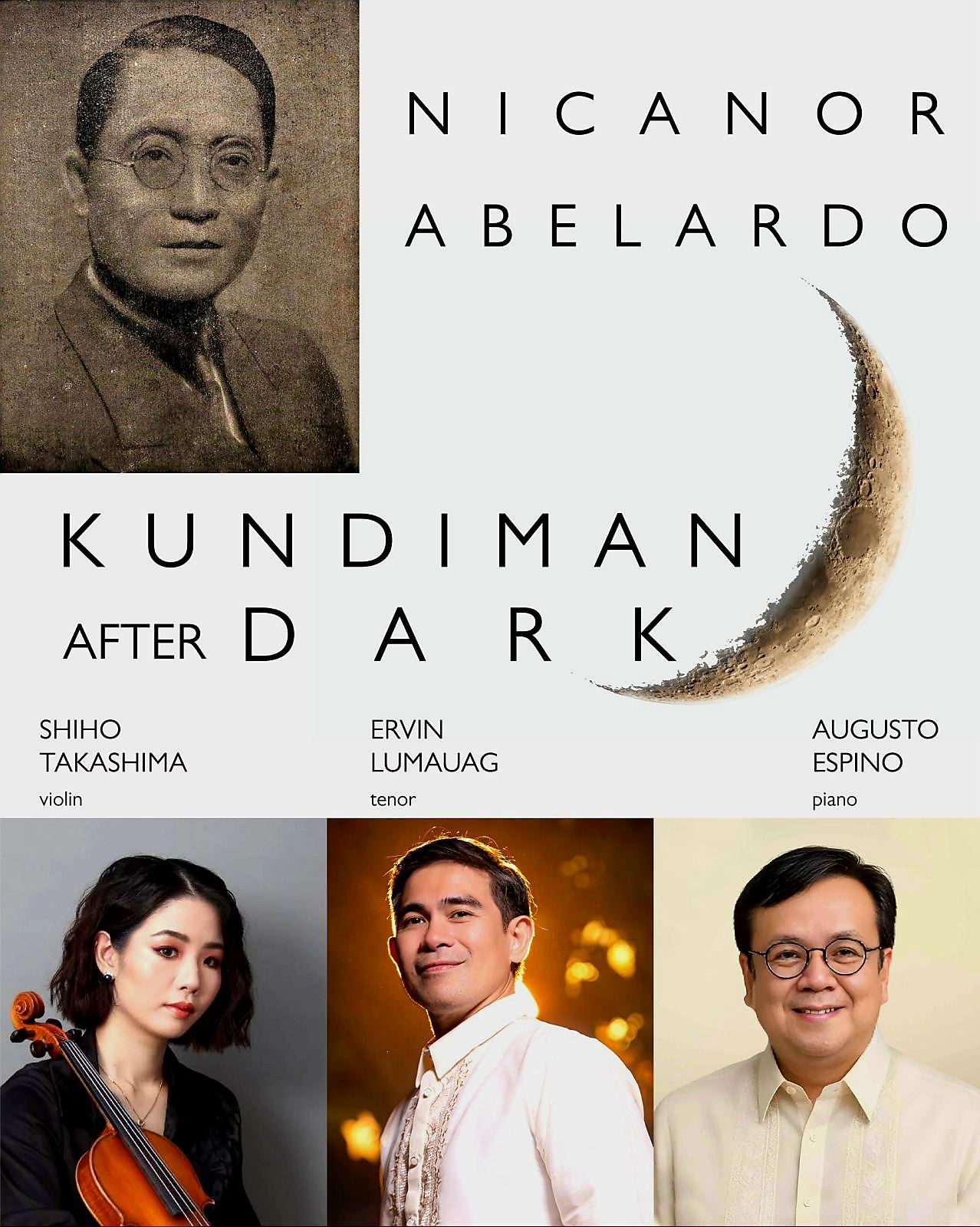
by Kingsley Medalla
The Kundiman is a traditional 19th-century Tagalog musical genre that served as a profound source of inspiration for many sophisticated, classically trained artists. The name is derived from the Tagalog phrase “kung hindi man,” literally translating to “if it were not so.” These musical pieces were often performed as poignant love songs characterized by smooth, flowing melodies containing emotional depth. Originating as a serenade in poetic Tagalog lyrics, it features a minor-to-major key progression expressing longing, devotion, patriotism, and a yearning for freedom.
Sine Pop, a boutique theater in a 1948 post-war heritage house located in Cubao, Quezon City, serves as a charming venue for cultural events and intimate performances with a small ensemble. Recently hosting Kundiman After Dark, a recital honoring the legacy of Nicanor Abelardo (1893–1934), a highly esteemed Filipino composer and pianist hailed as the “father of the sonata form in the Philippines” and a master of the art of the Kundiman. Carlson Chan, founder of Sine Pop, clarifies their unique model: the performances are open to the public and are, as such, complimentary, as its primary focus is to promote the performing artists per se.
The performances featured beloved Kundiman classics including Mutya ng Pasig (1926), Naku… Kenkoy (1930), and a personal favorite, Bituing Marikit (1926). These musical pieces were brought to life through the solo acts and live vocals of tenor Erwin Lumauag, Japanese violinist Shiho Takashima (who has since made the Philippines her permanent residence), and the renowned composer, pedagogue, and pianist Augusto Espino.
“Nasaan Ka Irog,” written in 1923, drew inspiration from a romantic tale shared by Nicanor Abelardo’s friend, who went overseas leaving behind his beloved in the Philippines. Years after, this man eventually became a doctor and, upon his return, discovered that the love of his life had been married to someone else. He also learned that the letters he had sent were never delivered to her, as they were kept by the doctor’s family, secretly away from her. A classic case of unrequited love. Kundiman serves as the heart and soul and the pinnacle of Filipino musical artistry.
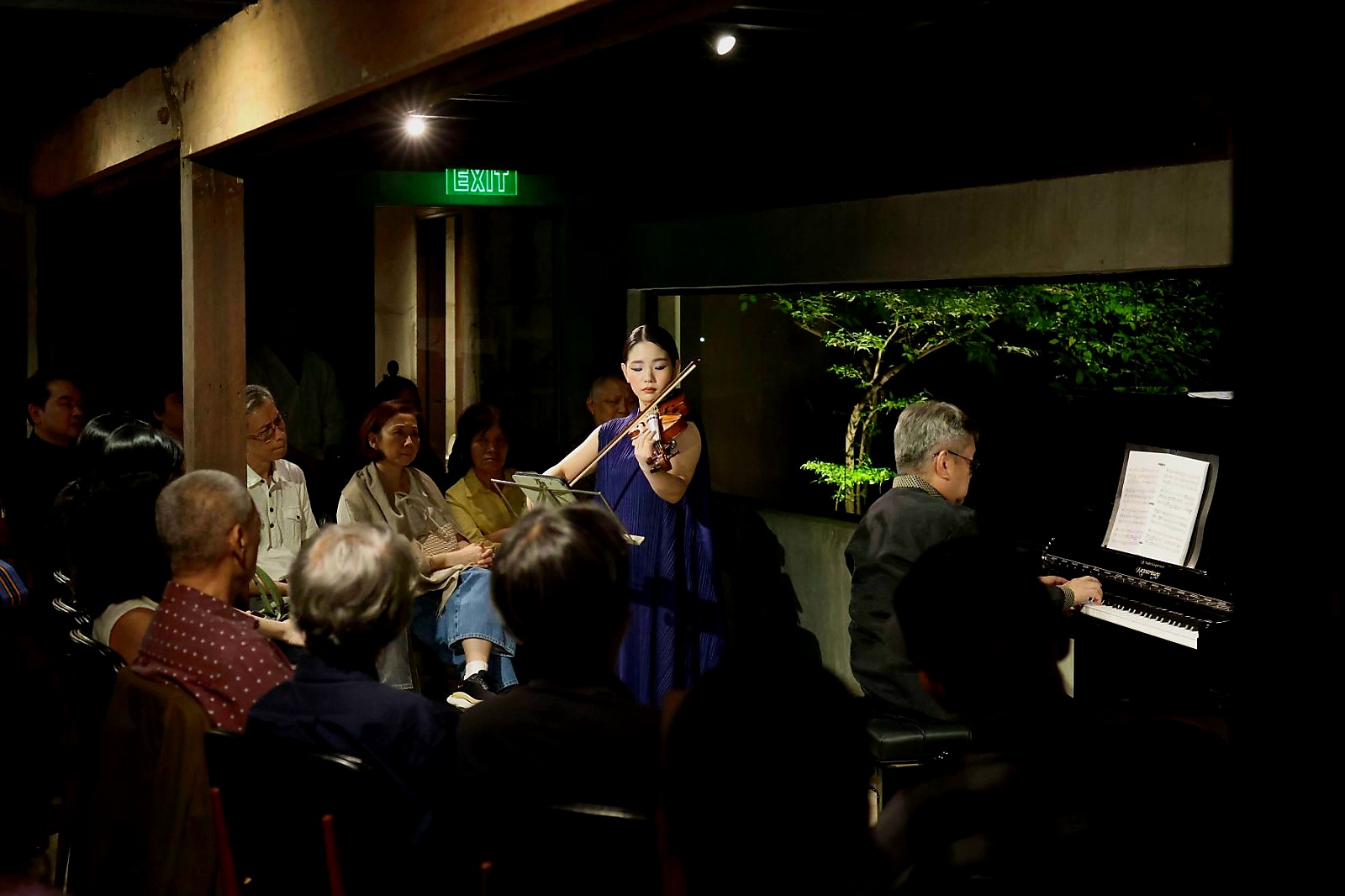
Violinist Shiho Takashima and pianist Augusto Espino
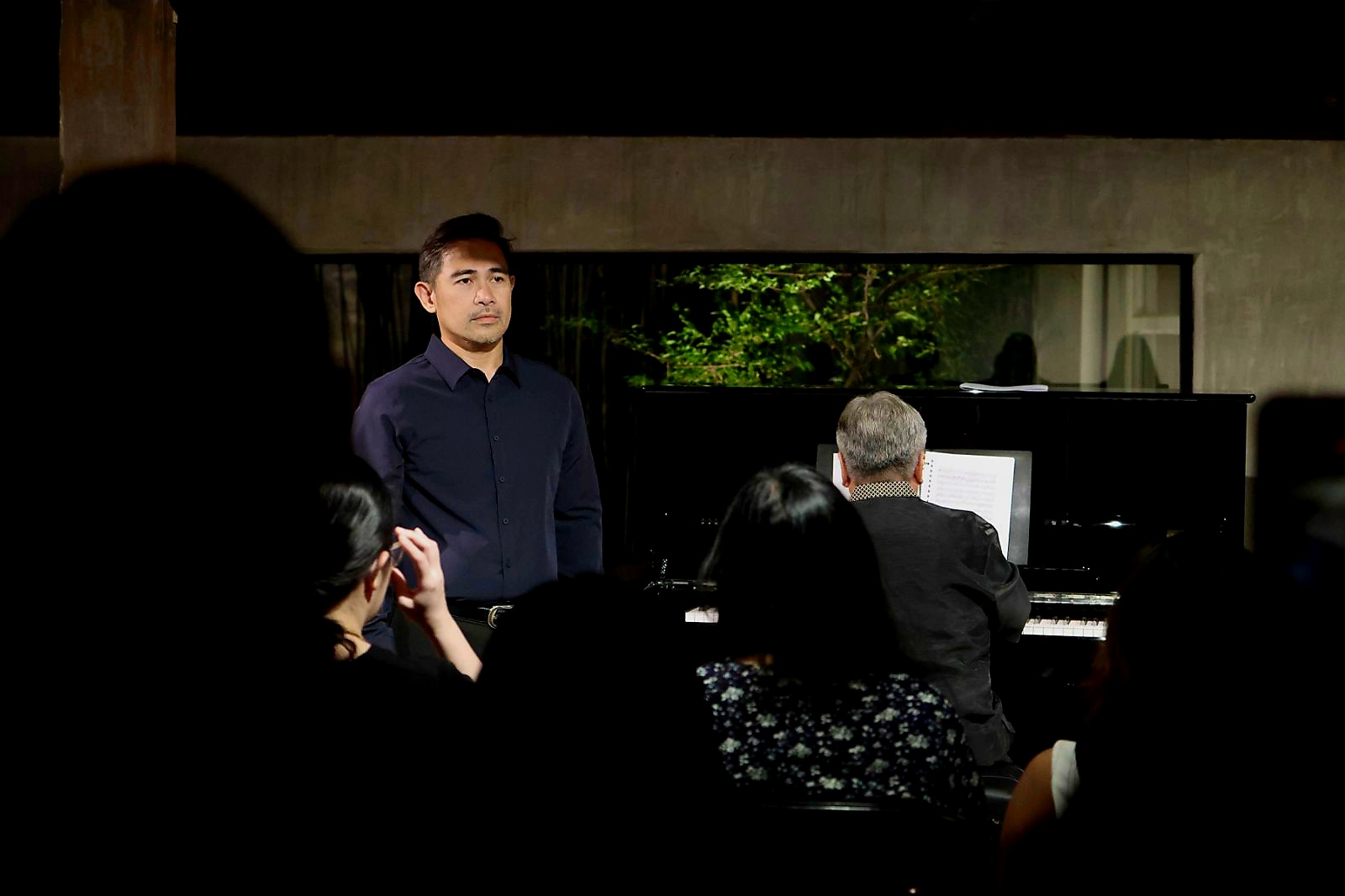
Tenor Erwin Lumauag
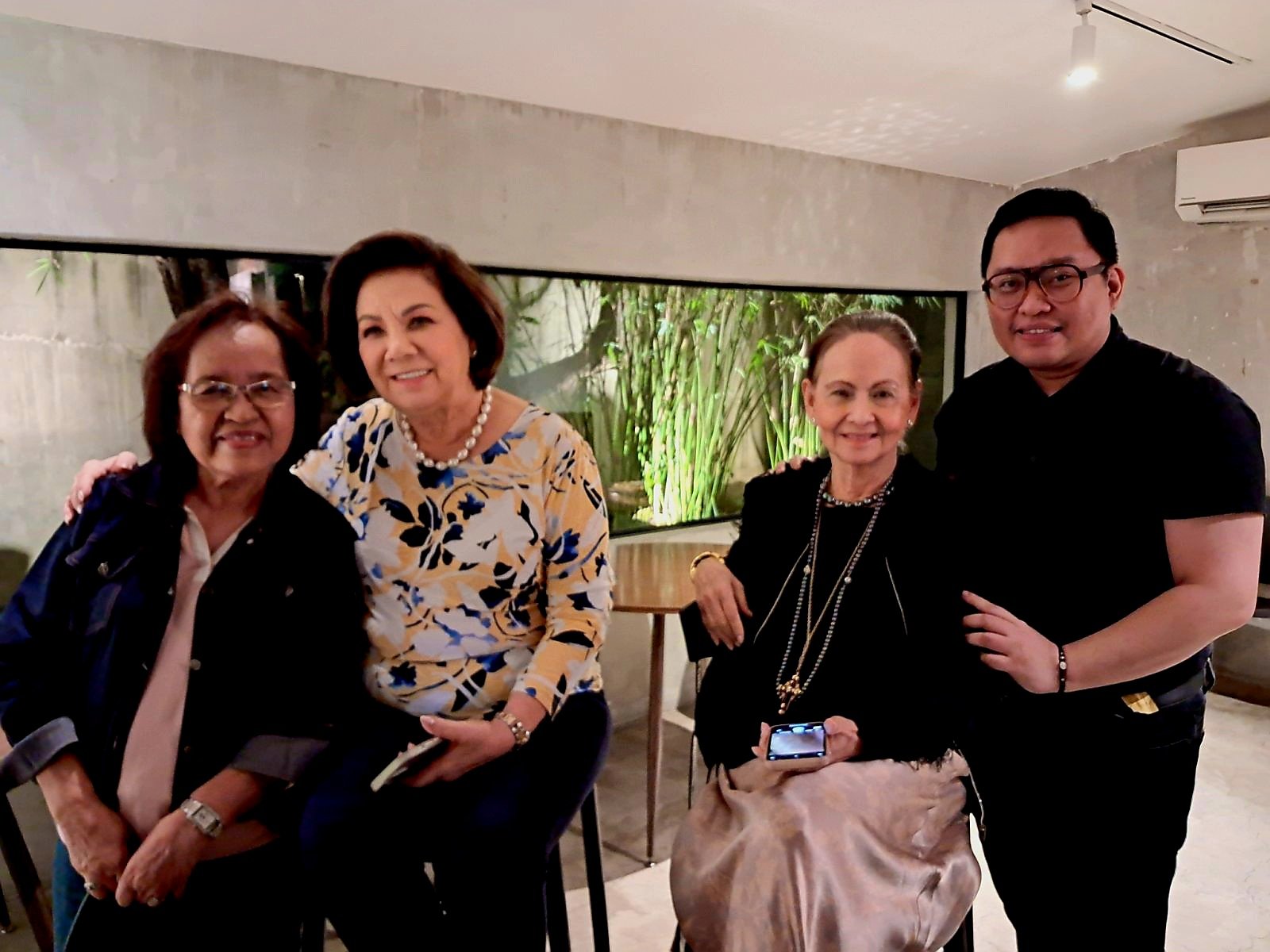
Art patrons; Pacita Agoncillo Sode, Marilou Khan Magsaysay, Patricia Cepeda-Sison and this writer Kingsley Medalle
7 Things You Need To Know Before Watching Balangiga: Howling Wilderness
Scenes From the Manila Art Fair 2026

Retrospective: Oj Hofer Celebrates 40 Years of Fashion

Cebu Isn’t Chasing Trends Anymore
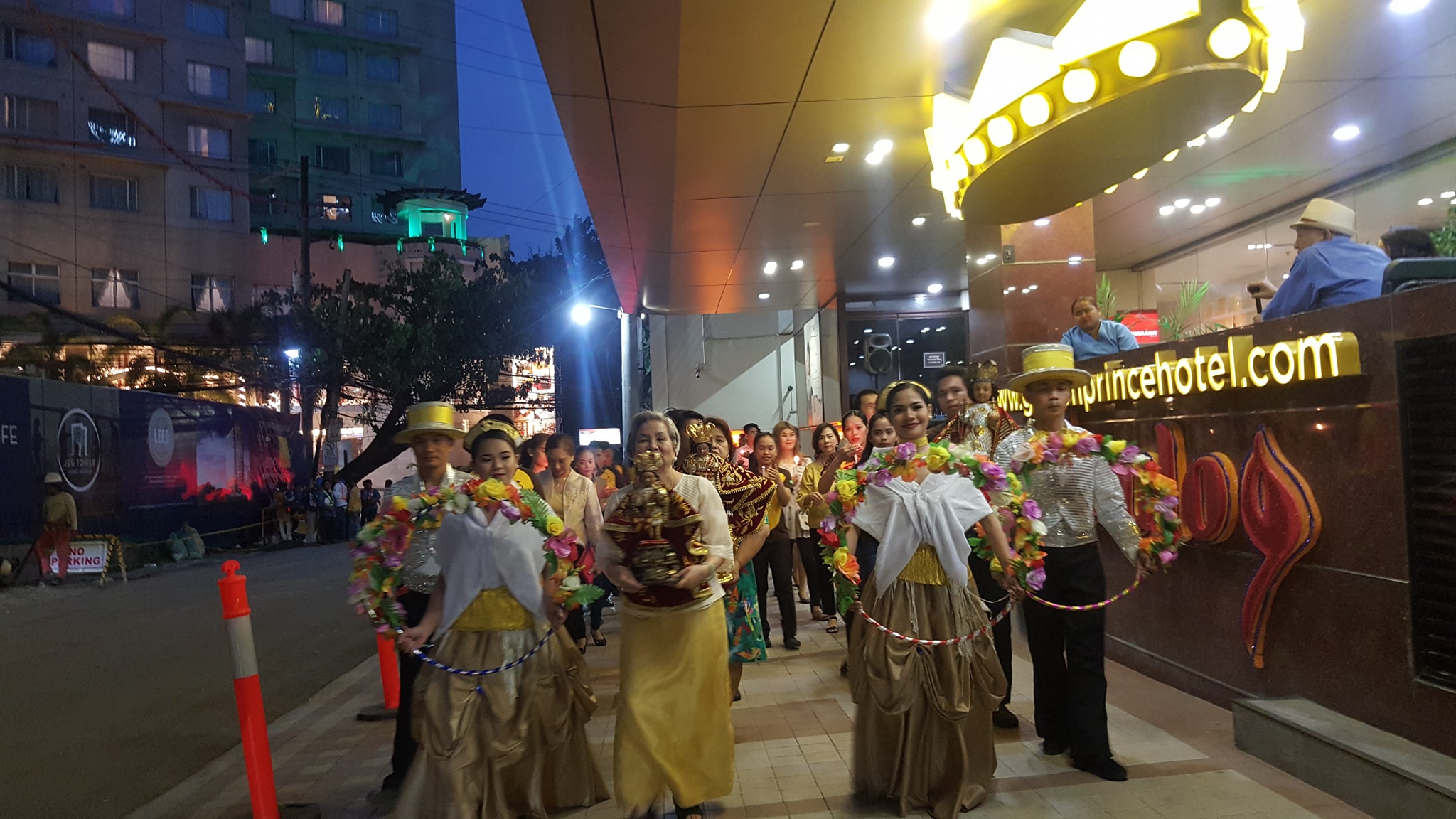
Golden Prince Hotel’s Sinulog Royalty Experience

SM Fashion Forum reveals Cebu’s style influencers
5 Filipino Films That Continue the Conversation on Women Empowerment
Noise and Sounds: An Artform

Christmas in Colonial Cebu: A Themed Exhibit by Teresin Mendezona and Eva Gullas for Stylescapes 2019

Artisanal Cebu: Aspiring calligraphy artist Abigail Condrado

Experience authentic Korean Barbeque at Da-In Restaurant

Chaine des Rotisseurs: A Night of Spanish Cuisine
-

 Ogle La La 3.03 months ago
Cebu’s Heritage Is Not a Museum Piece, Darlings
-
 Art Beat2 months ago
Assemblage: Art Exhibit Blending Themes of Infinity and Renewal
-
 The Scene2 months ago
At the Table: Introducing Flora de Filipinas
-
 Retail4 weeks ago
Cebu Isn’t Chasing Trends Anymore
-
 Art Beat4 weeks ago
Why Does Yayoi Kusama Matter to Cebu?
-
 Fashion2 weeks ago
Retrospective: Oj Hofer Celebrates 40 Years of Fashion
-
inside1 week ago
7 Things You Need To Know Before Watching Balangiga: Howling Wilderness
-
inside2 weeks ago
Scenes From the Manila Art Fair 2026