
Style
Under the Radar: Bernice Romualdez-Ocampo Finds the Perfectly Balanced Life at Milagros Farm House in Toledo
By Jing Ramos
After 45 years of marriage to Golden Ocampo, having raised two sons—Carlo and Franco—as well as managing a huge household in Manila, Bernice Romualdez-Ocampo had an unexpected change of heart. One day, she realized that she was wishing for a much simpler life in the countryside. “Living in the nation’s capital wasn’t exactly my scene anymore, particularly at this point in my life. I have always longed for a garden on a farm to tend to. Having grown up seeing my mother, Milagros Lebumfacil Romualdez, puttering around with plants—in fact, I was inspired by her love of the land and devotion to the process of creating a garden,” Bernice reflects on the start of her journey.
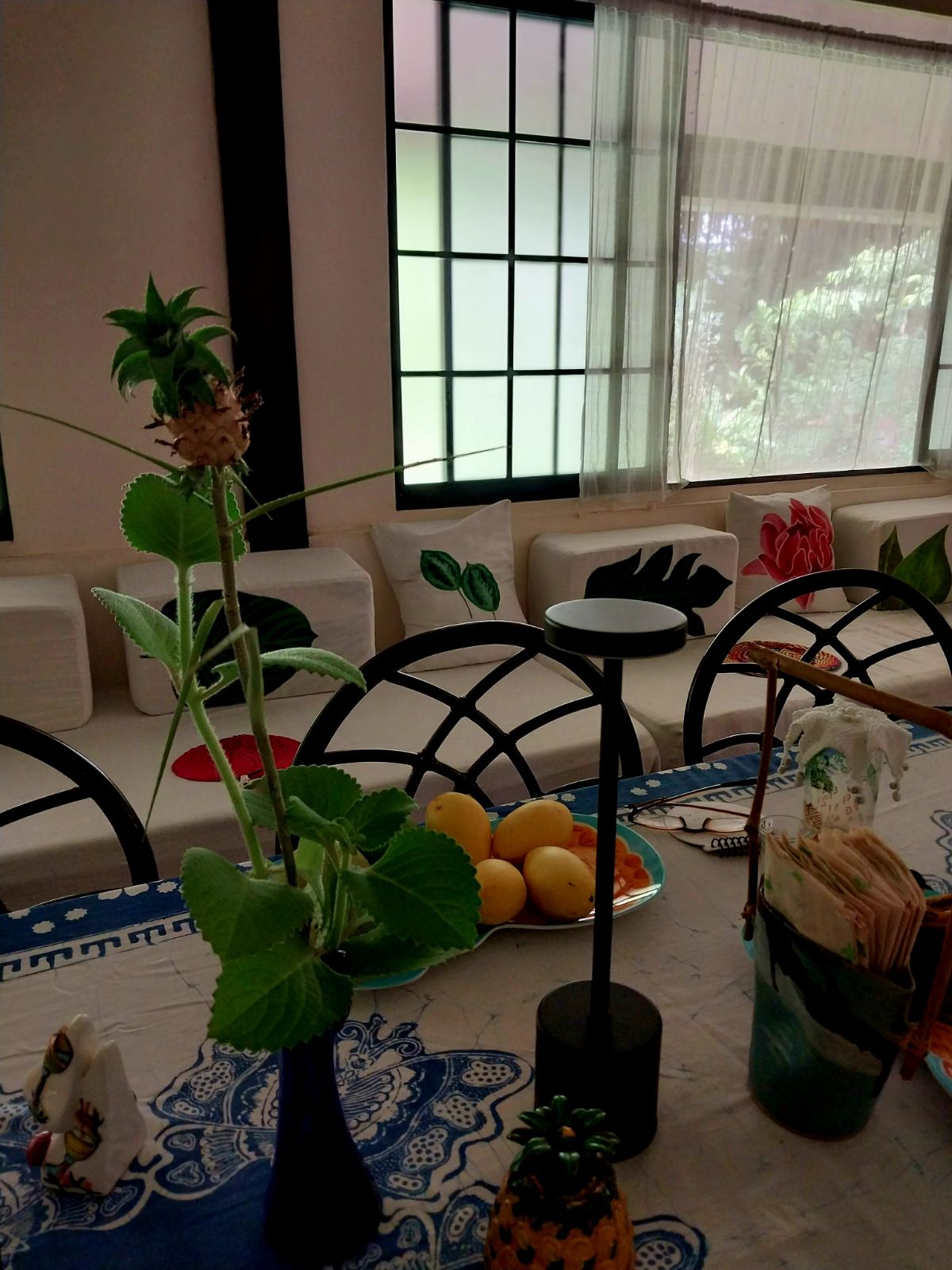
The pillows that adorn the beige sofa are hand-painted by her brother, the artist Chicoy Romualdez.
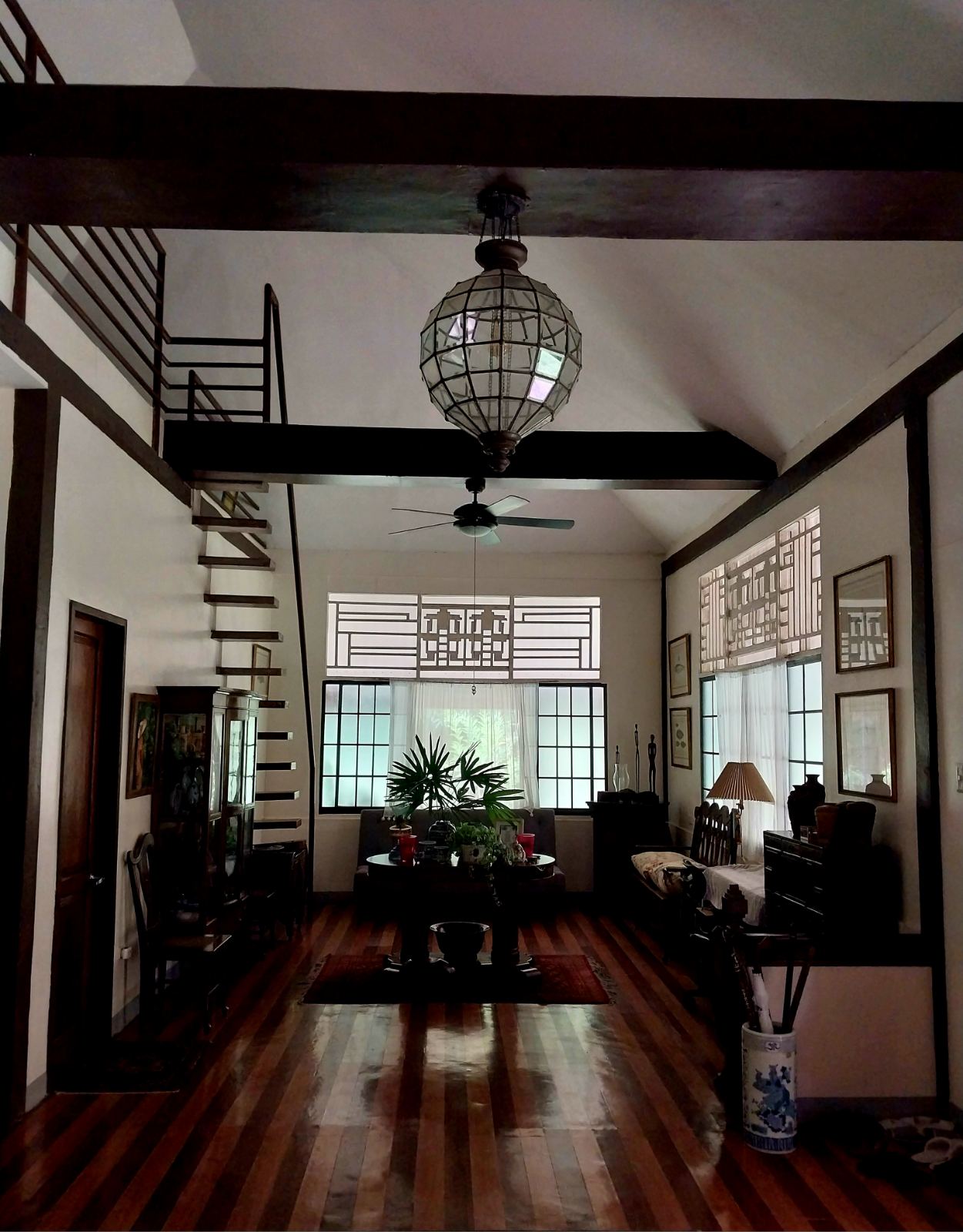
The charming contrast of biscuit-colored walls and ceiling against the wooden doors and flooring creates a warm and inviting atmosphere.
Eventually, Bernice inherited the Toledo farm property with her siblings, but only she took an interest in developing the land. The property spans around 3.4 hectares of farmland, teeming with a biodiversity of fruit trees, endemic species of plants, birds, and even bees.
There are fruit-bearing trees: mango, santol, breadfruit, atis, lime, dayap, and the like. Combining different fruit trees in a mixed orchard enhances pollination, biodiversity, and pest resistance. These fruit trees grow side by side with other endemic trees like kampong, narra, royal poinciana, and the local Palawan cherry.
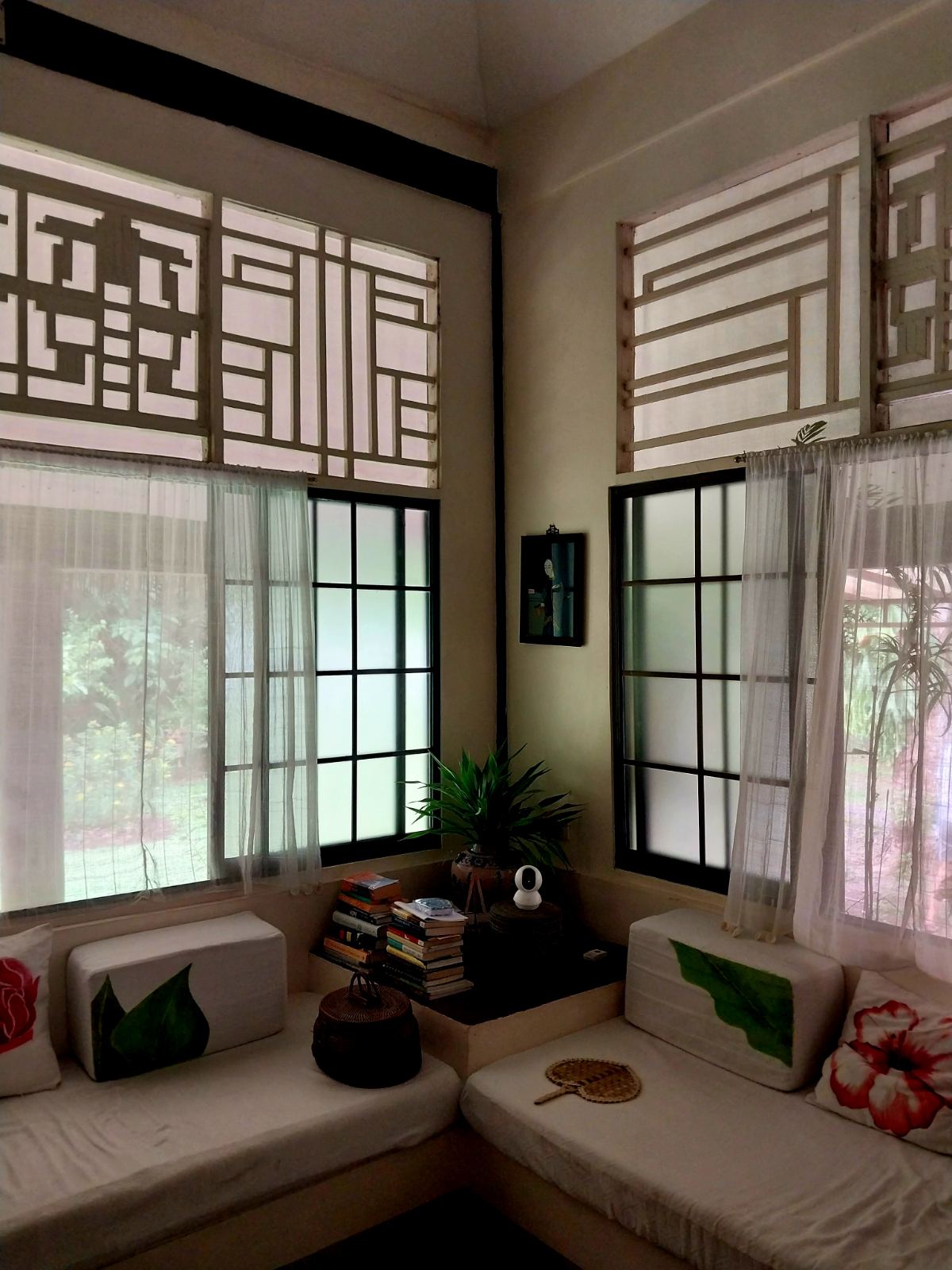
All the architectural details were taken from the Lebumfacil ancestral house in Fuente Osmeña, Cebu.
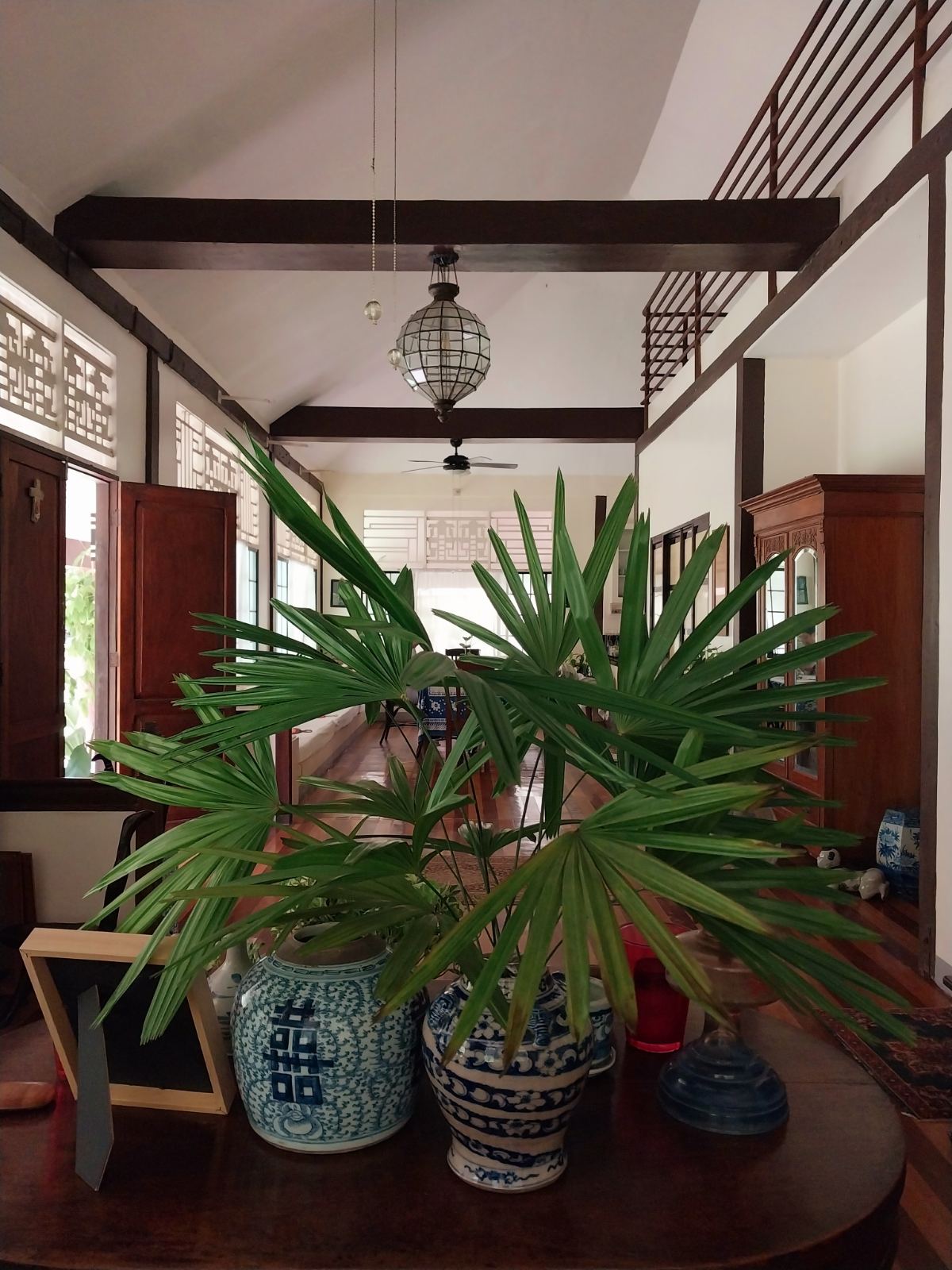
Antique blue and white ceramics hold anahaw palm fronds gathered from the garden.
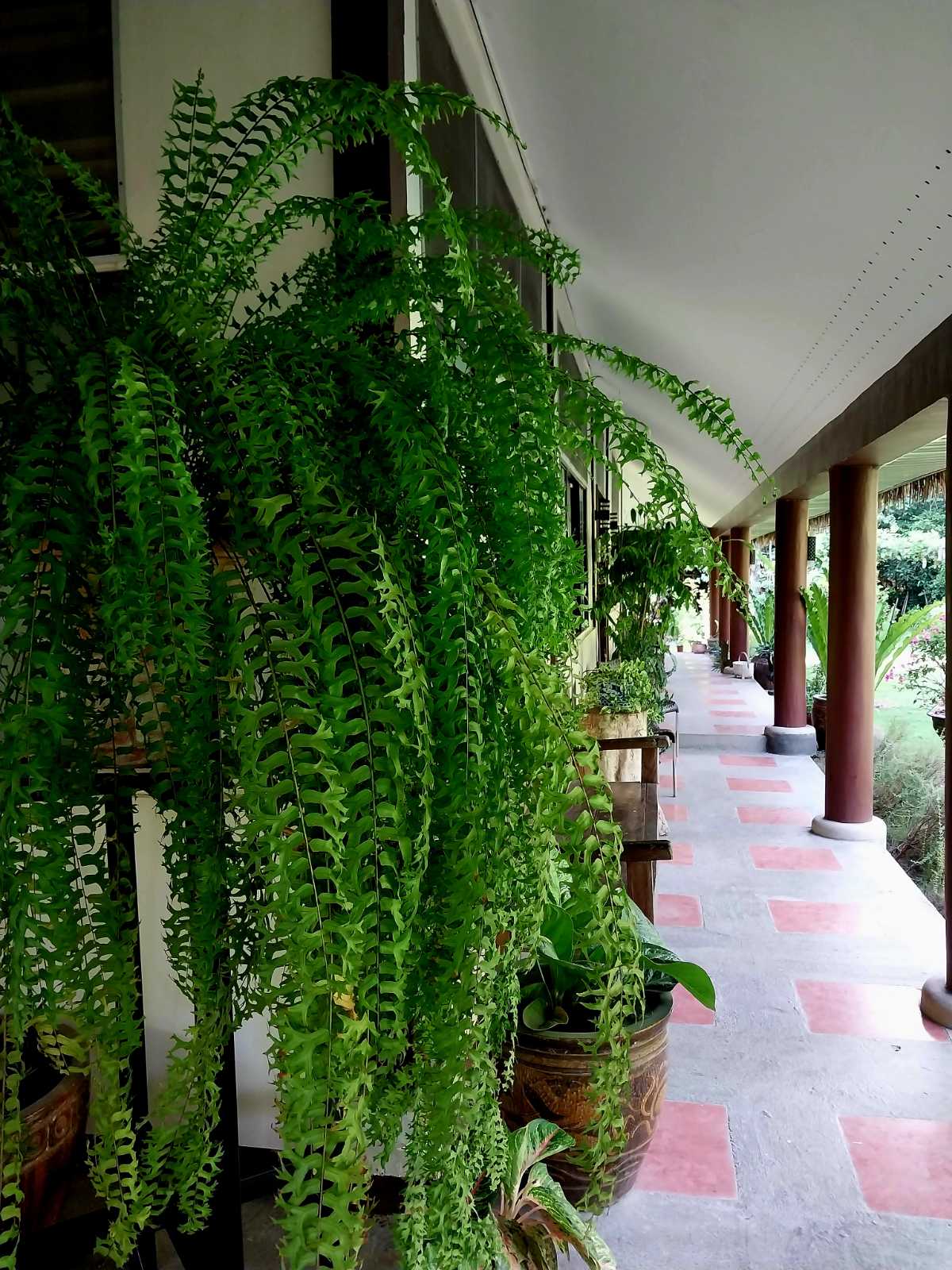
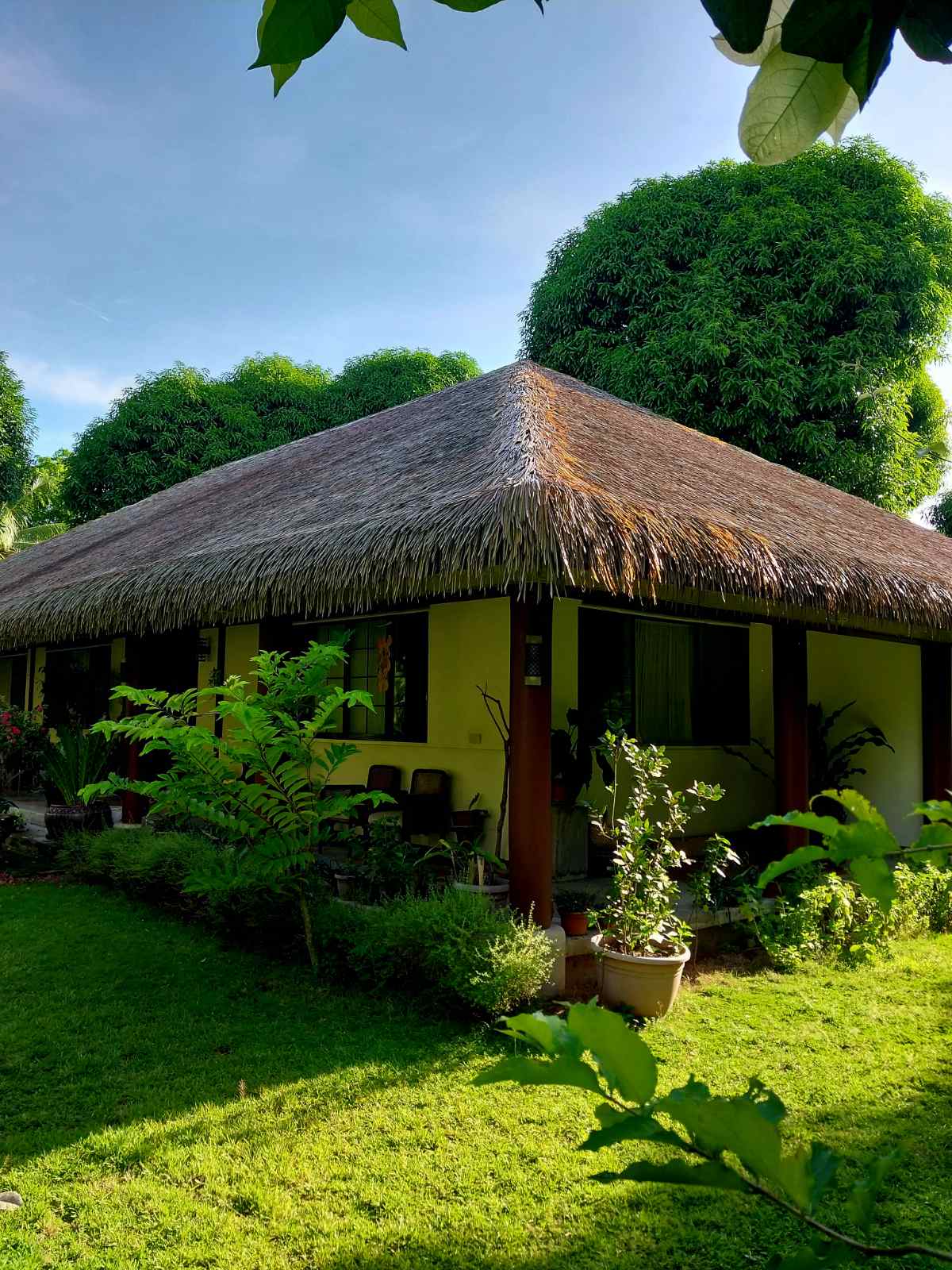
The lanai, bordered by wooden columns, opens to a thriving garden.
Back in the days when Bernice would visit her mother Milagros, she noticed that it was indeed a healthier lifestyle—simple and peaceful—and being surrounded by foliage was just the kind of life she was yearning for. She worked on the relocation tirelessly, and today the farmhouse is tastefully done in a colonial-style, thatched-roof building with wooden columns bordering the lanai. The interior of the building is an exercise in calm restraint: the walls are painted a shade of biscuit, providing a pleasant contrast to the polished wooden floors. Most of the architectural details integrated into the building came from the Lebumfacil ancestral house in the center of Fuente Osmeña in Cebu—hence the name, Milagros Farm House.
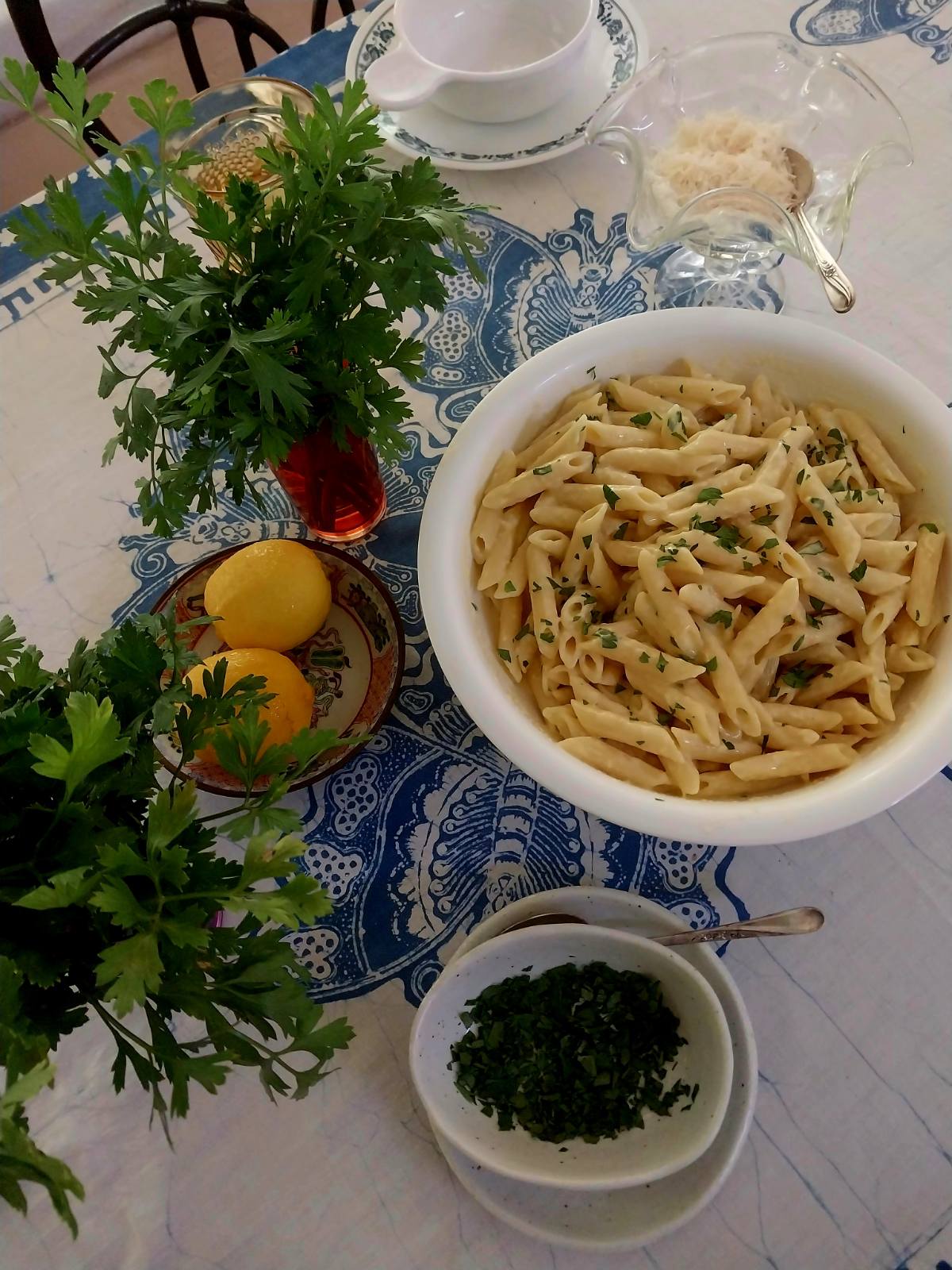
Lunch is served with arrangements of parsley and lemon, the primary ingredients in the pasta dish.
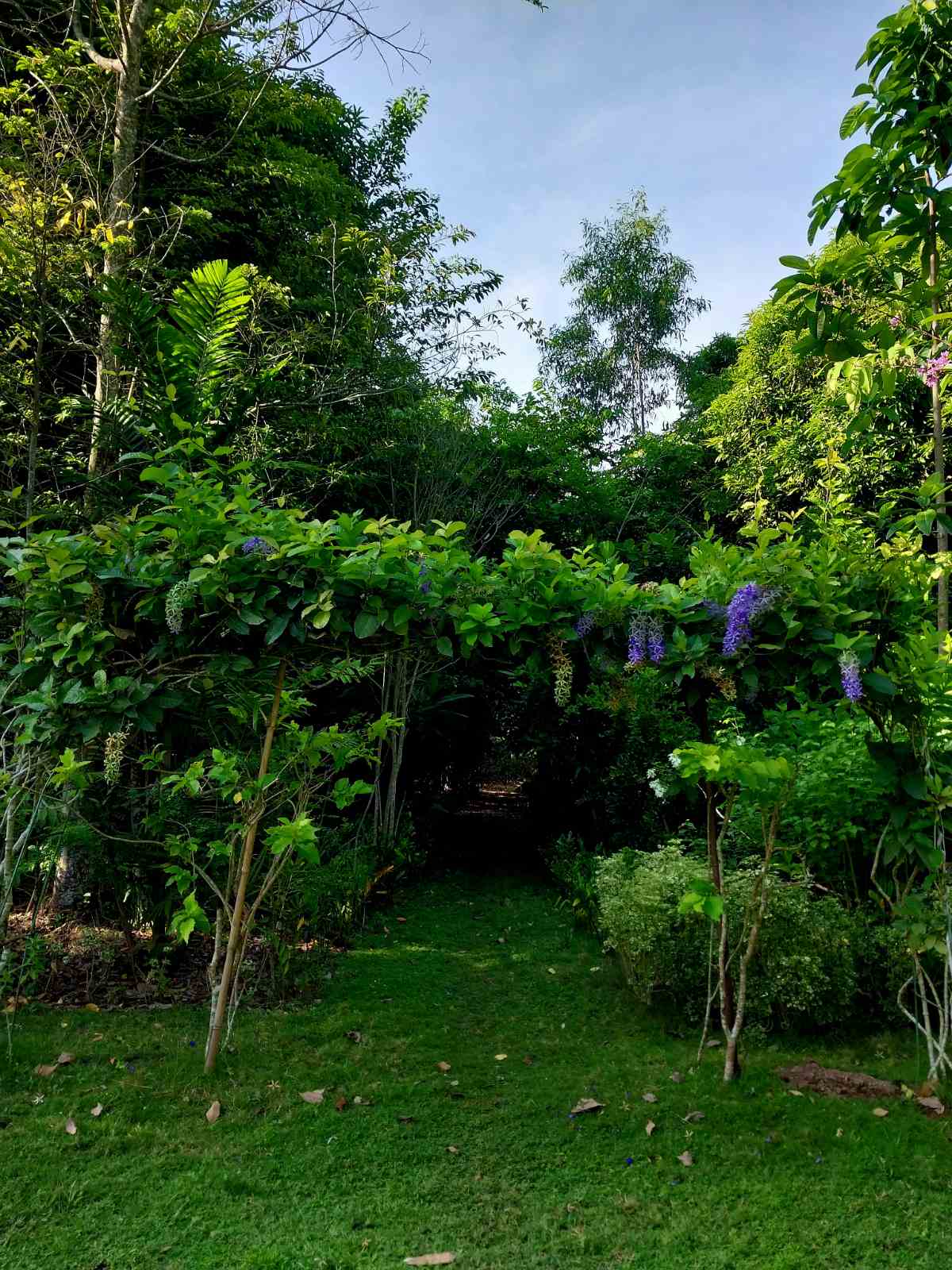
Garden of earthly delights
“Decades back, in my youth, I reveled in Manila city life: dining out with friends, staying up late into the night, traveling extensively, and even strutting down a fashion ramp as a model. That was the life then, I thought. These days, the tables have turned, and instead, gardening has taught me that nature always gives us back whatever we put in—rewarding our labor with fruits and flowers, and most importantly, blessing our lives with a strong sense of fulfillment and inner peace,” Bernice offers us a glimpse of her idyllic life on the farm.
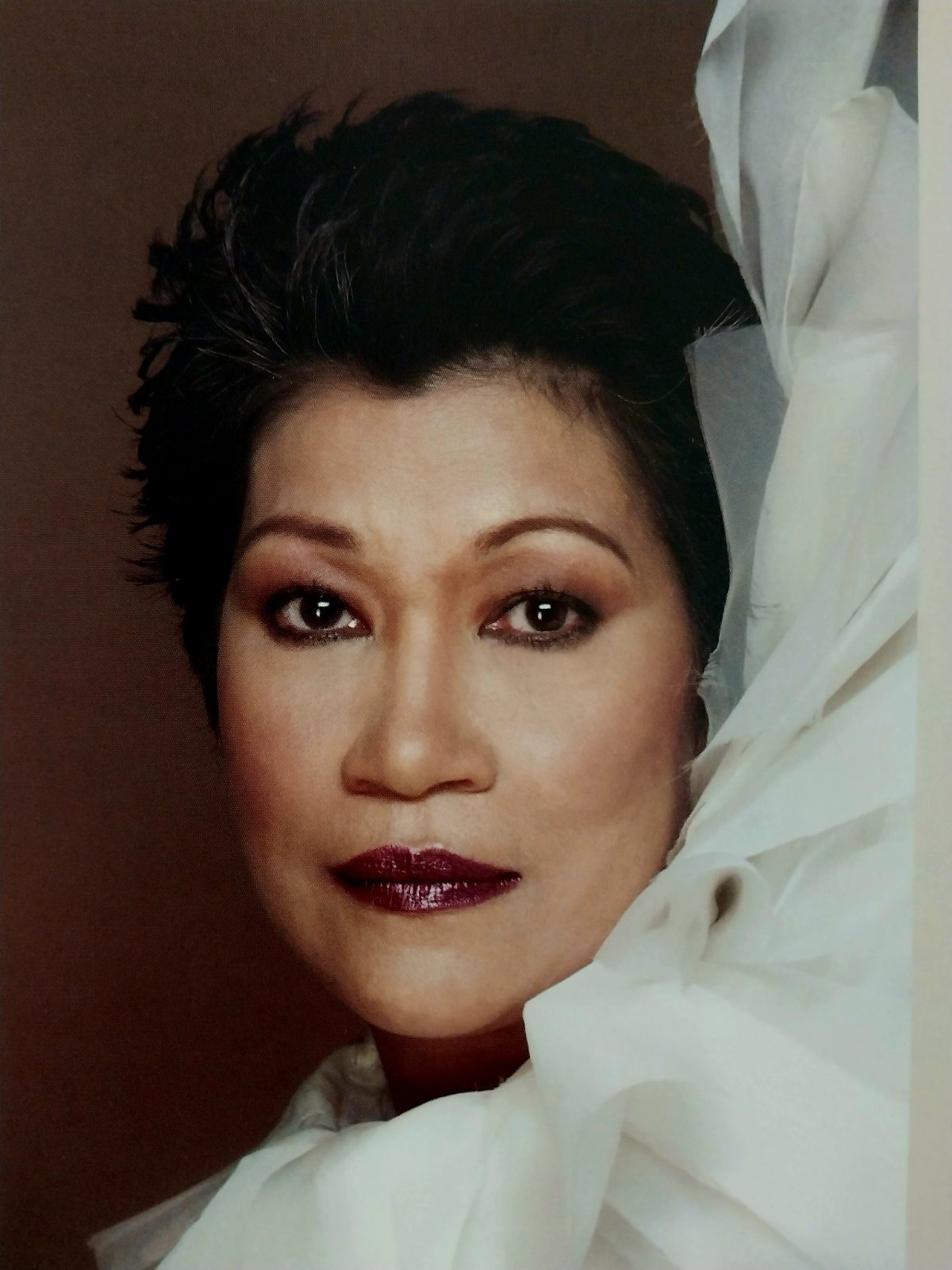
Bernice Romualdez-Ocampo, photography by Raymond Isaac, styling by Patrick Rosas

Style
The Glass House: Emma Gomez Finds the Right Perspective in Dauis Highlands, Bohol
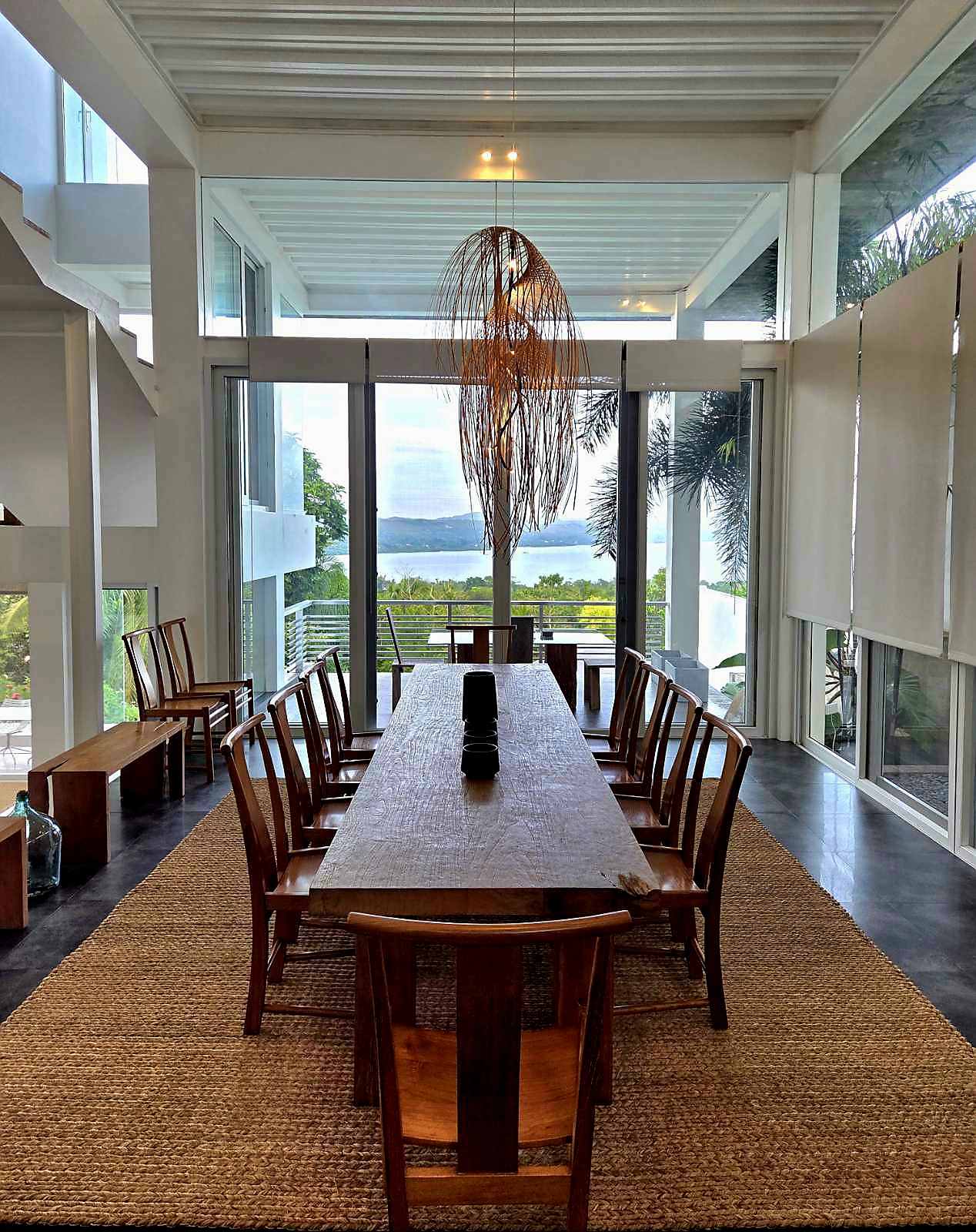
by Jing Ramos | photography by Doro Barandino
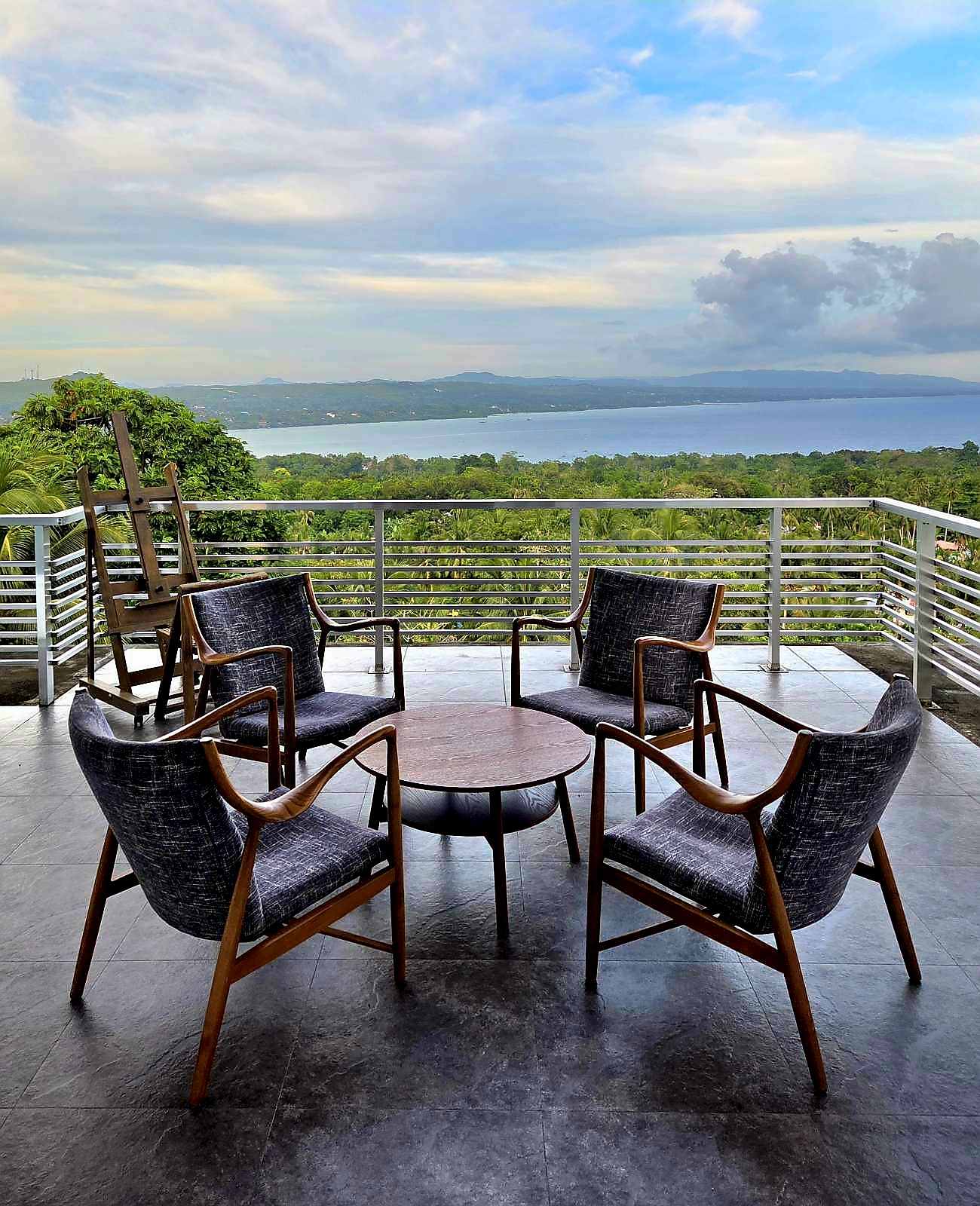
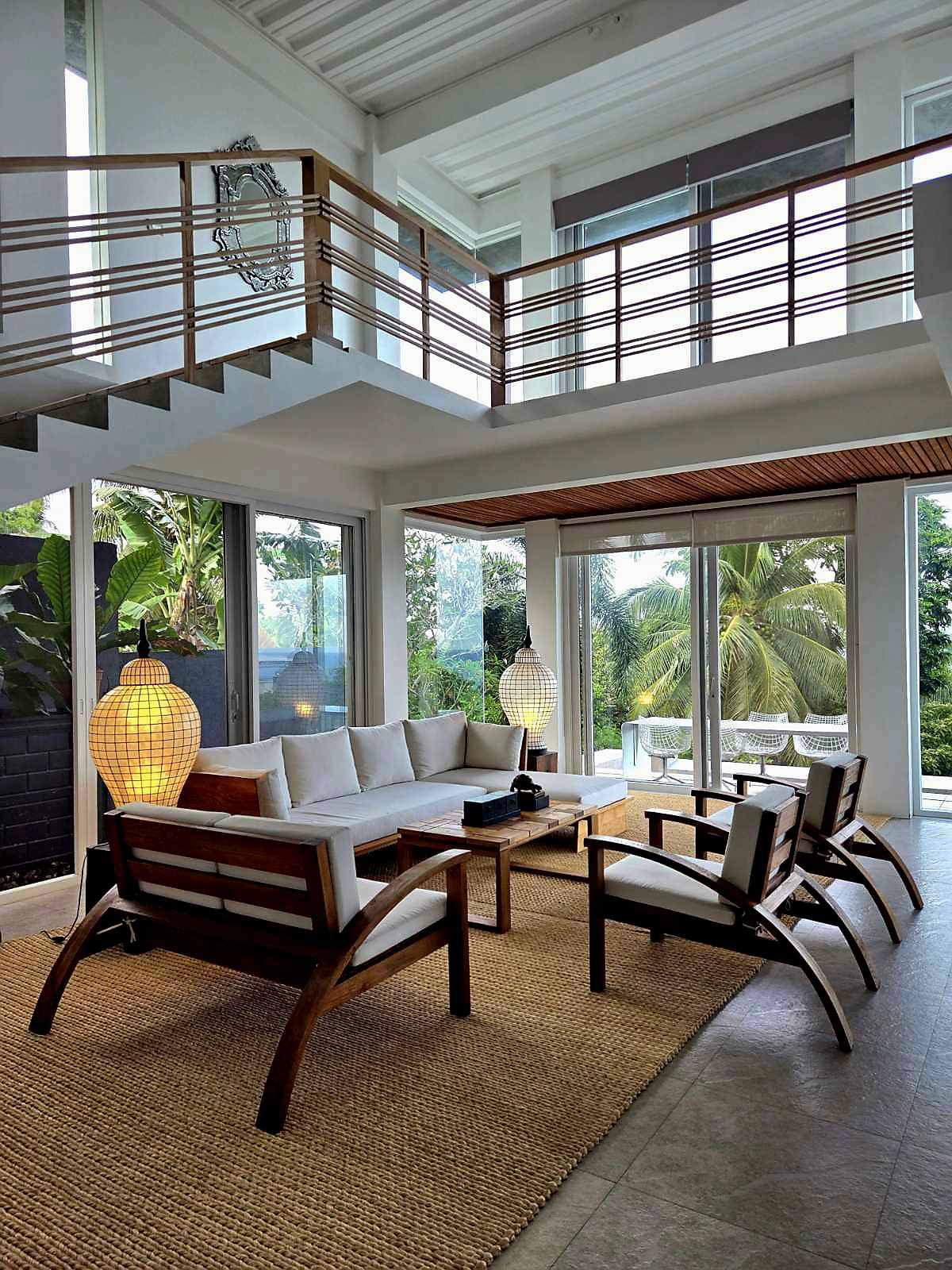
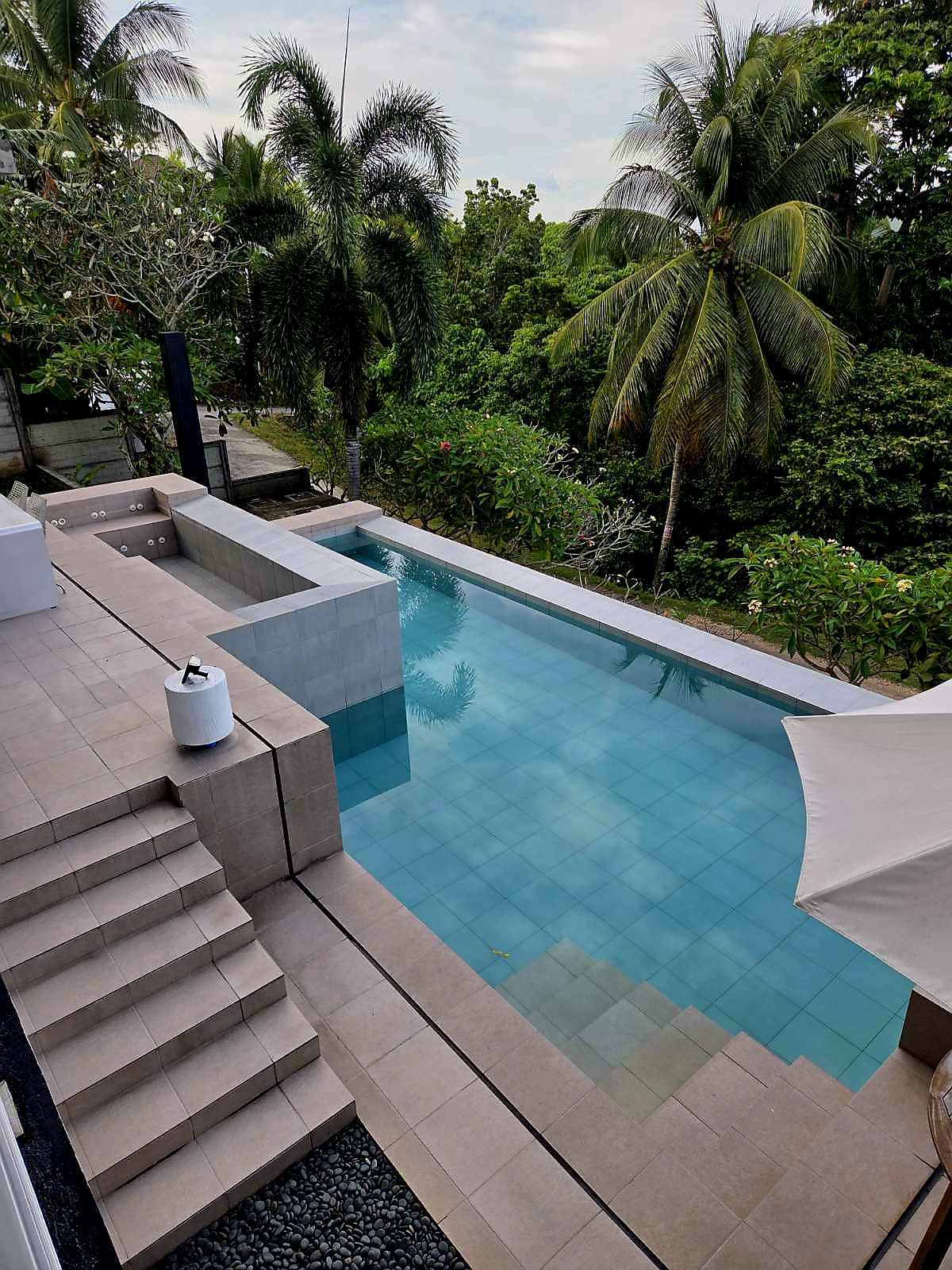
The terrace view offers a lush terrain overlooking Tagbilaran Bay with a cluster of mid-century chairs.
Style
Cliffhanger: Jun Escario and Simon Miles Live in a Post Modernist House Perched on a Jagged Slope
by Jing Ramos, photography by Doro Barandino
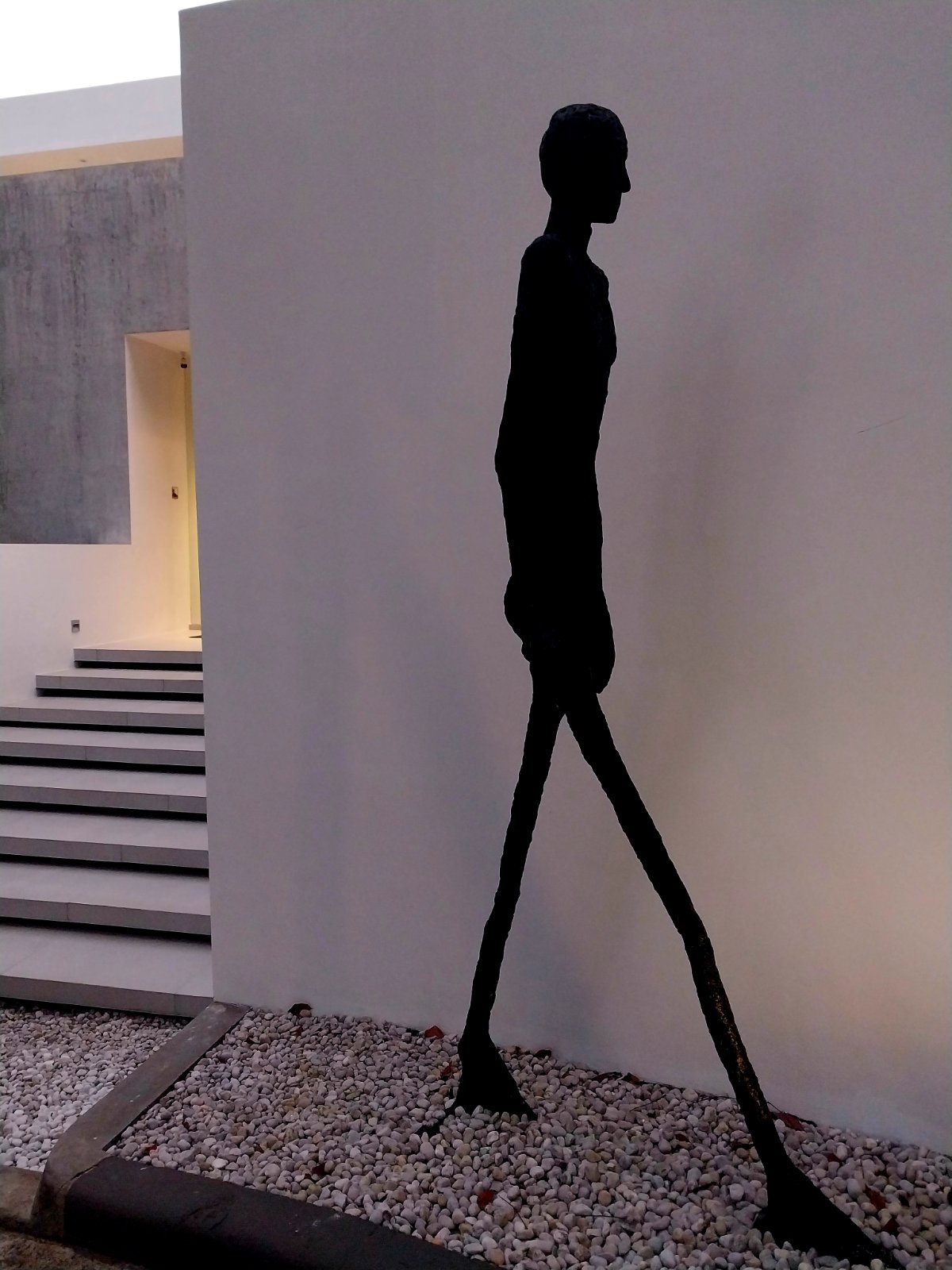
A Brancusi like sculpture against a polished concrete wall offers a low key entrance to the property.
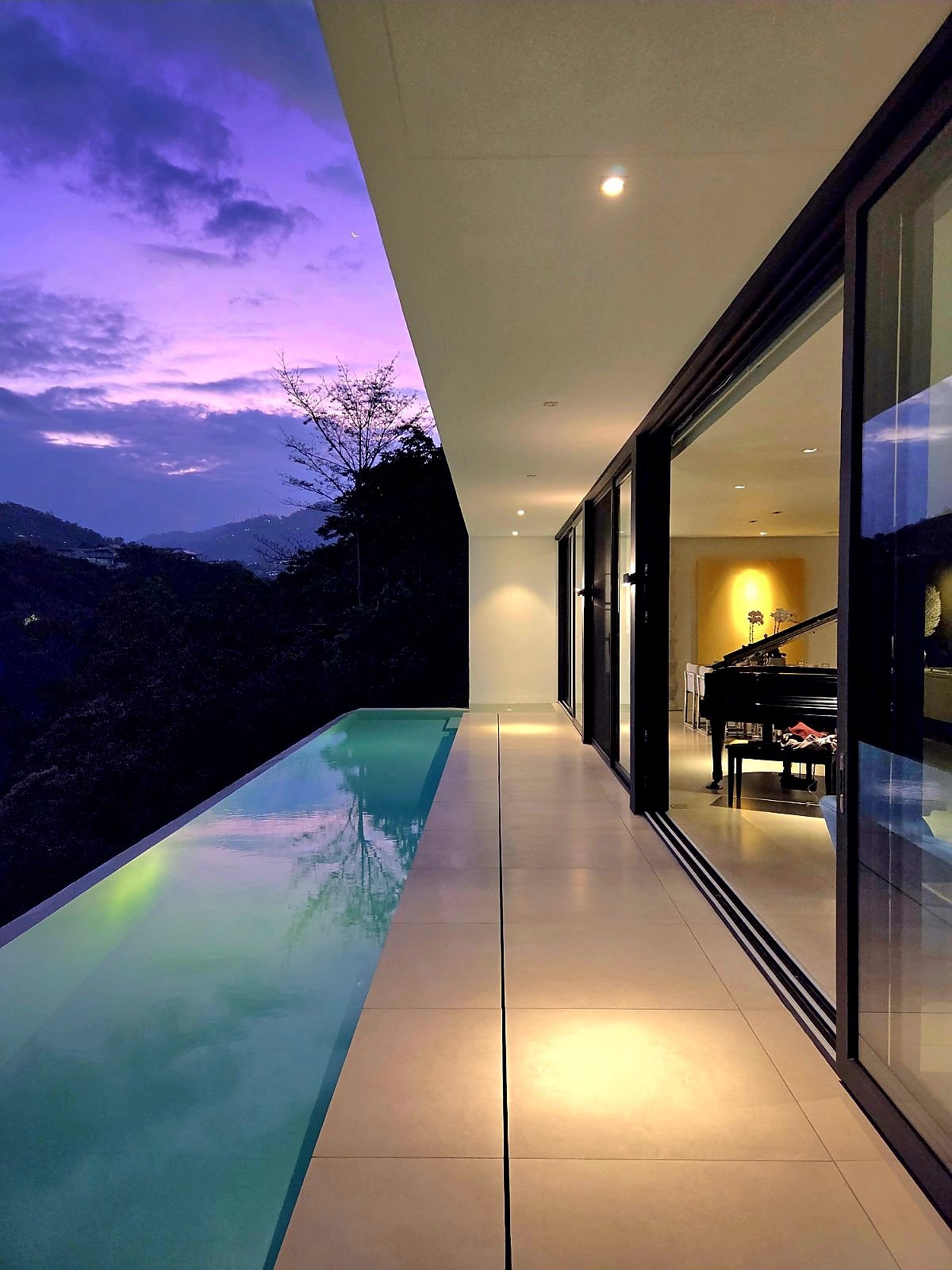
Maria Luisa Estate Park remains one of the most highly regarded real estate properties in Cebu. The lush landscape offers stunning views of the city. Situated atop the Banilad and Busay hills, the development is known for its high elevation and sweeping panorama of Cebu City and Mactan Island. The hilly topography makes the properties a challenge for building construction. It was no accident that fashion designer Jun Escario and architect Simon Miles chose a very specific look for their house on the rugged slopes of Maria Luisa Estate Park.
The couple have been living for eight years in what appears to be a temple of modernist architecture, defined by functionalism. The design of the house embraces new technologies—reinforced concrete, steel, and glass—to create clean, geometric, and often asymmetrical forms. This postmodernist architecture is characterized by classical elements reinterpreted with modern materials and a touch of irony. The visual shape of the house blends various styles, periods, and materials into a single structure. The focus is on how the building relates to its surroundings, opposing the universal glass-box approach to modernism.
As a result, the house features clean lines, a carefully balanced composition, and exposed building materials, along with spacious rooms and abundant natural light. The style emphasizes volume and perspective, further enhanced by a minimalist outlook.
Jun Escario added, “The concept of the house evolved around several pieces Simon and I already owned, particularly my collection of mid-century furniture, which we were keen to incorporate into the design. We also picked up several paintings and earthen jars from a trip to Santorini. With great respect for our talented Cebu designers, we wanted the overall aesthetics to remain true to our personal style—clutter-free and effortlessly chic. The property itself was laid out utilizing 650 square meters of the lot.”
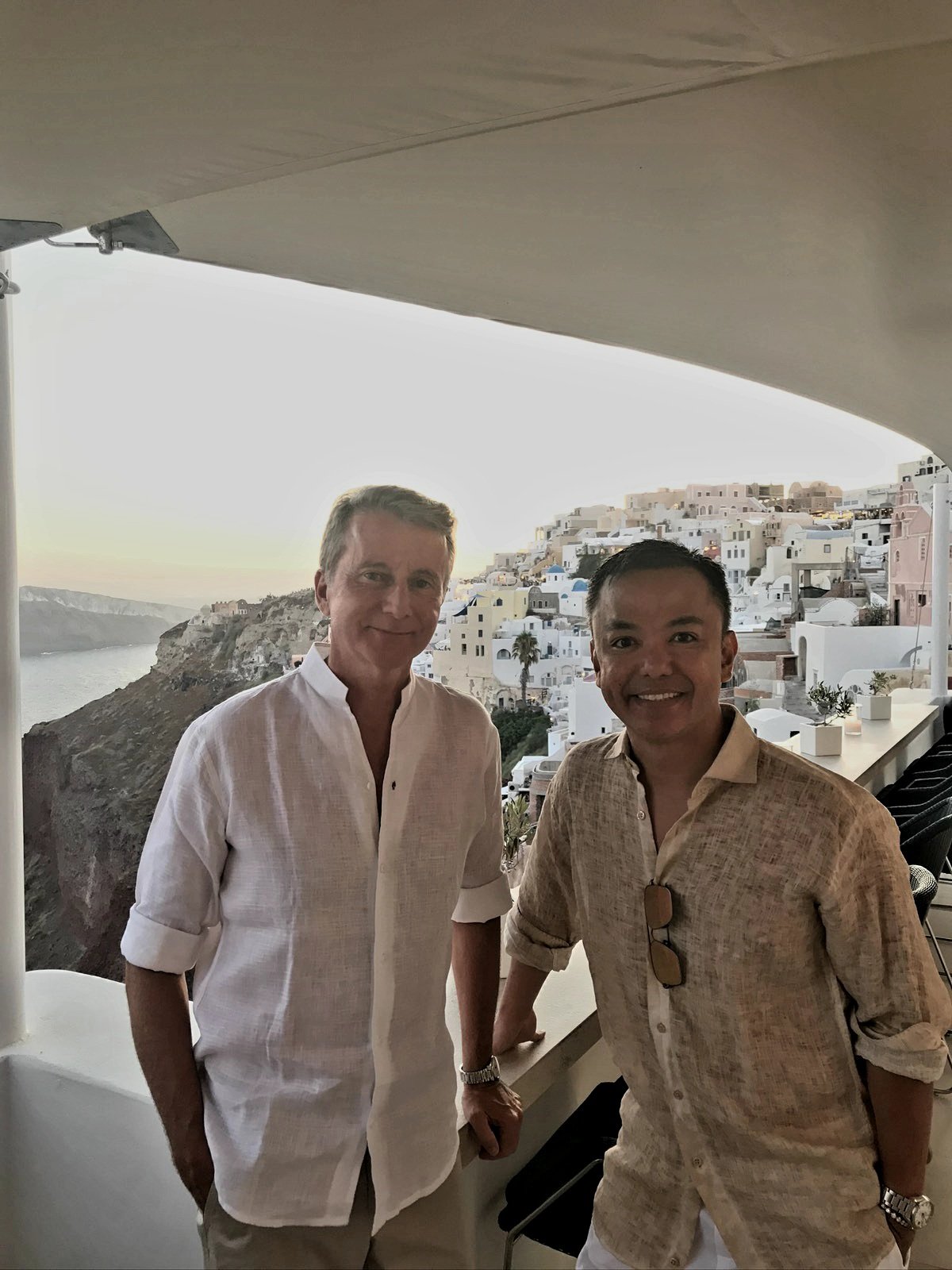
Simon Miles and Jun Escario in Santorini where the couple picked up a lot of their inspiration
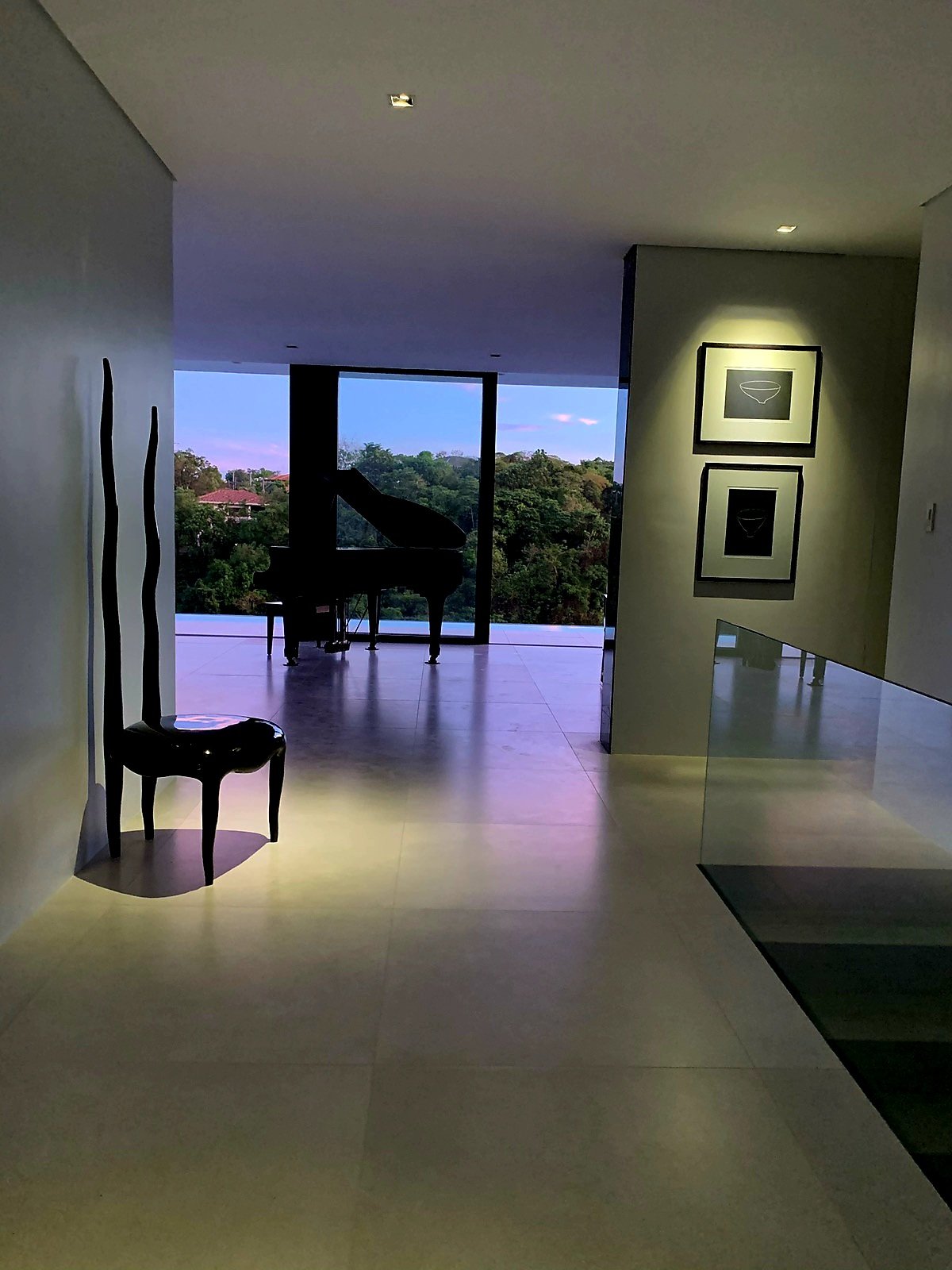
R&Y Agousti Sylvie chair and a black baby grand Weinstein piano define the space of the house’s entrance
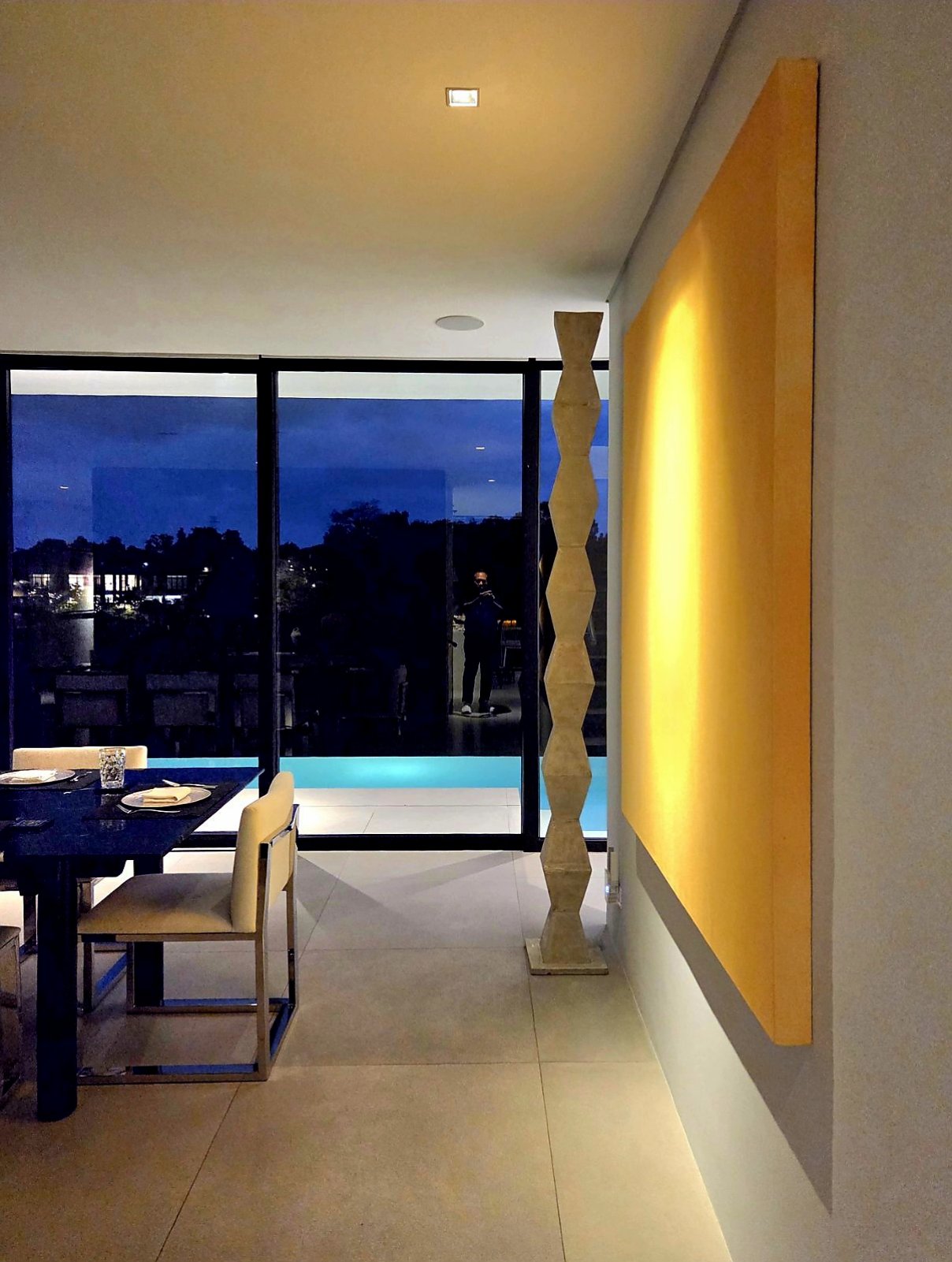
A contemporary dining area features a large, vibrant yellow abstract painting and a tall sculptural column reflect the owner’s aesthetic preferences.
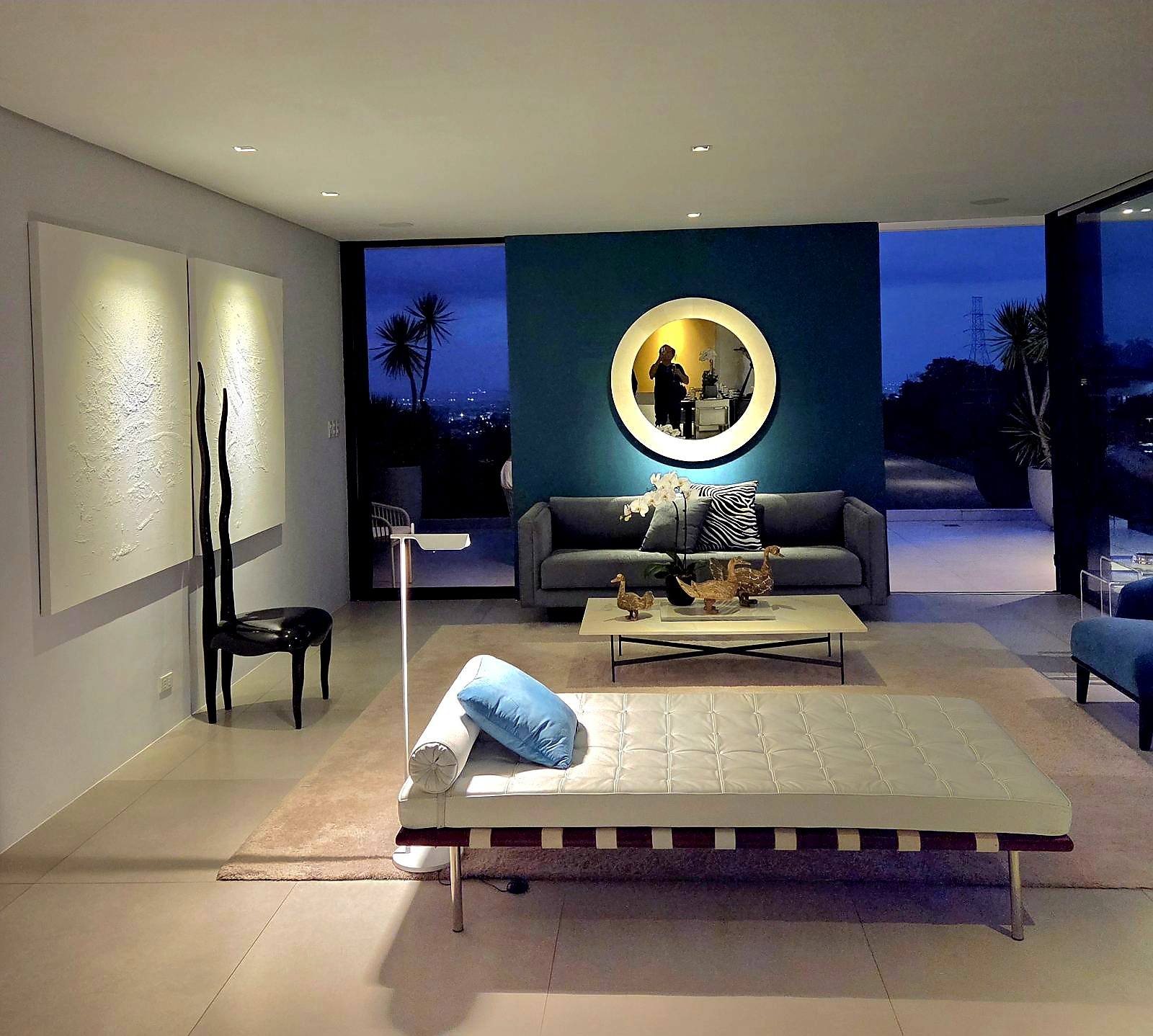
R&Y Agousti Sylvie chair and the Barcelona day bed are the prime design elements that characterize the principle of stark simplicity in this living room.
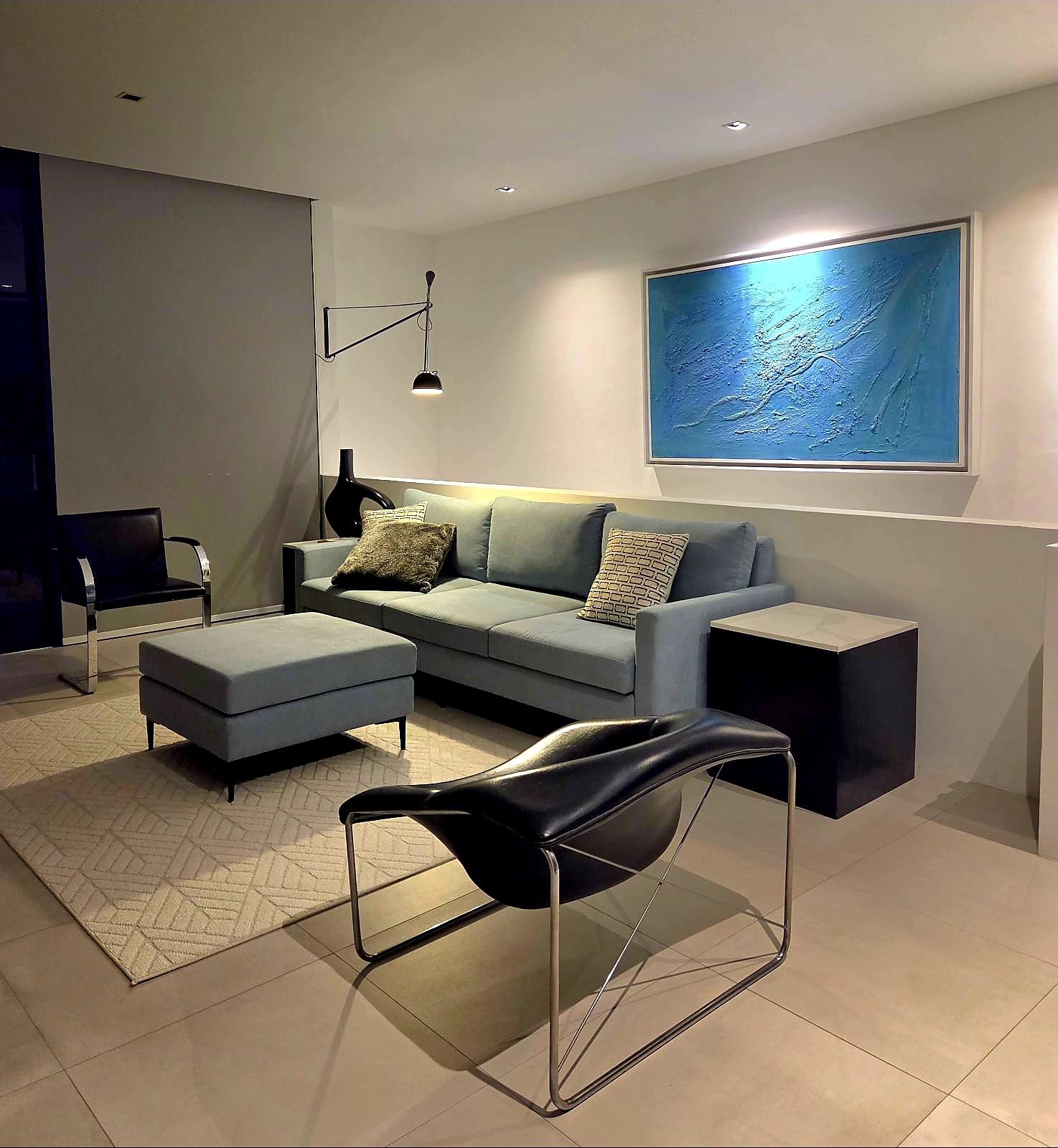
This lounge area features mid-century modern design elements that utilizes a minimalist approach with functional furniture anchored by a puce colored rug.
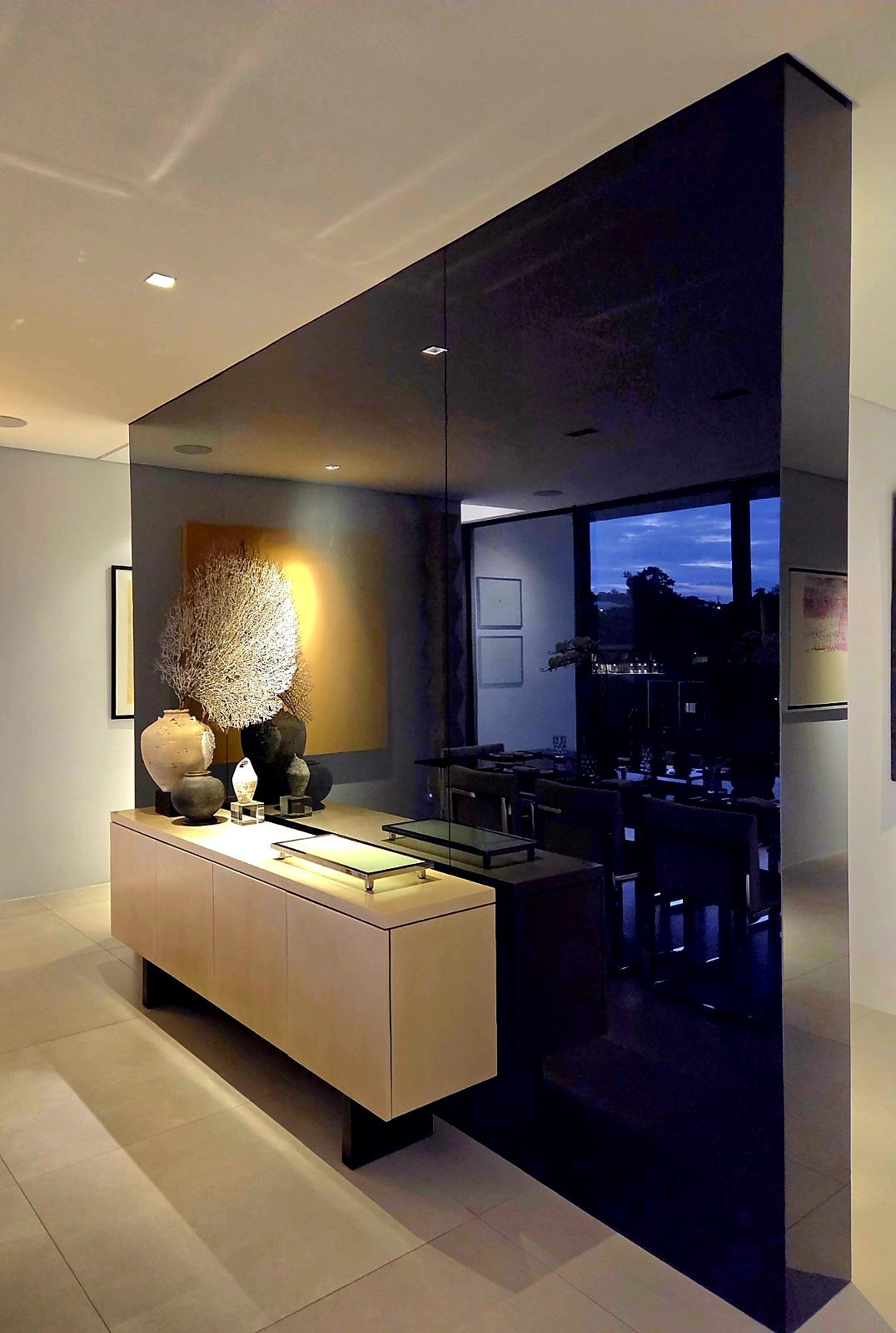
A large black glass wall divides spaces accompanied by an austere side board with art objects picked up from the couple’s extensive travels.
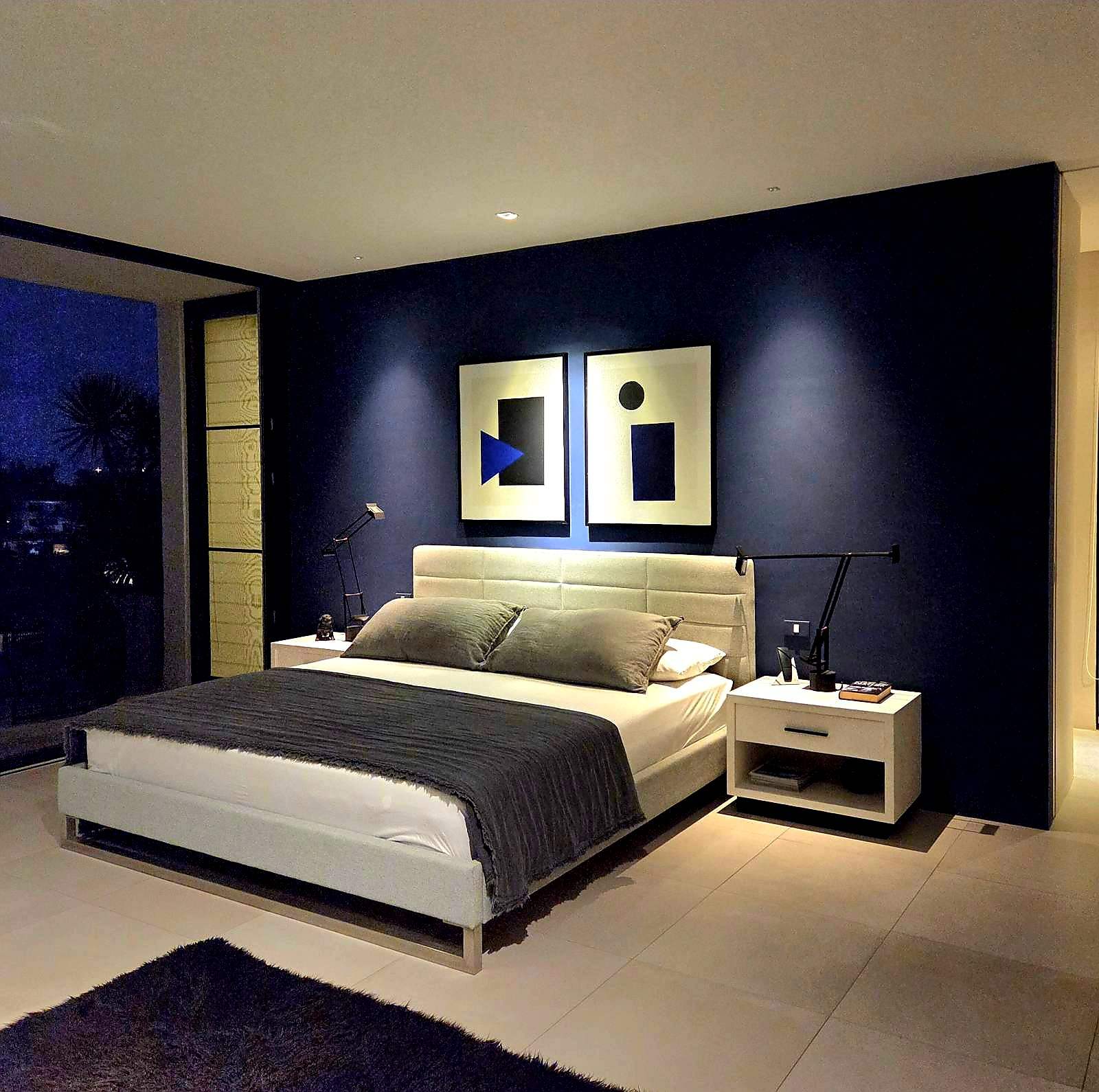
A low-profile upholstered platform bed with a distinctive padded headboard with clean lines and neutral tones supported by subtle light colored legs.
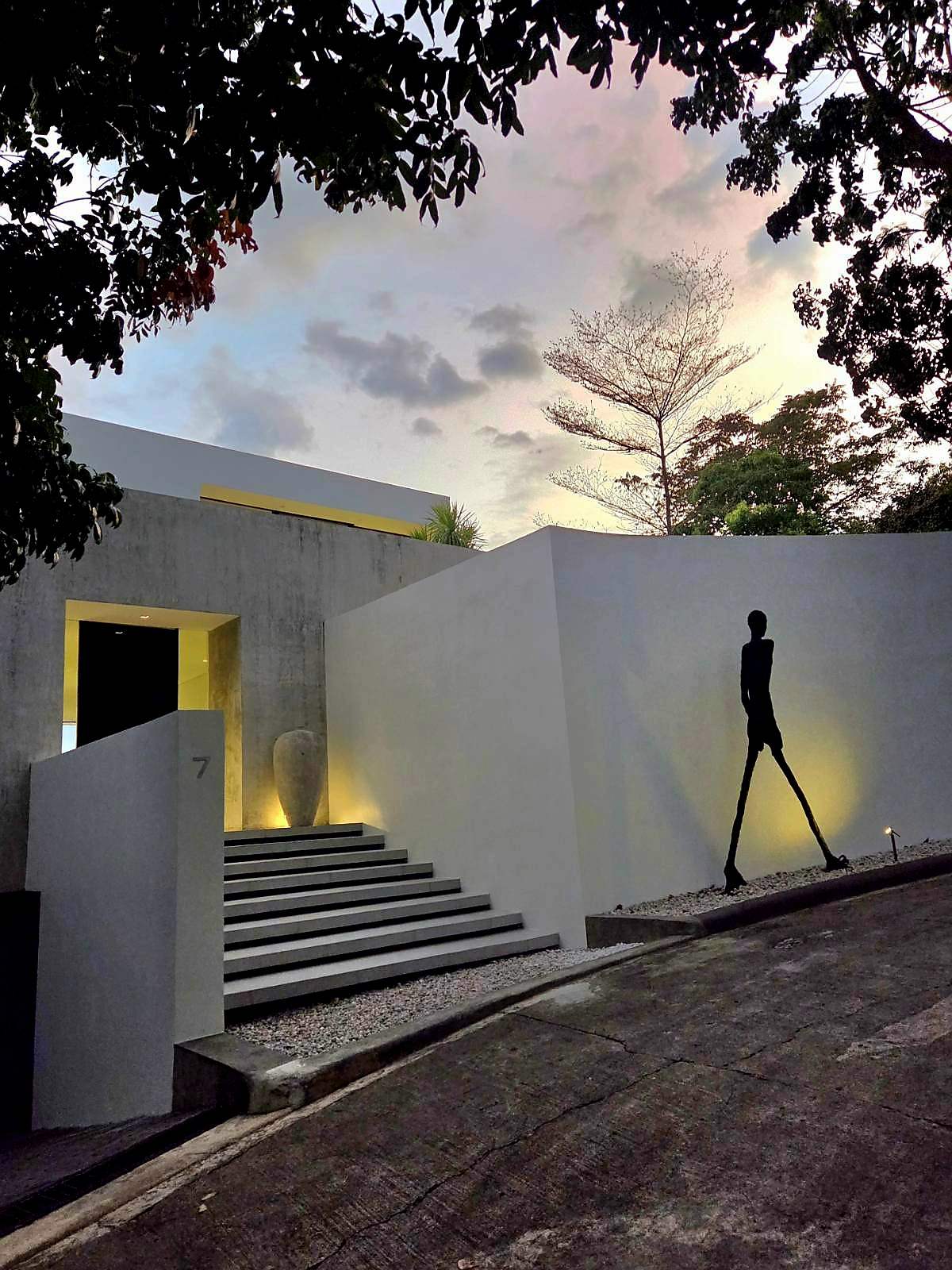
The entrance is recessed with dim lighting and exposed concrete steps lead to a black door flanked by an earthenware jar from Santorini, setting the mood of the house’s architecture.
Style
Femme Fatale: David Downton Celebrates the World’s Most Stylish Women
by Jing Ramos
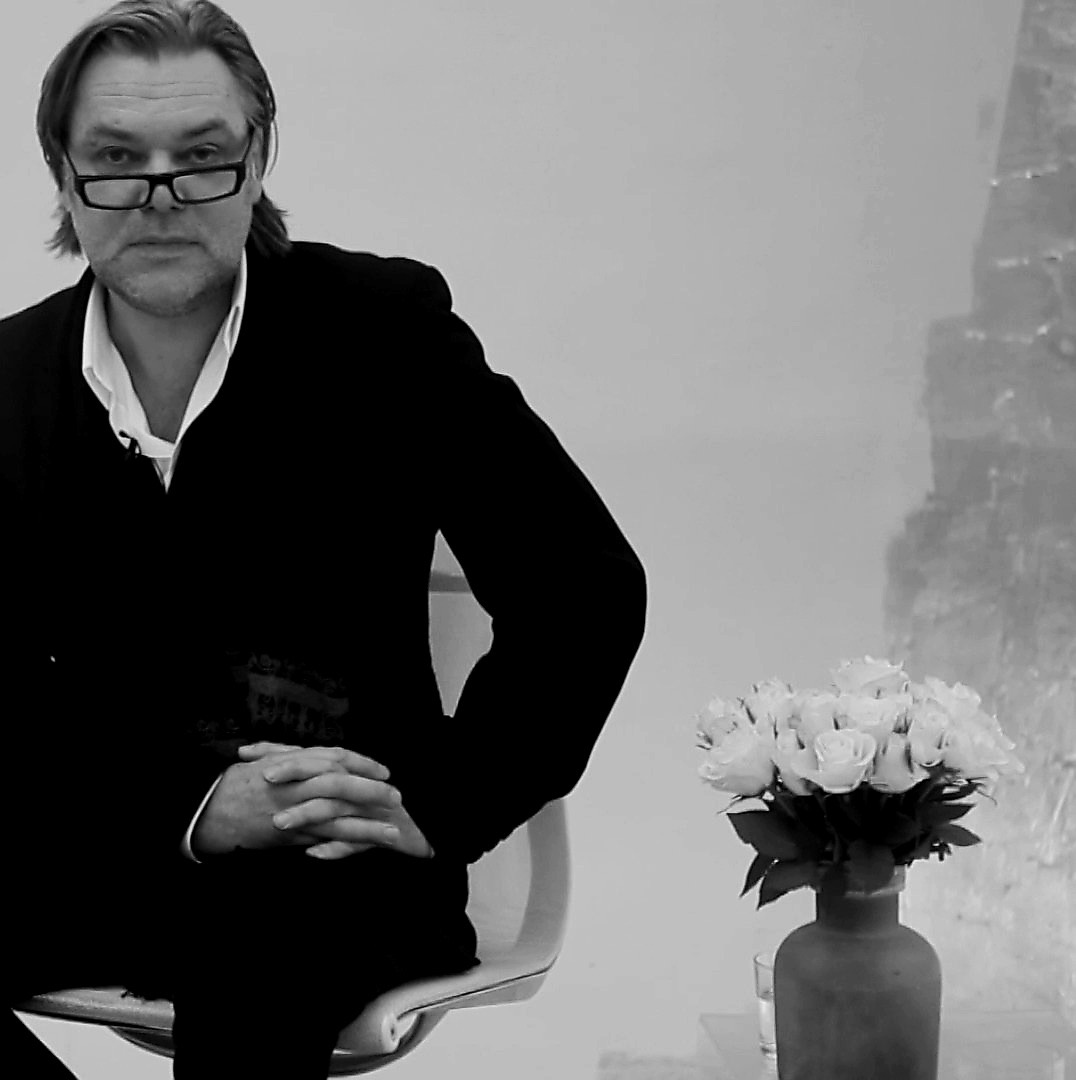
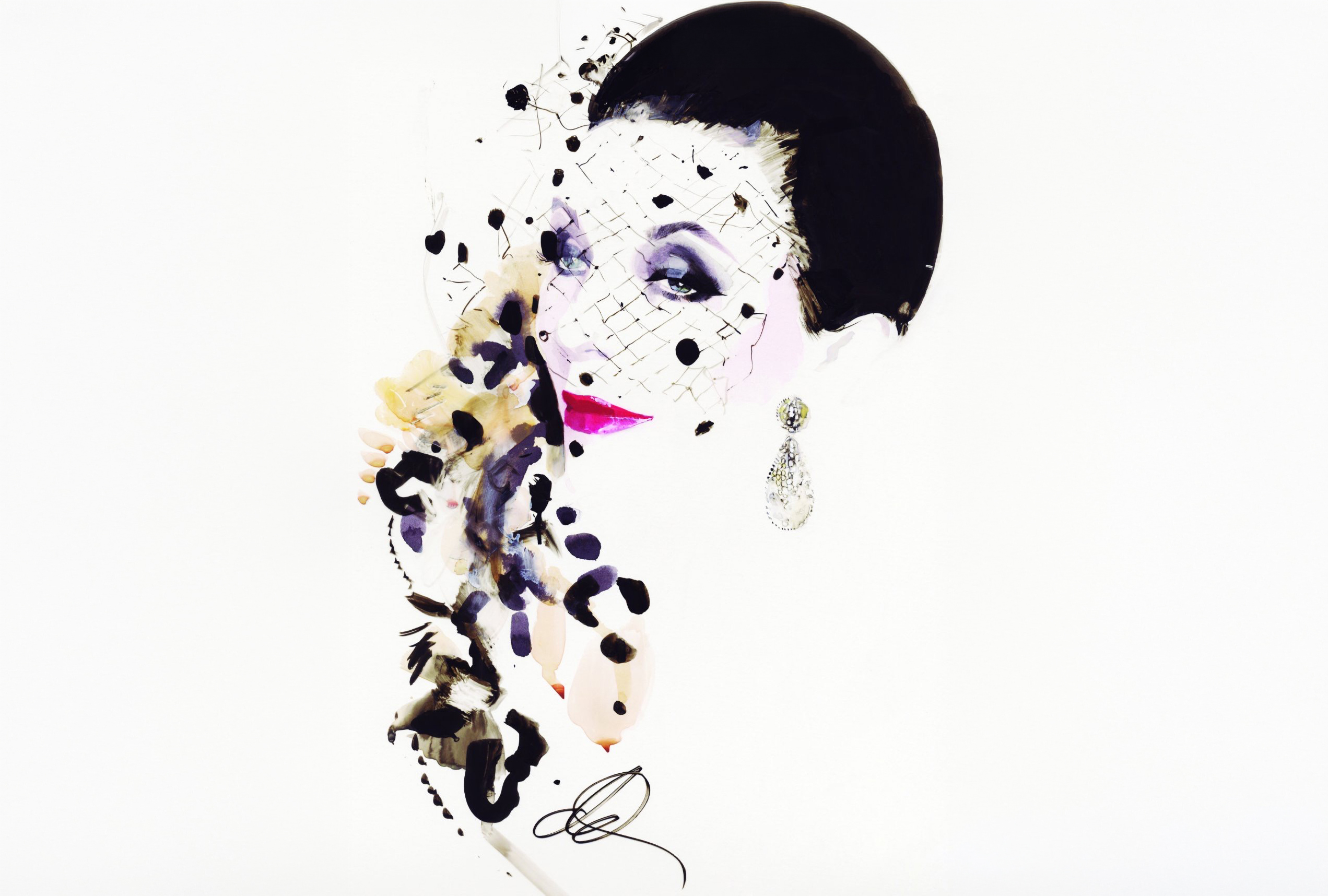
David Downton’s illustrations document the glamour of the portrait sitters.
“David Downton’s technique captures all the looks of today, their outline and their sophistication with paradoxical realism.” — Christian Lacroix, fashion designer
David Downton has established himself for over two decades now as the world’s premier fashion artist. His contemporary and stylish portraits of women have had such an impact on the fashion landscape that they have revived interest in fashion illustration in the manner of René Gruau and Antonio Lopez. David Downton believes that these illustrations reflect images of the times in which they were made. “I think fashion illustrations are every bit as evocative as fashion photography. An Antonio Lopez drawing from the 1970s or a René Gruau graphic from the 1940s can stand alongside a Richard Avedon or a Guy Bourdin photograph.”
From the time David Downton was commissioned by the Financial Times in 1996 to cover the Paris couture shows, fashion became his language. He likened the experience to entering Narnia. Inevitably, his career took off, and since then his name has become a byword, covering every base in the most important fashion publications globally: Vanity Fair, Vogue, and Harper’s Bazaar, to name a few. Currently, he is an editor-at-large at Graydon Carter’s Air Mail Weekly.
So what makes David Downton distinct from the rest of the fashion tribe? “David Downton has the magical gift of restoring movement, an attitude, the impeccable precision of a fabric, in a few smooth touches that are elegant and intelligent,” Christian Lacroix expounds. Downton’s fashion illustrations create artistic representations of his subjects in an atmosphere that translates conceptual designs into compelling visuals.
When embarking on a portrait, David Downton applies the same criteria as he does with fashion illustrations. The artist claims, “I am looking for beauty and a reductive line, trying to say as much as I can with as little fuss as possible.” The artistic quality that defines his work is purposely lacking in detail, slightly deconstructed, with lots of white space around and above the subject, and above all, the subject’s intense, sphinx-like gaze.
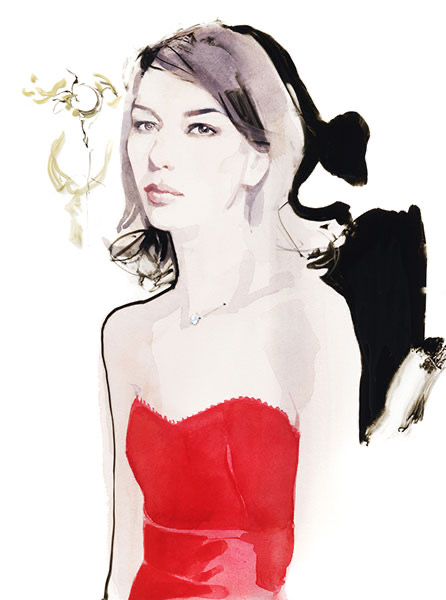
Sofia Coppola, Hotel Ritz,Paris 2012 Dress Marc Jacobs

Daphne Guiness, Claridge, London 2012
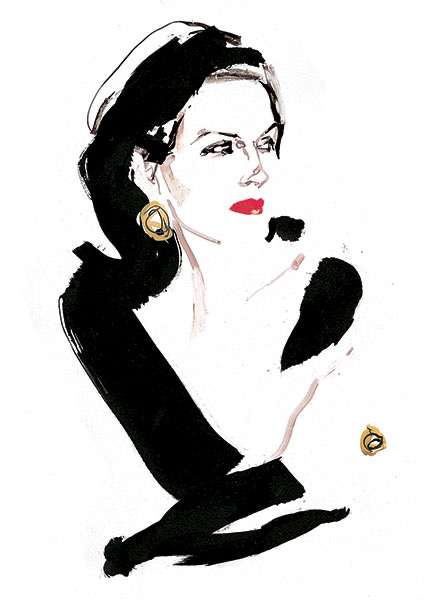
Paloma Picasso, London 1999
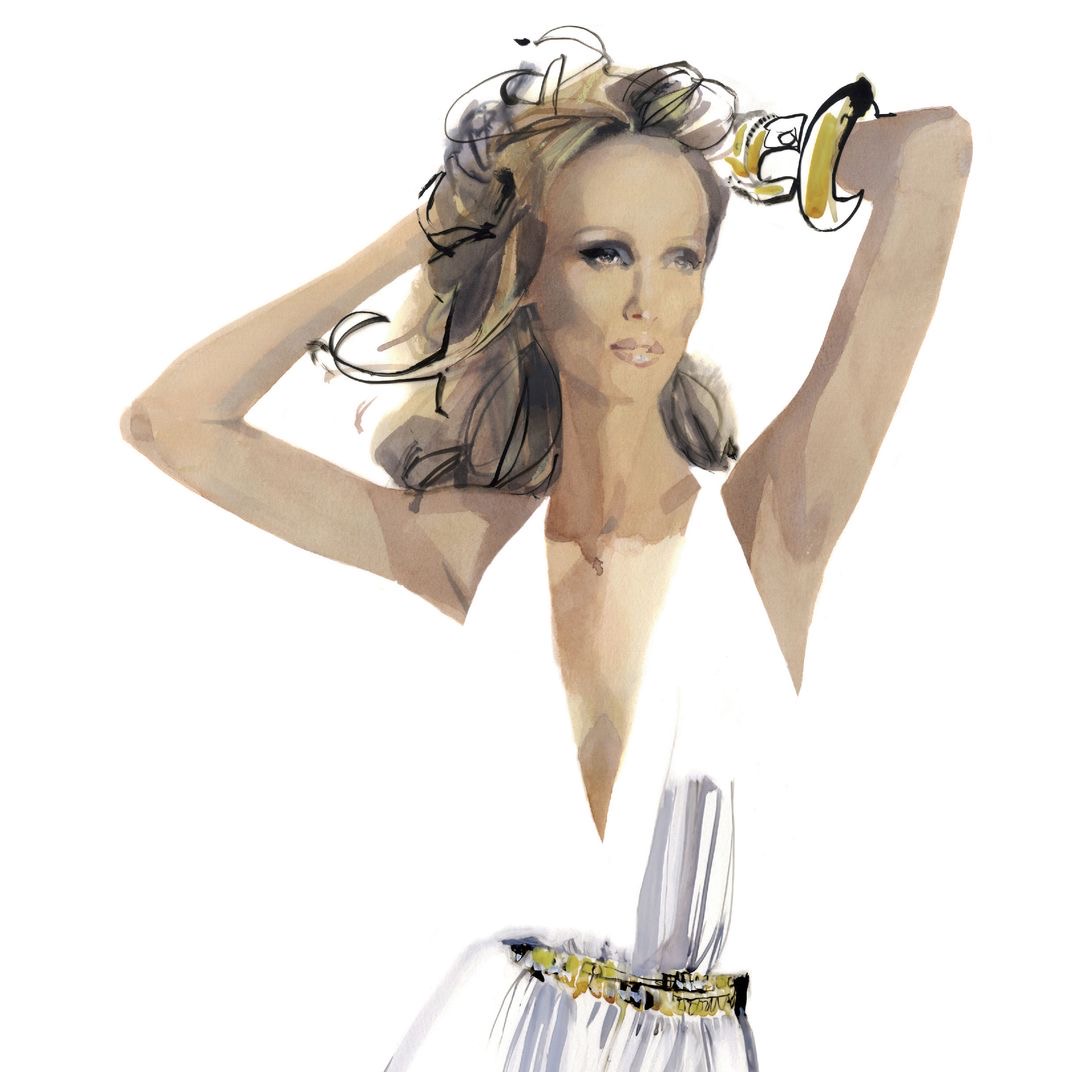
Iman, New York 2012, Dress, Azzedine Alaia

Anouk Aimee, Hotel Meurice, Paris 2001
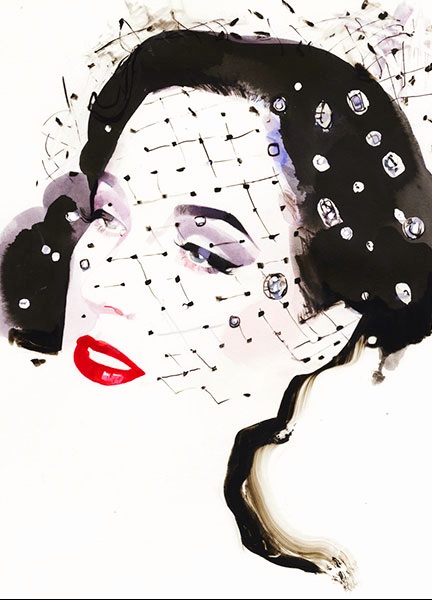
Dita Von Teese, London 2012, Veil by Stephen Jones
7 Things You Need To Know Before Watching Balangiga: Howling Wilderness
Scenes From the Manila Art Fair 2026

Retrospective: Oj Hofer Celebrates 40 Years of Fashion

Cebu Isn’t Chasing Trends Anymore
Golden Prince Hotel’s Sinulog Royalty Experience

SM Fashion Forum reveals Cebu’s style influencers
5 Filipino Films That Continue the Conversation on Women Empowerment

Noise and Sounds: An Artform

Christmas in Colonial Cebu: A Themed Exhibit by Teresin Mendezona and Eva Gullas for Stylescapes 2019

Artisanal Cebu: Aspiring calligraphy artist Abigail Condrado

Experience authentic Korean Barbeque at Da-In Restaurant

Chaine des Rotisseurs: A Night of Spanish Cuisine
-
 Ogle La La 3.03 months ago
Cebu’s Heritage Is Not a Museum Piece, Darlings
-

 Art Beat2 months ago
Assemblage: Art Exhibit Blending Themes of Infinity and Renewal
-
 The Scene2 months ago
At the Table: Introducing Flora de Filipinas
-
 Retail3 weeks ago
Cebu Isn’t Chasing Trends Anymore
-

 Art Beat3 weeks ago
Why Does Yayoi Kusama Matter to Cebu?
-
 Fashion4 days ago
Retrospective: Oj Hofer Celebrates 40 Years of Fashion
-
inside4 days ago
Scenes From the Manila Art Fair 2026
-
inside1 day ago
7 Things You Need To Know Before Watching Balangiga: Howling Wilderness