
Fashion
GLOBAL PINOYS: The Rise of a Global Brand
Starting out as a ready-to-wear business built on bold ideas, Penshoppe has become one of the country’s biggest retail brands, with a roster of “All Stars” that makes them poised to take on the international market. Bernie Liu and Golden ABC are a prime example of how a group who barely had any background on the industry staked a claim on fashion with designs that capitalized on youthful fun.

Starting out as a ready-to-wear business built on bold ideas, Penshoppe has become one of the country’s biggest retail brands, with a roster of “All Stars” that makes them poised to take on the international market. Bernie Liu and Golden ABC are a prime example of how a group who barely had any background on the industry staked a claim on fashion with designs that capitalized on youthful fun.
It is not surprising how the country’s leading fashion powerhouse, Golden ABC, would trace its roots to a province in the Philippines known for its resilient and fiercely independent people. Cebu may bear traces of the beginnings of Spanish colonization from hundreds of years ago, but prior to that, it had always been a center of trade for what is now called the southern Philippines, whose people had long been doing business with China, Malaysia, Japan, India, Burma, and other parts of Asia. In a land that nurtures the entrepreneurial spirit, visionaries and business leaders are always on the rise.
Chasing his own fierce dream of building a company that would house the most admired fashion brands in Asia, Bernie Liu and his group of friends—all young architecture graduates when they drew up a blueprint for the business, so to speak—anchored their vision on the growth and development in Cebu that was reflective of what was happening in the rest of the country. It was, after all, the time of groundbreaking changes. The year 1986 had ushered in a “peaceful, bloodless revolution” for the Philippines—an upheaval fuelled by years of prior political unrest but unprecedented, just the same, in the unplanned yet historic triumph of People Power. It was a time when anything seemed possible. It provided the perfect opportunity for young idealists armed with a lot of guts and a fair amount of know-how—Liu’s family owned a modest-sized garment factory—to start their own revolution.

Legend has it that Liu had ventured into an informal business of designing and producing t-shirts for school and corporate giveaways even before he graduated from college and passed the board. After briefly working for the family’s lumber business, he had an epiphany regarding the potential of branded retail, and this would mark his return to the garments business. Lured by the growing demand in Cebu for colorful shirts, Liu and company zeroed in on what would be their biggest group of buyers—the young college students and new grads like themselves. They decided to name their brand after the students’ constant companion and writing implement, the pen.
Although none of its founders had any professional training on how to design and sell shirts, they ventured into a market already cornered by several other successful brands. What they had going for themselves, though, was that they were armed with bolder ideas. It was said that they were the first to pay special attention to individual shirt packaging before any other local brand did, and shunned ordinary retail racks in favor of customized (pencil-shaped) ones. Indeed, what they lacked then in sales know-how was compensated by their sharp knowledge of design, translated successfully into catchy graphic images on brightly colored t-shirts. They also had a surprising grasp of marketing, committing to the principle of building a brand through focusing on image—that of youthfulness and being fun and hip.

If they had indeed been told that they would never make it in Manila, the young Cebuano entrepreneurs failed to heed the warning, and this would prove to be one of their major feats. Penshoppe became the flagship brand of Golden ABC, a line of ready-to-wear clothing and accessories launched in March 1986, just one month after the EDSA People Power revolution. Five years later, the brand would officially go national, opening its first boutique in what was then the biggest mall in the city capital, SM North EDSA.
By 1995, Penshoppe was given the Award of Excellence at the 14th Philippine Advertising Congress, a recognition that underscored the brand’s consistent and solid focus on its market. Penshoppe’s evolution into an overall lifestyle brand also saw the growth of the mother company that by then had begun to cater to different market segments by establishing the chic and trendy high-street brand Oxygen in 1996; the affordable brand for young executives, Memo, in 2002; and the brand celebrating each woman’s uniqueness, ForMe, in 2004.
Penshoppe was also awarded the Most Outstanding Retailer by the Philippine Retailers Association and the Department of Trade and Industry in 2000 and 2001, and by the following year had been entered in the Retail Hall of Fame. It furthered its imaging and branding with winning media campaigns like the award-winning “Battle Cry” television commercial, which received a bronze award in the 2005 New York Festivals. In 2006, the same campaign received another bronze from the Advertising Foundation of the Philippines and the Adboard, and silvers in the Araw Values Awards in the print and television ads categories.

Golden ABC continued its growth with the opening of its subsidiary Red Logo, a direct selling company, in 2008. The following year, it acquired Regatta, a leisure-lifestyle brand. Then, in 2011, it launched its first premium brand Tyler, offering day-to-night, business-to-leisure apparel for women.
As the story goes, Penshoppe’s owners tried to crack the Manila retail scene with their dogged refusal to take no for an answer—they were said to have “literally walked all over the capital trying to sell their shirts and product concepts,” as related on the cebu-online.com website—and their penchant for doing the unexpected. At that time, when other companies relied heavily on personalities and models to sell their products, they opted for the road less traveled and picked real people as their brand champions, and would launch its first batch of young and unknown, but cool models—the kind that most of their growing clientele would easily identify with.
These days, however, with increased globalization, Penshoppe steps up to the plate to make its own mark. It would become one of the local retail brands that would be endorsed by top Asian and Hollywood stars—from Thai superstar Mario Maurer to “Gossip Girl” mainstays Ed Westwick and Leighton Meester, “Vampire Diaries” hottie Ian Somerhalder, and heartthrob Zac Efron—on the way to its becoming a global retail name to be reckoned with. Its presence has become truly palpable and its claim solidified by improved clothing lines, bold media campaigns, and enhanced boutiques.
Armed with a formidable retail presence over 500 stores strong all over the country, Golden ABC sets its eyes to expanding beyond Asia and opening stores in the Middle East. Penshoppe’s success, bolstered by the equally impressive retail performance of its sister brands, has indeed given credence to the company’s goal of establishing itself as the most admired fashion brand builder in Asia, with its visionaries truly exemplifying the valiant spirit and high standard of excellence of the hardworking Cebuanos.
- by Annie S. Alejo
- photos courtesy of Golden ABC


Fashion
Retrospective: Oj Hofer Celebrates 40 Years of Fashion
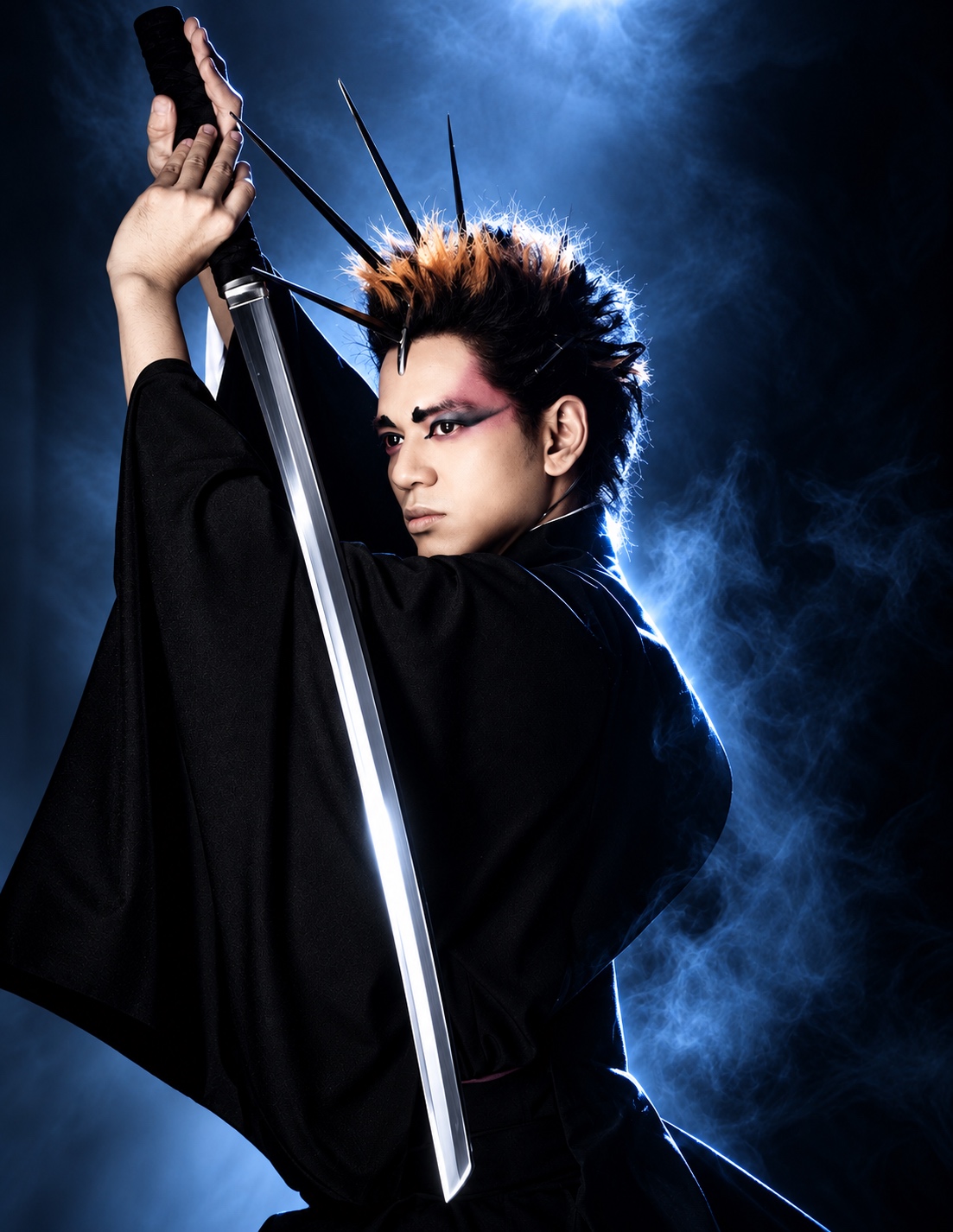
With four decades in fashion, OJ Hofer has built a practice rooted in craftsmanship, contemplation, and a distinct understanding of beauty. From establishing Chiaroscuro in Cebu to mentoring the next generation of designers, his journey has evolved beyond clothing into an exploration of aesthetics, identity, and culture. Here, Hofer reflects on the lessons that have shaped his career and the wisdom of seeing beauty beyond convention.
When did you start in the business? How did you begin your career in the industry?
I graduated with a Bachelor of Fine Arts degree, majoring in Visual Communications, from the University of the Philippines Diliman in 1987. My original aspiration was to pursue a career as a visual artist. Shortly after graduation, however, I relocated to Cebu when my cousin, Ann Hofer, now Governor of Zamboanga Sibugay Province, invited me to establish a bespoke fashion house.
Together, we founded Chiaroscuro, which debuted through a by-invitation fashion presentation attended by Cebu’s cultural and social leaders, alongside established figures in Philippine fashion. We also flew in Manila-based models, including Tweetie de Leon, who had recently been named the first Ford Supermodel of the Philippines.
As I continued participating in fashion presentations in both Cebu and Manila, my clientele gradually expanded. Recognition as a finalist in the inaugural Mega Magazine Young Designers’ Competition, together with participation in other international design competitions, further broadened my professional horizons. Although Cebu has remained my creative home, my work has taken me throughout the Philippines and abroad. Over the years, I have had the privilege of designing for individuals from diverse walks of life, including members of high society, artists, public figures, and political leaders, among them former President Gloria Macapagal Arroyo.
Looking back, I realize that my journey was never simply about building a fashion label. It was an ongoing inquiry into beauty, identity, and the expressive potential of clothing as a form of visual language.
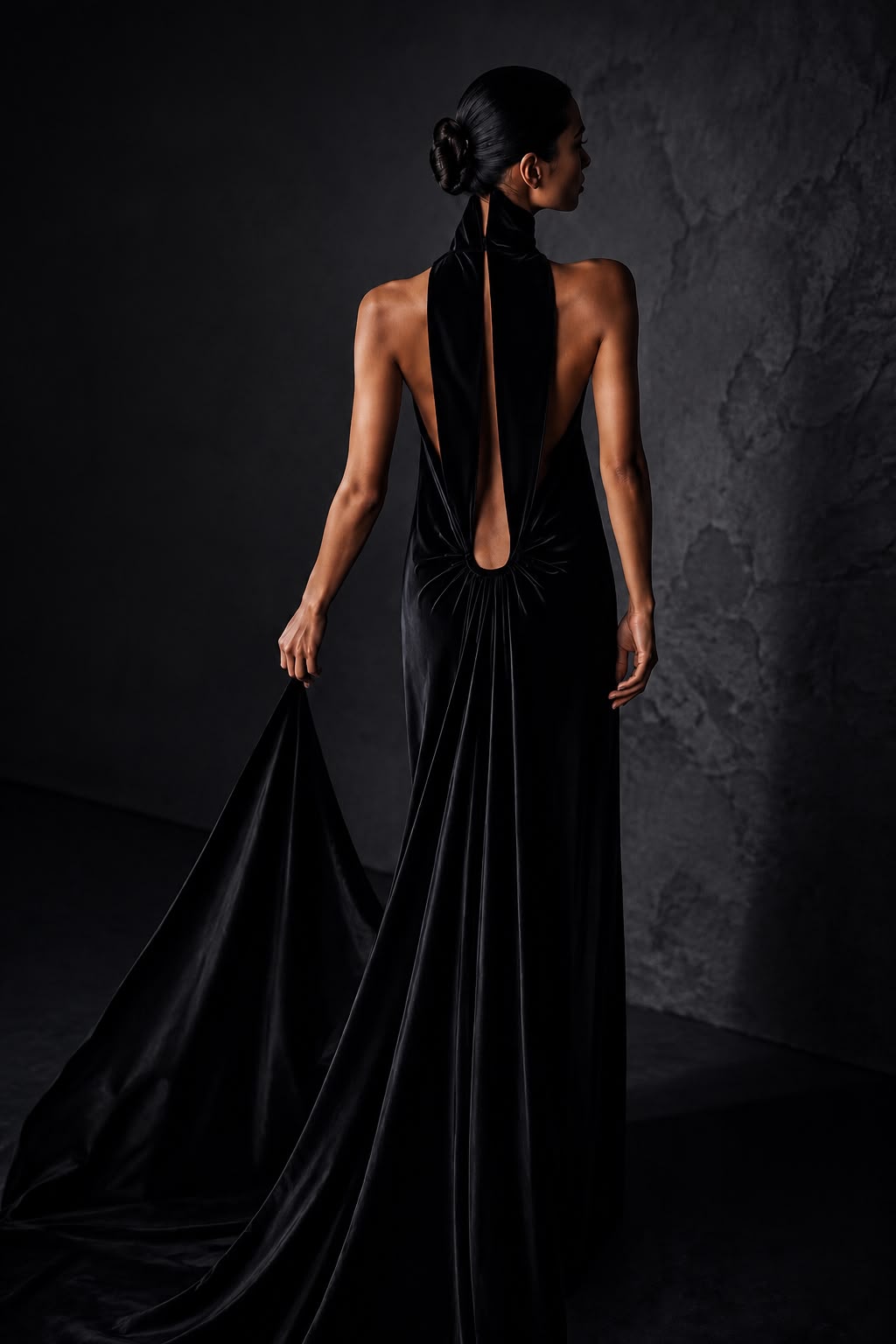
2008 — Velvet Dress with Sandal-Strap Peep-Hole Back A study in sculptural restraint: black velvet shaped into a dramatic open back, framed by slender sandal-like straps and falling into a fluid, elongated train.
What was the most challenging part of building your career?
The greatest challenge was not mastering technique but cultivating trust.
Creative practice requires entering into a relationship of confidence with another person. A garment begins as an idea that exists only in the imagination, and asking someone to believe in that unseen possibility demands both integrity and patience. Technical skill may attract attention, but it is consistency, empathy, and respect that sustain enduring relationships.
Over time, I came to understand that design is less about imposing one’s artistic vision than about listening deeply. Trust transforms the creative process into a genuine collaboration, allowing both designer and client to participate in shaping something meaningful.
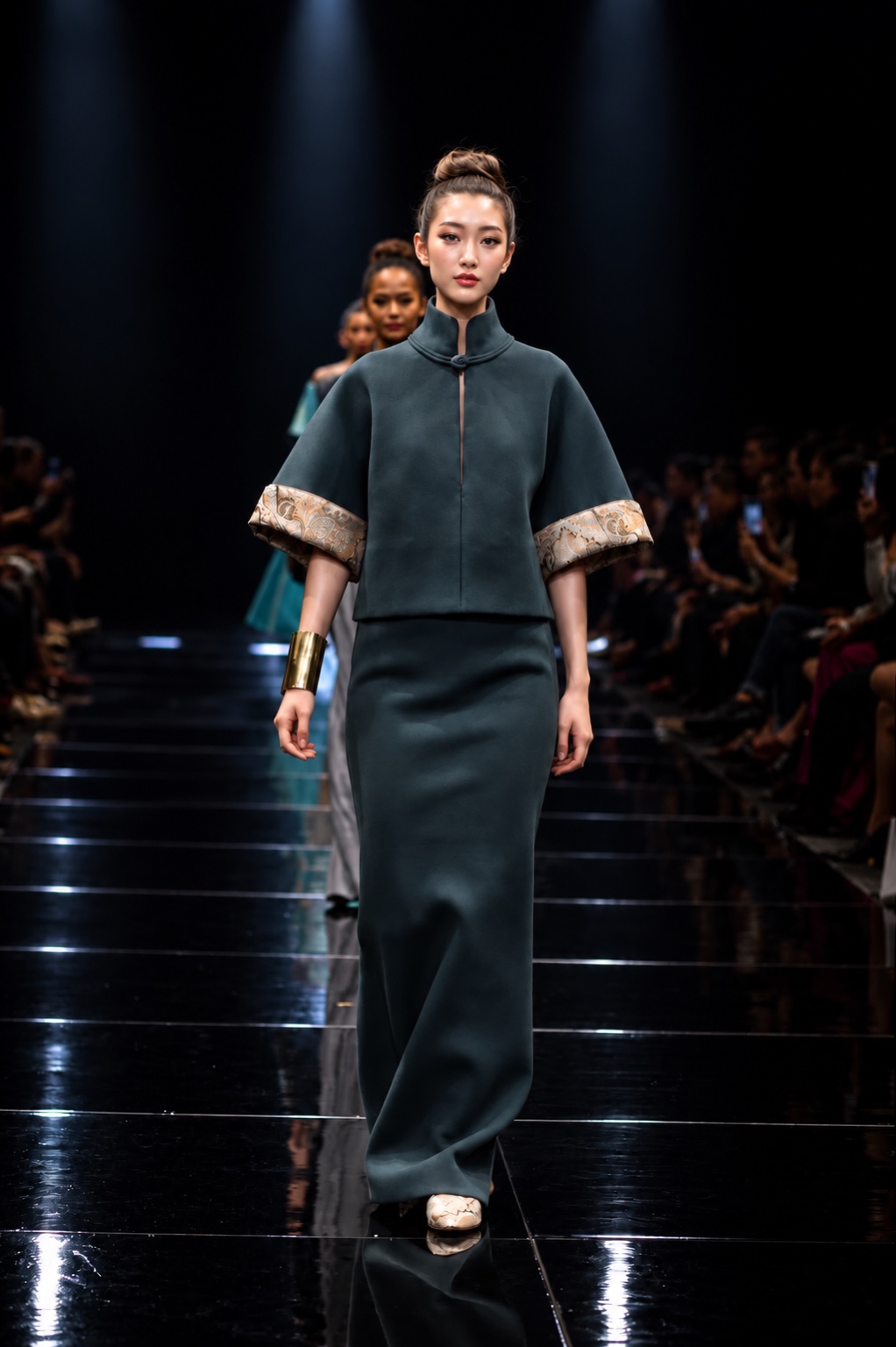
2018 — Stretch Ultrasuede Suit with Silk Brocade Fold-Back Sleeves | A study in disciplined tailoring: stretch ultrasuede shaped into a sleek, architectural suit, finished with silk brocade fold-back sleeves that introduce a measured note of opulence. Sculptural, tactile, and distinctly modern.
Where are you now in your career? What are you currently doing?
My practice has become increasingly intentional. Rather than pursuing growth in scale, I have chosen to devote my work to a smaller circle of clients whose commissions allow for greater depth of exploration and craftsmanship.
Teaching and mentoring have likewise become an integral part of my journey. I have lectured in fashion design and textile research at the University of the Philippines Cebu, while also mentoring many young Cebuano designers who have since become mentors themselves. Witnessing this progression reminds me of a teaching often attributed to Lao Tzu: “When the student is ready, the teacher appears. When the student is truly ready, the teacher disappears.” Whether or not the saying can be historically attributed to him, its wisdom resonates deeply with my own experience. The highest purpose of teaching is not to cultivate dependence, but to empower others until the teacher or mentor is no longer needed.
Beyond fashion, I have served as a fashion editor for a Cebu-based lifestyle magazine and continue to write on fashion, aesthetics, and culture. My ongoing practice of Taiji, Japanese kanji calligraphy, and Zen ink painting continues to reshape my understanding of design. These disciplines have led me to explore the apparent opposites of minimalism and maximalism, not as competing philosophies but as complementary expressions of the same aesthetic truth.
At this stage of my career, I find fulfillment not merely in creating garments but in contemplating the ideas that give rise to them. My work has become less about fashion itself and more about cultivating awareness through form.
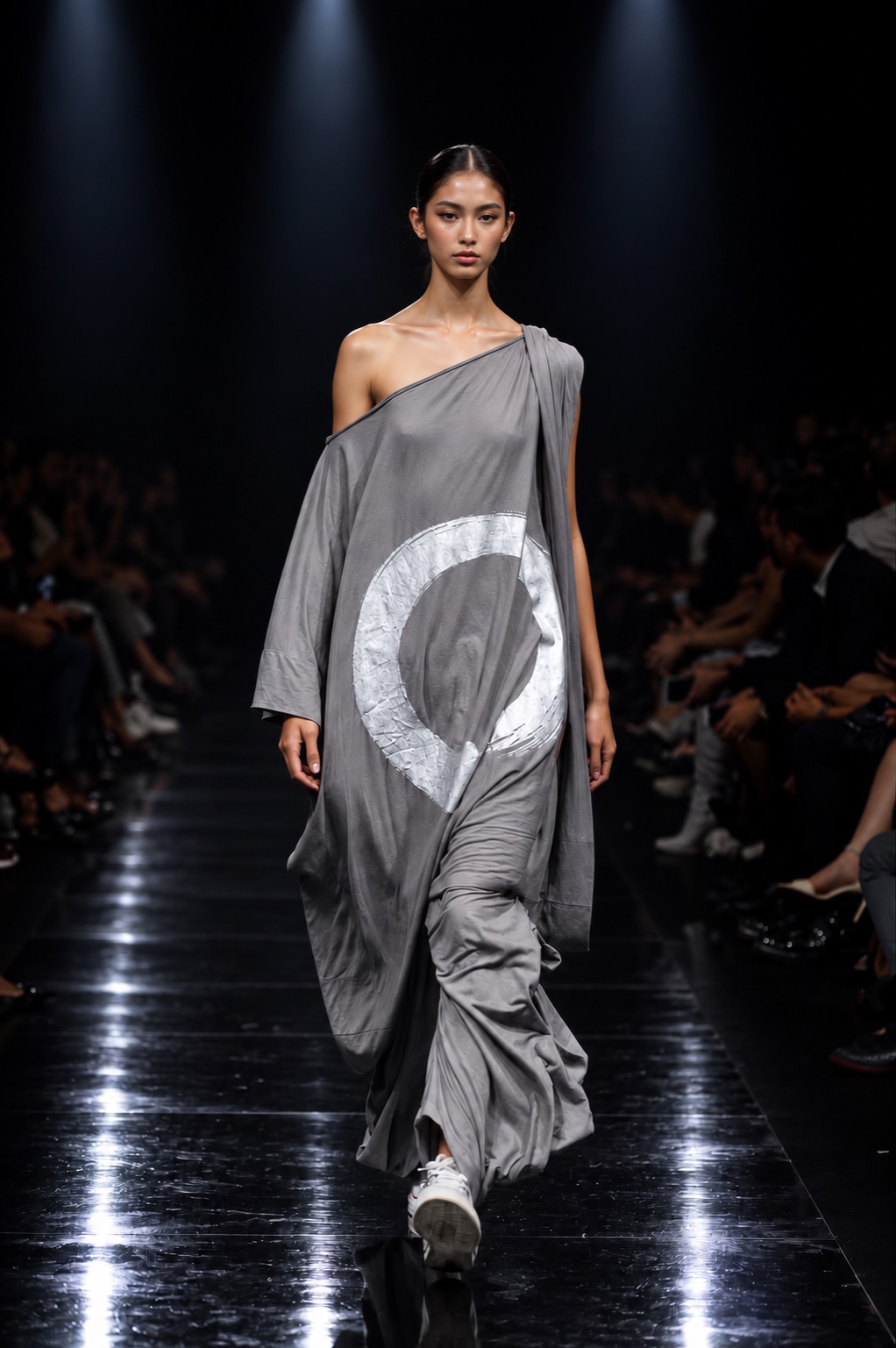
2019 — Athleisure Silk-Knit Suit with Ensō Circle | A fluid meditation on movement: silk knit falls in asymmetric, unstructured lines, punctuated by an oversized Ensō circle. Zen austerity meets athleisure ease—imperfect, instinctive, and deliberately undone.
What wisdom have you gained that you would like to share?
The two most profound lessons I have encountered are emptiness and impermanence.
In fashion, as in life, we are often conditioned to assign value according to rarity, ornamentation, or material wealth. Yet experience has taught me that the humble warp and weft of linen can possess the same dignity as silk adorned with ten thousand crystals. Neither is inherently superior. Their value emerges through context, intention, and perception.
Plainness and embellishment are not opposites; they are complementary manifestations of the same underlying reality. Once the mind ceases to divide experience into hierarchies of simplicity and extravagance, it begins to perceive their essential non-duality.
Perhaps this is the deepest lesson that fashion has taught me: beauty is not an attribute of objects but a quality of awakened perception. When we understand the emptiness of fixed distinctions and accept the impermanence of all forms, creativity becomes less an act of self-expression and more an expression of wisdom.
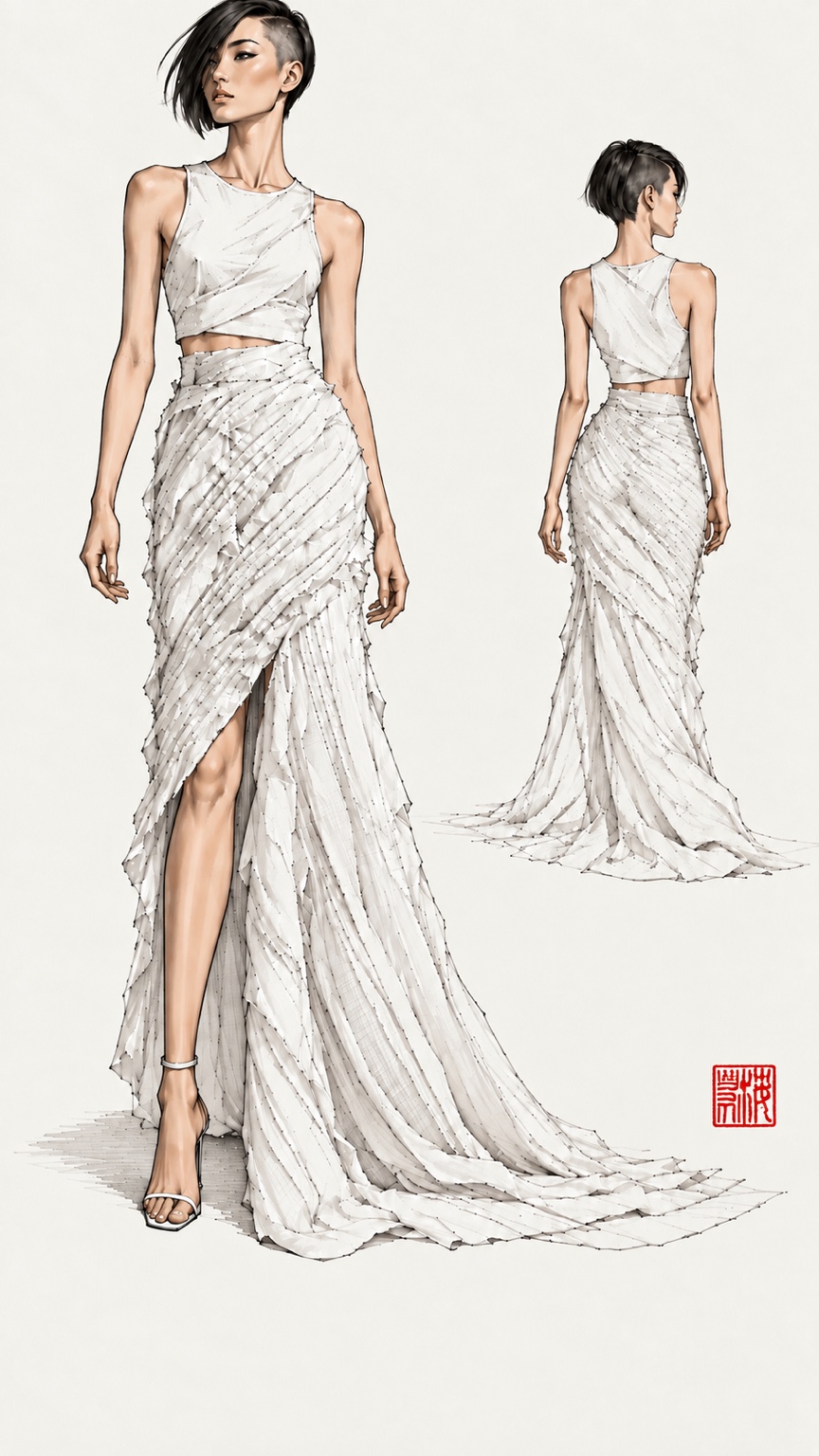
2026 — Spiral-Cut Cropped Top and Skirt, created for a wedding in New York City. | An exercise in sculptural movement, the spiral cut winds around the body with a precision that feels both architectural and fluid. Ivory layers cascade into a sweeping train, transforming a cropped top and skirt into a modern bridal silhouette—minimal in palette, maximal in gesture.
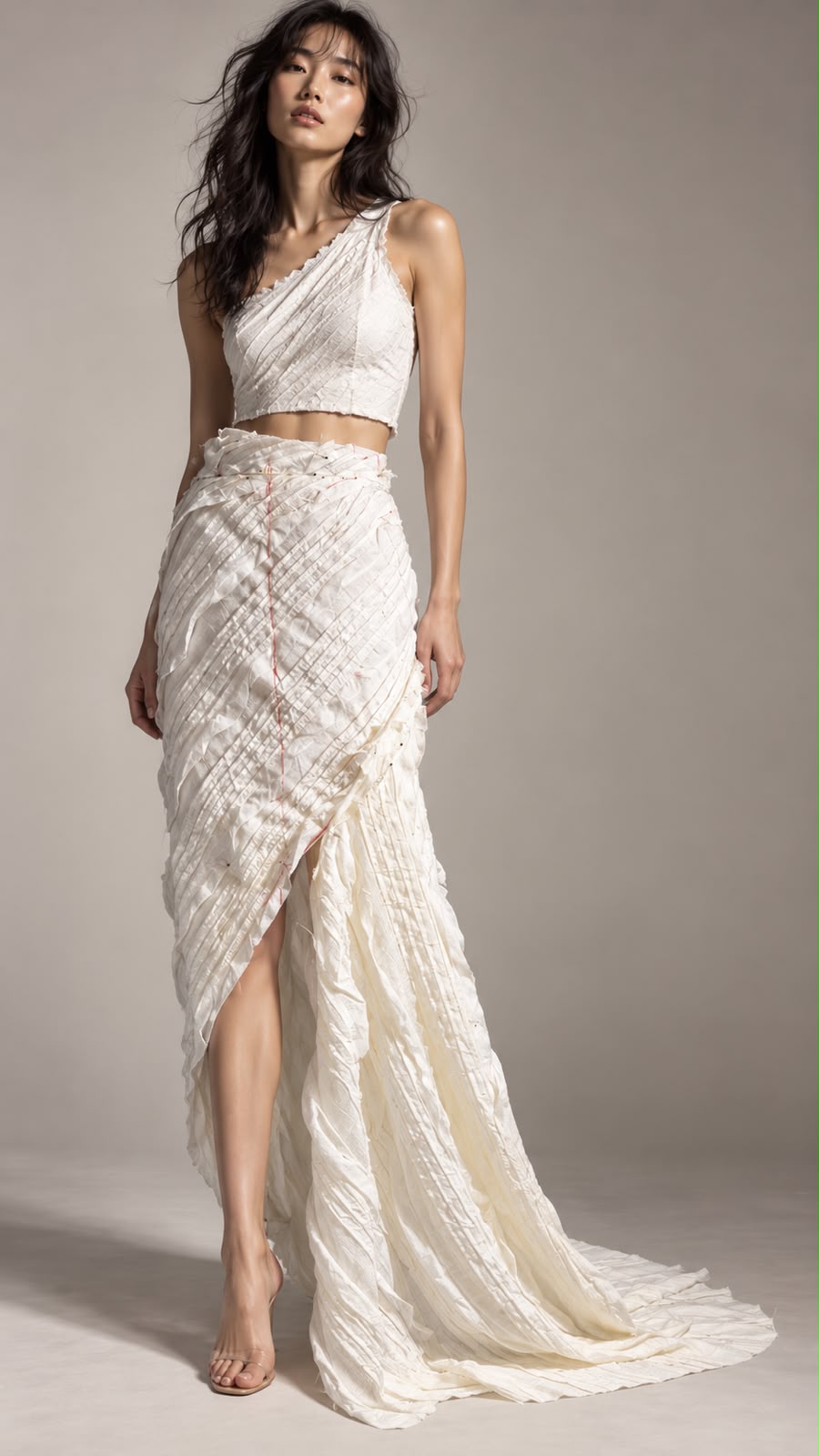
Cotton-Rayon Spiral Ensemble for Chin Onglatco’s New York Wedding | An exploration of texture and movement, this fluid cotton-rayon ensemble wraps the body in a continuous spiral of hand-worked folds and engineered drapery. Ivory layers sweep from a cropped silhouette into a fluid train—bridal dressing distilled into something tactile, modern, and unmistakably personal.
Fashion
Ramon Valera; Manila Society’s Fashion Darling
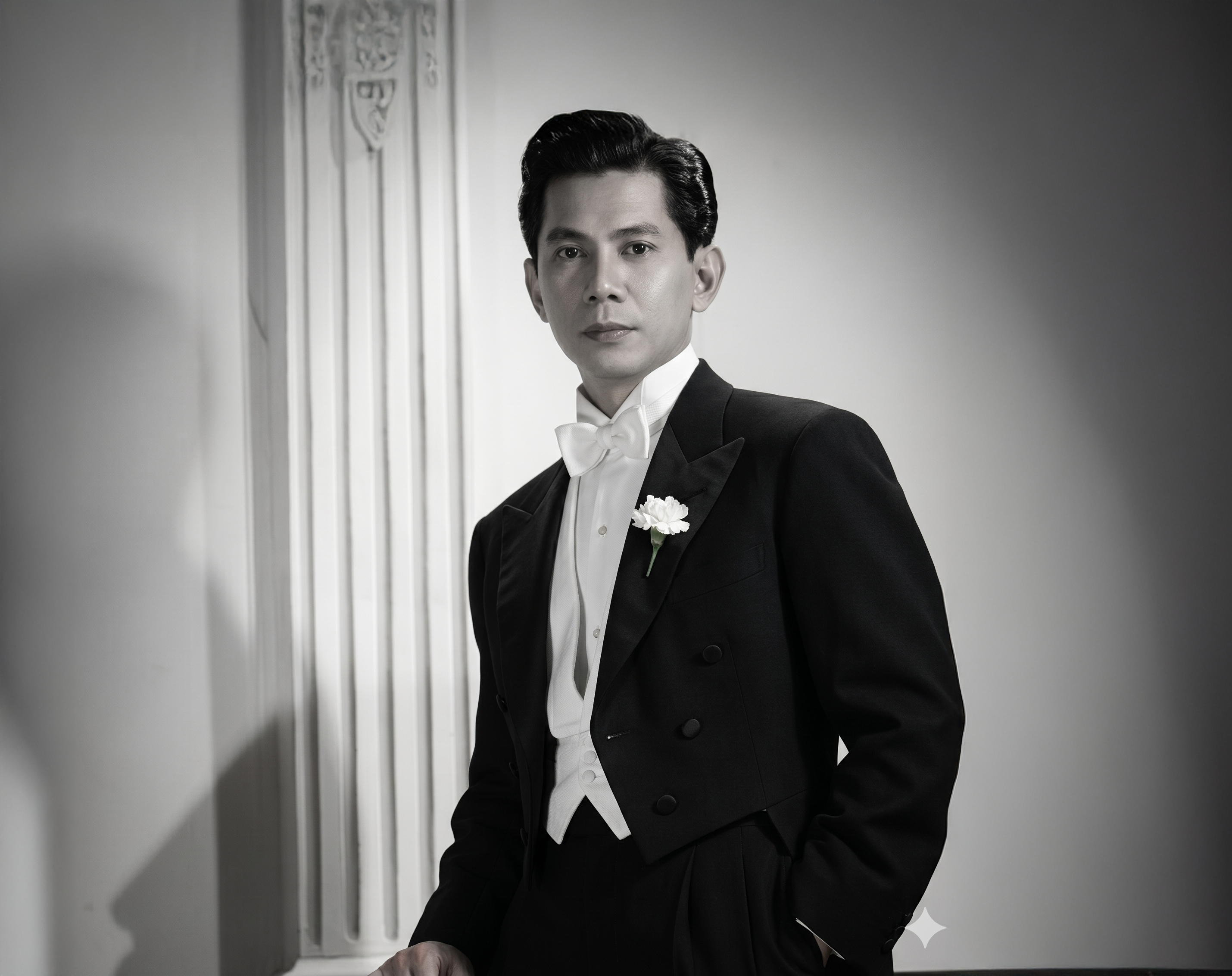
by Jing Ramos
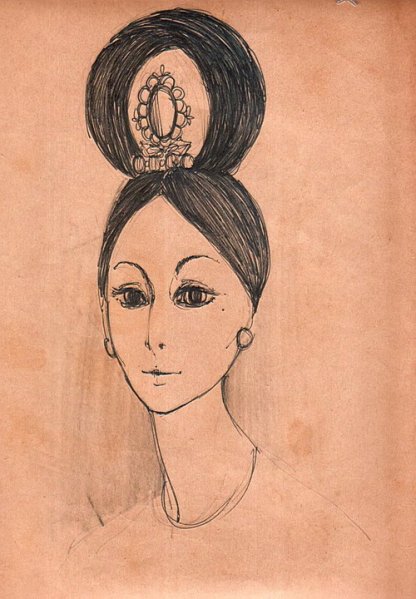
Ramon Valera’s fashion sketches were drawn on paper as they flashed in his mind.
“Without Ramon Valera, there would have been no high society in the Philippines, but it may be right to say that without high society, there would be no Ramon Valera.” –Abe Florendo
Ramon Valera, the first National Artist for Fashion Design, was born in Sta. Cruz, Manila. He came from a wealthy family. His parents, Melencio Valera and Maria del Pilar Oswald, moved in prominent business circles in postwar Manila. He had the privilege of studying at La Salle College and later pursued a course in Commerce at Far Eastern University. It wasn’t long before his artistic inclinations prevailed, leading him to quit school and establish a fashion atelier. This marked the beginning of Ramon Valera’s profession as a fashion designer.
Previously, Valera had apprenticed under Mina Roa, who made ternos for the elite and was known to be a dominant figure in the fashion industry. Mina Roa taught Valera the rudiments of the classic European techniques of construction and draping.
It was during the 1950s and 1960s that Ramon Valera’s career flourished, coinciding with the golden era of a new and modern Philippine society fueled by progressive postwar entrepreneurship and the undeniable presence of old-money families. The designer was celebrated for his craftsmanship and originality, but his most important contribution was revolutionizing the national costume.
Ramon Valera is credited with revitalizing the traje de mestiza, otherwise known as the Maria Clara, traditionally a four-piece garment comprising a blouse, skirt, overskirt, and scarf. The terno was soon transformed into a one-piece ensemble and, instead of being fastened with hooks, was secured with a zipper. The butterfly sleeves were emboldened in volume, which remains a staple among contemporary designers. Valera also discarded the pañuelo, exposing the woman’s décolletage, which was considered very risqué at the time. A few of his clients dared to wear them, including Mrs. Claro M. Recto and Mrs. Primitivo Lovina, who were broad-minded enough to ignore public scrutiny. He brazenly transformed the Maria Clara into a wedding gown and successfully established it as an icon. It soon appeared in countless society weddings because Manila brides could not get enough of Valera’s originality and flawless execution.
Ramon Valera was known among his peers as the consummate snob. His random impromptu remarks often left people in stitches. When he saw his niece, Peching Zulueta Gomez, dressed in a combination of red, white, and blue, he commented, “Now you can sing the national anthem.” On another occasion, when asked why he had turned down a very important potential client, he replied, “She doesn’t have a torso.”
He had the luxury of choosing whom he wanted to dress, focusing mostly on formal gowns and bridal trousseau for a highly select clientele. He attended to his clients personally, tape measure in hand, and it was not so much “by appointment” as “by invitation only.” His demeanor was dignified, and he was a man of painstaking habits and judgment.
Ramon Valera’s famed dinner parties were planned meticulously, and his distinctive style left its imprint on everything—from the dinner menu to the floral arrangements, down to the silver and fine bone china used for the occasion. Everything was executed with impeccable taste.
A stellar list of Manila socialites wore his creations. Susan Magalona, when she married Carlos Ledesma, appeared in an extravagant lace-and-tulle terno. Pacita de los Reyes wore a groundbreaking terno without a pañuelo. Chito Madrigal donned a terno with a futuristic bubble skirt made from sixty-five yards of silk, hand-painted with flowers traced in beads. Pressy Lopez wore a white evening gown ruched throughout, complemented by a capelet of the same motif. Elvira Manahan dazzled in a leopard-print beaded evening dress paired with an opera coat in blue silk.
The list is seemingly endless, serving as a reminder of Ramon Valera’s influence on Philippine society and politics. In spite of all the accolades attributed to this brilliant innovator, and long before he was lionized as the Philippines’ National Artist for Fashion Design posthumously in 2006, the Valera brand had already been firmly established. Retrospective exhibitions were mounted in museums, countless articles were written about his contributions to the fashion industry, and his impact on Manila society was already secure.
Today, that legacy lives on, honoring the master who lived by his motto: “Cada traje es una obra maestra”—every dress is a masterpiece.
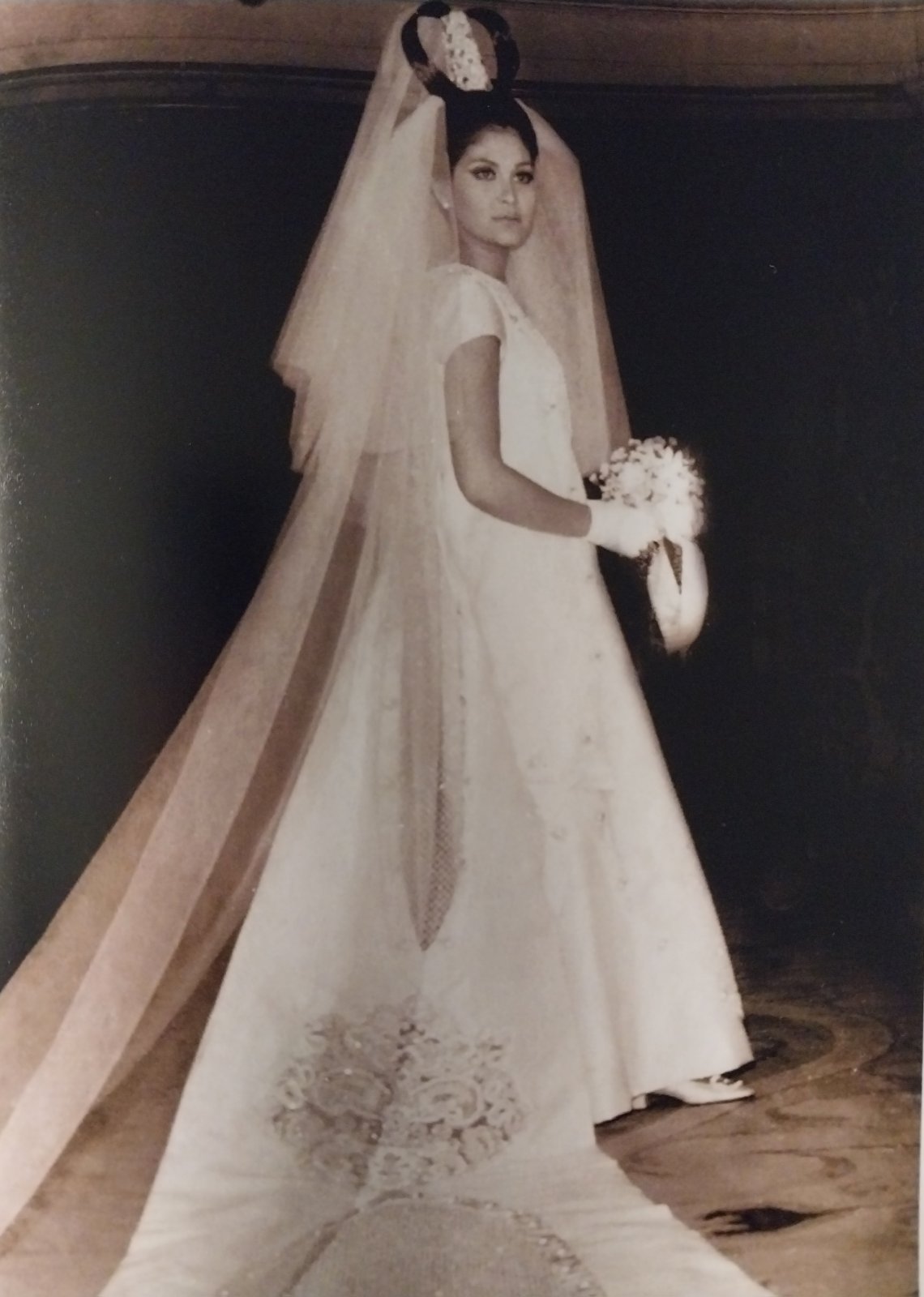
Margarita Romualdez
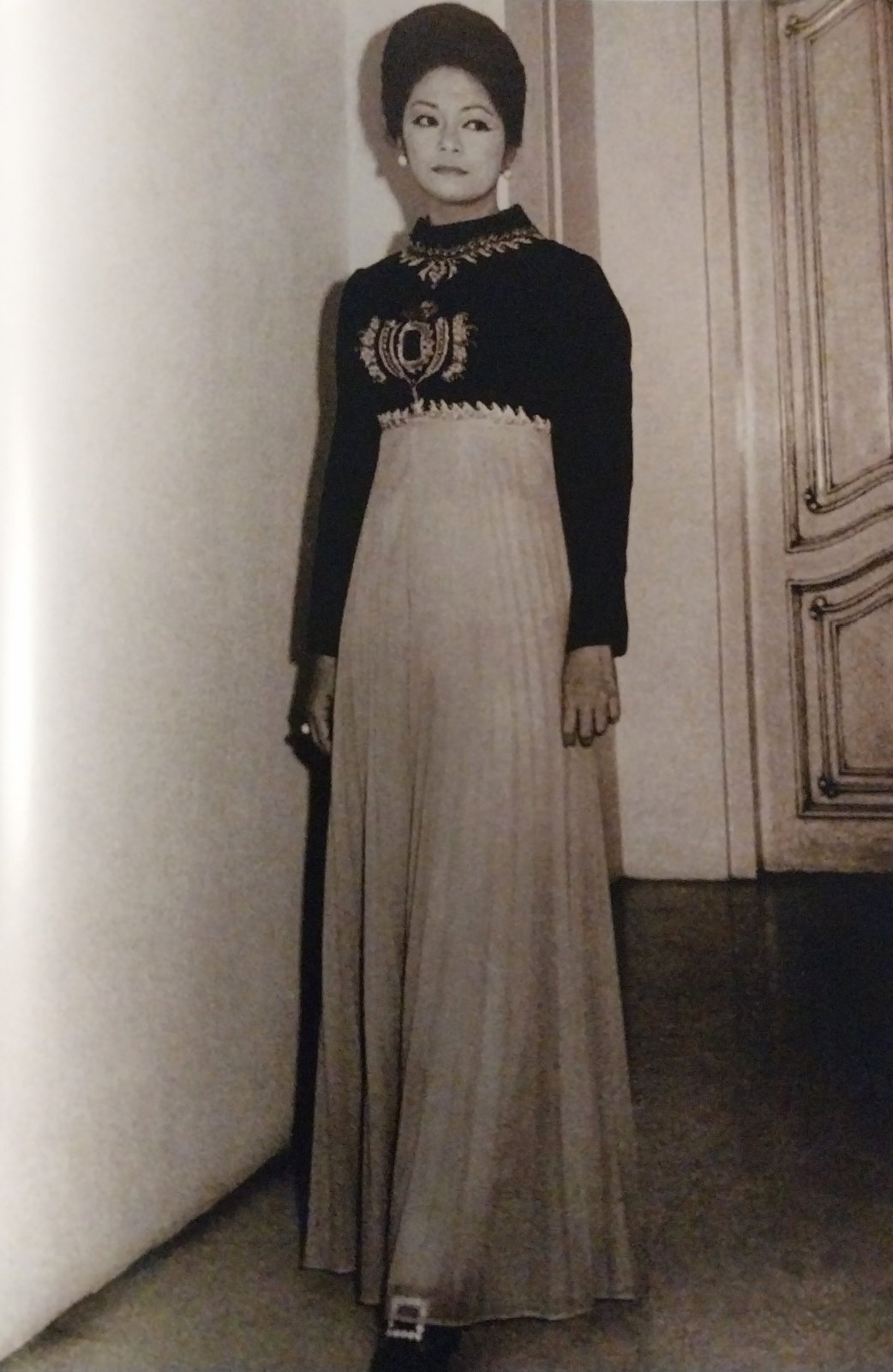
Fe Dolor Serrano
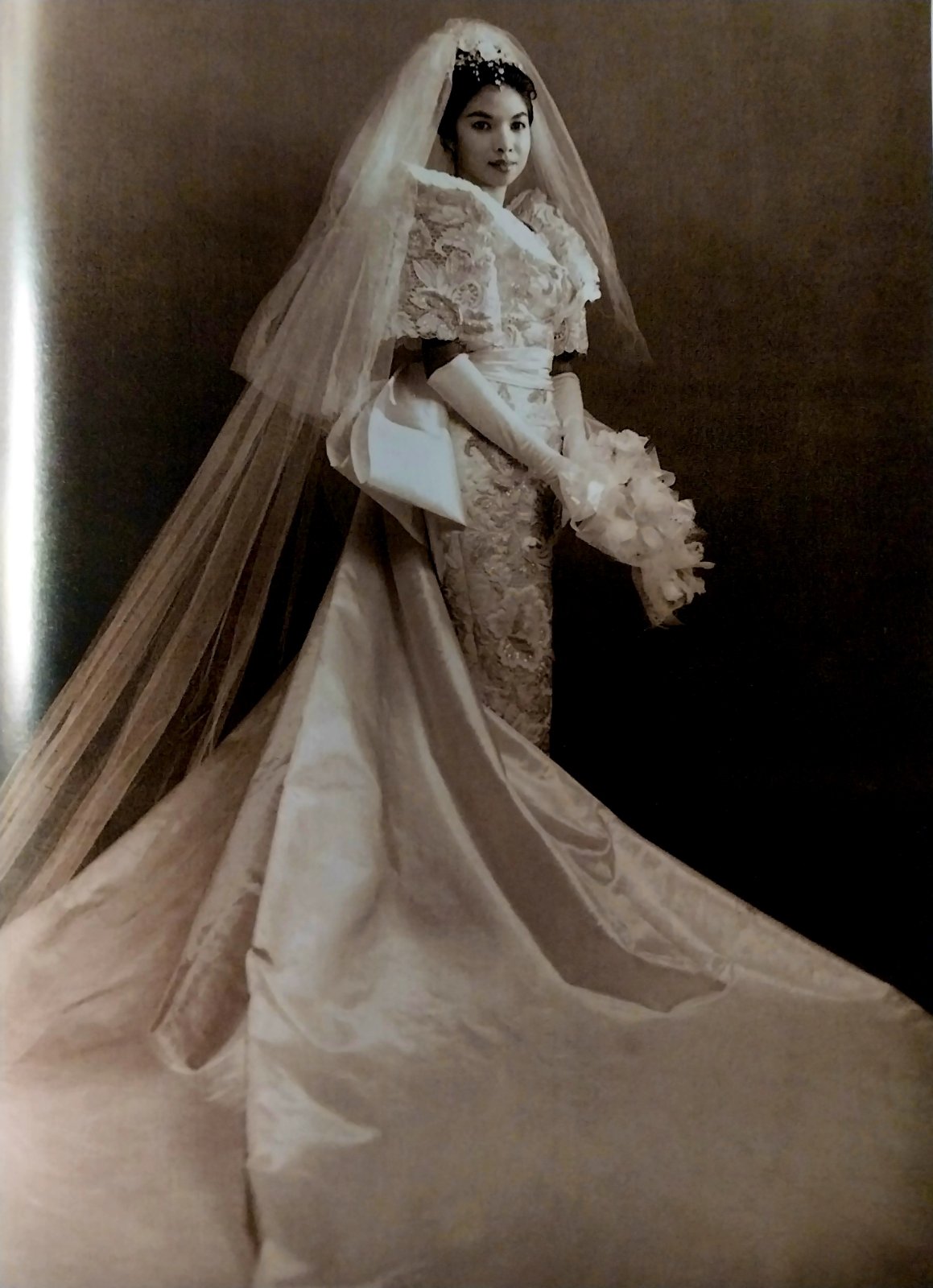
Rosemary Arenas
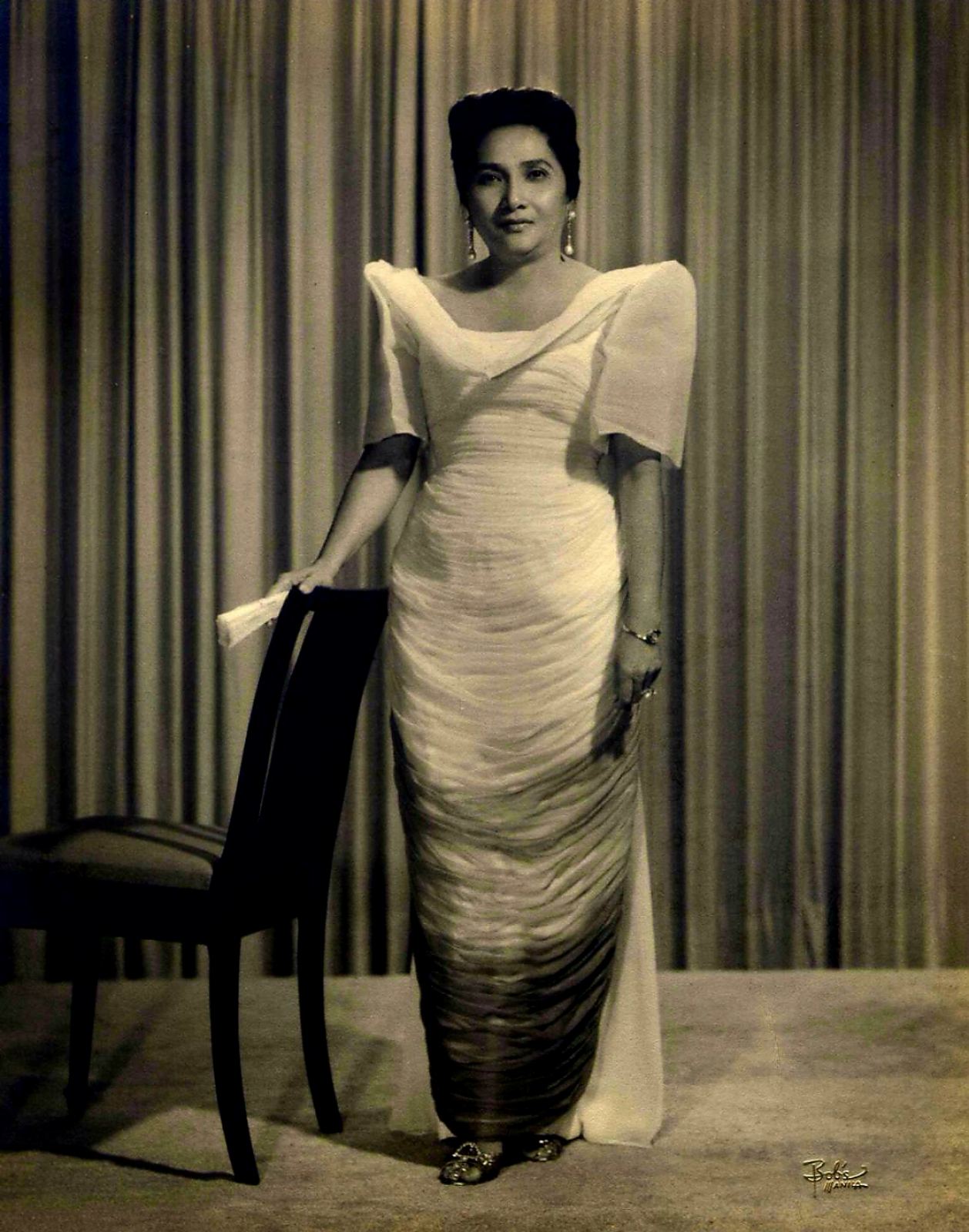
Leonila Dimataga Garcia
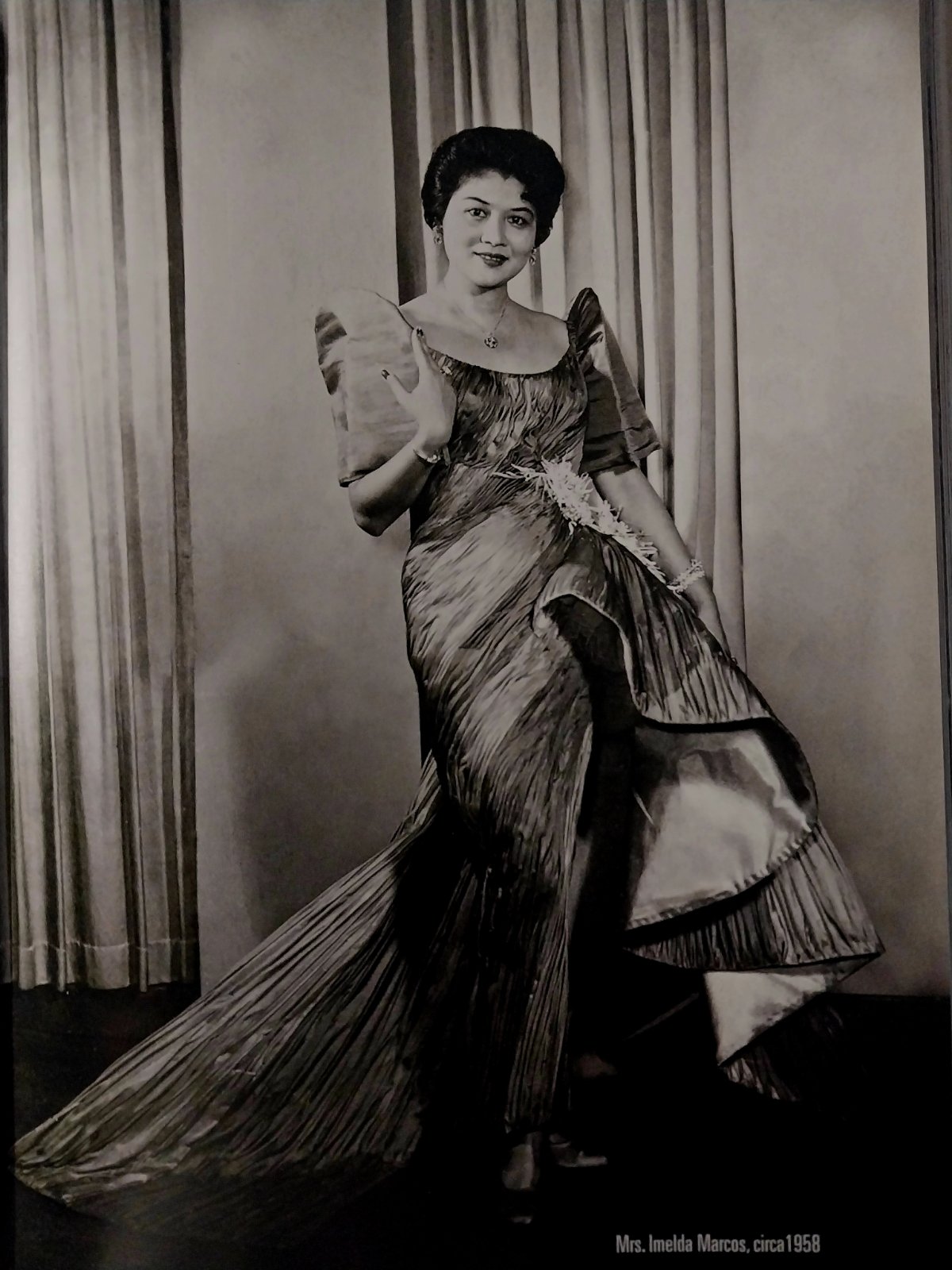
Imelda Romualdez Marcos
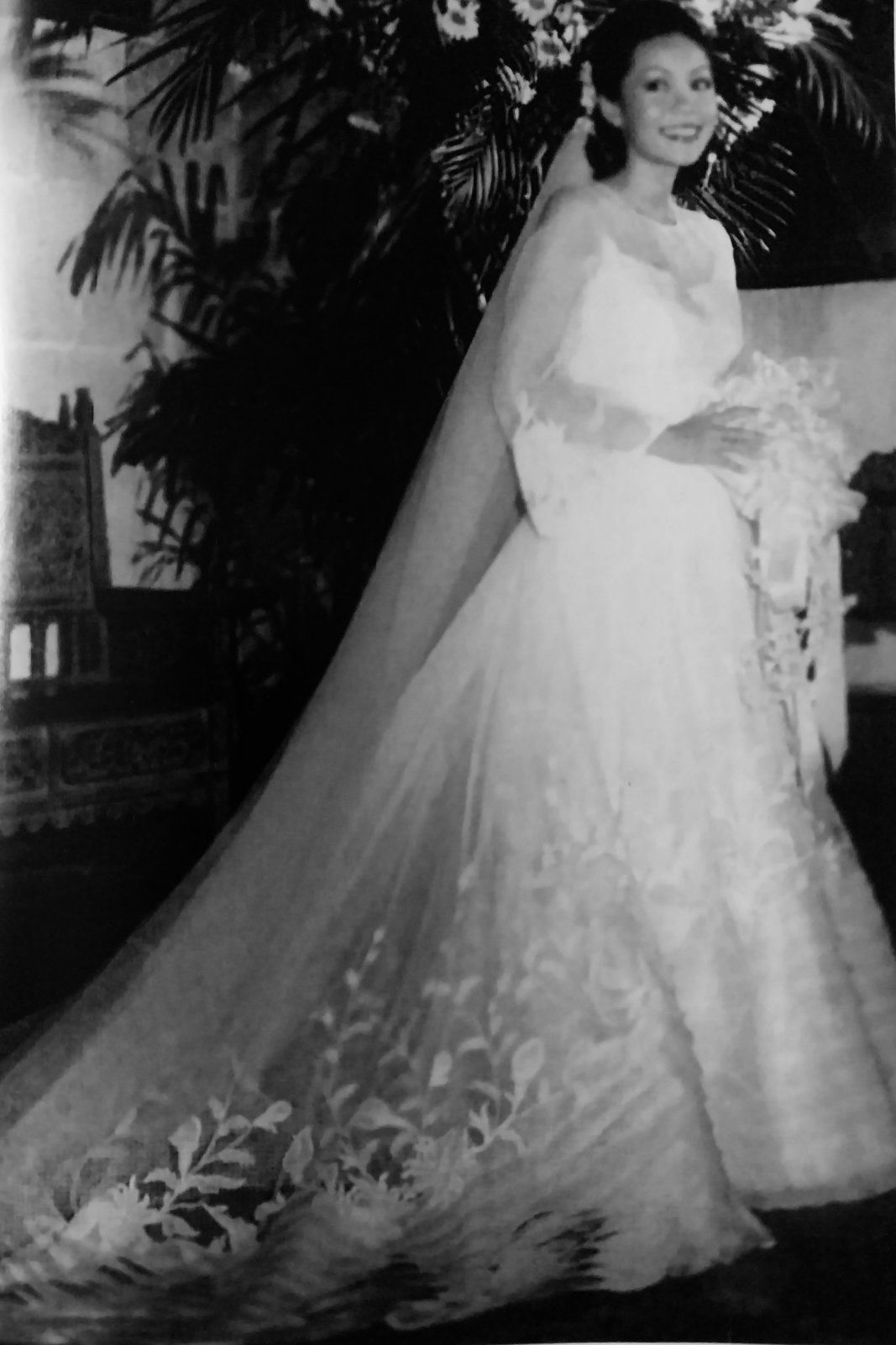
Lisa Tinio Bayot
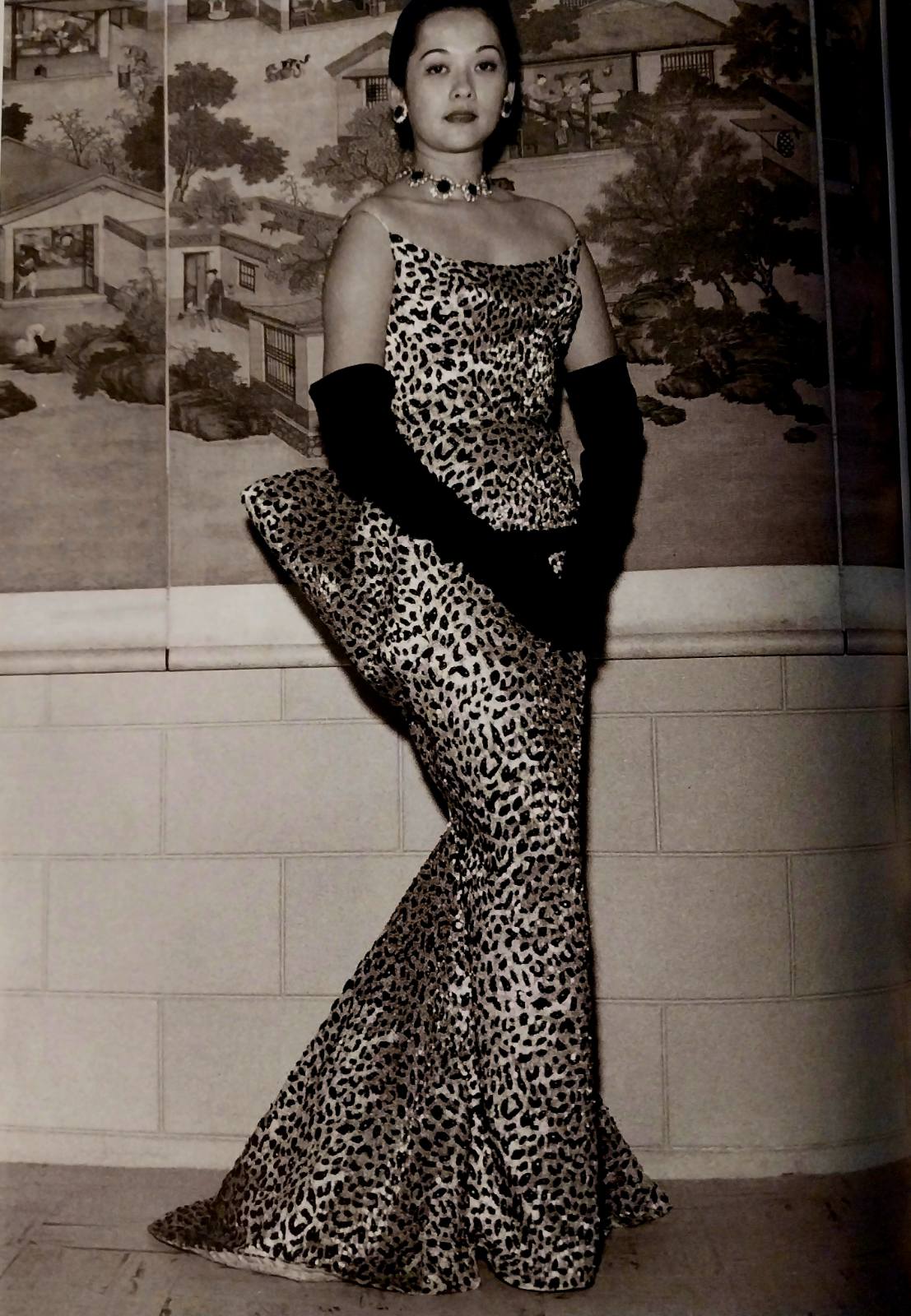
Elvira Ledesma Manahan
Fashion
Cloud Dancer: The Resonant Reset of 2026

by OJ HOFER
Pantone’s Color of the Year for 2026, Cloud Dancer, signals a deliberate shift toward clarity and restraint. This off-white hue—balanced, soft, and lightly luminous—emerges in response to visual saturation and constant acceleration. Rather than competing for attention, Cloud Dancer provides a neutral foundation, allowing design and intention to take precedence over excess.
Its relevance is underscored by the Year of the Fire Horse, which officially begins on February 17. Traditionally associated with momentum, decisiveness, and forward motion, the Fire Horse introduces an energetic rhythm that benefits from focus. Cloud Dancer offers that counterbalance. It tempers intensity without diminishing drive, creating space for action guided by intention. In this context, color operates not as decoration, but as a framework for decision-making.

RESTORATIVE SPACE. Natural tones set the calm, while subtle touches of black, deep brown, navy, or olive add quiet contrast—bringing depth and character to Wabi-Sabi spaces without disturbing their sense of balance.
In interiors, Cloud Dancer supports environments shaped by longevity and ease. Applied to walls, ceilings, and architectural surfaces, it reflects light with subtlety, enhancing spatial clarity without austerity. The hue pairs naturally with wood, stone, linen, and ceramic, reinforcing a preference for tactile materials and functional design. Homes become spaces for restoration and daily living, rather than display.

EFFORTLESS POISE. Louise Trotter’s Spring 2026 ready-to-wear for Bottega Veneta pairs a billowing jupe-culotte cotton trouser, anchored low on the hip, with an ultra-stretch silk tank for quiet, modern ease.
Fashion adopts Cloud Dancer as a study in form and construction. The color allows silhouette, proportion, and movement to take the lead. Tailored separates, fluid dresses, and layered essentials in this off-white tone read as considered and adaptable. It aligns with a continued shift toward wardrobe longevity and thoughtful repetition, where garments are designed to endure.

MODERN EASE. The white Chanel 19 brings relaxed refinement to your wardrobe with its soft, slouchy shape, oversized quilting, and mixed-metal chain hardware for a quietly chic finish.

CELESTIAL RADIANCE.White jade and selenite glow in warm, milky restraint, punctuated by a sculptural gold lotus and a serene Buddha face—an intimate expression of harmony, quietly attuned to the wearer’s birth rhythm. Available by appointment: 0910 418 2028
Accessories extend the narrative. Bags, footwear, and eyewear in Cloud Dancer offer continuity across seasons, while jewelry in pearl, brushed gold, and muted silver finds balance against the softness of the hue. The effect is understated, with design serving function rather than statement.

TIMELESS STRIDE. First unveiled in 2013, the Y-3 Qasa endures as a cult icon—its avant-garde silhouette carrying a vintage pedigree while remaining rooted in present-day wearability and select global availability.
Beyond aesthetics, Cloud Dancer reflects a broader lifestyle orientation toward simplicity and clarity. Its application across tableware, stationery, wellness spaces, and personal objects encourages mindful selection over accumulation. As 2026 unfolds, Cloud Dancer frames the year as one of refinement—supporting forward momentum with focus and restraint. Cloud Dancer is the resonant reset for 2026.

7 Things You Need To Know Before Watching Balangiga: Howling Wilderness
Scenes From the Manila Art Fair 2026

Retrospective: Oj Hofer Celebrates 40 Years of Fashion

Cebu Isn’t Chasing Trends Anymore

Golden Prince Hotel’s Sinulog Royalty Experience

SM Fashion Forum reveals Cebu’s style influencers
5 Filipino Films That Continue the Conversation on Women Empowerment

Noise and Sounds: An Artform

Christmas in Colonial Cebu: A Themed Exhibit by Teresin Mendezona and Eva Gullas for Stylescapes 2019

Artisanal Cebu: Aspiring calligraphy artist Abigail Condrado

Experience authentic Korean Barbeque at Da-In Restaurant

Chaine des Rotisseurs: A Night of Spanish Cuisine
-

 Ogle La La 3.03 months ago
Cebu’s Heritage Is Not a Museum Piece, Darlings
-

 Art Beat2 months ago
Assemblage: Art Exhibit Blending Themes of Infinity and Renewal
-
 The Scene2 months ago
At the Table: Introducing Flora de Filipinas
-
 Retail3 weeks ago
Cebu Isn’t Chasing Trends Anymore
-

 Art Beat3 weeks ago
Why Does Yayoi Kusama Matter to Cebu?
-
 Fashion2 weeks ago
Retrospective: Oj Hofer Celebrates 40 Years of Fashion
-
inside1 week ago
Scenes From the Manila Art Fair 2026
-
inside1 week ago
7 Things You Need To Know Before Watching Balangiga: Howling Wilderness
You must be logged in to post a comment Login