
Travel
Bali: Island of the Gods
Bali is a hot destination. Has been for years, and that reputation was once more reinforced by Elizabeth George’s book and movie,” Eat, Pray, Love.” It is home to several five-star hotels and resorts – three Amans, two Four Seasons, a W hotel soon to open; the names go on. Bali is the destination of choice for sybaritic travelers as well as backpackers, and tops the must-visit islands list.

The Balinese are practicing Hindus that believe in karma and accept their lives and situation as is. Hence, there is no animosity towards outsiders who may have more than they do. This leads to a harmony and co-existence between the resort and the village that is a wonderful reflection of Bali and its people – in fact, a situation that cannot be found in many other parts of the world.
from Amandari’s Welcome Folder

Bali is a hot destination. Has been for years, and that reputation was once more reinforced by Elizabeth George’s book and movie,” Eat, Pray, Love.” It is home to several five-star hotels and resorts – three Amans, two Four Seasons, a W hotel soon to open; the names go on. Bali is the destination of choice for sybaritic travelers as well as backpackers, and tops the must-visit islands list.

We came to Bali not for its beaches. Coming from Cebu where we have sugar-fine white sand, the black coastlines of Kuta and Seminyak are not much of a comparison. We were there instead to discover what makes it different. Despite decades of being in the limelight, its claim of “not being ruined” still runs true and this was clear the moment we rounded the city center. Even with foreign influences, the spirit of Bali is strong, its culture and Hindu religion too imbued for it to lose its identity.

To fully appreciate its customs and traditions, we chose the town of Ubud, located in the center of Bali. Perhaps because of its royal history, which in contemporary times is more religious in role than political, there are several palaces around. The royal houses were the catalyst to local arts and crafts, producing carvers, musicians and dancers; even the massage parlors proliferate on the island. And temples. Each family worth their salt has a shrine in the front courtyard, in addition to the abundance of the bigger village temples. This rich visual display of intricate stone and wood edifices, carved Garuda statues, ornamental effigies wrapped in checkered black and white cloth (for balance) laid with small banana leaf baskets filled with frangipani petals as prayer offerings, is perhaps the single defining image of Bali, earning it the name, “Island of the Gods.”

Ubud is a bohemian community – filled with artists, free spirits and those looking for enlightenment. In this community are hilltop villas and luxury hotels all discreetly tucked away. Amandari is one of them. Its entrance is inconspicuous, blending easily with its surroundings so that it was easy to imagine David and Victoria Beckham just popping out and crossing the narrow village street for a stroll, which is exactly what they did in one of their recent visits.
Amandari opened its doors in 1989 and immediately set the luxe bar higher in this remote area. Its horizontal layout was quite a novelty at an era of tall vertical structures. Noted Australian architect Peter Muller designed it as a Balinese village, with highly defined spaces for public and private use. He elaborates, “Each family retains its own privacy with a wall to defend the house. This is not so much a fortress idea as a simple method of retaining individuality in a community which demands many communal rituals.”

An Aman-stay is designed to be seamless – you are whisked off to the VIP line in the airport immigration and there are cold towels and Indonesian beers during the drive to the resort. A welcome delegation of ever-smiling guest relations staff is always on hand, greeting arrivals with a respectful Ibu for madam, and Bapak for the gentlemen. But most welcome of all was the availability of a car service to drop off and pick up guests to the town center and its vicinity; it was like having a personal chauffeur at your beck and call.
Amandari offers a whole page of cultural activities. There are cooking lessons, river rafting, even a visit to the local medicine man for those who want to channel Julia Roberts. We signed up for a guided trek along the Ayung Valley. The two-hour walk starts early in the day, past rice paddies and the roar of the Ayung River. What a lot of people tend to forget is that Indonesia was once part of the Dutch East India Company’s vast Asian network during the last century. In Ubud, there remains a semblance of their influence and this can be seen in the dikes that meander thru the narrow gorges on their way to vegetating the plantations. Just outside Amandari’s complex, we passed John Hardy’s original house. The Canadian-born Mr. Hardy is one of the island’s most famous residents, setting his jewelry design shop here long before anybody else. He has since moved on to another location and to other projects.

Our guide, Dharma, has been taking guests through these walks. He pointed out to us the locales’ deep respect for nature. In the same breath, he mentioned the American President who walked the same path. “He told me to call him Mr. Peanut,” said Dharma, referring to Jimmy Carter, the peanut farmer from Georgia who visited Bali during the Indonesian elections of 2008. In true Aman way, the trek ended in a specially constructed Bale at the other side of the valley overlooking a spectacular view of the river and the mountains around it. There, a butler waited with starched napkins and carafes of fresh coffee and orange juice. After that, a car waited to drive us back to the resort, but not before stopping by Bongkasa village where we saw the oldest banyan tree on the island, spanning several man-widths.

Food is a major feature as well in this part of the world, harking back to its monarchical society and festival feasts. The more traditional dishes are nasi goreng, gado-gado and satay. They also have their own version of lechon or roasted pig called babi guling. We went to a local favorite, Bu Oka, upon the recommendation of the concierge, and found ourselves sitting on the floor with a serving of crispy skin and a slab of roasted meat and rice that was deliciously full of spices.
Ubud’s main artery is lined with swanky restaurants sitting side by side with tiny cafes and art galleries full of local charms. Peeking in between this is normal village life – sari-sari stores, rice paddies, vegetable patches and the ubiquitous family shrines. Ubud has obviously grown in the last years, but not once has it lost its beat of authenticity.




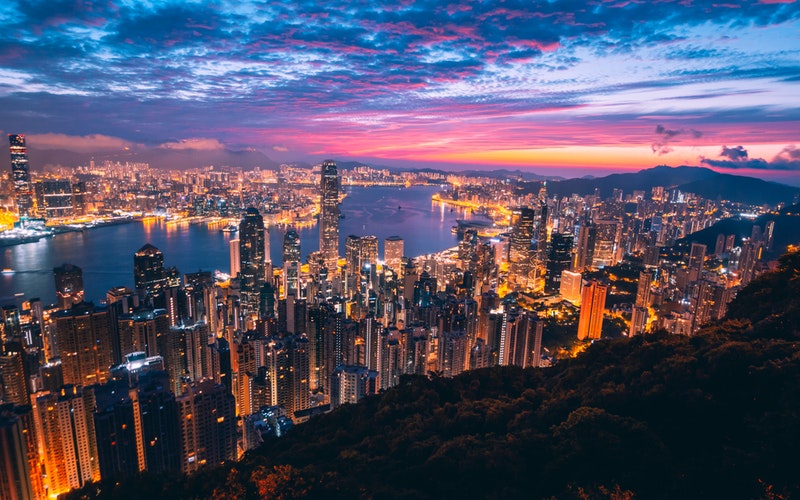
Travel
Sunlight in Siquijor: Discovering the Landscape Shifts and Coastal Plains of this Mystical Island
by Will Yap
Siquijor is a small circular island located between southern Cebu and Bohol. Its landscape shifts from calm coastal plains to dramatic cliffs and lush forests, giving it a well-known reputation as a “healing island.” The weather is typical of the Philippines—tropical and warm year-round, with sunny days during the summer months and rains in the monsoon season in the second half of the year.
Unlike more popular island destinations in the Philippines, Siquijor remains largely unspoilt—fewer crowds and a slower pace of life where its people have remained genuine and warm. The island is small enough to explore in a day, yet it offers a diversity of natural beauty. Adding to the island’s charm is its deep connection to folklore and the mystical. Siquijor’s history continues to fascinate visitors, beginning with pre-colonial trade prior to the Spanish discovery in 1565. Originally, the island was known as “Isla del Fuego” (Island of Fire) due to the proliferation of fireflies that swarmed the island at night.
Some trips arrive as a surprise, and this Siquijor getaway proved to be a welcome respite. Known for its healing traditions centered on spiritual and herbal remedies, Siquijor is definitely a place to revisit—an island that offers both spiritual calm and a laid-back beach lifestyle.
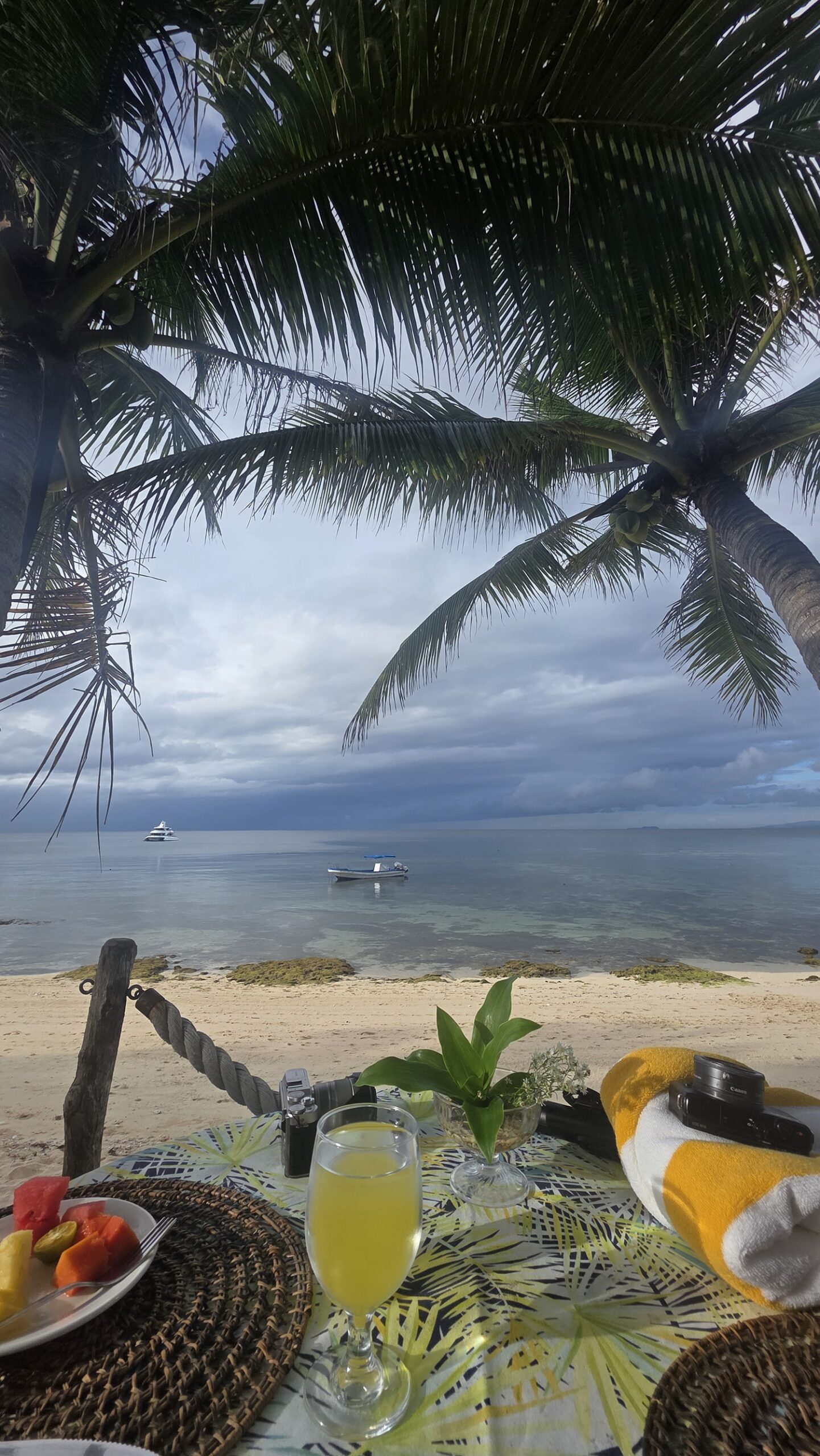
Slow, quiet mornings while enjoying the view at Sunset Restaurant, Coco Grove Beach resort.
Our party was flown via Sunlight Air, a boutique domestic airline designed for inter-island travel in the Philippines, with refurbished cabins offering wider legroom. The airline has a no-overbooking policy and complimentary in-flight snacks, small details that make the forty-minute flight from Cebu more relaxed and enjoyable.

Sunlight Air operates a fleet primarily consisting of ATR72 turboprop with a capacity for 68 passengers.
Upon our arrival at Siquijor Airport, our party was greeted lavishly with dancers and drummers ushering our welcome. We were then driven to Coco Grove Dive and Spa Resort, where we were billeted for our stay. After traditional welcome drinks, we were hosted for lunch at the Sunset Restaurant before settling into our fine accommodations to rest and prepare for a sunset yacht cruise, followed by an enjoyable dinner with a fire dance show to cap the evening.
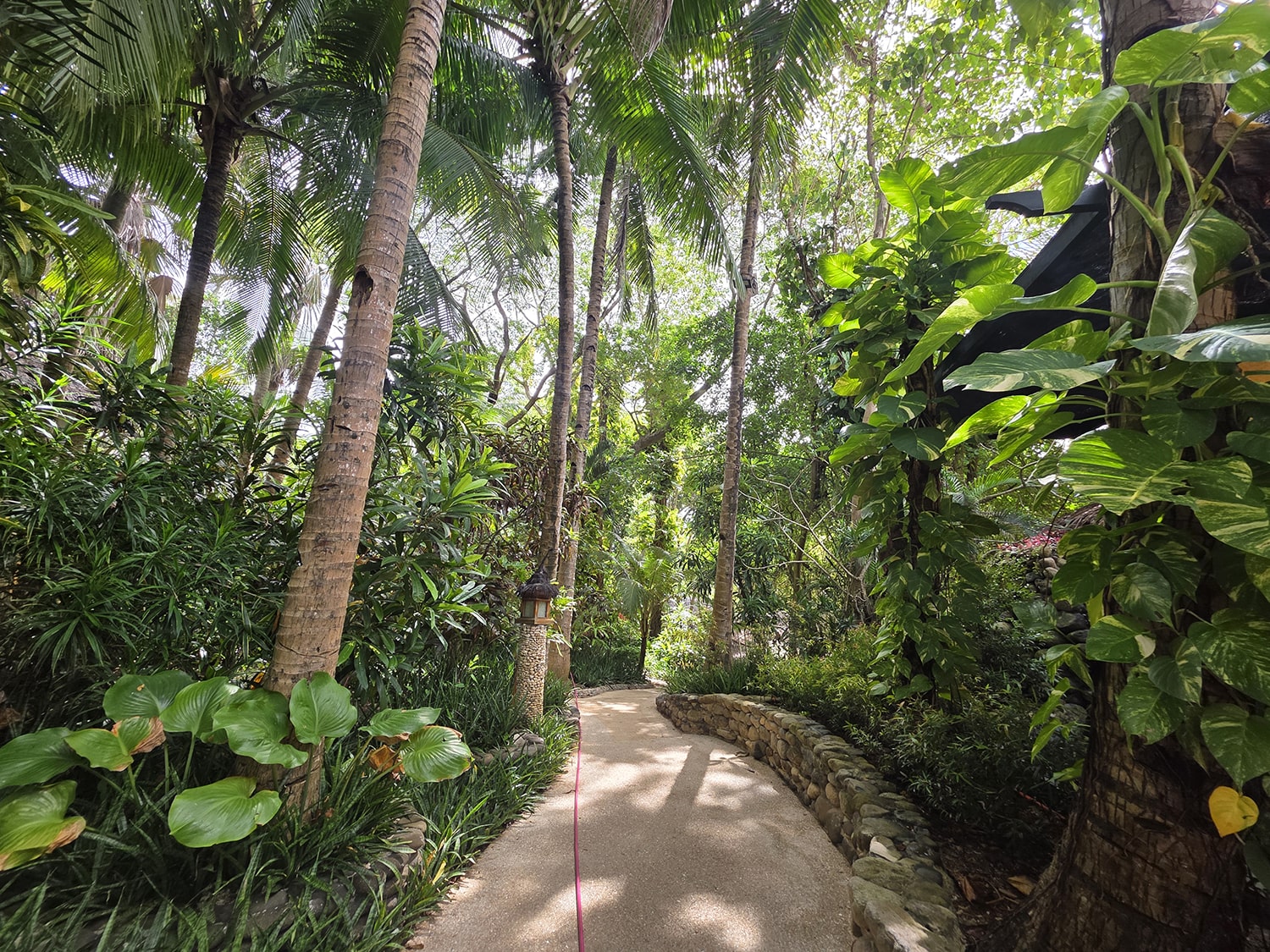
The lush greenery path walk of Coco Grove Beach Resort emanates tranquility.
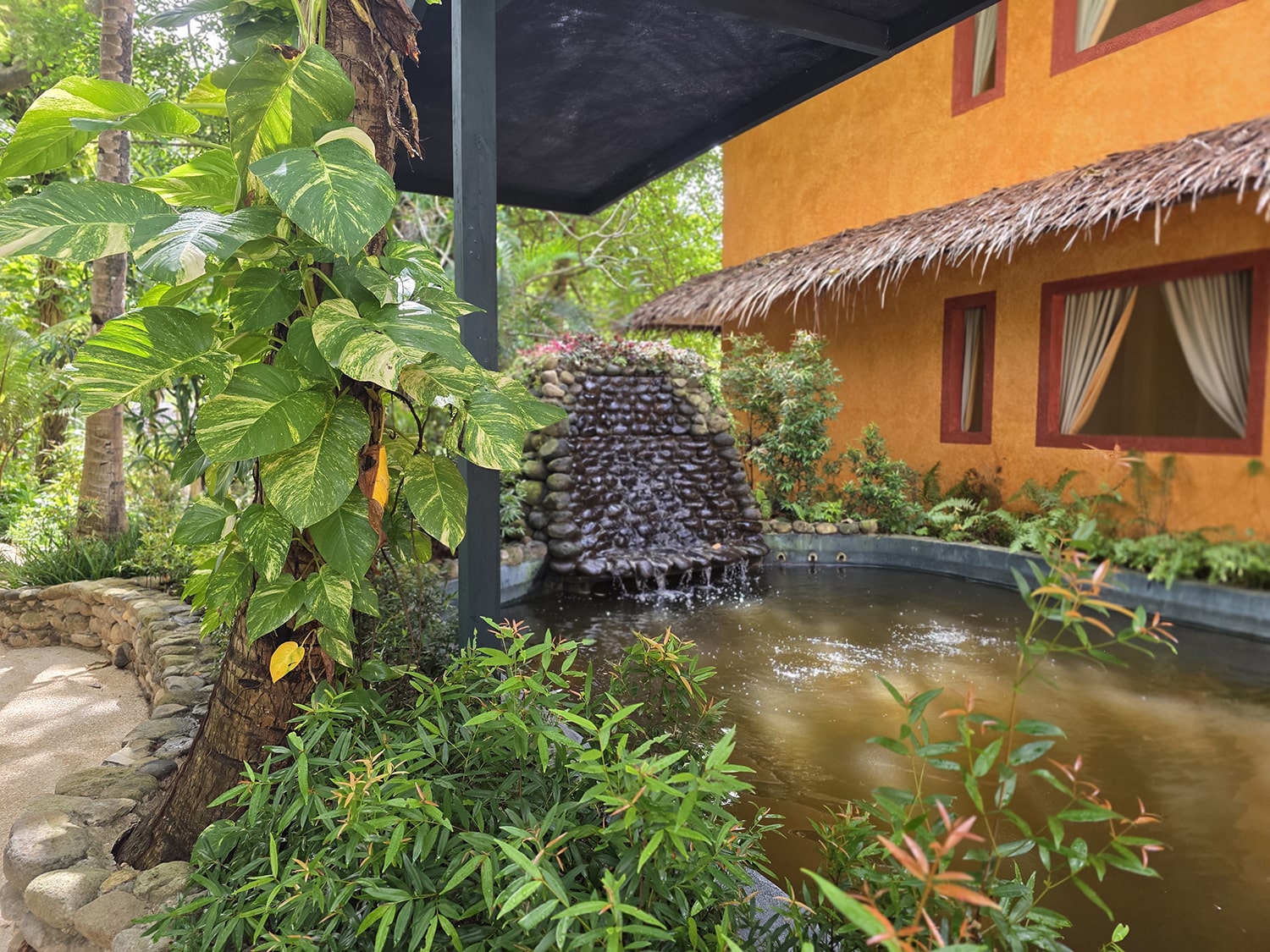
This peaceful corner makes every walk back to the room feel welcoming.
The following day, we explored St. Francis of Assisi Church, the island’s oldest cultural landmark, a stone’s throw away from the Siquijor Port. The church was founded in 1783 and was originally made of nipa palm fronds. In 1795, the church building was developed, with coral stones used as its main structural material by Spanish missionaries. Named after St. Francis of Assisi, the church reflects the island’s spiritual roots, with its patron saint known for his affinity for nature.
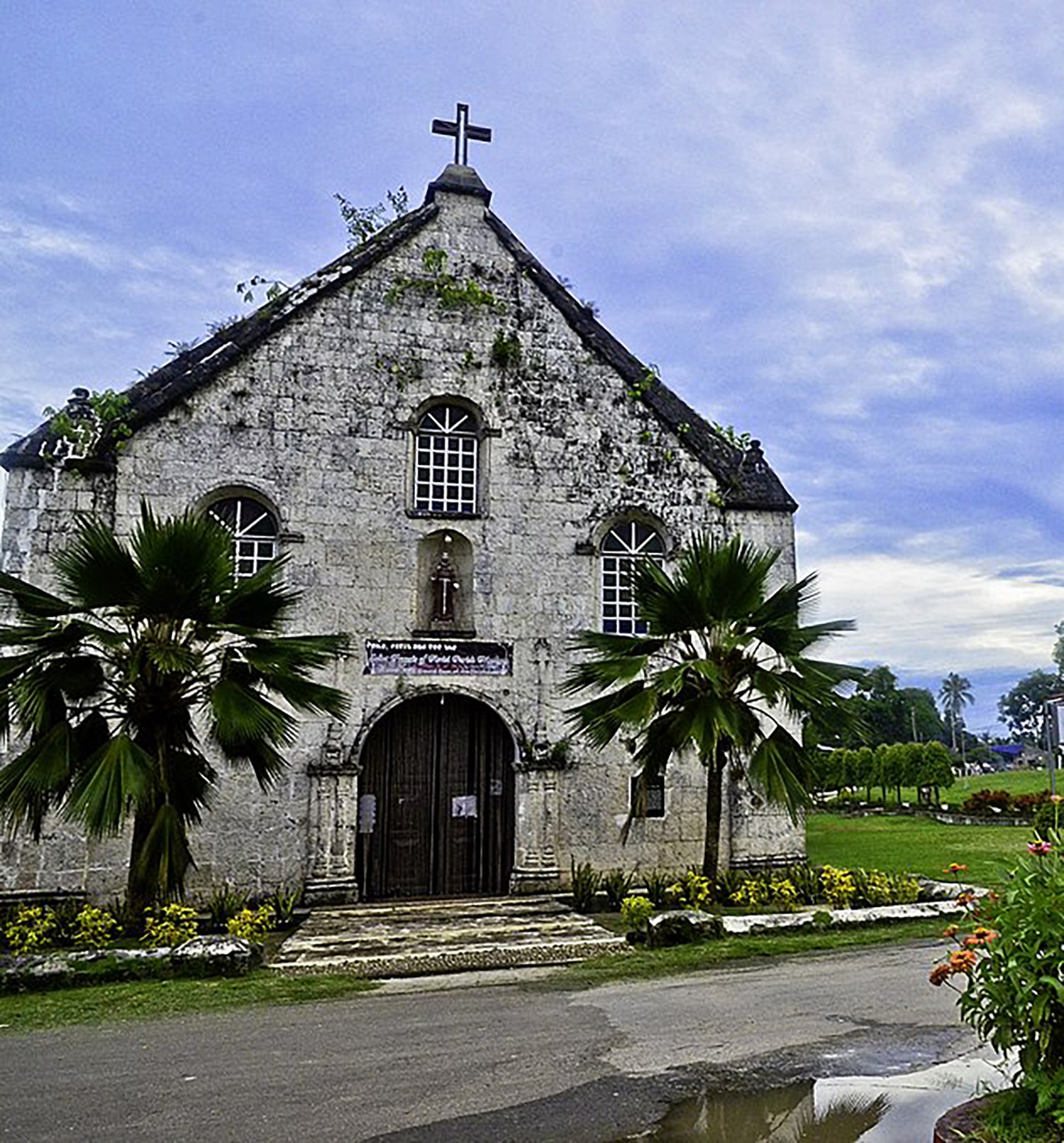
The famous St. Francis of Assisi Church made from Seastones welcomes guests in Siquijor’s main port, the Poblacion port.
Lunch after was at Paliton Beach, where we feasted on fresh seafood while lounging idly by the shore. Our next stop was the Mystical Balete Tree, a popular spot known for its ethereal atmosphere, gigantic roots, a spring-fed natural pool, and a “fish spa,” where tiny fishes nibble off exfoliating skin from your feet—a truly immersive and relaxing experience that blends natural wonder with folklore myth. The Balete tree signifies growth, renewal, and our sense of place.
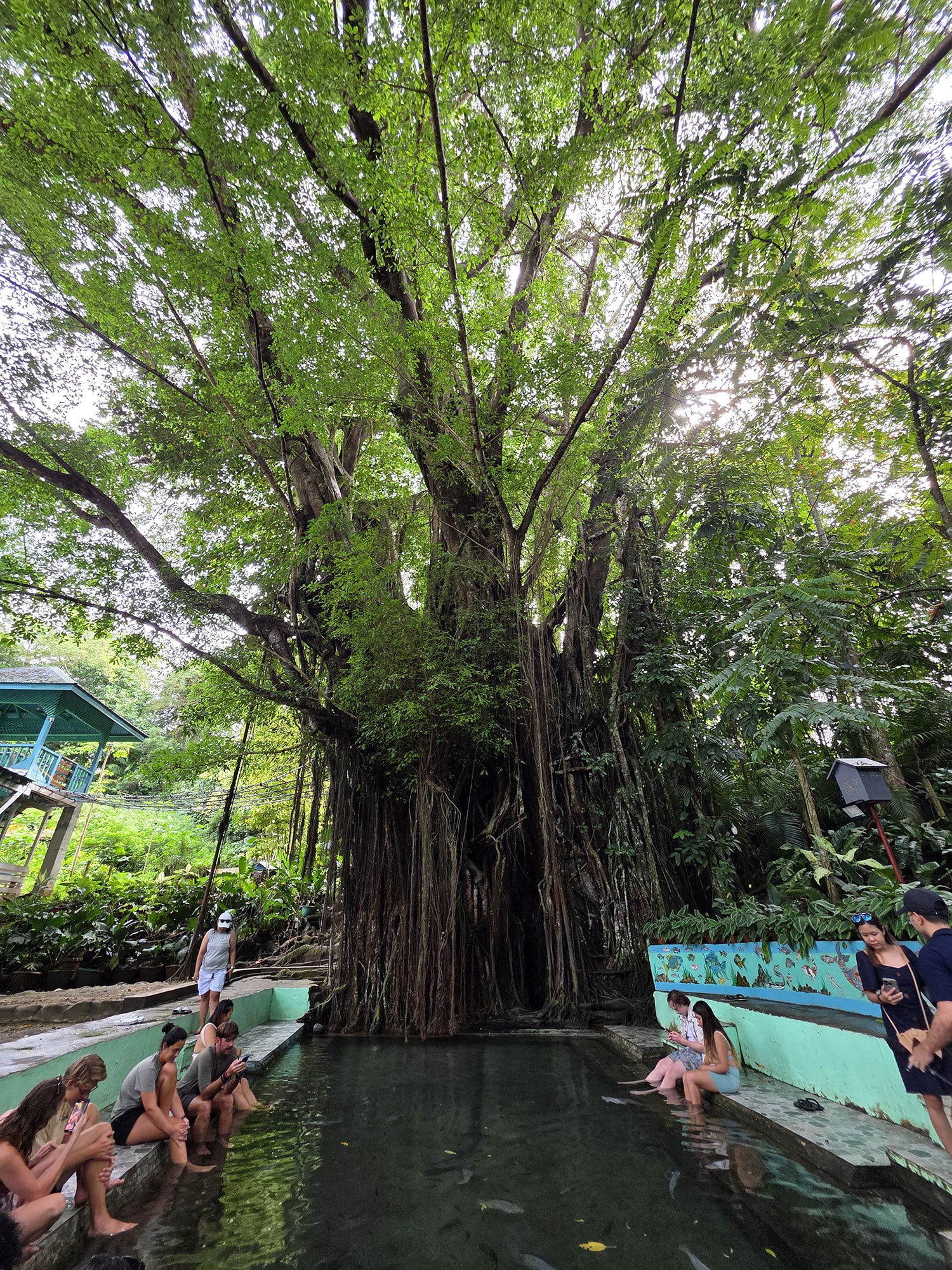
Tourists and locals alike enjoying the free fish spa at the Enchanting Balete Tree.
Next on the agenda was Cambughay Falls, a multi-tiered waterfall with clear, fresh turquoise waters and pockets of natural swimming pools. The falls cascade into three shallow pools ideal for swimming, diving, and even rafting. Surrounded by dense rainforest and limestone formations, it has a certain magical vibe.
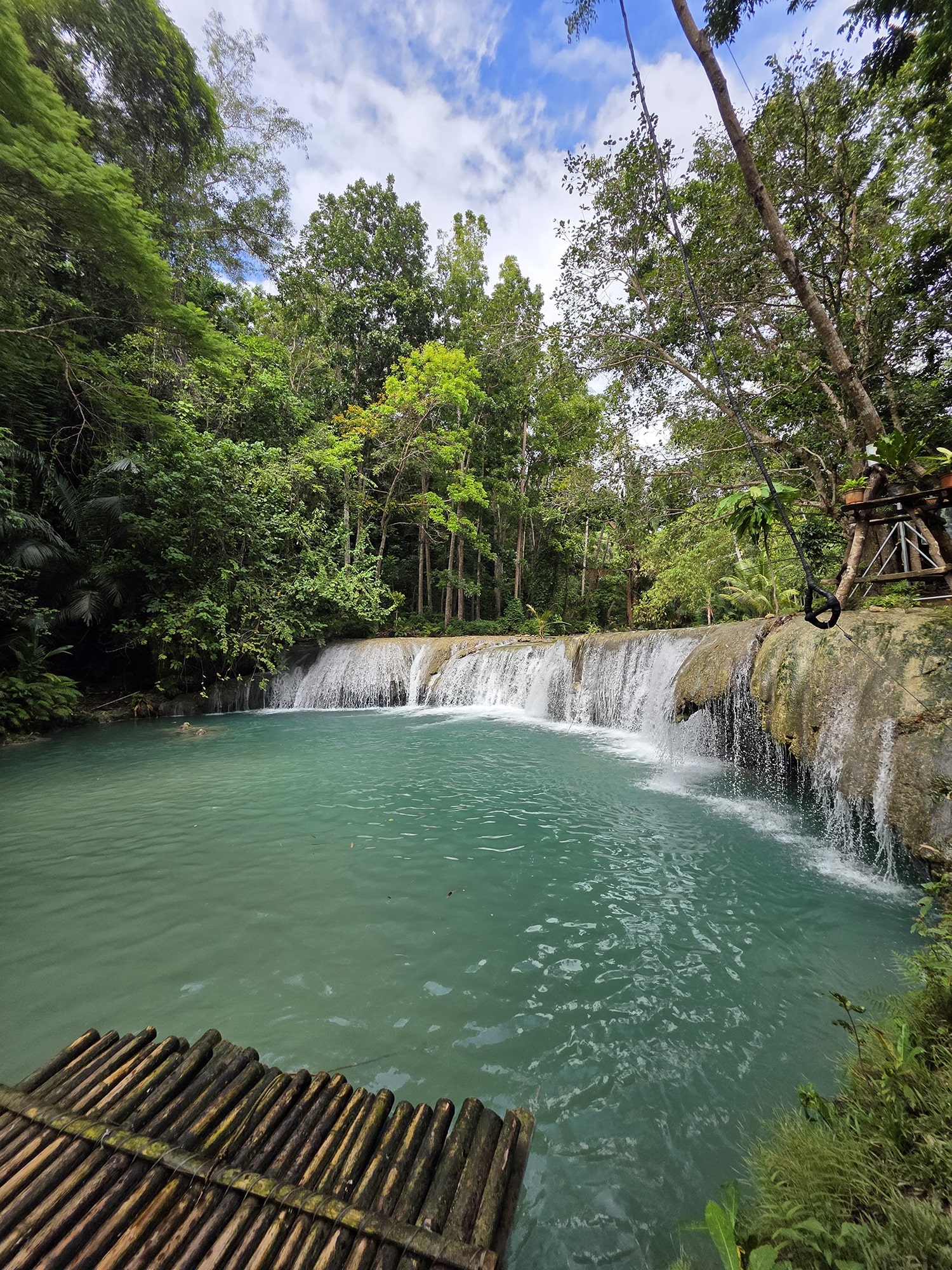
That picture perfect Cambugahay falls. A must destination when visiting Siquijor.
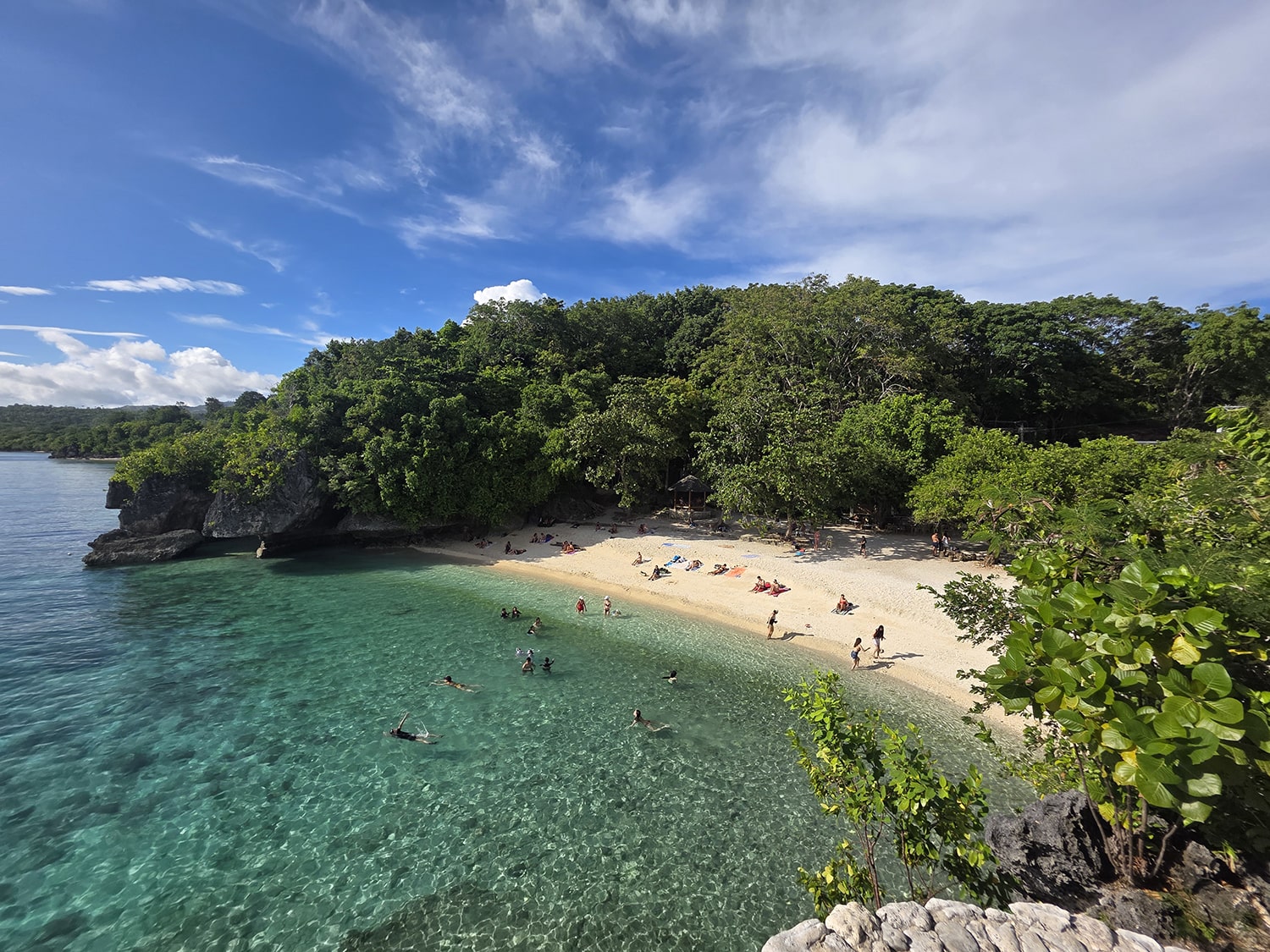
Salagdoong beach,famous for its clear waters and pristine white sands in a crescent shaped beach cove.
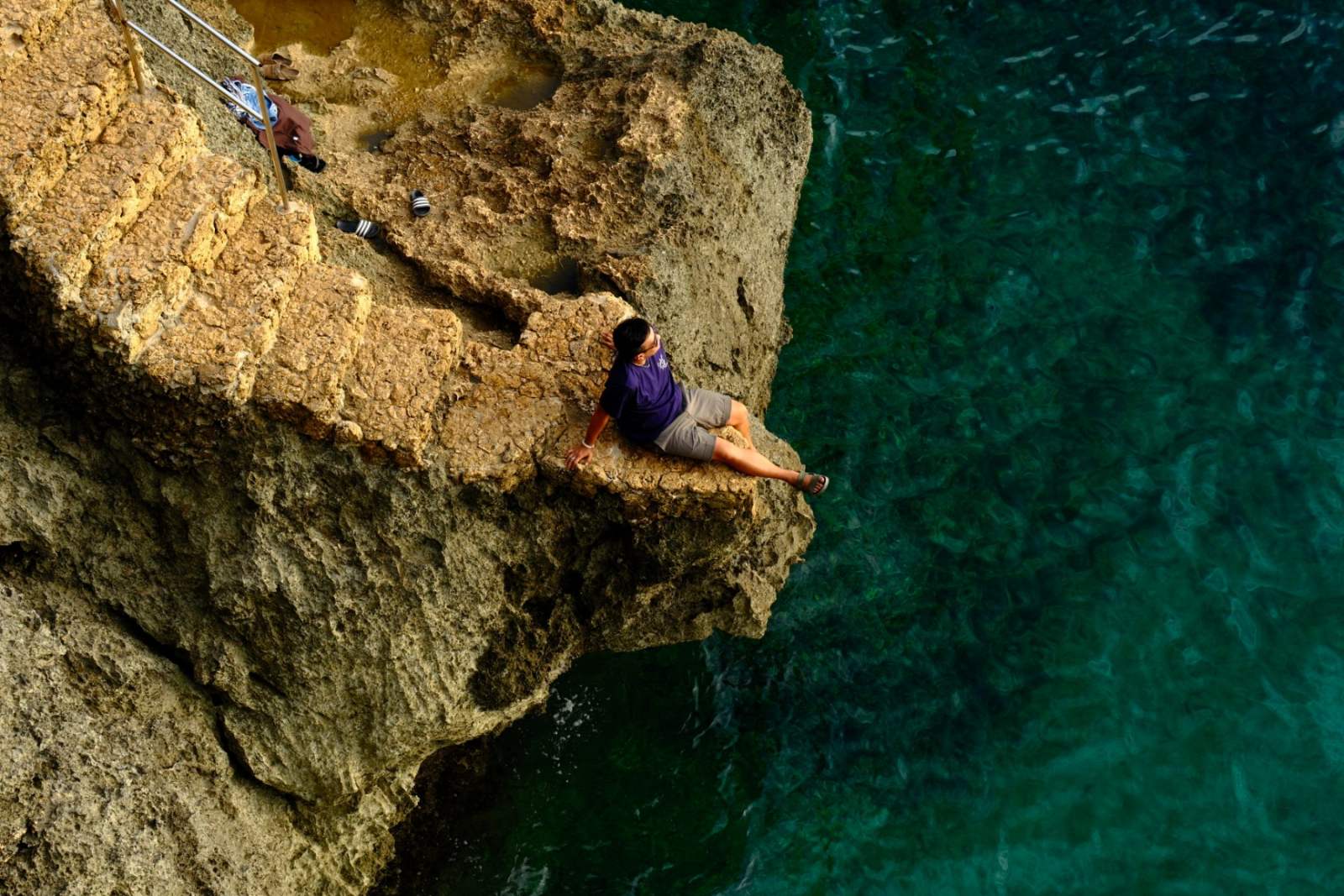
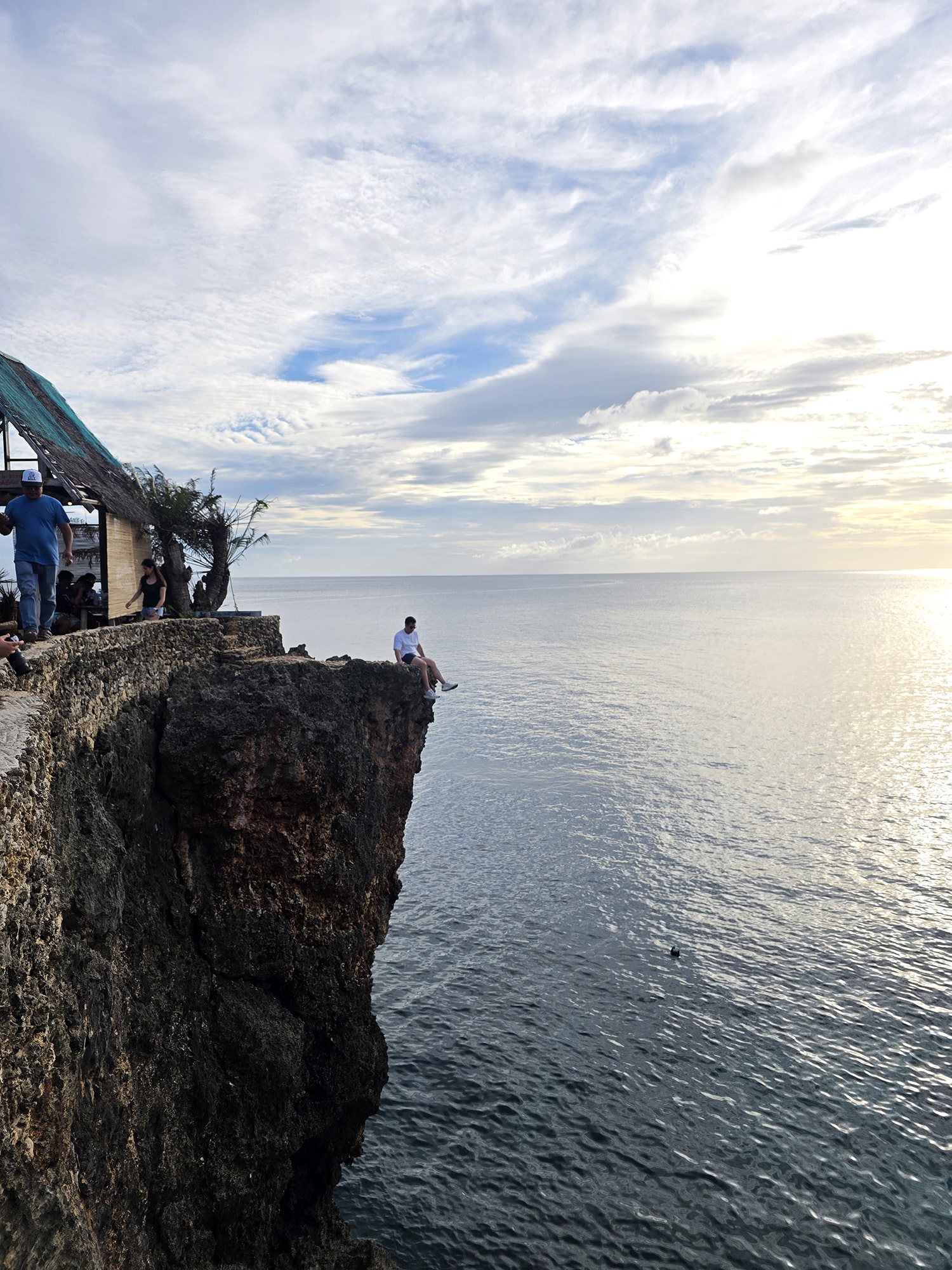
This writer Will Yap basking in the sunset view of Pitogo Cliffs.
Our final stop was Pitogo Cliff in San Juan, overlooking the Sulu Sea, just in time for the much-awaited stunning sunset view known for its peaceful atmosphere. Characterized by steep cliffs dramatically plunging into deep blue ocean waters, the cliffs are mantled in lush vegetation, mostly tropical palms like pitogo (native cycads), hence the location’s name. The Pitogo Cliffs face westward, giving front-seat views of the sunset, while the sound of waves crashing against limestone rocks offers a serene escape.
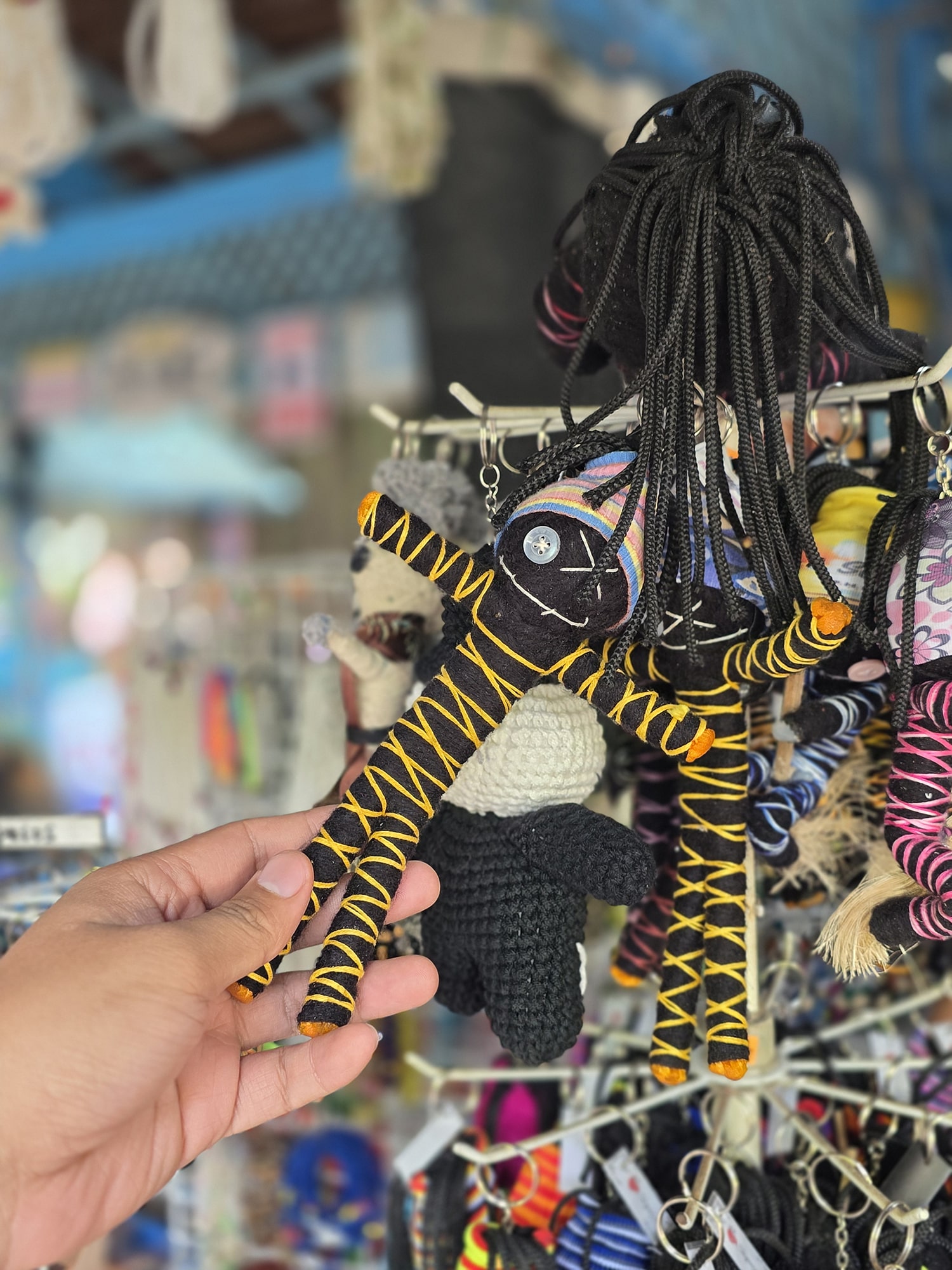
Little keepsakes with big folklore energy: voodoo doll souvenirs straight from mystical Siquijor.
If you’re planning your own Siquijor escape, book that flight, take that break, and let the island do its healing.
***
Starting December 15, 2025, travelers can now fly directly to Siquijor with Sunlight Air, eliminating the usual Dumaguete–ferry route. The new service offers direct flights from Cebu and convenient connections from Manila and Clark to Siquijor’s newly upgraded airport, supported by the provincial and local governments. To mark the launch, Sunlight Air is offering an introductory one-way base fare of ₱1,988 for Cebu–Siquijor flights, making the island’s beaches, waterfalls, and cultural heritage more accessible than ever.
Travel
Autumn in Istanbul: Fellow Travellers Share Turkish Delights

by Jing Ramos
Istanbul is a transcontinental city positioned between Europe and Asia, known for its rich history and upbeat modern identity. The city features a unique blend of Byzantine and Ottoman architecture and has a bustling metropolitan life straddled along the Bosphorus Strait. Like Rome, it’s an old city built on seven hills. In fact, Istanbul’s gradient characteristic originates from the Roman Empire. The cobblestone streets of Istanbul were crafted by Albanian craftsmen commissioned by Sultan Abdulmecit in the 19th century, giving the city an old-world charm.

The lobby of the Pera Palace Hotel exudes old world charm.
Stephen Aznar, who organized this brief interlude in Istanbul, couldn’t have chosen a more interesting address—after all, location is paramount. We were right in the heart of Beyoglu, a historic and vibrant neighbourhood on the European side of Istanbul. Cultural landmarks such as the Galata Tower, historical buildings, art galleries, numerous churches, and an engaging atmosphere of fascinating restaurants and cafés surrounded us. Not far from our apartment stood the iconic Pera Palace Hotel, built in 1895 for passengers of the Orient Express. Designed by French-Ottoman architect Alexander Vallaury, the hotel’s opulent architecture is a hybrid of neo-classical, art nouveau, and oriental styles. Famous names have graced the hotel’s registry, including Mustafa Kemal Atatürk, founder of the Republic of Turkey, and writer Agatha Christie, who reportedly drew inspiration from the hotel for her novel Murder on the Orient Express. Other notable visitors included Ernest Hemingway, Alfred Hitchcock, and Queen Elizabeth II.

Stephen Aznar by the Galata Tower in Beyoglu.

The interiors of the patisserie were given a facelift by renowned interior designer Anouska Hempel.

The china served in the cafe were naturally pink, a favorite color of the Atataturks.
Stepping into the patisserie of the Pera Palace Hotel is a journey into the Belle Époque—a dreamlike era when the art nouveau period flourished. This French-style bakery features a predominantly pink ambiance with cranberry tones, moiré silks, and velvet cushions. Interior designer Anouska Hempel refreshed the café’s interiors in 2013, enhancing its original design, and the result is “the glamour of a bygone era.” Dessert history spanning Istanbul to Anatolia includes a varied range of baklavas, rice pudding, and Turkish delights from the Ottoman Palace, as well as patisserie products, biscuits, tarts, and cakes that made their way to Pera in the mid–19th century. That particular afternoon, our guilty pleasure consisted of Turkish tea with a traditional caramel éclair and a lotus tart served on pink china—a favourite color of the Atatürks.

Tracey Emin’s Bazen/Sometimes, inkjet mounted on foam board 2009
The Elgiz Museum of Contemporary Art, located in Istanbul’s business district within the Beybi Giz Plaza building, is Turkey’s first contemporary art museum established to support the development of contemporary art. The museum is nonprofit, founded by Sevda and Can Elgiz, and houses the family’s private collection, showcases temporary exhibitions, and serves as a platform for young and emerging artists and curators.
Currently on exhibition is Season of Mirage, which explores the thin line between dream and reality through current works by Turkish artists and selections from the museum’s private collection. A journey through the layered world of art, the exhibition—named after a mirage—offers a visual feast shaped by artists’ observations of the modern world. The interplay between clarity and uncertainty provides viewers with an opportunity to transcend time and explore both past and present. And although the city of Istanbul remains deeply rooted in its glorious past, the present reveals a collective artistic voice expressing concern over societal challenges, vividly depicted in the images of Season of Mirage.

This writer, Jing Ramos soaking up the atmosphere at the Patisserie .
Lifestyle
Find Your Summer Spirit in Shangri-La Mactan, Cebu
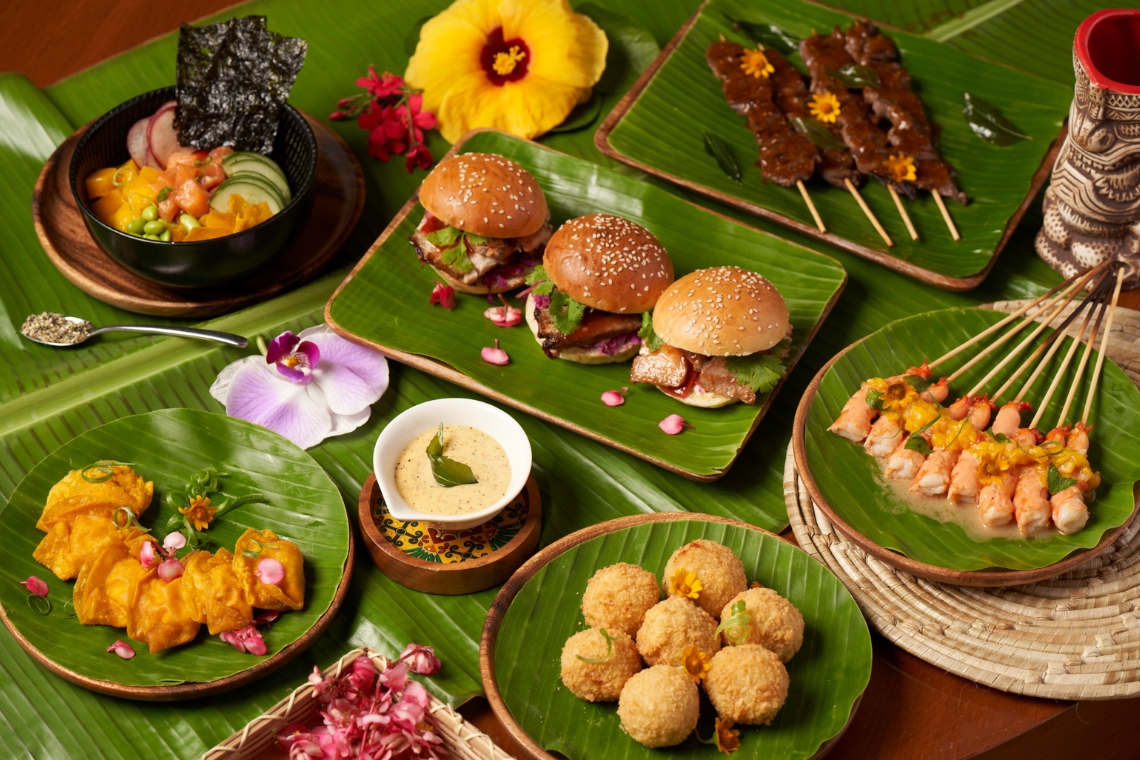
Breathe in the tropical atmosphere, as you find summer joys through sight, sound and taste at Shangri-La Mactan, Cebu. Poolside fun during the day, spent serenely and luxuriantly—a refreshment in hand. While the evenings are for outdoor family movie nights, with the ocean waves rippling in the background.
Summer is all of that, and more! Plan an extraordinary weekend with an array of exciting activities that await your arrival. Discover your #ShangriLaSummerSpirit from 15 July to 30 August.

Tiki Bar at Buko Bar
Epicurean Delights by the Pool
Keep yourself fueled up as you splish and splash with the whole crew. Take a quick break from all that summer jazz with Mediterranean and Polynesian-inspired bites exquisitely crafted for your palate. From rice balls and pastas, ice creams to sliders—indulge in tastes and aromas that transport you to a world of endless, golden summers.

Mediterranean Selections at Acqua
A Whimsical Touch
Make it a colourful summer for the kids! Let them explore their own version of paradise with whimsical floaties, sure to keep them happily afloat. Your little ones can now freely kick and play in the water with fun and fascinating, animal-shaped inflatables.
Pleasant Sundowner Tunes
Bid the sun adieu and embrace the sunset hues with live acoustics at the Main Pool from 4pm to 6:30pm.

Tiki Cocktails at Buko Bar

Champagne Bar at Acqua
A Toast to an Endless Summer!
Unwind and savour the tropical vibe as our expert mixologists craft refreshing Tiki cocktails and serve chilled bottles of exquisite champagne by the pool! With a backdrop of swaying palm trees and stunning ocean views, sip on delightful beverages and toast to unforgettable summer moments in paradise.
Family Outdoor Movie Night
Gather your nearest and dearest for an enchanting evening as we set up a large outdoor screen by the pool under the starry night sky. Cozy up as you enjoy a family-friendly movie that will delight both those who are young and young-at-heart at Treasure Island from 7pm to 9pm.

Surrounded by lush greens, let the experience bring you to a world of joy and laughter, creating cherished memories for you and the family. For more information on Shangri-La Mactan, Cebu, you may contact (032) 2310288. You may also follow them on Facebook and Instagram or visit https://www.shangri-la.com/cebu/mactanresort/ #FindYourSummerSpirit #FindYourShangriLa

Assemblage: Art Exhibit Blending Themes of Infinity and Renewal

At the Table: Introducing Flora de Filipinas

Cebu’s Heritage Is Not a Museum Piece, Darlings

James Morales Jr.; Capturing Significant Images Through His Lenses While Nurturing a Lifelong Passion for Vintage Cars
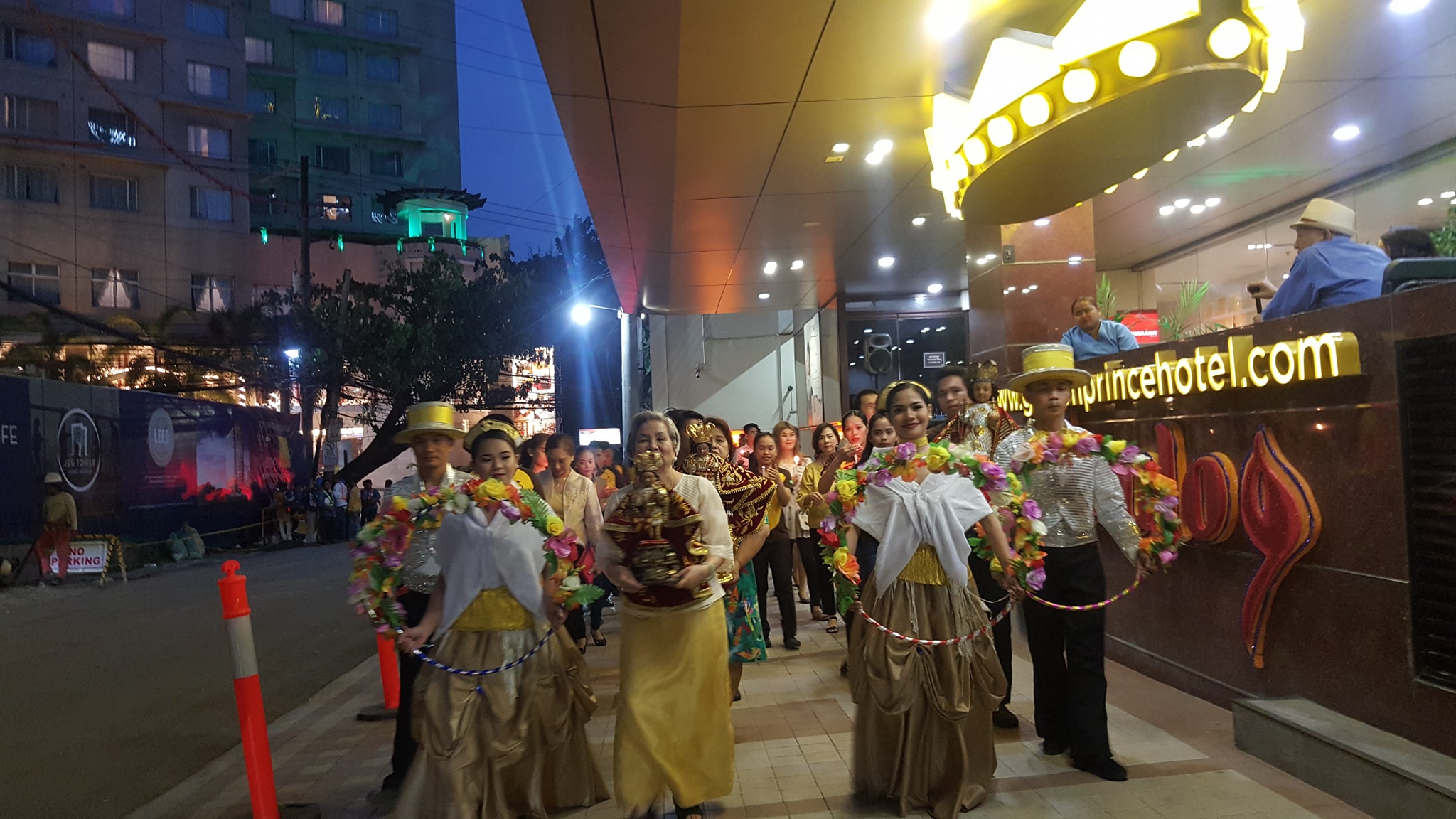
Golden Prince Hotel’s Sinulog Royalty Experience

SM Fashion Forum reveals Cebu’s style influencers
5 Filipino Films That Continue the Conversation on Women Empowerment
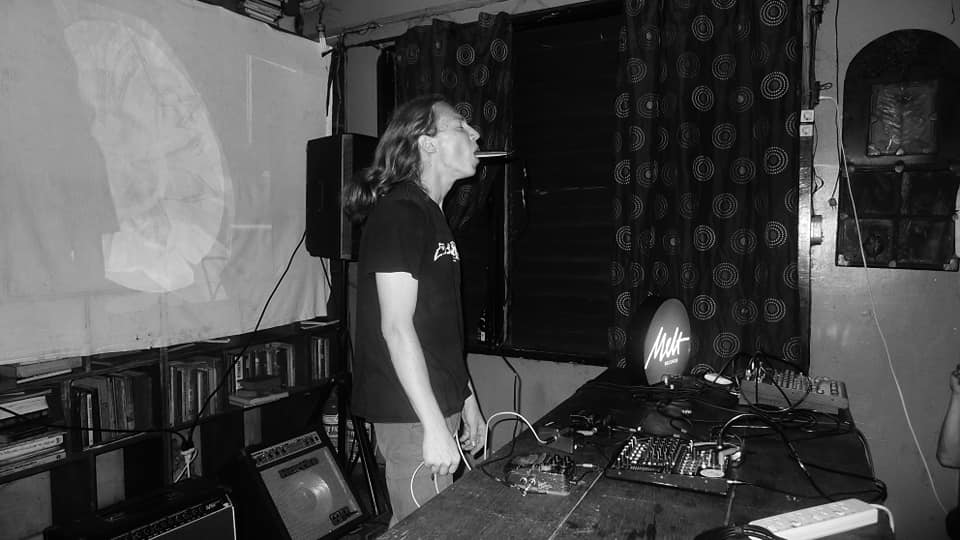
Noise and Sounds: An Artform

Christmas in Colonial Cebu: A Themed Exhibit by Teresin Mendezona and Eva Gullas for Stylescapes 2019

Artisanal Cebu: Aspiring calligraphy artist Abigail Condrado

Experience authentic Korean Barbeque at Da-In Restaurant

Chaine des Rotisseurs: A Night of Spanish Cuisine
-
 Advertorial3 months ago
ALLU Philippines Opens in Cebu; Expanding Luxury Resale in the Visayas
-
 Fashion3 months ago
Ramon Valera; Manila Society’s Fashion Darling
-
 Ogle La La 3.04 weeks ago
Cebu’s Heritage Is Not a Museum Piece, Darlings
-
 Prime Target1 month ago
James Morales Jr.; Capturing Significant Images Through His Lenses While Nurturing a Lifelong Passion for Vintage Cars
-
 Art Beat2 weeks ago
Assemblage: Art Exhibit Blending Themes of Infinity and Renewal
-
 The Scene2 weeks ago
At the Table: Introducing Flora de Filipinas
You must be logged in to post a comment Login