
Travel
Surigao Sur is Your Next Favorite Travel Destination
Surigao Sur is a province that’s not often mentioned in the list of popular Philippine tourist destinations, but editor Shari Quimbo finds out why it should be.
The mesmerizing video clips of Laswitan have been making the rounds in social media in the last few months. You know what I’m talking about—it’s these thunderous waves of water crashing against the craggy rocks filling up tidal pools with foamy seawater and soaking the tourists bathing in it. It’s a powerful epitome for the forces of nature, if you ask me.
It’s incredible to think that this magnificent scene was happening right in our backyard, and even more incredible to realize that I (and probably a good chunk of the local population) didn’t really know much about Surigao Sur. I was familiar with its northern namesake, of course — discovering Siargao two years ago had made it my new favorite local destination. But even the Enchanted River, arguably the province’s most famous landmark, is more associate with Surigao del Norte, a funny fact considering Surigao City was more than a five-hour drive away.
We live in an archipelago of 7,107 islands, so yes, it’s inevitable that some destinations don’t enter the common tourism spectrum of Boracay, Palawan, Bohol or even Cebu. But it bugged me that I had previously never heard much about this province that was just a short plane ride away from my hometown, and a quick Google search revealed that it had much to offer.
Off the bat, though, I realized that Surigao Sur was a place that you need to visit with a sense of adventure. Here, the tourism industry is just stretching its legs — flights to the capital city of Tandag were only three times a week, there isn’t much choice for accommodations, and moving from place to place involved drives that could be as quick as 30 minutes or as long as four hours (something that the oft-motion sick me didn’t much appreciate).
It didn’t come easy, to be sure. A lot of the places we’d visited in Surigao Sur presented naturally beautiful sights, but also a challenge that we had to surpass to really get there.

Tinuy-an Falls, for example, had gotten its name from the Bisaya word tuyo meaning with an intention — the only reason you’d be on the road to Tinuy-an is that you were on your way there. The rough road went up and down hills, before finally dipping into a valley where, even from the parking lot, you could hear the cacophany of falling water.
We were lucky enough to have been visiting in the middle of an incredibly rainy week, which meant the river was practically overflowing. The current was so strong that the volunteers at the site had to remove the wooden bridge that connected the entrance to the other side of the river—but because the overgrown playgrounds and picnic benches over there were more picturesque, we agreed to crossing. A wooden canoe looked like it would topple over quickly, so instead we go through the knee-deep water and the most forceful current ever.
A person slipping on the wet stones and one lost action cam later, we found ourselves on the other side, enjoying the refreshing mist created by the crashing water and the mostly untouched trees surrounding us.
This sort of delayed gratification was something that Surigao Sur had in spades. An early morning call time for island hopping in the Britania Group of Islands promised us a beautiful view of the sunrise over the open ocean, but being on the edge of the Philippine Sea made it feel like the waves would throw us overboard any minute. Even trying to dock was a challenge — the boat bobbed up and down against the sloping terrain of our first stop Hagonoy Island, and we eventually had to just leap down onto the sand.
Not that we were planning on complaining. The sun was slowly rising into the cloudy sky, casting the island’s three coconut trees into a dramatic light. After all the necessary photo ops, we retreated to Hiyor-Hiyoran Island for breakfast on seafood that had been caught just hours before.
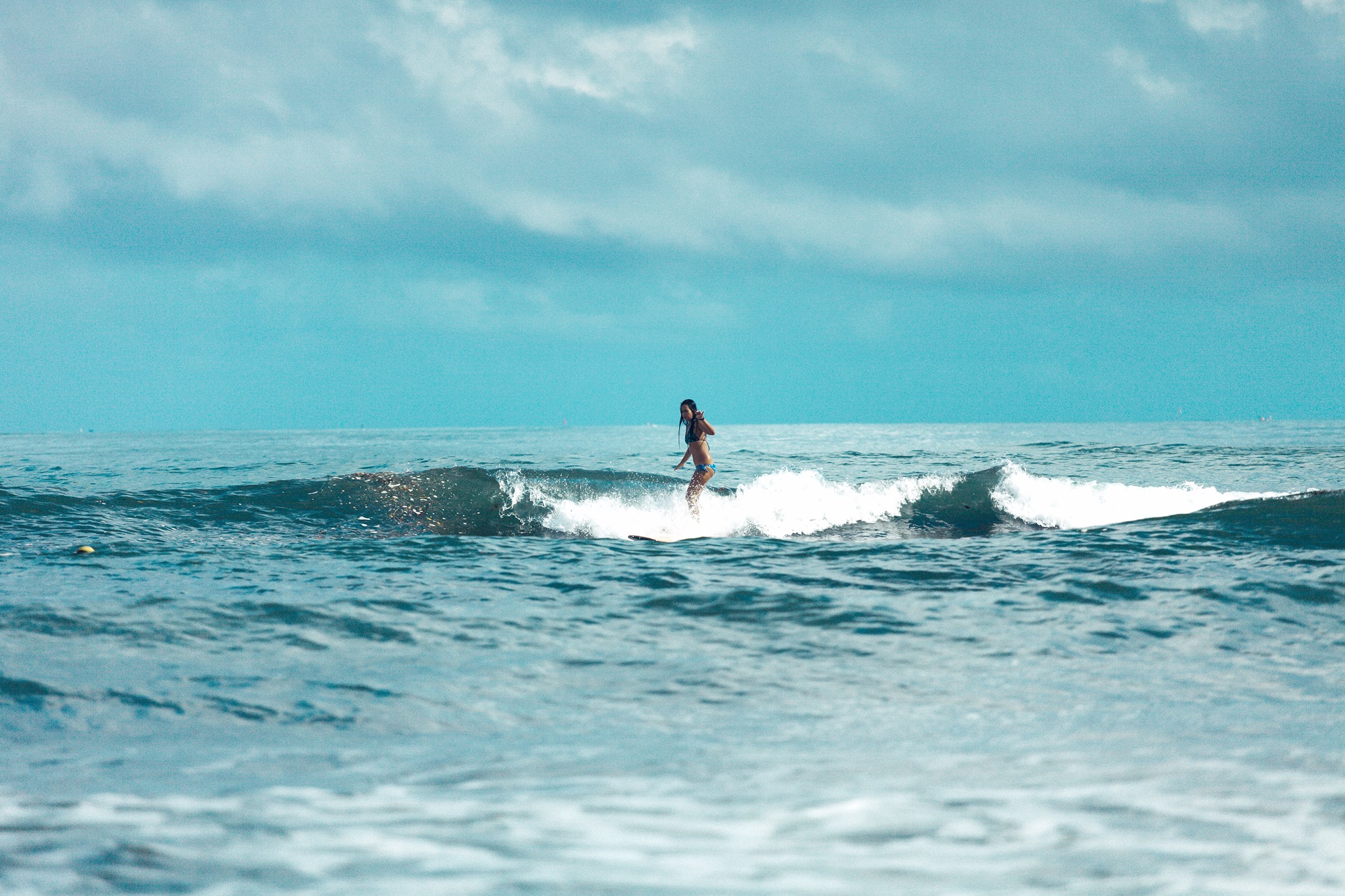
The sea plays a very big role in Surigao Sur’s tourist offerings. In Lanuza, the beach scene is one of action — locals are constantly paddling out to meet the waves, learning to ride them at an early age. The vibe was a lot more laidback than that of Siargao, although a lot of foreigners are now frequenting the spot. In fact, the town is now host to the different international competitions, and the local Surf Camp offers packages that allow you to spend weeks at a time mastering the sport.

Although I had originally wanted to surf, it wasn’t exactly the best season to ride the waves — you had to ride a good distance out to get good swells, and I was much too content settling into the cottage on stilts we had rented out, listening to music and digging into the bag of cooked shellfish I’d bought at the local market. The afternoon was spent watching the more skilled surfers cruise the choppy seas — Debbie, our unofficial guide for the few days we were there, was the amazing surfer I hope to be one day.
A spot that I had tried to lower expectations for was the Enchanted River — it had garnered massive popularity for its beautifully colored, crystal-clear waters, and for the mystery of its seemingly bottomless caverns. I was honestly a little worried that the actual place wouldn’t live up to the hype.

Thankfully, I was wrong. We were lucky enough to have visited when swimming wasn’t allowed (and I’d recently read that swimming in the mouth of the river is now permanently prohibited), so there were no crowds to distract from the scenery. It looked like someone had turned the saturation up in the area, the lush greenery of the canyon framing the vivid blue hues that got darker as the water got deeper.
It’s unsurprising that people attach supernatural meaning to the place — even the fish were peculiar, traveling alone or in pairs while peering up at you intently from beneath the surface. No wonder they decided to call it enchanted.

Quite fittingly, our last stop for the trip was Laswitan, the very spot that had gotten me interested in Surigao Sur in the first place. Much like a lot of the places we visited, getting there took some time — from the highway, you had to take a narrow dirt road that snakes through farms and wooded areas before leading to a clearing that dropped into the water. From there, a steep staircase led to sea level, where helpful volunteers told us to sit in a cottage and wait.The waves hadn’t been as strong lately, they said, so maybe we’ll get luckier as the afternoon got later.
And wait, we did. February was the tail end of the stronger squalls and cold fronts, so the waves we saw only produced a light spray as it crashed onto the rock formations.
It’s interesting to note the sheer number of people who were there — social media had truly done its job. We’re told that people from other provinces drive for as much as five hours just to see the sight they’d seen online for themselves.
As the day got later, we had begun to resign ourselves to the fact that we might not be able to see a wave big enough to cause a massive splash. We were just talking about packing up when the sound of a steadily growing roar was building up from beyond the rocks, and a gust of water slammed into it, bringing an enormous gush into the tidal pools. Pretty soon, they come in regular intervals, making me think that somewhere, Mother Nature was thanking me for deciding to come.
Photography by Arnauld and Chester Baldicantos

Travel
Sunlight in Siquijor: Discovering the Landscape Shifts and Coastal Plains of this Mystical Island
by Will Yap
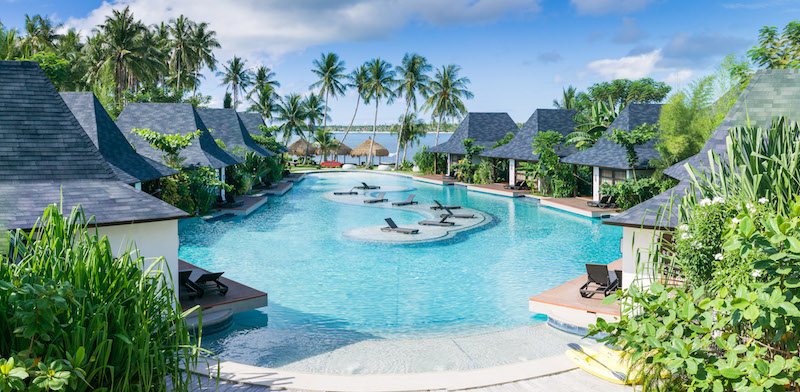
Siquijor is a small circular island located between southern Cebu and Bohol. Its landscape shifts from calm coastal plains to dramatic cliffs and lush forests, giving it a well-known reputation as a “healing island.” The weather is typical of the Philippines—tropical and warm year-round, with sunny days during the summer months and rains in the monsoon season in the second half of the year.
Unlike more popular island destinations in the Philippines, Siquijor remains largely unspoilt—fewer crowds and a slower pace of life where its people have remained genuine and warm. The island is small enough to explore in a day, yet it offers a diversity of natural beauty. Adding to the island’s charm is its deep connection to folklore and the mystical. Siquijor’s history continues to fascinate visitors, beginning with pre-colonial trade prior to the Spanish discovery in 1565. Originally, the island was known as “Isla del Fuego” (Island of Fire) due to the proliferation of fireflies that swarmed the island at night.
Some trips arrive as a surprise, and this Siquijor getaway proved to be a welcome respite. Known for its healing traditions centered on spiritual and herbal remedies, Siquijor is definitely a place to revisit—an island that offers both spiritual calm and a laid-back beach lifestyle.
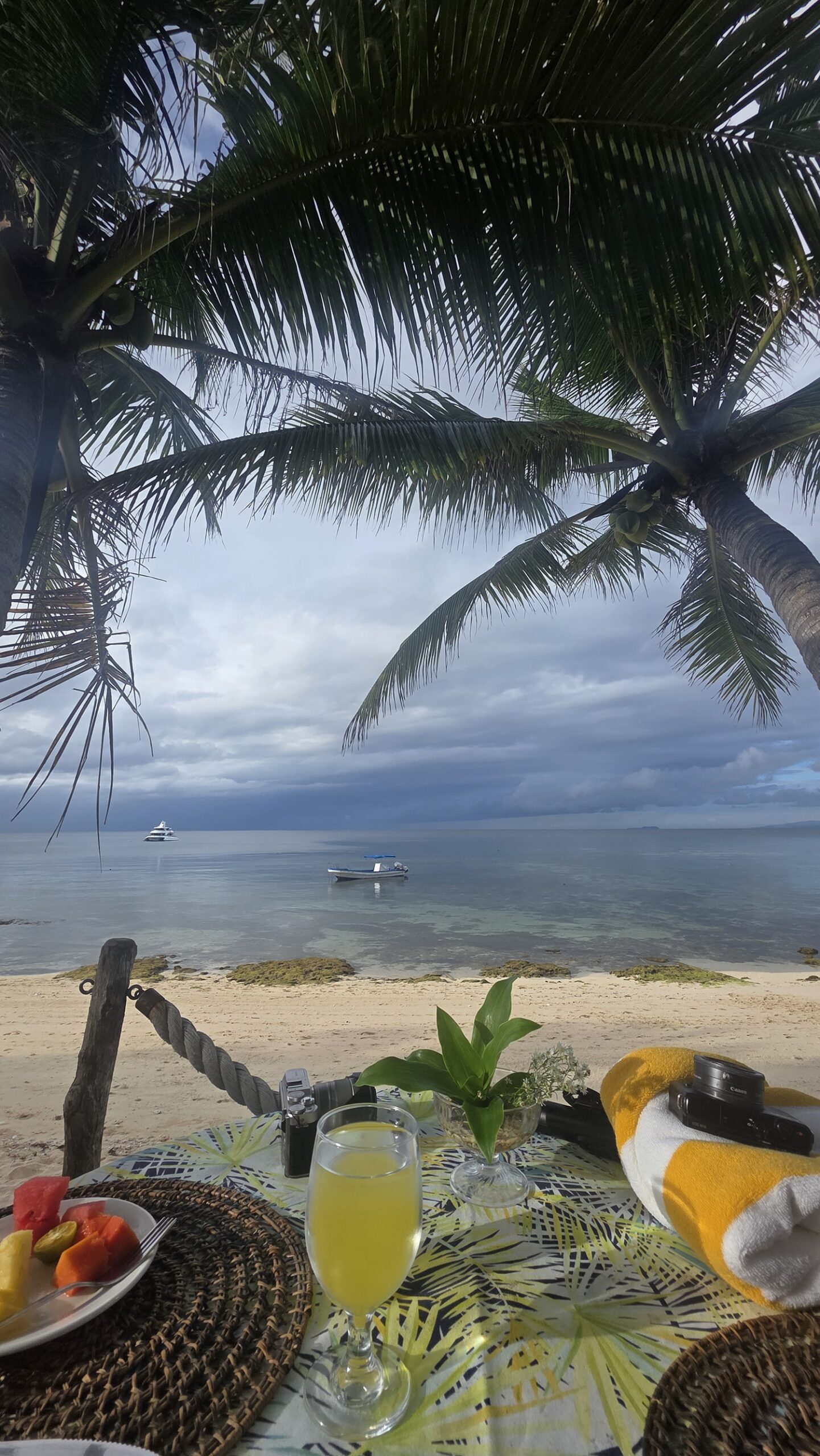
Slow, quiet mornings while enjoying the view at Sunset Restaurant, Coco Grove Beach resort.
Our party was flown via Sunlight Air, a boutique domestic airline designed for inter-island travel in the Philippines, with refurbished cabins offering wider legroom. The airline has a no-overbooking policy and complimentary in-flight snacks, small details that make the forty-minute flight from Cebu more relaxed and enjoyable.

Sunlight Air operates a fleet primarily consisting of ATR72 turboprop with a capacity for 68 passengers.
Upon our arrival at Siquijor Airport, our party was greeted lavishly with dancers and drummers ushering our welcome. We were then driven to Coco Grove Dive and Spa Resort, where we were billeted for our stay. After traditional welcome drinks, we were hosted for lunch at the Sunset Restaurant before settling into our fine accommodations to rest and prepare for a sunset yacht cruise, followed by an enjoyable dinner with a fire dance show to cap the evening.
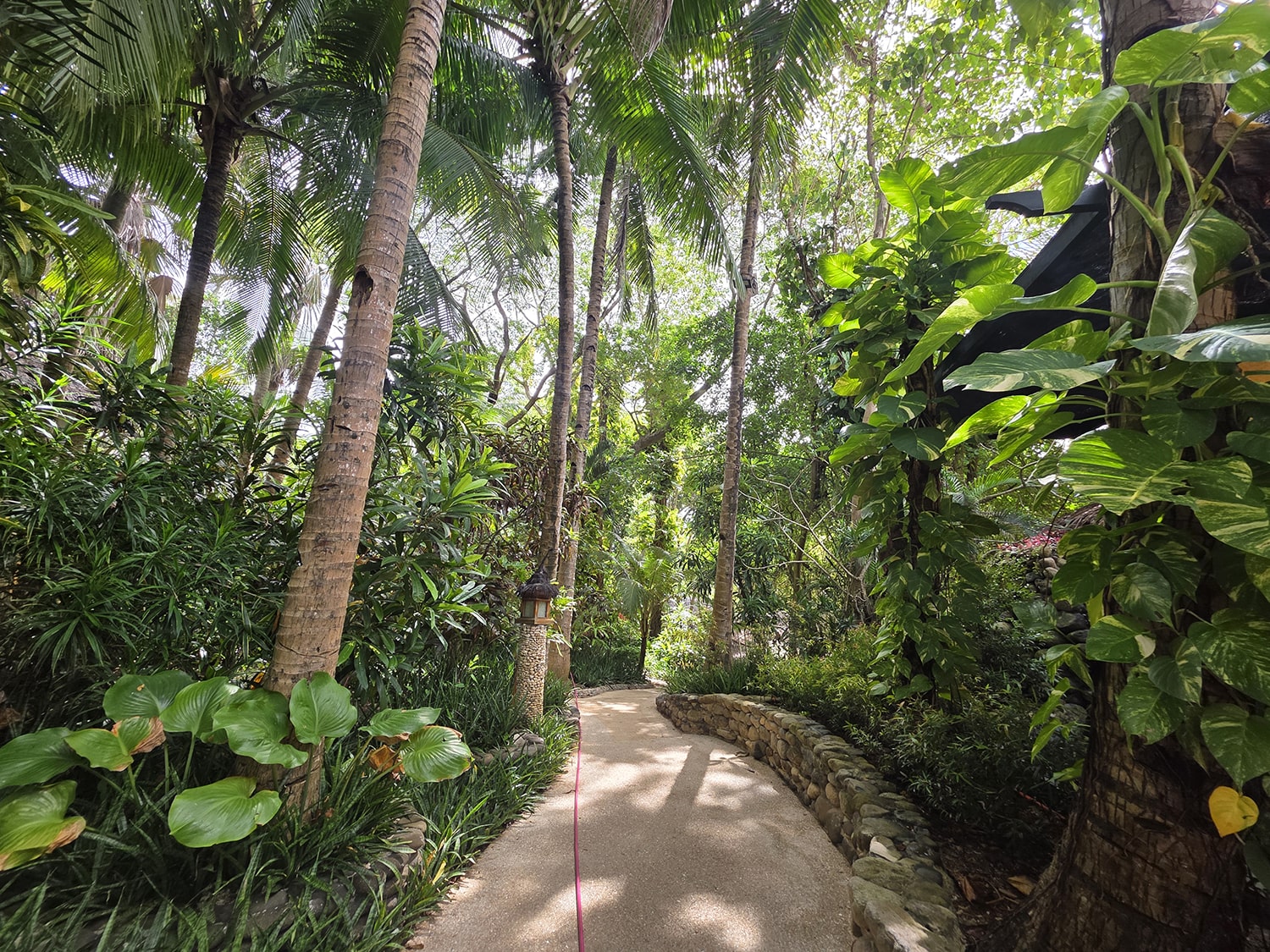
The lush greenery path walk of Coco Grove Beach Resort emanates tranquility.
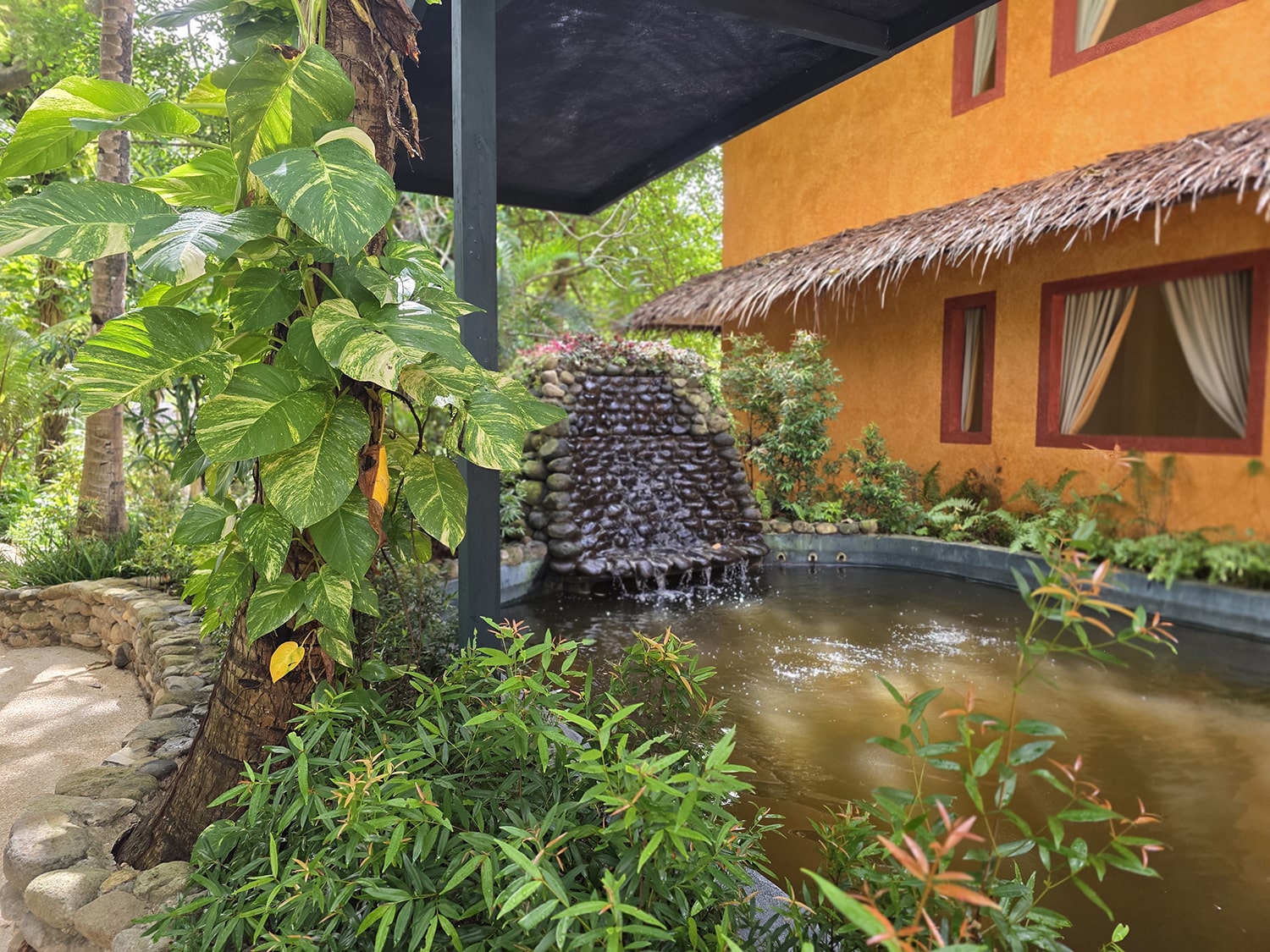
This peaceful corner makes every walk back to the room feel welcoming.
The following day, we explored St. Francis of Assisi Church, the island’s oldest cultural landmark, a stone’s throw away from the Siquijor Port. The church was founded in 1783 and was originally made of nipa palm fronds. In 1795, the church building was developed, with coral stones used as its main structural material by Spanish missionaries. Named after St. Francis of Assisi, the church reflects the island’s spiritual roots, with its patron saint known for his affinity for nature.
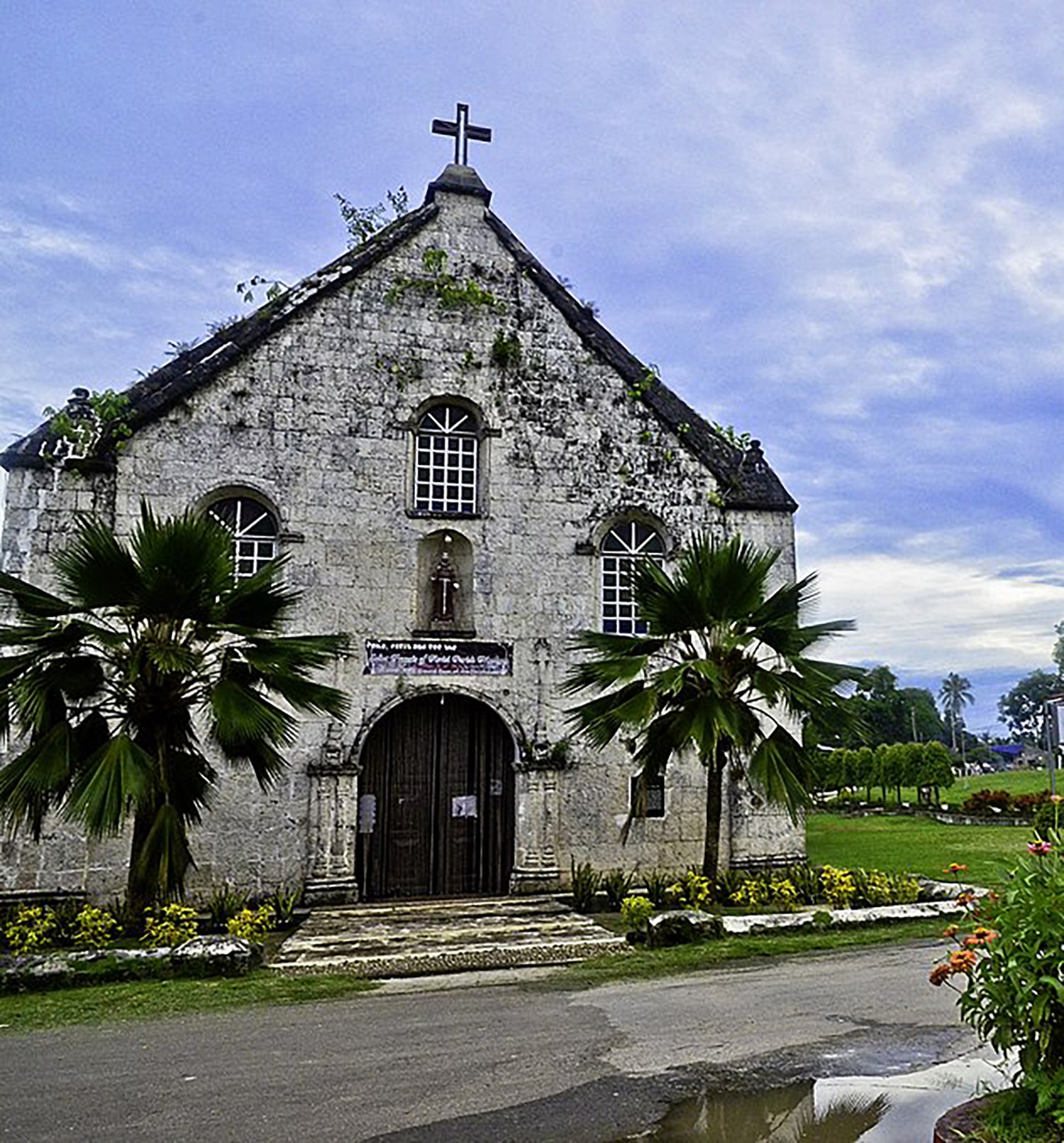
The famous St. Francis of Assisi Church made from Seastones welcomes guests in Siquijor’s main port, the Poblacion port.
Lunch after was at Paliton Beach, where we feasted on fresh seafood while lounging idly by the shore. Our next stop was the Mystical Balete Tree, a popular spot known for its ethereal atmosphere, gigantic roots, a spring-fed natural pool, and a “fish spa,” where tiny fishes nibble off exfoliating skin from your feet—a truly immersive and relaxing experience that blends natural wonder with folklore myth. The Balete tree signifies growth, renewal, and our sense of place.
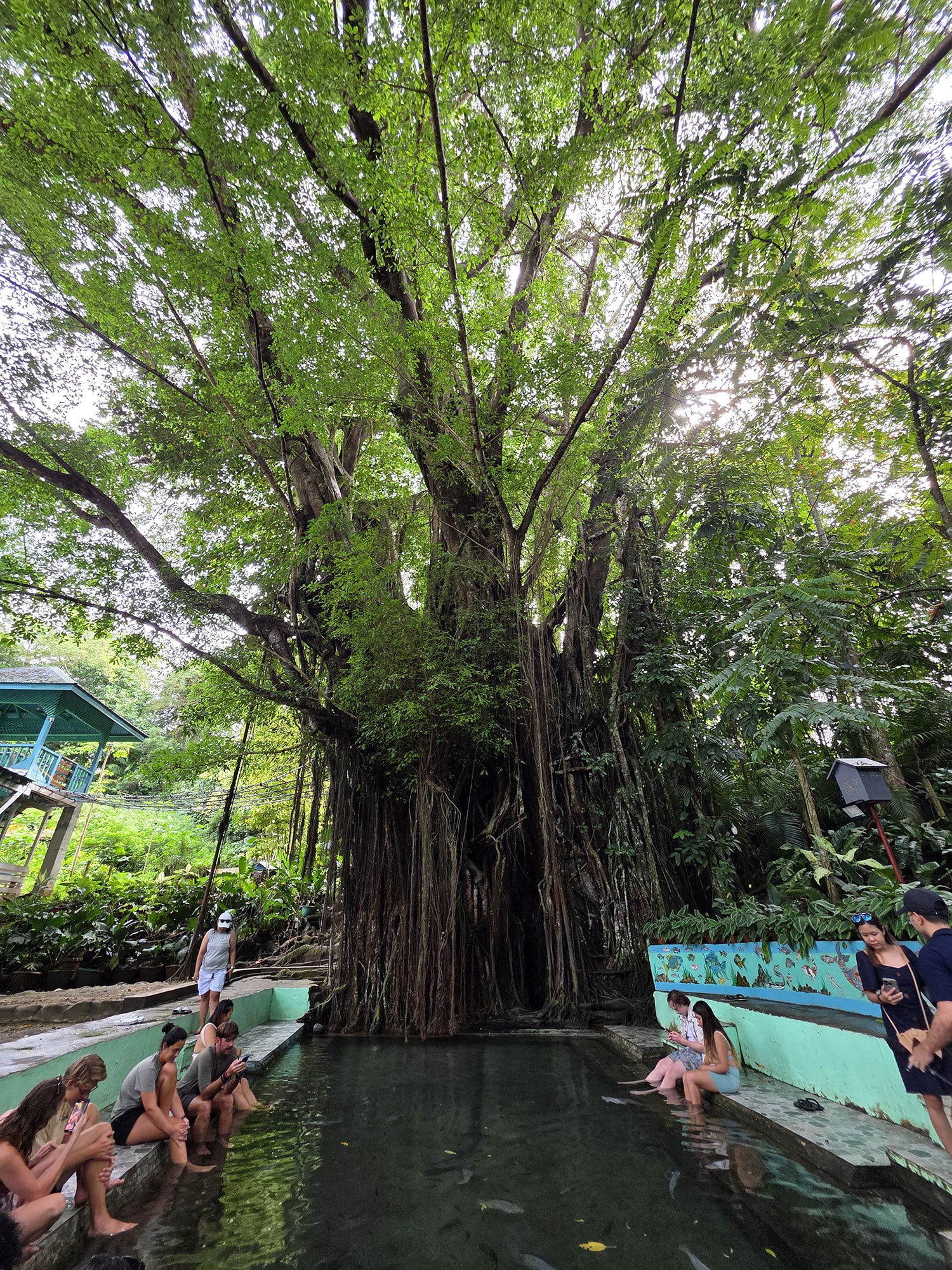
Tourists and locals alike enjoying the free fish spa at the Enchanting Balete Tree.
Next on the agenda was Cambughay Falls, a multi-tiered waterfall with clear, fresh turquoise waters and pockets of natural swimming pools. The falls cascade into three shallow pools ideal for swimming, diving, and even rafting. Surrounded by dense rainforest and limestone formations, it has a certain magical vibe.
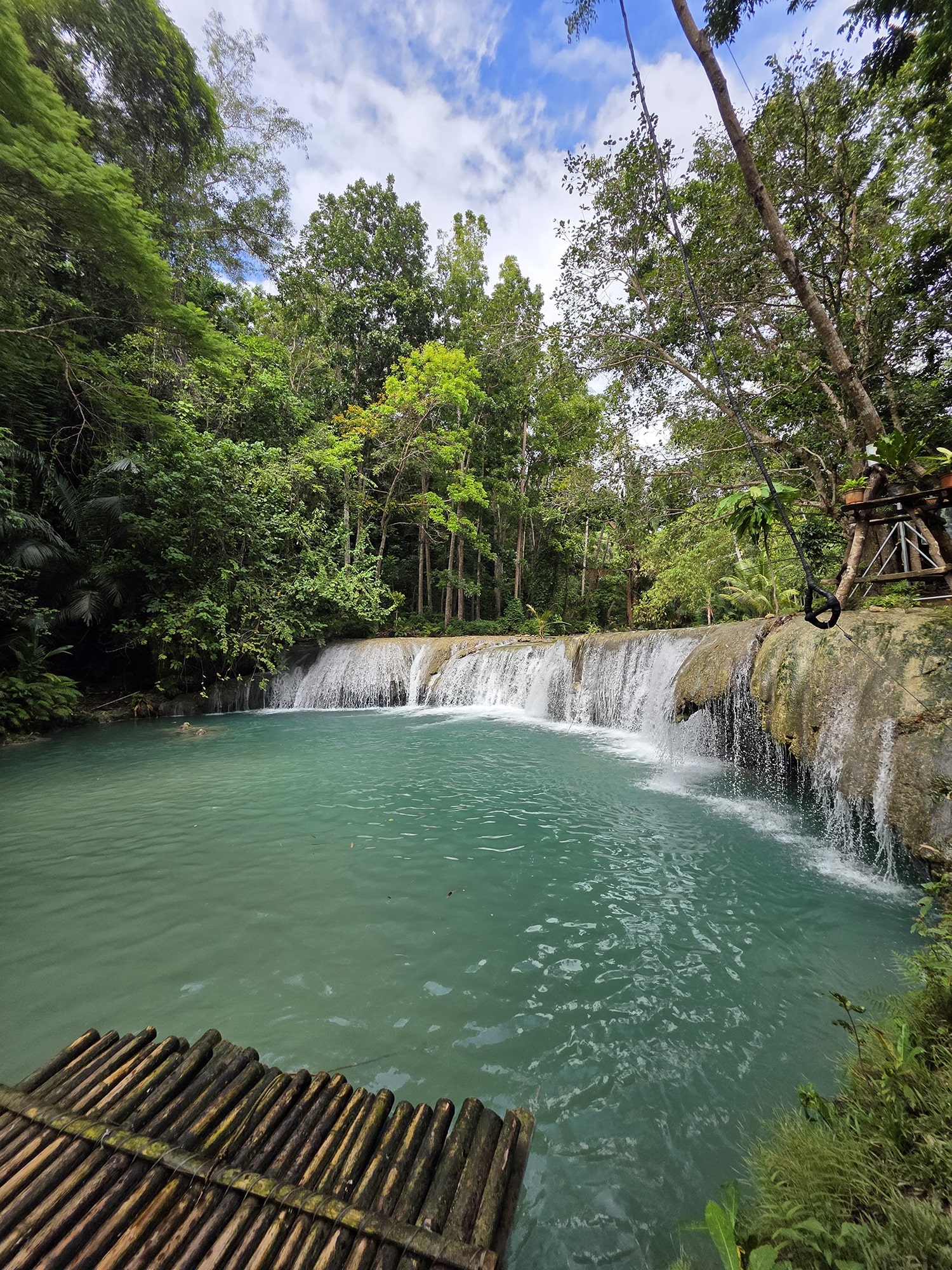
That picture perfect Cambugahay falls. A must destination when visiting Siquijor.
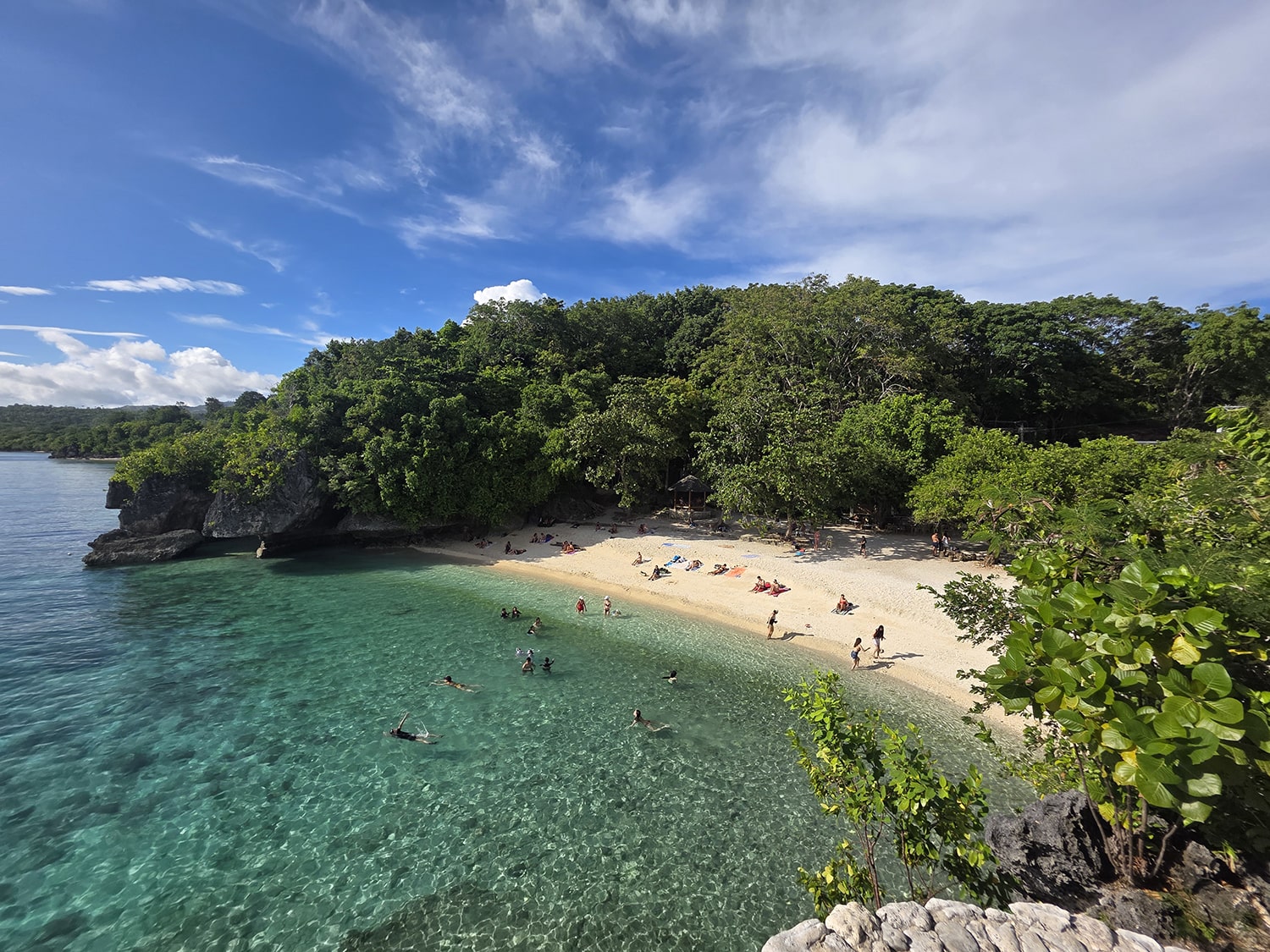
Salagdoong beach,famous for its clear waters and pristine white sands in a crescent shaped beach cove.
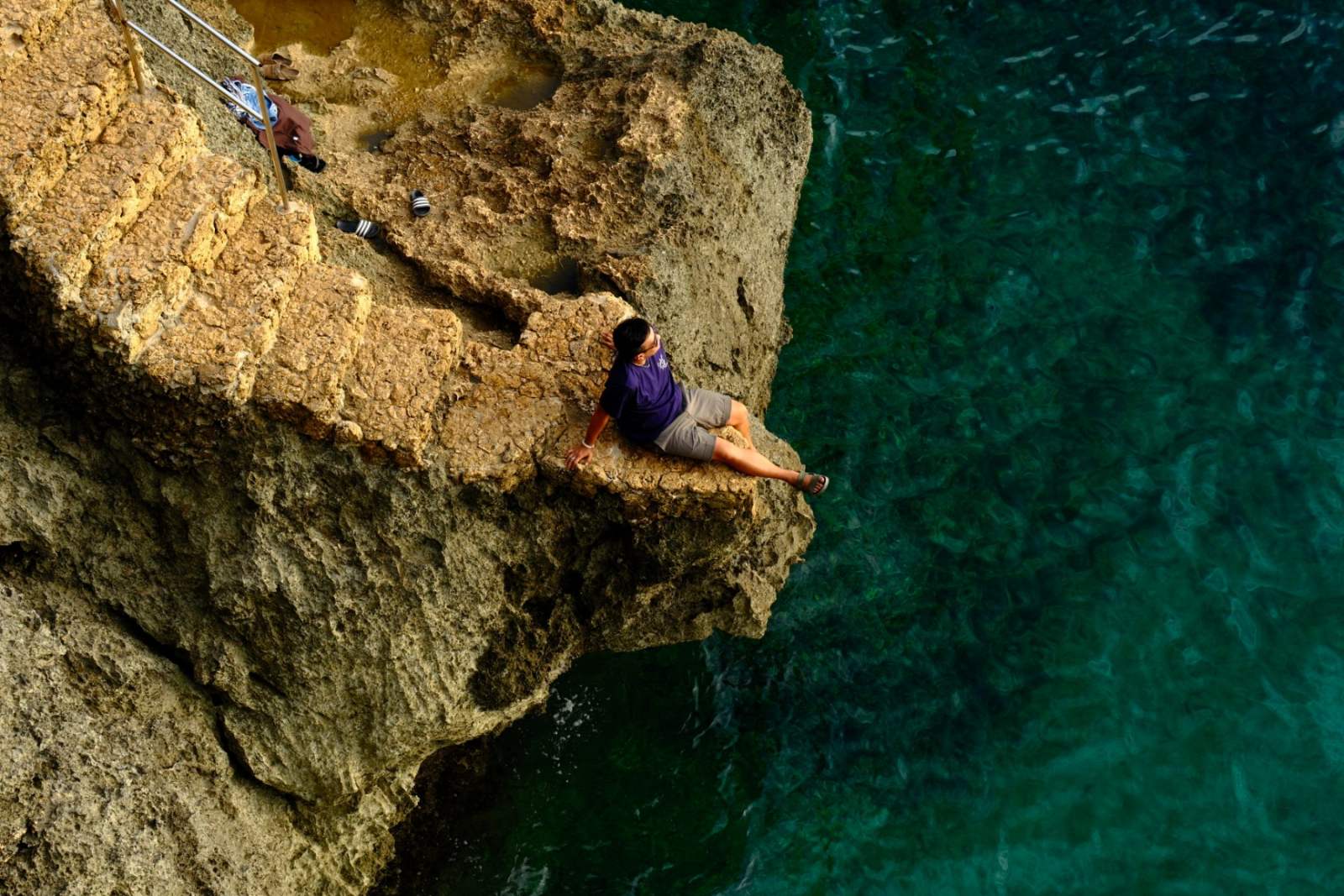
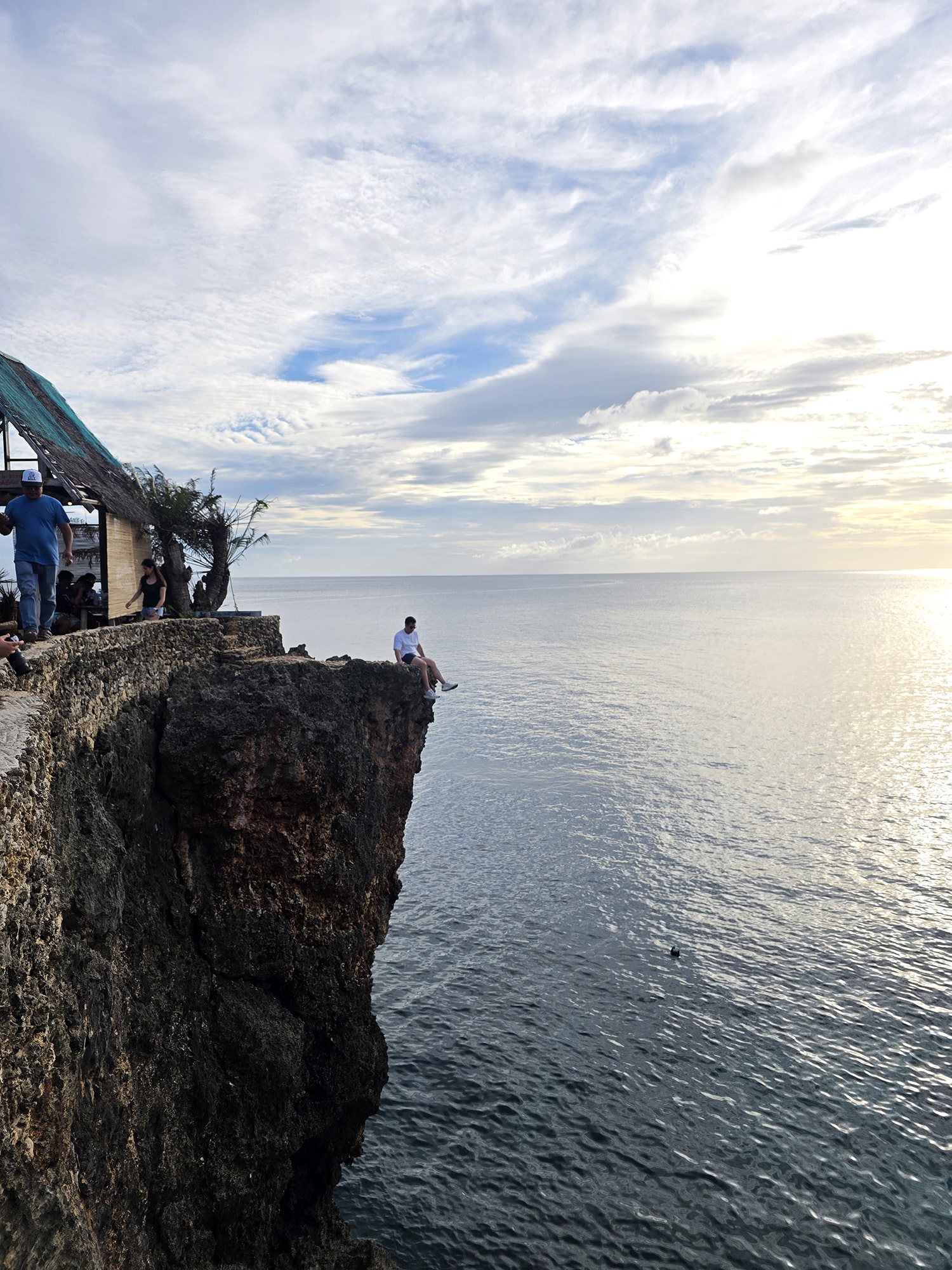
This writer Will Yap basking in the sunset view of Pitogo Cliffs.
Our final stop was Pitogo Cliff in San Juan, overlooking the Sulu Sea, just in time for the much-awaited stunning sunset view known for its peaceful atmosphere. Characterized by steep cliffs dramatically plunging into deep blue ocean waters, the cliffs are mantled in lush vegetation, mostly tropical palms like pitogo (native cycads), hence the location’s name. The Pitogo Cliffs face westward, giving front-seat views of the sunset, while the sound of waves crashing against limestone rocks offers a serene escape.
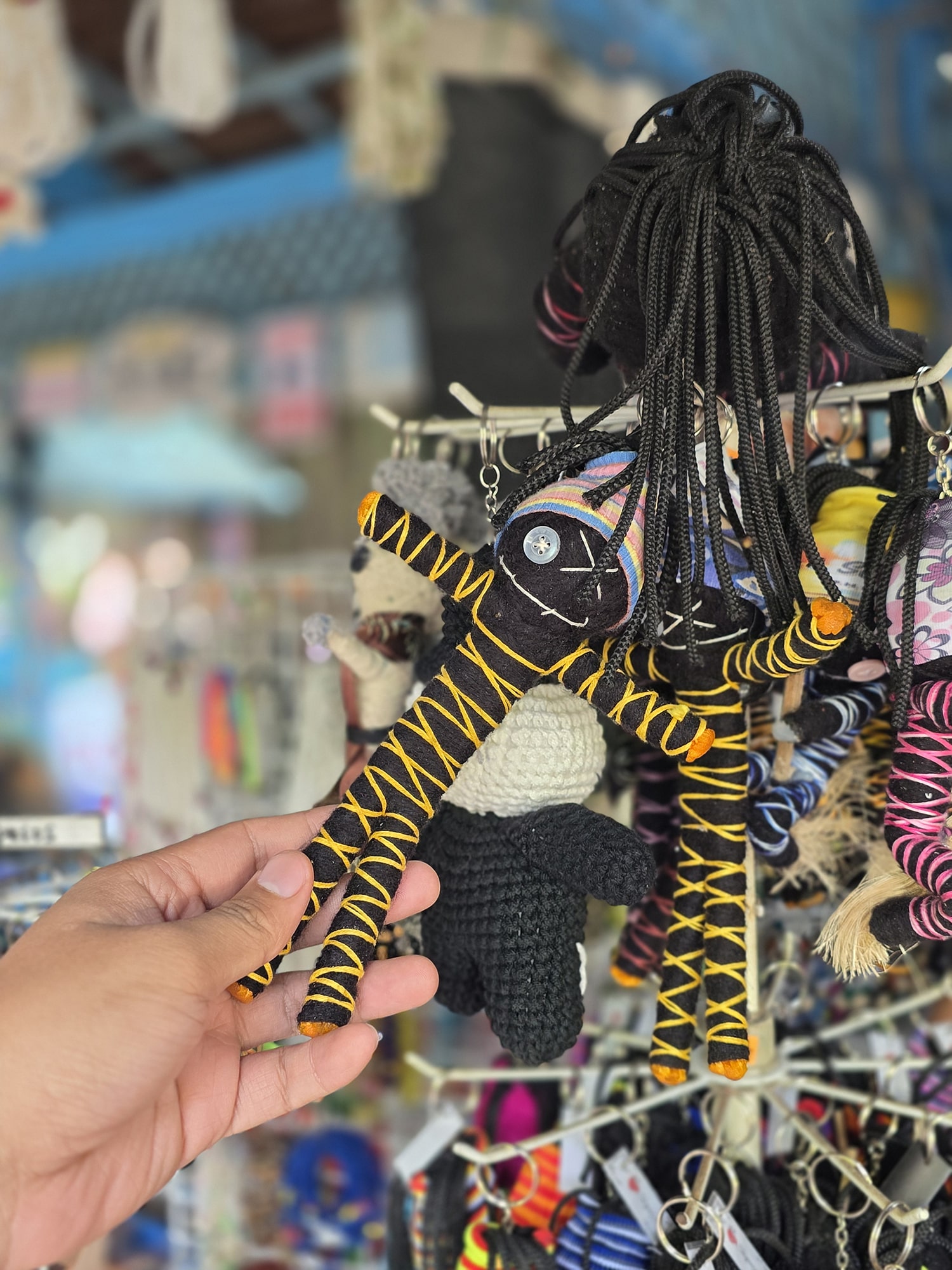
Little keepsakes with big folklore energy: voodoo doll souvenirs straight from mystical Siquijor.
If you’re planning your own Siquijor escape, book that flight, take that break, and let the island do its healing.
***
Starting December 15, 2025, travelers can now fly directly to Siquijor with Sunlight Air, eliminating the usual Dumaguete–ferry route. The new service offers direct flights from Cebu and convenient connections from Manila and Clark to Siquijor’s newly upgraded airport, supported by the provincial and local governments. To mark the launch, Sunlight Air is offering an introductory one-way base fare of ₱1,988 for Cebu–Siquijor flights, making the island’s beaches, waterfalls, and cultural heritage more accessible than ever.
Travel
Autumn in Istanbul: Fellow Travellers Share Turkish Delights

by Jing Ramos
Istanbul is a transcontinental city positioned between Europe and Asia, known for its rich history and upbeat modern identity. The city features a unique blend of Byzantine and Ottoman architecture and has a bustling metropolitan life straddled along the Bosphorus Strait. Like Rome, it’s an old city built on seven hills. In fact, Istanbul’s gradient characteristic originates from the Roman Empire. The cobblestone streets of Istanbul were crafted by Albanian craftsmen commissioned by Sultan Abdulmecit in the 19th century, giving the city an old-world charm.

The lobby of the Pera Palace Hotel exudes old world charm.
Stephen Aznar, who organized this brief interlude in Istanbul, couldn’t have chosen a more interesting address—after all, location is paramount. We were right in the heart of Beyoglu, a historic and vibrant neighbourhood on the European side of Istanbul. Cultural landmarks such as the Galata Tower, historical buildings, art galleries, numerous churches, and an engaging atmosphere of fascinating restaurants and cafés surrounded us. Not far from our apartment stood the iconic Pera Palace Hotel, built in 1895 for passengers of the Orient Express. Designed by French-Ottoman architect Alexander Vallaury, the hotel’s opulent architecture is a hybrid of neo-classical, art nouveau, and oriental styles. Famous names have graced the hotel’s registry, including Mustafa Kemal Atatürk, founder of the Republic of Turkey, and writer Agatha Christie, who reportedly drew inspiration from the hotel for her novel Murder on the Orient Express. Other notable visitors included Ernest Hemingway, Alfred Hitchcock, and Queen Elizabeth II.

Stephen Aznar by the Galata Tower in Beyoglu.

The interiors of the patisserie were given a facelift by renowned interior designer Anouska Hempel.

The china served in the cafe were naturally pink, a favorite color of the Atataturks.
Stepping into the patisserie of the Pera Palace Hotel is a journey into the Belle Époque—a dreamlike era when the art nouveau period flourished. This French-style bakery features a predominantly pink ambiance with cranberry tones, moiré silks, and velvet cushions. Interior designer Anouska Hempel refreshed the café’s interiors in 2013, enhancing its original design, and the result is “the glamour of a bygone era.” Dessert history spanning Istanbul to Anatolia includes a varied range of baklavas, rice pudding, and Turkish delights from the Ottoman Palace, as well as patisserie products, biscuits, tarts, and cakes that made their way to Pera in the mid–19th century. That particular afternoon, our guilty pleasure consisted of Turkish tea with a traditional caramel éclair and a lotus tart served on pink china—a favourite color of the Atatürks.

Tracey Emin’s Bazen/Sometimes, inkjet mounted on foam board 2009
The Elgiz Museum of Contemporary Art, located in Istanbul’s business district within the Beybi Giz Plaza building, is Turkey’s first contemporary art museum established to support the development of contemporary art. The museum is nonprofit, founded by Sevda and Can Elgiz, and houses the family’s private collection, showcases temporary exhibitions, and serves as a platform for young and emerging artists and curators.
Currently on exhibition is Season of Mirage, which explores the thin line between dream and reality through current works by Turkish artists and selections from the museum’s private collection. A journey through the layered world of art, the exhibition—named after a mirage—offers a visual feast shaped by artists’ observations of the modern world. The interplay between clarity and uncertainty provides viewers with an opportunity to transcend time and explore both past and present. And although the city of Istanbul remains deeply rooted in its glorious past, the present reveals a collective artistic voice expressing concern over societal challenges, vividly depicted in the images of Season of Mirage.

This writer, Jing Ramos soaking up the atmosphere at the Patisserie .
Lifestyle
Find Your Summer Spirit in Shangri-La Mactan, Cebu
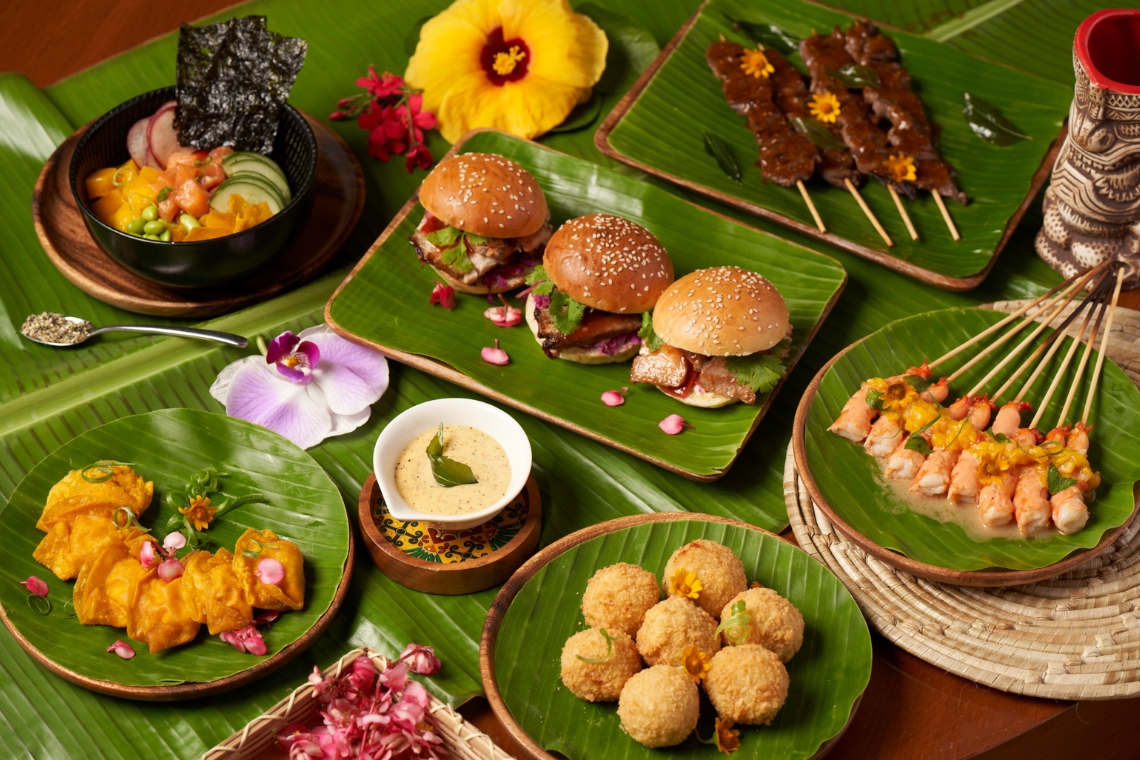
Breathe in the tropical atmosphere, as you find summer joys through sight, sound and taste at Shangri-La Mactan, Cebu. Poolside fun during the day, spent serenely and luxuriantly—a refreshment in hand. While the evenings are for outdoor family movie nights, with the ocean waves rippling in the background.
Summer is all of that, and more! Plan an extraordinary weekend with an array of exciting activities that await your arrival. Discover your #ShangriLaSummerSpirit from 15 July to 30 August.

Tiki Bar at Buko Bar
Epicurean Delights by the Pool
Keep yourself fueled up as you splish and splash with the whole crew. Take a quick break from all that summer jazz with Mediterranean and Polynesian-inspired bites exquisitely crafted for your palate. From rice balls and pastas, ice creams to sliders—indulge in tastes and aromas that transport you to a world of endless, golden summers.

Mediterranean Selections at Acqua
A Whimsical Touch
Make it a colourful summer for the kids! Let them explore their own version of paradise with whimsical floaties, sure to keep them happily afloat. Your little ones can now freely kick and play in the water with fun and fascinating, animal-shaped inflatables.
Pleasant Sundowner Tunes
Bid the sun adieu and embrace the sunset hues with live acoustics at the Main Pool from 4pm to 6:30pm.

Tiki Cocktails at Buko Bar

Champagne Bar at Acqua
A Toast to an Endless Summer!
Unwind and savour the tropical vibe as our expert mixologists craft refreshing Tiki cocktails and serve chilled bottles of exquisite champagne by the pool! With a backdrop of swaying palm trees and stunning ocean views, sip on delightful beverages and toast to unforgettable summer moments in paradise.
Family Outdoor Movie Night
Gather your nearest and dearest for an enchanting evening as we set up a large outdoor screen by the pool under the starry night sky. Cozy up as you enjoy a family-friendly movie that will delight both those who are young and young-at-heart at Treasure Island from 7pm to 9pm.

Surrounded by lush greens, let the experience bring you to a world of joy and laughter, creating cherished memories for you and the family. For more information on Shangri-La Mactan, Cebu, you may contact (032) 2310288. You may also follow them on Facebook and Instagram or visit https://www.shangri-la.com/cebu/mactanresort/ #FindYourSummerSpirit #FindYourShangriLa

Kundiman After Dark: Traditional 19th Century Filipino Musical Genre Continues to Inspire

Ethan Andre H. Gomez: Turning One’s Body into a Canvas to Create Specific Marketable Tools

Ludy Vilma Demecillo Makes a Leap From the Corporate World to the Exciting Broadcasting Industry

Femme Fatale: David Downton Celebrates the World’s Most Stylish Women
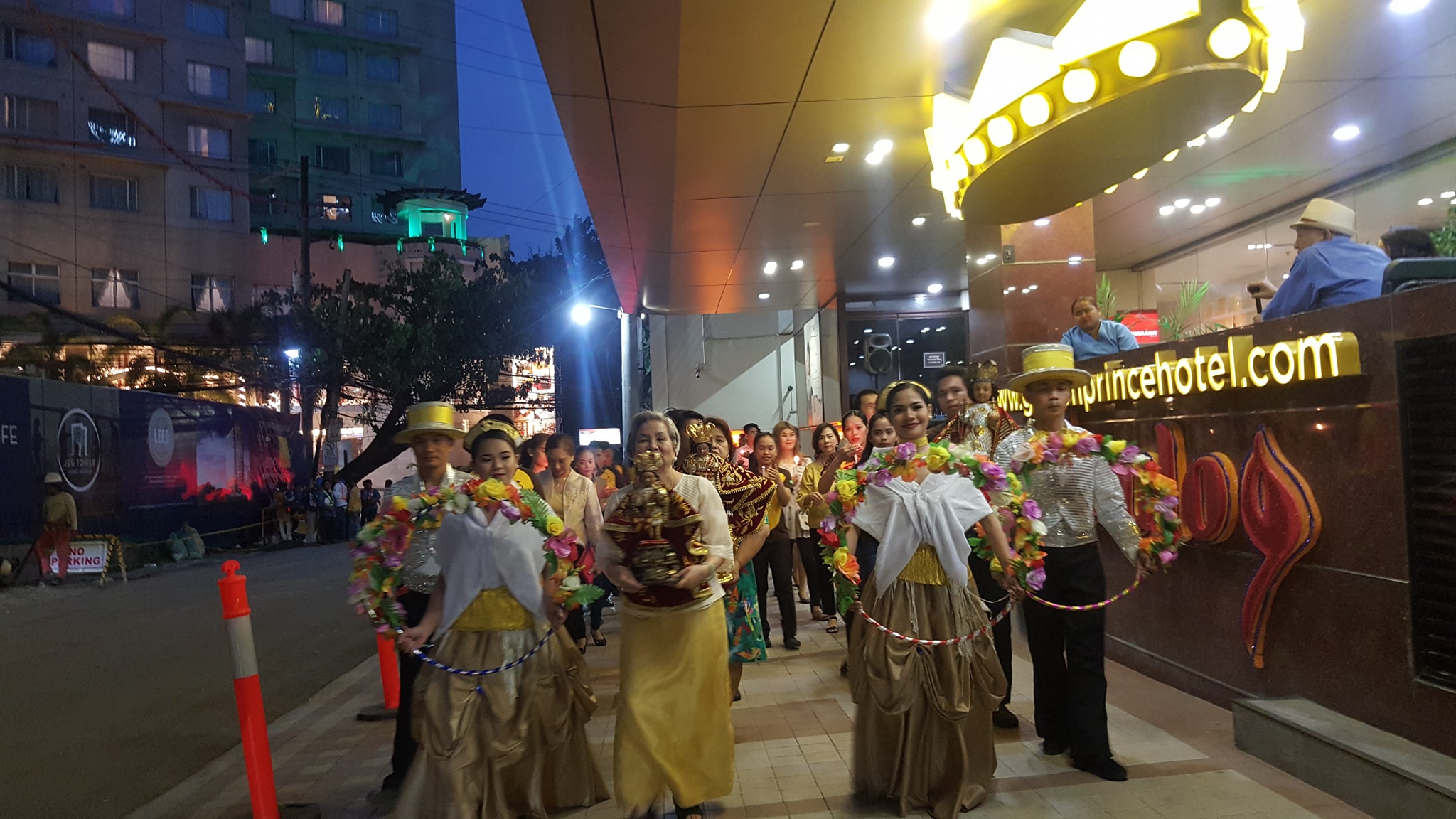
Golden Prince Hotel’s Sinulog Royalty Experience

SM Fashion Forum reveals Cebu’s style influencers

5 Filipino Films That Continue the Conversation on Women Empowerment

Noise and Sounds: An Artform

Christmas in Colonial Cebu: A Themed Exhibit by Teresin Mendezona and Eva Gullas for Stylescapes 2019

Artisanal Cebu: Aspiring calligraphy artist Abigail Condrado

Experience authentic Korean Barbeque at Da-In Restaurant

Chaine des Rotisseurs: A Night of Spanish Cuisine
-

 Prime Target3 months ago
Bee Urgello–Fashion Influencer and Designer’s Muse Goes on a Hiatus
-

 Travel3 months ago
Sunlight in Siquijor: Discovering the Landscape Shifts and Coastal Plains of this Mystical Island
-

 Fashion3 months ago
Cloud Dancer: The Resonant Reset of 2026
-
 Prime Target4 weeks ago
Ludy Vilma Demecillo Makes a Leap From the Corporate World to the Exciting Broadcasting Industry
-

 QuickFx1 month ago
Chromatic Narratives: Wayne Lacson Forte at the Negros Museum
-

 Prime Target2 months ago
Rod Malanao: Empowering the Growth of the Luxury Fashion Industry to Designing Knit Wear on the Side
-
 Prime Target3 weeks ago
Ethan Andre H. Gomez: Turning One’s Body into a Canvas to Create Specific Marketable Tools
-
 Style1 month ago
Femme Fatale: David Downton Celebrates the World’s Most Stylish Women
You must be logged in to post a comment Login